Posts Tagged ‘unquintessential leadership’

This begins the series of posts that will do quintessential leadership analyses on historically-significant people in leadership positions. Today’s post will look at the early  years of King Henry VIII of England.

And just to get the levity out of the way, while I was thinking about this and refreshing my memory on some of the details, I was amused by how many times the scene from the movie, Ghost, where Patrick Swayze sings “Henry the 8th” to Whoopi Goldberg until she agrees to help him, drifted in and out of the serious research I was doing. It’s a very funny scene, and obviously, quite effective from a cinematic standpoint.

But on to the the real Henry VIII and the quintessential leadership analysis of the first part of his life.

Henry VIII was born in 1491, one year before Christopher Columbus, under the patronage of King Ferdinand and Queen Isabella of Spain, would begin the series of voyages that would change North, Central, and South America, and the Caribbean islands forever…and not for the better.

He was the second son born to Henry VII, the first monarch in the Tudor dynasty. Henry VII came to throne after defeating Richard III (whose remains were recently discovered) in 1485 during the Battle at Bosworth Field. As a side note, one of my favorite Shakespeare plays is The Life and Death of Richard the Third. It, however, must be read in the context of when it was written – during Elizabeth I’s reign – so the portrayals are very favorably skewed toward the Tudors and very harshly skewed against the Plantagenets, of which Richard III was the last ruler.

Being the second son of Henry VII, who by all accounts was the exact opposite of Henry VIII in every way except the obsessive paranoia that plagued both men (Henry VII seems to have always been very paranoid, while Henry VIII became more paranoid in the last half of his life), Henry VIII started life with the prospect of being a simply a prince, since his older brother, Arthur, was heir to the throne. 

In many ways, in hindsight, it’s because of Henry VIII’s birth order that his formal education included so little government and economics, consisting primarily of what we now call liberal arts: languages, literature, music, and art. That is also what probably gave him the air of being a “Renaissance Man.” Henry VIII was very intelligent and very gifted. He was an accomplished author and musician. He was also a gifted athlete. He had a passion for gambling as well. These were the things that Henry VIII enjoyed and loved to spend his time doing.

Great for a prince, probably (I think of Prince Charles of England now as an example), but awful for a king. And some of these interests and proclivities were what made him dangerous – and an unquintessential leader – as a king.

Henry VIII was also a devout Roman Catholic, very knowledgeable on liturgy and theology, and authored a best-selling book in Europe denouncing Martin Luther and supporting the church in Rome. Paradoxically, Henry VIII Henry VIII as a young manwas also very handsome as a young man and, even before his marriages, had begun to be a womanizer. Like so many things in Henry VIII’s life, his professed beliefs and the contradictory behavior showed an unquintessential leader at the very core. It also, and this became more apparent throughout his life, showed a complete lack of self-control – also an unquintessential leadership trait.

Henry VII arranged a marriage early on for Arthur with the youngest daughter of Ferdinand and Isabella, Catherine of Aragon. The young couple married in 1501, but Arthur died five months after they were married.

After Authur’s death, Henry VII offered Henry VIII, who was 10 years old at the time, to Ferdinand and Isabella as a husband for Catherine, who was five years older, when he was old enough. These were political marriages and with Spain still at the top of game in Europe, Henry VII wanted to ensure peace and prosperity for England by a continue alliance with Ferdinand and Isabella. The logic was pragmatic: it’s unlikely, although not impossible, that a ruler will initiate a war against a country where one of his children is the spouse of the ruler.

Ferdinand and Isabella agreed.

When Henry VIII was eligible to marry Catherine at age 14, he rejected the marriage at the insistence of Henry VII, mainly because Isabella had died and Spain was not as politically strong nor as valuable to have as an ally. However, after Henry VII’s death, beginning a long series of unnecessary “in-your-face” decisions in opposition to his late father, Henry VIII married Catherine. It was a decision that would, in time, change the course of English and European history forever.

Henry VIII’s early reign showed many unquintessential leadership traits (although, some stayed the same throughout his reign, others replaced the younger ones as time went on). One that stayed the same was his method of dealing with people – all people – who were either inconvenient or got in his way. He simply got rid of them. The first two people he had executed were two of his father’s advisors, Richard Empson and Edmund Dudley.

Other unquintessential leadership traits became apparent in the way Henry VIII governed – or, more precisely, didn’t govern – early on. For some time after ascending to the throne, Henry VIII lived much the same life he lived as a prince, devoting most of his time to doing the things he enjoyed and following his passions. The unquintessential leadership trait that emerged was handing all the governing responsibilities over to a single person – Thomas Wolsey – who both quickly started consolidating his own power and making a lot of enemies. The fractious and dangerous environment of Henry VIII’s court began here. Henry, when he finally did decide to take complete control (another unquintessential leadership trait), used this to his advantage, encouraging and instigating the constant atmosphere of fear, intrigue, suspicion, and lies that led to death that characterize his reign. None of this was quintessential leadership.

He was a spendthrift all his life. His tastes were lavish, excessive, and his need for instant gratification quickly took the English coffers from the economically-stable position that Henry VII had left them in to a constant need for cash infusions throughout Henry VIII’s reign, which ended with him and England deeply in debt.

In part II of this look at Henry VIII, we’ll pick up at the point where his marriage to Catherine became inconvenient.

I plan to make this a weekly feature on this blog, beginning with today’s post. I’ve done this type of post a couple of times already this year, breaking a story or two down in detail.

However, beginning with this post I will summarize the stories – some you’ve heard and some you probably missed – and give a big-picture statement about the the failure of quintessential leadership in each of them, and then invite you, as quintessential leaders, to do your own more in-depth analysis about the quintessential leadership failure aspects of each of them.

I do this because the heart and core of who I am is a coach. My role as a coach is to highlight and guide, but I firmly believe that each of us must actually put some effort into the analysis, the learning, and the application process to fully benefit from it. We’re on this journey to become fully quintessential leaders together. Therefore, we must all be engaged and participating in the process. I invite you to join me in meeting that goal.

The first story of unquintessential leadership that caught my attention this week was the FBI sting that left 10 Atlanta police officers facing corruption charges, when it became clear that they were accepting large sums of money from street gangs to provide protection during drug deals. Law enforcement is entrusted with protecting those of us who obey the laws – local, state, national – and removing those who don’t – street gangs and drug dealers certainly are among those – and this is yet another example of that trust and trustworthiness being broken.  That is unquintessential leadership.

For a detailed and in-depth discussion of the components and traits involved in building trust and being trustworthy, please purchase my eBook, Building Trust and Being Trustworthy. You can also purchase a paperback copy from Amazon or a Kindle version.

The second story also involves law enforcement – Chris Dorner, who was terminated by the Los Angeles Police Department in 2009, and took a resoundingly unquintessential leadership route to protest what he believed was an unfair and unmerited – which it could well have been – termination. It doesn’t take much, from a big-picture point of view, to see how this is unquintessential leadership. Any claims that Dorner had about bias, prejudice, and mistreatment during his tenure and in his termination from the LAPD (he laid this out in a very coherent, well-organized document that shows this was an intelligent, sane man talking) were erased by how he chose to force the issue: with threats, murders, and hostage-taking. Eventually it cost Chris Dorner his life – who didn’t know that would be how it ended? – but if there were any real problems that he wanted addressed and corrected, no one will listen or do anything about it because the last actions of his life seem to support his termination.

Beyond the obvious – I do hope the obvious is obvious – what can we learn from this about how we resolve issues and about how our methods need to be consistent with quintessential leadership? It’s important to remember that not every issue, dispute, or disagreement is win or lose, with no in between. Some are. But those involve moral foundations and principles and are non-negotiable under any circumstances.

But for the everyday issues, disputes, and disagreements we deal with, are we able to see that a draw is sometimes quintessential leadership in action? The “how” we do something matters as much as the “what” and “why.” Are you the kind of person who draws a line in the sand about absolutely everything? If so, you’re not a quintessential leader.

I urge you to take some time to think about this in your own lives. I have seen many people with legitimate whats and whys go down in flames because of how they tried to address and resolve them. On the other hand, I’ve seen just as many people who had absolutely no basis for their whats and whys – in in many cases, were completely on the wrong side of everything – prevail because of how they dealt with them. Both of these are the extremes, but it should be a lesson for us.

Another story of unquintessential leadership this week involves a company. Carnival Cruise Lines failed all leadership tests this week with their handling of the result of an engine room fire on Carnival Triumph earlier this week. The right – and quintessential leadership – action would have been to send some means of rescue (ferries, another ship with support to do the transfer, etc.) out immediately. Carnival Cruise Lines didn’t do that because of the cost involved. Their greed – as well as their belief that their industry is “bullet-proof” – underlines the lack of quintessential leadership at this company.

I read a statement from Carnival Cruise Line CEO Gerry Cahill this morning and if I were on the board of directors for this company, he would have been terminated right after this statement: “We pride ourselves on providing our guests with a great vacation experience, and clearly we failed in this particular case.”  Failure was simply a matter of not providing a great vacation experience? Mr. Cahill is an unquintessential leader in action.

Another continuing story of unquintessential leadership this week are the Armed Services Committee confirmation hearings on Chuck Hagel as Secretary of Defense. The “politics-as-usual” circus surrounding this highlights how much of a lack of any quintessential leadership there is in American politics. But freshman senator Ted Cruz of Texas brought the unquintessential leadership spotlight on himself this week during the hearings. Read the story. This is not quintessential leadership. Period.

And the last story of unquintessential leadership that I’ll point out today is the story of Oscar Pistorius. You can read the story if you don’t know it already. Any time I hear of athletes involved in incidents like this, my first thought goes to overinflated egos – an unquintessential leadership trait. My second thought goes to the rampant use of performance-enhancing drugs among professional and Olympic athletes, which is illegal, unfair, and wrong – also unquintessential leadership traits – and the emotional and hormonal side-effects of those drugs, which can contribute to actions like these.

Ultimately, though, the full responsibility for this falls solely and completely on Oscar Pistorius. If he took performance-enhancing drugs, he knew the risks, and he made the choice. All the tears, shaking, and “strongest denials possible” won’t change the fact the he is responsible for every choice he made – including this one.

Want to know the heart, the core, the soul of what being a quintessential leader is? It is building trust and being trustworthy. Without this, you cannot be a quintessential leader. Without this, you cannot be a leader. Period.

Let’s get real. It doesn’t matter how many platitudes you give. It doesn’t matter how many buzz words you use. It doesn’t matter how many leadership seminars you conduct, how many leadership articles you write, how many leadership lectures you give. If you are not living and being these traits of building trust and being trustworthy, then you are not a quintessential leader and your example, your seminars, your writing, your lectures are perpetuating a fraud on your teams, your students, your readers, and your audiences.

As quintessential leaders, our responsibility is to build trust and be trustworthy. We say that is who we are, but do we really know how far that commitment takes us? It’s definitely the narrow path, but to be genuine, authentic, and quintessential leaders and not wannabe’s, which is what we see around us in most of the people in leadership positions, we must commit and adhere to that. Otherwise, there will be no real leadership.

Let’s make sure we’re not pretenders. Let’s make sure we’re not following the crowd. Let’s make sure we know what we need to do – from our families, because this is where quintessential leadership starts, for our neighbors, for our teams, for our business units, for our organizations, for our towns, for our states, for our countries, for our brothers and sisters in the human race.

You and I have a personal responsibility to do this. It doesn’t matter whether anyone else is doing it or not. You and I answer for ourselves alone, not for anyone else. Anything less than ensuring that you and I are fulfilling our responsibility to build trust and be trustworthy is an excuse.

Quintessential leadership doesn’t have excuses. It is action. Let’s take action today. None of us is guaranteed tomorrow.

Beginning this week, I will be starting a new series of posts that will evaluate how quintessential – or not – the leadership of well-known people in history that held leadership positions was.

This idea came as an outgrowth of a request from a very good friend of mine to consider writing a “real” history book – an idea that I’m researching and considering seriously – to counter all the mostly skewed, angled, and sometimes outright untrue information that passes for history these days – in education, in non-fiction writing, and on the internet. 

It seems that we, as humans, have become lazy enough to believe just about anything without proving or disproving it and we like “smooth words” more than the truth.

The history of humanity is ugly. If we, as quintessential leaders, look honestly and closely at ourselves, we’ll admit that some of our personal history is ugly too. It seems, though, that a lot of people would rather just lie about it or doctor it up, instead of facing it and doing something about it to clean it up and make our future histories not ugly.

Once lies and deception become part of our histories and established histories, then we’ve lost the battle for change, for betterment, and, in fact, to become quintessential leaders. Let’s be sure that we’re not afraid to be honest, with ourselves, with our histories, with the world’s history. Only when we face the truth about all of these are we ever in a position it to change it and do something better and different.

After reading extensive excerpts from the Senate Armed Services Committee’s confirmation hearing on January 31, 2013  considering retired Nebraska senator Chuck Hagel’s suitability as the next Secretary of Defense, I could not help but think of William Shakespeare, of Julius Caesar, of Brutus, of Marc Antony.

“So are they all, all honourable men” was the line from Marc Antony’s eulogy, which I memorized for oral recitation in 10th grade English class, that kept coming back to me. Because Marc Antony’s eulogy is facetious in its praise of the very men – and especially Brutus – he knows betrayed Julius Caesar and figuratively stabbed him in the back and literally stabbed him in the front.

I also thought of Dante Alighieri’s The Inferno and the nethermost layer of his hell, which was reserved for traitors. He assigns Brutus and Judas Iscariot to this layer, using this literary vehicle to show betrayal as the ultimate breach of trust. 

(It may interest you to know, by the way, that The Inferno, along with the rest of The Divine Comedy, is actually a political, not religious, book. This fictional work was Dante’s revenge against his political and personal enemies, but by using the cover of a religious treatise, he could condemn his enemies without fear of retaliation. However, the fictional, unscriptural concepts that Dante introduces in this work were later incorporated into the dogma of the church and became much of what both Protestant and Catholic adherents believe about the afterlife today – all of which is based on a work of complete fiction.)

Chuck Hagel Secretary of Defense HearingsThe reality is that few of the people involved in this proceeding are honorable men – and very few of them show any quintessential leadership traits. The overriding hypocrisy, the back-stabbing, and posturing by most of those on the Senate Armed Services Committee are all unquintessential leadership traits.

A glaring example of this emerged over and over as different members of the Armed Services Committee referred to Chuck Hagel in their lead-in to their questions as “friend” or “old friend,” and then each of those same people proceeded to deal with Mr. Hagel in a manner that was, not only unfriendly, but downright hostile. With “friends” like these, who needs enemies?


Arizona Senator John McCain was particularly notable in his hostility and outright bullying (please purchase Unquintessential Leadership for a thorough discussion of bullying and two other unquintessential leadership traits that are often closely related to it) during the hearing. This has been the trend of John McCain’s behavior and character since his unsuccessful 2008 U.S. presidential race. It seems that a bitterness and anger has set in with him that has made him the attacker, the accuser, the blamer, and the one who demands the final word and not only always has to be right, but has to hear, even if it requires brute force, everyone else admit he’s right.

McCain’s questioning of Chuck Hagel was a continuation of that behavior and character. Whatever strengths,John McCain Senate Armed Services Committee knowledge, experience, and respect that John McCain once brought to the table with his inclusion in Senate matters has been eclipsed – and perhaps lost, though, hopefully not for the long haul – by this unquintessential leadership behavior that now characterizes his interaction with almost everyone.

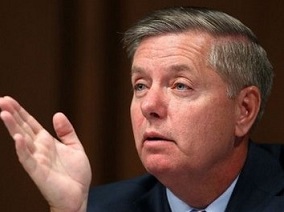
Of all the Senate Armed Services Committee members who questioned Chuck Hagel, the only one who based his questioning on actual things related to national defense that Chuck Hagel has discussed in the past in a measured, persistent-but-not-bullying way was South Carolina Senator Lindsey Graham. The stark contrast between his interrogation of Mr. Hagel and John McCain’s was easily discernible in print, but even more discernible in the video excerpts.

John McCain’s body language, tone, and face are those of an unquintessential leader. Everything is combat and he must win at all time and his “enemy” must publicly surrender. Lindsey Graham’s body language, tone, and face showed none of those things. It was clear, though, that his line of questioning was directed toward a centerpiece of American defense policy, and its importance was why he stayed with it to try to elicit a policy response from Chuck Hagel.

lindsey graham Armed Services Committee SenateOn the other side of the table in the confirmation hearing, however, was another unquintessential leader. As a quintessential leader who interviews and hires people routinely, if Chuck Hagel had been a candidate I was interviewing for a job, after about five minutes, I would have ended the interview and would have asked my HR department to send out a form letter to Mr. Hagel saying “thanks, but no thanks.”

Mr. Hagel was completely unprepared for any of the questions he was asked. He lacked key information on policy matters directly related to the job of Secretary of Defense. He lacked, it seemed, informed and well-thought out policies on international matters and foreign relations. In short, he seemed not to even be aware of the rudimentary elements and matters related to the job he is being considered for. Most of his time was spent embroiled in defending or being decimated about his past, and the end result was the question, at least in my mind, of why anyone thought Mr. Hagel was even remotely qualified to be considered for the Secretary of Defense position.

Quintessential leaders are (a) qualified and (b) extremely prepared for their jobs. That is what we as quintessential leaders must be at all times. We will never know all the answers to all the questions, but as quintessential leaders, it’s our responsibility to be honest and say, “I don’t know the answer to that, but I’ll find out and get back to you,” and then get back with an answer as soon as possible. You won’t lose respect if you don’t know all the answers, but you will lose respect if you don’t know any of the answers.

Quintessential leaders are also not hypocritical and disingenuous. You will not hear a quintessential leader call someone a friend and then treat him or her like an enemy. Quintessential leaders do not bully, do not insist on always being right nor do they insist that everyone publicly admit he or she is right, do not blame, do not accuse, do not attack, do not exhibit any kind of hostility. Disagreement and hostility are not twins. People can disagree without hating each other. And people who hate each other can agree.

As quintessential leaders, we should always look at the wealth of examples of people in leadership positions that surrounds us every day and identify what is quintessential leadership and unquintessential leadership. Then we need to take what we find and measure ourselves against it, because knowledge doesn’t do us any good unless we apply it. And the only person you or I can change is ourselves. If you’re not growing and changing, you’re at best stagnating, but more likely, you’re going backward.

And that’s one direction, as quintessential leaders, we need to be vigilant about ensuring that we’re not going consistently. As long as you and I breathe for a living, there will be times when we take a step or two back. That’s life. But the difference between quintessential leaders and unquintessential leaders is that quintessential leaders know this, are continually watching for it, recognize it as soon as it starts happen, and take immediate action to stop and reverse it.

Where are you today? Going backward? Stationary (stagnant)? Going forward? 

What are you going to do about it?

If you like what you’re reading here, then check out our store at The Quintessential Leader where you can purchase, for a nominal fee, eBooks about the components of trust and trustworthiness, examples of communicating vision, how to build teams using performance planning, evaluations, and reviews, styles of control that exemplify unquintessential leadership, and unquintessential leadership pitfalls we all need to avoid.

These eBooks are worth far more in experience and the time taken to put them together than they are priced at. You, as a quintessential leader, can’t afford the cost of not having the information they contain.

You have a choice. Save a few dollars and fail to be a quintessential leader, or spend a few dollars and learn what are some of the things quintessential leaders look like – and don’t look like – and what some of the things quintessential leaders do and are – and don’t do and aren’t. This is an investment in yourself and your team.

I don’t have all the answers either. I am learning just like you. But as I learn, I share my knowledge and my experience. That’s how I become a more quintessential leader. I believe in paying forward. What do you do to become a more quintessential leader? How do you pay forward what you’ve learned and experienced?

Whether you buy my eBooks or not is not important. But what you do with what you learn and what your experience has taught, is teaching, and will teach you is.

Think about that. When it’s all said and said, that’s all we’re left with. It’s a legacy. What is your legacy going to look like?