Archive for the ‘Qualities of a Quintessential Leader’ Category

This blog post caught my attention today. I think this is something that we, as quintessential leaders, need to think deeply about.

I know a lot of us are “busy.” But the question we need to ask is ourselves is “doing what?” Are we busy for the sake of being busy and accomplishing little? Are we busy to the point that we have wrecked our lives in pursuit of for, what in the end, will be nothing? Or are we busy in a productive, life-changing – for ourselves and others – way that will have tangible results in the long-term? Or is our “busyness” simply nothing more than a waste of our and others’ time?

Tough questions. Tough answers.

But, my fellow quintessential leaders, we must ask and answer these questions. Honestly. If the answers find our efforts to be mere busyness and not life, team, personally-changing, then I challenge each of us to take a step back to focus on our priorities, what is important, and what matters.

After all, the only thing we take out of this life is our character and how well we have managed all the relationships we’ve committed to: to God and Jesus Christ first because every other relationship we manage and commit to is based on this. To our spouses. To our families. To our teams. To humanity.

I certainly know I have a lot of work to do in each of these. What about you?

sofagirl's avatarCampari and Sofa

Stop the glorification of busy.My friend Gavin was telling me about a conversation he had with some Dutch colleagues. Gavin, and his compadre Georgina, find that the sheer volume of work they are confronted with on a weekly basis is just un-doable within the confines of a normal 8-hour work day. So they regularly put in 10-hour days at the office. And another couple of hours at home picking up emails. This causes all sorts of problems: they’re tired all the time, their spouses feel ignored, they don’t want to go out at night or over the weekend and they lose touch with friends.

Hmmfff…”, said their pals, “In Holland, if you were to work like that we would think you were not coping.”

“Am I”, he wondered, “not coping? Or am I doing more than I should? And if I am doing more than I should –  what should I stop doing? And…

View original post 1,063 more words

As a Southerner I’ve often had to face some of the challenges presented by Nick Sacco on this thought-provoking blog. But the questions he raises here are bigger than the American Civil War and the stereotypical views of Southerners and Northerners in the United States based on that conflict.

The subject of racism has, over the last twelve years, as someone who led multinational teams in New York City after 9/11/01 – after watching the World Trade Center towers fall up close and personal – and had to manage and counsel in depth understandable anger in juxtaposition to the reality that “not one size fits all” big-picture view that encompassed the multinational team I led and and served, has weighed heavily on my mind.

It weighed heavily on my mind growing up in the South. When I saw prejudice first-hand in my teenage days in blueberry fields in eastern North Carolina, I took a stand against it. I suffered a considerable amount of grief for my stand, but I wasn’t fired. I realized then that those giving me grief simply didn’t understand why what they were doing was so wrong. That, for me, was where I began to learn forgiveness.

We live in a world that divides. As quintessential leaders, our job is to bridge the divides as we are able. However, we must never compromise nor sacrifice the heart, soul, and mind of what quintessential leadership entails to effect a false or temporary or meaningless peace.

We must exercise the wisdom, the discernment, the understanding to know the difference.

Nick Sacco's avatarExploring the Past

… or simply racist? It is clear that the legacy of the Civil War is still with us 150 years after the first shots were fired. For all of its poor word choices and cringe-worthy moments, Brad Paisley and LL Cool J’s song actually provides a glimpse into something quite revelatory. Memories are created, not self-evident. Oftentimes the memories we create about our past are used as coping mechanisms to make sense of events in our past that make us feel bad about our history and our ancestors who may have been complicit in perpetuating that history. Sometimes the goal of our memories is to also forget the past, as evidenced in the lyrics “let bygones be bygones.”

There are other interesting word choices in the song as well. The statement “Caught between Southern Pride and Southern Blame” is something many white Southerners have had to address at some point…

View original post 873 more words

This is about quintessential leadership. Ethics. Doing the right thing. Making the right choices. The fields we’re in don’t matter. The choices we make do. Always. Never forget that. When you forget that you are responsible for the choices you make, then you forget your principles, your ethics, your moral principles.

In short, you forget that you are a quintessential leader.

As quintessential leaders, we can never forget what our foundation, our principles, our ethics, the very cores of who and what we are consists of.

Tarun Gill's avatarTarun Gill Motivation

communications as a careerIn life you would always have two options for everything. That’s why we are tagged as byproduct of the choices we make in life.

As a communication professional, you would make some good choices and some not so good choices in choosing your employer.

Lets face it, communications, as a function is not a common one. In some organizations the communications role doesn’t exist. This is not a local practice but a global trend. Businesses don’t really understand what corporate communications is? No wonder we are often struggling to quantify what we do in the organization.

One thing, which we have to be very clear of, weather, you are a fresher passed out from a mass communication college or an experienced individual. Communication will always be a “Good to have” Line of business not a “Need to have”. And not so evolved organizations always are focusing in fixing up their…

View original post 290 more words

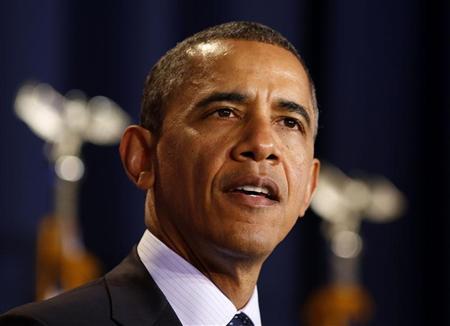
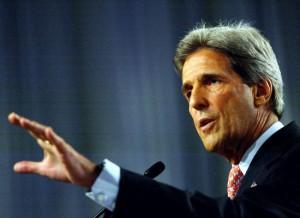
President Barack Obama, Secretary of State John Kerry, Attorney General Eric Holder and a few other top administration officials gave a nod to quintessential leadership this week by giving back a portion 0f their salaries as U.S. federal government worker furloughs begin to take effect from the sequestration that began March 1, 2013.

U.S. President Barack ObamaPresident Obama will write a check for 5% of his salary to the U.S. Treasury each month,Secretary of State John Kerry while Secretary Kerry will donate his 5% to a charity that helps U.S. State Department employees. Attorney General Holder will write a check to the US Treasury for 14 days worth of his annual salary. Details of how the other members of the president’s Cabinet who are forfeiting a portion of their salaries have not been finalized.

While the actual amounts on money these three people in U.S. leadership positions is small, the symbolism of their gestures – and the quintessential leadership statement they make, is large. And the example they’ve set for the rest of those in leadership positions in the U.S. government is powerful.

To date, I have not read of anyone in the U.S. Congress following President Obama’s, Secretary John Kerry’s, Attorney General Holder’s, and the other Cabinet members’ examples by giving back a portion of his or her salary.

I have always found it interesting that time and again the United States Congress shows how devoid it is of quintessential leadership. While the governing body itself is a chaotic and ineffective mess, they routinely give themselves pay raises – while the people they supposedly represent continue to lose jobs, homes, and sometimes families because of the global economic crisis, which the U.S. Congress had no small part in contributing to because of all the financial lobbying money backing many of its members – and make sure they have the best of health care, consistent income, and guaranteed retirement. 

I doubt this was what the Founding Fathers envisioned when they spelled out the three branches of U.S. government in Article 1 of the U.S. Constitution. What was supposed to have been a legislative body made up of the people, by the people, and for the people has become a cloister of the most wealthy and connected, by the most wealthy and connected, for the most wealthy and connected.

As with every human political system, the Grand Experiment was doomed to descend to its present state because of ever-present human nature, greed, and selfishness, and the inability of human beings to always strive to successfully go through the narrow gate of quintessential leadership consistently and continually.

As quintessential leaders, we should always be mindful that we are human beings too and we must always be checking our own positions as leaders, making sure that our intents, our attitudes, our motives, our actions, and our words are meeting the higher standard of quintessential leadership.

Have we done our check today?

Beneath today’s termination of Mike Price’s contract as head basketball coach at Rutgers University lies a very common story about the way many people in leadership positions now function and operate day-in and day-out.

Rutgers' head coach Mike Rice It’s interesting to see how much indignation about this.one.incident comes pouring forth, while the larger problem – and the bigger picture – is virtually ignored.

The reality is that this is a vivid example of a now very-common story line that shows how abuse of all kinds is allowed (and, often, encouraged), tolerated, and committed by people in leadership positions throughout every segment of society today. Committing abuse is present in some shape or form in every organizational construct today. It’s a reflection of a society that has come to accept the existence of abuse as being normal. As quintessential leaders, it is imperative that we are discerning and attentive so that we recognize abuse, no matter how subtly-shaded it is, and reject it as wrong and eliminate it wherever it exists.

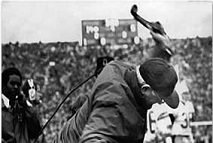
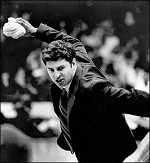
Mike Price’s story as an abusive coach at the collegiate level is not unfamiliar. Bobby Knight at Indiana University and Woody Hayes at Ohio State come to mind almostBobby Knight Indiana University immediately.

Woody Hayes Ohio State UniversityHowever, as I discussed last year in “Absolute Power Corrupts Absolutely,” regarding Penn State and which I discuss in detail in one of the components of Building Trust and Being Trustworthyall of the people in leadership positions at Rutgers have shown unquintessential leadership in this matter. Because this is the second time in 16 years, that we know of, this kind of abuse has occurred with Rutgers’ athletic program – it is obvious that allowing, tolerating, and committing abuse is accepted as standard operating procedure among those in leadership positions at Rutgers. And when those in leadership positions at an organization accept abuse, abusive behavior spreads throughout the organization.

But frequency of occurrence is not the most damning evidence that those in leadership positions at Rutgers University accept abusive behavior as being normal and okay. The back story to Mike Rice’s termination today, however, is.

One of Rice’s coaching assistants, Eric Murdock, brought Rice’s abusive behavior toward players – recorded on video from practices from 2010-2012 – to the attention of Rutgers University’s athletic director, Tim Pernetti, early last summer. Rice fired Murdock in July 2012. Pernetti suspended Rice for three games and fined him $50,000 in December 2012 after the attorneys for Murdock, who sued Rutgers University for wrongful termination, produced video proof of Rice’s abusive behavior toward his players in November 2012.

If Murdock had not threatened to release the video tape to larger audiences, this would have been the only action that Rutgers University would have taken against Mike Rice. However, once the video became public, then those in leadership positions at Rutgers University – and this includes those in executive leadership positions outside the athletic department – decided the behavior of Rice was egregious enough to terminate his contract with the university.

And therein lies an unquintessential leadership philosophy: it’s okay to do the wrong thing as long as you don’t get caught and/or no one else knows or finds out about it. Everyone in a leadership position at Rutgers University clearly embraces and believes this philosophy. By extension, this philosophy is being passed on as acceptable and normal to every student who attends Rutgers University. What does this say about how these students will act and behave when they get into leadership positions in their careers?

Think about that carefully for a while. It should make all of us in leadership positions and we, who are striving to be quintessential leaders in every aspect of our lives, stop and take stock of our own actions, behaviors and beliefs. Do we allow abuse? Do we tolerate abuse? Do we encourage abuse? Do we commit abuse? If we do, then we need to change completely. If we don’t, then we need to stay vigilant to ensure that what has become normal and acceptable behavior among those in leadership positions doesn’t sneak into our behaviors, beliefs, and actions or into the behaviors, beliefs, and actions of our teams.

Inevitably, many people in leadership positions may look at Mike Rice’s behavior and think “well, I’ve never cursed at, thrown things at, or physically pushed around those I lead, so I have never been abusive to anyone I’ve led or lead.” That is very dangerous thinking, because abuse has many faces.

We, as quintessential leaders, as I’ve said many times must be brutally honest with ourselves in examining who and what we are and do to ensure that the person we’re not the most dishonest with is ourselves. This is not easy, but it is absolutely necessary. Let’s all ask and answer the following questions about ourselves in our fearless self-examination of whether we have been or are abusive.

Have I ever implicitly or explicitly threatened someone because that person pointed out something wrong or flawed or inconsistent in me or my behavior?

Have I ever publicly embarrassed or harassed someone to try to force that person to agree with me or see things from my point of view under the guise of helping that person?

Have I ever used the “I’m in charge and if you don’t like it, you can leave” statement to try to intimidate someone who had a different – but not wrong – perspective and/or opinion than I did?

Have I ever used the “silent treatment” to try to manipulate someone into agreeing with or going along with me?

Have I ever talked over someone’s head in an attempt to make that person feel inferior or ignorant?

Have I made general disparaging comments about the intelligence, the quality, the substance, and the efficacy of my teams to put them or keep them “in their place?”

If we answered “yes,” to any of these questions, we’re guilty of having been abusive. And this list of questions is not exhaustive. I urge all of us to think deeply about this subject and identify abuse so that we understand what it is we are fighting and must not allow to become part of our way of being or thinking or doing or speaking.

As human beings, we all tend toward abuse as a defense. It seems to be hard-wired into who and what we are. But, as quintessential leaders, we hold ourselves to a higher standard and part of that higher standard is treating everyone as we ourselves want to be treated. You don’t want to be abused. I don’t want to be abused. And it must be our highest priority not to be abusive in any part of our lives.

I spoke of the courage that quintessential leaders must have in my last post. This is a concrete example of what that courage looks like.

A quick review of the week of March 15, 2013 finds further examples of unquintessential leadership already noted with two principles here previously.

The first is Carnival Cruise Lines. After the debacle the week of February 15, 2013 with the Triumph, this week brings stories about three of the cruise line company’s other ships having similar troubles. The Dream, Elation, and Legend cruise ships all experienced technical difficulties this week, and all have had to be either towed, stopped early, or are limping slowly back to port.

Once again, Carnival’s response is to offer insignificant refunds or discounts, instead of taking their whole fleet off the water for whatever time it takes to update the equipment and make the vessels seaworthy and trustworthy. This is unquintessential leadership because these are serious and potentially dangerous, if not fatal, problems andCarnival Cruise Legend Cruise Ship those in leadership positions are unwilling to acknowledge and fix them immediately, no matter what the cost in money or time is. Those in executive positions at Carnival Cruise Lines are unquintessential leaders because they don’t care about the safety of the passengers nor the reliability and trustworthiness of the company. Instead, all they care about is how much money they can make. This is greed and selfishness in action.

The second principle is freshman Senator Ted Cruz. Senator Cruz is a Harvard Law School graduate who should be totally knowledgeable about the difference between an opinion about the U.S. Constitution and what the U.S. Constitution actually says. If he’s not, then Harvard needs take a serious look at its law school curriculum and professors.

On Thursday, March 14, 2013, Senator Cruz, in what has become his customary rude and disrespectful manner toward more-seasoned legislators, argued during a Senate Judiciary committee meeting than a ban on assault weapons is unconstitutional. In a condescending “schooling” session directed at Senator Dianne Feinstein that, in essence, implied that she had no understanding of the 2nd Amendment, so she needed it explained to her, Senator Cruz said that banning assault weapons is to the 2nd Amendment what censoring books is to the 1st Amendment.

It is not, although that’s what the Tea Party and the NRA would like everyone to believe. The 2nd Amendment says: “A well regulated militia, being necessary to the security of a free state, the right of the people to keep and bear arms, shall not be infringed.”

The Supreme Court ruled definitively on the scope of what the 2nd Amendment covers in 2008’s District of Columbia V. Heller, with Justice Anthony Scalia’s majority opinion, which clearly says that 2nd amendment does not preclude banning assault weapons.

The reality is that at the time the amendment was added to the U.S. Constitution, no assault weapons existed, and the intent was to give all U.S. citizens the right to protect their homes, property, and families, and to feed themselves through hunting. It goes without saying that one doesn’t need assault weapons to do either of these things.

So Senator Cruz shows his unquintessential leadership again in several ways. First, he doesn’t even know the body of constitutional law involving the 2nd Amendment, which is unacceptable for a person in a leadership position who is a member of a committee that deals with matters involving constitutional law. Second, he is contradicting, without legitimate basis, the highest legal authority in the United States. And third, Senator Cruz consistently shows contempt and disrespect in his dealings and conversations with his colleagues, many of whom have served much longer – admittedly, probably too long in many cases – in the United States Senate than he has.

These are two news items that caught my attention regarding quintessential leadership – or the lack of it – this week. I urge all of us as quintessential leaders to observe the world around us – and that includes the news – and find mirrors that we can look into and see if we’re being the quintessential leaders we’re striving to be and say we are or there are areas where we are being unquintessential leaders and we need to change.

I’ve certainly seen some unquintessential leadership things in my mirrors this week and I have committed myself to changing them into quintessential leadership. We all have our weak spots and our blind spots and our unquintessential leadership thoughts, attitudes, and actions.

The difference between an unquintessential leader and a quintessential leader is that unquintessential leaders always look through windows, so they never see what they need to see about themselves, only what others need to do or change or be.

Quintessential leaders, on the other hand, look into mirrors and when they see the reflections of themselves, they see what needs to done, changed, or who they need to be, and they immediately commit to and start taking action to make that happen.

So my question to you, fellow quintessential leaders, is are you looking through a window or are you looking into a mirror?