Archive for the ‘Examples and Analyses of Quintessential Leadership’ Category

Beginning this week, I will be starting a new series of posts that will evaluate how quintessential – or not – the leadership of well-known people in history that held leadership positions was.

This idea came as an outgrowth of a request from a very good friend of mine to consider writing a “real” history book – an idea that I’m researching and considering seriously – to counter all the mostly skewed, angled, and sometimes outright untrue information that passes for history these days – in education, in non-fiction writing, and on the internet. 

It seems that we, as humans, have become lazy enough to believe just about anything without proving or disproving it and we like “smooth words” more than the truth.

The history of humanity is ugly. If we, as quintessential leaders, look honestly and closely at ourselves, we’ll admit that some of our personal history is ugly too. It seems, though, that a lot of people would rather just lie about it or doctor it up, instead of facing it and doing something about it to clean it up and make our future histories not ugly.

Once lies and deception become part of our histories and established histories, then we’ve lost the battle for change, for betterment, and, in fact, to become quintessential leaders. Let’s be sure that we’re not afraid to be honest, with ourselves, with our histories, with the world’s history. Only when we face the truth about all of these are we ever in a position it to change it and do something better and different.

I am a close observer of people who are in leadership positions. I look for quintessential leadership traits in them, as part of who they are as people. I don’t always agree with their positions on things nor do I wholeheartedly support and approve of everything they are associated with.

I strip all that stuff away however when I’m looking at people to determine whether they have quintessential leadership traits or not. Because quintessential leadership traits are what should be important to all of us who are in leadership positions.

So when I write about someone here, I’m pointing out where they do – or don’t – possess quintessential leadership traits. Period. Because that’s what this blog is about.

Hillary Rodham Clinton has proven over time that she has many quintessential Secretary of State Hillary Clintonleadership traits and that she continues to hone those and grow in maturity in them. We can learn a lot from briefly reviewing them.

One quintessential leadership trait that Hillary Clinton has is resiliency. When she first emerged on the national scene during President Bill Clinton’s first presidential run, she made a lot of comments that made her unpopular with older Americans, it seemed. When she emerged as a working First Lady, Hillary Clinton seemed to lose even more popularity. At that time, it seemed that a lot of the American public despised her.

She resoundingly failed to change national public health care, which was the cause she took on in President Clinton’s first term in office, and that failure brought more condemnation and dismissal from a large segment of the population and elected officials. 

During President Clinton’s second term in office, Hillary Clinton endured personal humiliation and condemnation because of President Clinton’s infidelity.

However, because of the quintessential leadership trait of resiliency, Hillary Clinton never quit, and shortly after the second Clinton presidential term, successfully ran for a senate seat to represent New York in Congress.

In 2008, Senator Hillary Clinton ran an unsuccessful primary campaign against Senator Barack Obama for the Democratic presidential nomination. It went badly for a lot of reasons and Senator Barack Obama won the nomination.

Once again, Senator Clinton did not quit, and by this time had, through her work in the Senate, shown her knowledge, skill, and ability to be the obvious choice to lead the State Department and easily won confirmation as Secretary of State during President Obama’s first term in office.

It has been in this role as Secretary of State that the other quintessential leadership traits of Secretary Clinton have really come to light.

One of those quintessential leadership traits that Secretary Clinton has shown is a thorough knowledge of her job. While all quintessential leaders will sometimes let things slip through the cracks, even with thorough knowledge, given the opportunity to explain the circumstances and complexity of their work, it becomes clear that, as much as humanly possible, they are on top of everything.

Such is the case with  the Benghazi attack in Libya on September 11, 2012 that left Ambassador Chris Stevens and three other Americans dead. Secretary Clinton was aware of the danger – generally, not specifically to Ambassador Chris Stevens’ situation in Libya – and was continually and exhaustively dealing with several different countries at the same time in trying to keep everyone out of harm’s way. A cable from Ambassador Stevens requesting more security did not get to Secretary Clinton personally and American lives were lost.

Secretary Clinton’s immediate responses within the State Department and publicly show two other quintessential leadership traits she has.

First, Secretary Clinton took responsibility for the problems that led to the death of four Americans in Libya. She acknowledged, among other things, the procedural problem in the State Department that made this cable from Ambassador Stevens not get bumped up to her attention.

Second, Secretary Clinton took action to right the wrongs that existed by completely accepting and working immediately on making all 24 recommendations for change within the State Department made by an independent report on the Benghazi attack released in December 2012.

Another less-touted and harder-to-accomplish quintessential leadership trait that Secretary Clinton – unlike the majority of her government colleagues – showed was humility. Instead of denying, rejecting, blaming, and refusing to change, Secretary Clinton listened to and took the recommendations of others, even though it meant admitting her own failure. It takes a big person to do that and that is a huge quintessential leadership trait.

After reading through excerpts of the January, 23, 2013 U.S. congressional hearings where Secretary Clinton gave testimony about the Benghazi attacks, it is clear that Secretary Clinton has developed and matured the quintessential leadership traits she has. She was pretty viciously attacked and disrespected by some of those on the congressional side of the hearings, but she didn’t attack back.

Another quintessential leadership trait that came out in the excerpts I read was Secretary Clinton’s ability to stay focused on the big picture – vision. And, perhaps, that is the underlying quintessential leadership trait that has sustained Secretary Clinton during many years on a crazy roller-coaster ride in a very public venue. Secretary Clinton didn’t let all the derailment attempts take over – the “would have, should have, could have” statements that focused on a past she had no control over and couldn’t change. Instead Secretary Clinton focused on the present and the future and how to change and improve things.

And the interesting thing about the congressional attacks of and outright disrespect toward Secretary Clinton and her response was it seems like the only adult – and the only quintessential leader – in the whole bunch that showed up that day was Secretary Clinton.

As not-so-public human beings, it’s very easy to jump in and become part of the peanut gallery and Monday morning quarterbacks. But as quintessential leaders, it’s a good exercise sometimes to put ourselves in the shoes of people like Secretary Clinton and see how many of our quintessential leadership traits would be as obvious and apparent in the same situation and circumstances.

When’s the last time you yelled at an employee in front of someone else? When’s the last time you attacked someone who was pointing out that something you are responsible for needed to change? When’s the last time somebody really made a nasty comment to you and you made a nastier one back to them? When’s the last time you did absolutely everything right with no mistakes?

Being quintessential leaders is a 24/7 job. In fact, it’s not job. It’s who we are and becoming better at being. Everything matters. Let’s never forget that!

As today – January 21, 2013 – marks the United States’ federal observance of Dr. Martin Luther King, Jr.’s birthday (Dr. King’s actual birth date was January 15, 1929), it is a good time to review some of the quintessential leadership traits that Dr. King possessed and that we should be looking for and developing in our own quintessential leadership journeys.

Dr. Martin Luther King, Jr.As always, having quintessential leadership traits does not make any of us perfect or without the flaws of human nature, so I urge each of us, as Dr. King undoubtedly did, to also examine ourselves to see where we are unquintessential in leadership and in life and endeavor and persevere to change or eliminate those things and traits that prevent us from being thoroughly quintessential in every aspect of who we are, what we do, how we live, and how we lead. This is our life-long quest.

One of the premier quintessential leadership traits that Dr. Martin Luther King, Jr. possessed was the ability to see the big picture – vision – and communicate that vision. To learn in-depth and to gain application insight into how Dr. King and three other leaders who shared this rare quintessential leadership trait, you can purchase Communicating Vision from The Quintessential Leader online store.

Dr. King also had the quintessential leadership traits of undeterred focus and commitment. His goal was the next substantial effort undertaken after President Abraham Lincoln’s two momentous achievements – the Emancipation Proclamation of 1863 and ensuring the passage of the 13th Amendment to the U.S. Constitution in 1865 – toward making the phrase “all men are created equal,” as declared by Thomas Jefferson in the U.S. Declaration of Independence in 1776 true, not just in words, but in fact.

No matter what Dr. King had to endure personally, including prison, overt hatred, ominous threats, and ultimately, untimely death by assassination on April 4, 1968 at the hands of James Earl Ray at the Lorraine Motel in Memphis, Tennessee, or what he and the civil rights movement collectively endured, including the deadly bombing of the 16th Street Baptist Church in Birmingham, Alabama in 1963, the deadly and strong backlash of the resurgent Ku Klux Klan, and overt local and state-sanctioned law enforcement brutality, Dr. King never wavered in focus or commitment to making racial equality a reality.

He didn’t see problems, only opportunities, even in the face of daunting odds and a lot of pain and suffering for a lot of people along the way. That is a rare quintessential leader trait that we could and should all make sure is part of how we lead and who we are.

Another quintessential leadership trait that Dr. King had was part of what made him a trusted and a trustworthy leader: he set and he adhered to a higher standard for what the road to achieving racial equality would look like. Dr. King was adamant about not using violence in the cause (this was a big difference between the civil rights movement of the 1950’s and most of the 1960’s and the more radical Baby Boomer civil rights activism of the late 1960’s that took center stage in the fight for racial equality, promoting violence as the great equalizer). Dr. King knew that returning violence for the violence being perpetrated against the African-American community would only create more violence. He knew that was not the solution. 

He set the higher standard for the moving of winning hearts and mind, through eloquence, persuasion, passion, reason, and practicality. A good example of this was the very successful bus boycott in Montgomery, Alabama in 1955 to end segregation on buses that was initiated because of what had happened to Rosa Parks.

Although the white community in Montgomery largely acted shamefully and, sometimes violently, the African-American community followed the example set by Dr. King, meeting that higher standard of non-violence – even when they were the victims of violence – and their perseverance paid off.

Another quintessential leadership that that Dr. King had was the ability to admit fear and then face and overcome it. Just because we’re in leadership positions doesn’t mean that we won’t come up against things bigger than ourselves – often! – and things that can seem scary or can create anxiety. Those are all part of our normal human emotional makeup. But how we manage fear and anxiety is the difference between a quintessential leader and an unquintessential leader.

Dr. King had an interesting statement about fear and anxiety: “If you’re not anxious, then you’re not engaged.” He didn’t live or lead with overriding fears and anxiety, which unquintessential leaders do, but he recognized the relationship between being wholeheartedly invested in something and the range of emotions that can evoke.

Knowing that Dr. King was a pastor, undoubtedly he spent a lot of time in prayer asking God for the help to overcome the fears and the anxieties. King David talks with God about this very thing as well in Psalm 139:23. This is the verse that always comes to my mind and is part of my prayers to God when I am dealing with fears and anxieties.

Quintessential leaders are not ruled by their emotions and they know what resources they have available to them to help them manage and neutralize them so that they don’t cause hasty and poor decision-making.

If you find yourself as a leader being led by your emotions, then you’re not exercising this quintessential leadership trait. A good rule of thumb when you’re dealing with an emotionally-charged situation is to put a little time and distance between you and it before doing anything. The phrases “let me sleep on it” or “let me think about it” should become part of your decision-making process because that time and distance can neutralize the emotional aspect and give you clarity to make the right decisions for the right reasons.

While this is not a comprehensive discussion of all the quintessential leadership traits that Dr. King had, I would be remiss if I left out the trait of team-building from this discussion. Dr. King understood how vital building and growing teams – and individuals on those teams (look how many people from the civil rights movement went on to take leadership positions later in their lives) – was to accomplishing the goal of racial equality.

He understood that consensus across a diverse and large group of the American nation was the only way to achieve the goal. He knew it was critical to and how to motivate, engage, encourage, support, and sustain the ever-burgeoning team. Dr. King was, like President Abraham Lincoln, a very gifted team builder. As quintessential leaders, it benefits us greatly to go back and learn in detail how they did it. The eBook, Teams & Performance, available from The Quintessential Leader online store, provides an in-depth analysis and application of what quintessential team-building looks like.

Quintessential leaders are, at heart, historians, because they study the successes and failures of people in leadership positions before them, with an eye to learning to become even more quintessential leaders and removing or avoiding the mistakes of unquintessential leadership that are equally a part of our education.

Dr. Martin Luther King, Jr. is one of those leaders we should go back and spend some time with. You’ll find that, like you and like me, he made his share of mistakes, he had human flaws and weaknesses, but the thrust, intent, and purpose of his life was, as ours should be, not to be the sum of those, but to be the sum of his victories. His legacy tells us he achieved that goal. We should expect no less of ourselves.

I made a rare trip to a movie theater recently to see the Steven Spielberg movie, Lincoln. Having read Doris Kearns Goodwin’s Team of Rivals: the Political Genius of Abraham Lincoln a few years back, I was curious to see how Spielberg, who acquired the movie rights before the book was ever written, would treat the book and President Abraham Lincoln and his interaction with his Cabinet and with Congress.

If you’ve read the book and are expecting a visual rehash of it, you will be disappointed. But if you want to see a close-up view that in many ways summarizes Goodwin’s book and some real quintessential leadership moments from President Lincoln in the last four months of his life, this is the movie to watch.

Lincoln is one of those rare movies that I had to spend time processing on a lot of different levels. It is a heavy and intense movie, but very rich in things to think about and lessons to learn.

I will do my best not give away any spoilers here, but I would like to highlight the quintessential-leadership-in-action aspects of the movie. 

The primary subject of the movie is the all-out effort, spearheaded by President Lincoln, to get the 13th Amendment – which abolished slavery – to the U.S. Constitution passed by the House of Representatives by January 31, 1865 (just before the newly-elected representatives took office). In the backdrop are the last and equally-blood days of the Civil War, a possible negotiated peace with the Confederacy, and the outer and inner turmoil of the many burdens President Lincoln found himself encumbered with.

One of the quintessential leadership traits that made President Lincoln stand head and shoulders above everyone else was his ability to communicate vision. For an in-depth look at this quintessential leadership trait in President Lincoln and three other well-known public figures, you can purchase the downloadable eBook, “Communicating Vision,” from my store.

Another quintessential leadership trait that President Lincoln had was the ability to see the big picture and to stay committed to that goal, no matter what. President Lincoln understood that abolishing slavery was the underlying action that needed to be done to begin the path to ending the Civil War and start the slow – and still-not-completed – path toward the equality of all people the preamble to the US Constitution covers and refers to.

Lincoln shows how heavily this focus and determination weighed on President Lincoln and it also shows the strength of his commitment in the face of constant attempts to undermine and derail the goal.

Another quintessential leadership trait that President Lincoln had was respect for everyone, even his most fierce opponents, and his willingness to seek input from and listen to people outside of Washington and politics. By showing respect to everyone, President Lincoln was able to gain keen insights into what his policies and legislation would mean and look like in practice. 

One of the most moving scenes in the movie is when General Robert E. Lee leaves the Appomattox home of Wilmer and Virginia McClean after signing the documents of surrender with General Ulysses S. Grant. General Grant and the Union army members who are with him all gather on the porch to watch General Lee leave. They show their respect for General Lee, no doubt at the urging of President Lincoln, by simultaneously removing their hats in a gesture of deference to General Lee.

Another quintessential leadership trait that President Lincoln had was the ability to fight when he had to, but always with an eye to conciliation and making the outcome win-win, if possible. One of the prime examples of this in the movie is his pardoning of a young Confederate soldier, when President Lincoln says “I don’t want to hang a boy for being frightened. What good would it be for him?”

President Lincoln also possessed the quintessential leadership trait of strategic planning accompanied by flexibility and adaptability. He understood that planning is critical to success, but the plan cannot possibly see all the twists and turns and contingencies that will crop up during its execution and quintessential leaders must be equipped to handle those deftly and swiftly without impeding or halting progress. President Lincoln’s quote on this subject should be something we all think about often: “The compass points you true north but does not warn you of obstacles and swamps along the way.”

Another quintessential leadership trait that President Abraham Lincoln possessed was that he never stopped learning. There is an intriguing scene in the movie where he takes a mathematical concept from a book he’d read and applied it in a philosophical way as an explanation for why what was important to him was so important.

Quintessential leaders must be life-long students and spend time reading widely and well. This means reading outside the scope of our skills, abilities, and fields of work. There are so many things that can enhance our abilities as quintessential leaders and help us gain different perspectives and angles on the bigger issues we face each day as leaders. Don’t waste your time on anything that isn’t going to enhance your knowledge and understanding so that you become a more quintessential leader.

President Lincoln set an example of quintessential leadership when he assembled teams. First among these was his Cabinet, which included William H. Seward, Salmon P. Chase, Simeon Cameron, and Edward Bates. All of these men had been Abraham Lincoln’s rivals in the 1860 U.S. presidential race. President Lincoln had a chance to evaluate their strengths – and the support that including each of them on the team would bring to his presidency – and, in what is widely considered an improbable stroke of genius, brought them together as a team of allies when he won the presidential election.

President Lincoln did a lot of team-building – often one-on-one and in very personal ways that showed he was a careful listener and observer with the intent of trying to understand what was important to other people and why they did and thought and believed what they did – outside of the White House as well. It’s surprising, especially in Goodwin’s book, to see some of the teams that President Lincoln forged in Washington and in Congress, with a level of diversity and complexity that only a quintessential leader could have brought and kept them together.

I strongly recommend Lincoln. It gives us quintessential leaders a lot of food for thought and hopefully it will help us to redouble our efforts to acquire and hone not only the quintessential leadership traits that President Lincoln had (and these certainly are not all of them), but also the other quintessential leader traits that we have already discussed and the ones we will discuss in the future.

If you like what you’re reading here, then check out our store at The Quintessential Leader where you can purchase, for a nominal fee, eBooks about the components of trust and trustworthiness, examples of communicating vision, how to build teams using performance planning, evaluations, and reviews, styles of control that exemplify unquintessential leadership, and unquintessential leadership pitfalls we all need to avoid.

These eBooks are worth far more in experience and the time taken to put them together than they are priced at. You, as a quintessential leader, can’t afford the cost of not having the information they contain.

You have a choice. Save a few dollars and fail to be a quintessential leader, or spend a few dollars and learn what are some of the things quintessential leaders look like – and don’t look like – and what some of the things quintessential leaders do and are – and don’t do and aren’t. This is an investment in yourself and your team.

I don’t have all the answers either. I am learning just like you. But as I learn, I share my knowledge and my experience. That’s how I become a more quintessential leader. I believe in paying forward. What do you do to become a more quintessential leader? How do you pay forward what you’ve learned and experienced?

Whether you buy my eBooks or not is not important. But what you do with what you learn and what your experience has taught, is teaching, and will teach you is.

Think about that. When it’s all said and said, that’s all we’re left with. It’s a legacy. What is your legacy going to look like?

I’ve been observing for the last four years an emerging and accurate identification of an obstacle that exists that has contributed to the ever-present gridlock between the current president of the United States, President Barack Obama, and the United States Congress (the U.S. Senate and the U.S. House of Representatives). However, one of the things that is missing from the conversation is the real what and why behind the obstacle and the solution to removing it. The people who’ve identified the symptom talk and write about it without understanding the cause and how to address that in an effective way.

Let me say up front that this is not a post about politics. Politics is a game of lies and spin and I have no time or use for all that, nor will I waste my time talking about it. This post, instead, is about how temperament can affect quintessential leadership negatively and this post also drills down to how an introverted leader needs to modify his or her behavior to ensure that teamwork is in play and goals are successfully achieved.

Joe Scarborough, of MSNBC’s “Morning Joe,” seems to consistently and accurately define the obstacle (i.e., the symptom of the problem) that stands between President Barack Obama and the United States Congress. Ironically, when Scarborough points to the symptom of the solution, without realizing it, he is talking about two extremes in temperament: strong introversion and strong extroversion.

The solution, realistically, lies somewhere in the middle, but the solution can be found in the comparison and contrast between the strongly-introverted person that President Obama is and the strongly-extroverted person that Scarborough points to again and again as the model for teamwork and getting things done.

Joe Scarborough describes the obstacle to getting things done legislatively as an unwillingness by President Obama to reach out to anybody in Congress, including members of his own Democrat party, and an unwillingness to sit down and talk face-to-face, either one-on-one or in a group, to either members of his own party or members of the Republican party. And every time Scarborough describes this obstacle, he brings up former President Bill Clinton to show the contrast of how someone, probably more successfully than any other American president, countered and removed all gridlock by doing just the opposite of what President Obama is doing.

And what Scarborough is pointing to when he contrasts these two men is temperament and how President Clinton used his strong extroversion to ensure that the country’s goals were achieved and how President Obama’s strong introversion is inhibiting his ability to do the same. An analysis of how temperament can get in the way of quintessential leadership, then, and what can be done to moderate and counter that is, therefore, the sole topic of discussion in this post.

Before addressing the temperaments of these two men and the things that separate them temperamentally in their leadership styles, a short discussion of temperaments and how they play into how each of us sees and relates to the world around us is critical. An invaluable – I personally think this book ought to be a “must read” for everyone who is a leadership position – resource for quintessential leaders to understand both extroversion and introversion and leadership is Susan Cain‘s “Quiet: The Power of Introverts in a World That Can’t Stop Talking.”

Commonly-accepted proportions, based on extensive research, of extroverts to introverts in the human population show a 75%-extrovert to 25%-introvert ratio (one in every four people is an introvert).  Cain’s book, while showing that general temperament dominance can also be a function of culture, shows that all of us are genetically and neurologically predisposed to either extroversion or introversion. She also shows how extroversion as “normal” and preferred and introversion as “abnormal” and undesirable – as well as needing to be “fixed” or “changed” – developed into the mindset and culture of the Western world.

Another important part of this conversation is that, because of temperament, it is very difficult – and impossible for people with strong and extreme tendencies in this temperament – for extroverts to ever really understand introverts, while introverts – even though it makes no sense to them – have a quite good understanding of extroverts. Extroverts can’t understand any temperament that is not like theirs, so much of the “abnormal” kinds of labeling – loner, weird, unsociable, etc. – that is typically applied to introverts – who, by the way, are none of these – we see in general cultural views expressed by extroverts.

Please take some time to read Jonathan Rauch’s article, “Caring for Your Introvert,” published in The Atlantic in March 2003 because it does a good job of dispelling some of these incorrect ideas and shows why the labels don’t match up with the reality.

Introversion and extroversion can be measured by scientific instruments such as the Myers-Briggs test, which is often a prerequisite to acceptance into post-graduate programs at many U. S. universities and colleges, and the Myers-Briggs Type Indicator which identifies 16 temperament types.

And even though all people can be typed within these 16 temperament types, where each person falls on the spectrum of the various components that make up the temperament is what makes no two same-temperament people exactly alike. In other words, each of us is unique. An additional note, which Susan Cain makes sure to point out, is that even though a person is characterized by a temperament type, even strongly, not all the attributes of that type may actually apply or be present. Again, each of us is unique. And that’s the most important thing to remember when discussing generalities, which the topic of temperament types is.

Since I’m taking this topic on – and to show the truth embedded in the cautions in my last paragraph – I will share my temperament type (which, no matter how many times I’ve been tested and how much experience and time is accrued between the tests, the type and proportions remain the same) with you and tell you a little bit about why I am  in a position to bring temperament as the source of the obstacle that Joe Scarborough has identified. If you click on the graph below, you’ll see it in its original size, which will make it easier to read.
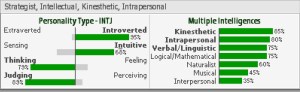
quintessentialldr Myers-Briggs Temperament Indicator Graph

As you can see, I’m an INTJ, so I’ve got an introvert temperament. You’ll also noticed that I fall into the strong/extreme range of introversion. This is important, because this is a temperament characteristic that President Obama and I share. While I don’t know the exact temperament type of President Obama, I suspect that he is also an INTJ, and his unique temperament type lies in where he falls along each of the measurement scales.

One of the paradoxes that I’ve read and seen noted about President Obama time and again is that of the seemingly two different people he is in front of big crowds versus in front of small groups or one-on-one. It really isn’t a paradox, because since I’ve noticed the same paradox in myself – and this is something I’ve had to learn how to change in the second setting – I know why he is more comfortable in front of a large, mostly anonymous crowd instead of in a small and well-known group and individual setting.

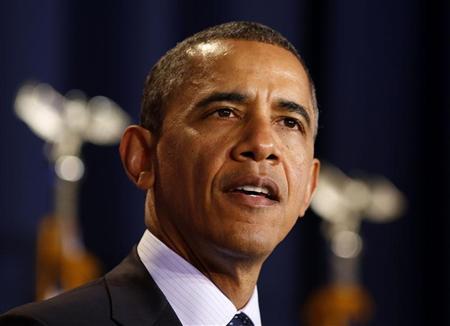
In front of a large, mostly anonymous group, President Obama is doing a presentation about something he believes, is a part of who he is, and he is an expert on. He’s written about, thought about, and is a subject-matter expert, from his perspective, about it. It’s not a conversation, which would require him to process information quickly and U.S. President Barack Obama speaks at the National Defense University in Washingtonverbalize eloquently just as quickly his response – which introverts simply cannot do (look at how poorly he did in the Q & A debates in this year’s election process). Therefore, there’s no pressure on him, and is relaxed and confident, and even almost passionate.

However, in the give-and-take of ad hoc verbal conversation and negotiation in face-to-face meetings with groups and individuals President Obama knows, he is so uncomfortable that he avoids it altogether. I read about what he’s done proposal-wise with the current fiscal cliff negotiations and that he’s incredulous about why it’s not done already. I don’t know the details of the proposal – nor is that important here. However, here’s what I’ve read and seen about what President Obama has done. He’s composed – that’s in writing – a document that says what he wants and sent it to Congress to get passed.

That’s how introverts are most comfortable communicating and he’d be delighted to have Congress put their proposal in writing, send it to him – introverts understand information much more easily when they read it than when they hear it -, give him some solitude to digest it, make written changes, if needed, then send the revised proposal back in writing. He’s probably the best emailing president we’ve ever had. 🙂

And that’s the problem. If we consider the 4:1 ratio of extroverts to introverts, then applied generally, 75% of Congress are extroverts and they are the majority that want a face-to-face sit-down with President Obama to hammer out an agreement (not to mention that, except for President Jimmy Carter, who was probably as strongly introverted as President Obama, this is how Washington has traditionally gotten things done at the end of the day).

And this is why former President Bill Clinton represents the key to the solution. President Clinton is clearly an extrovert on the strong-to-extreme end of the spectrum.  I suspect this “polar opposites” temperament difference between President Obama and him has been why there are constant suggestions that the two men don’t like eachPresident-Bill-Clinton other and their relationship has seemed frosty at best.

The fact is that President Clinton doesn’t understand President Obama, temperamentally, and President Obama, while he understands President Clinton temperamentally, can’t wrap his head around embracing it or doing it.

There’s another possible component that may explain the seeming distance between the presidents. As a strong-to-extreme extrovert, President Clinton most likely (and some of his personal behavior lends credibility to this) has no concept of personal space and physical (not visible, but discernible) boundaries – both of which are important and critical to introverts.

And I guarantee you that President Clinton has unknowingly invaded President Obama’s personal space and ignored his physical boundaries way too many times, and President Obama’s response, which is an introvert response, has been to literally and figuratively back up to create a safe distance – for him – between the two men. That’s the heart of the dynamic you can see going on between these two presidents, who probably don’t really dislike each other, but are in totally different universes temperamentally.

But Joe Scarborough, who is also a strong extrovert, is right in pointing to President Clinton as someone from whom President Obama needs to draw on his playbook to get anything accomplished. This means President Obama, who has been time and again characterized as “leading from behind,” which is what INTJ’s typically do, needs to get out of his comfort zone. The reality is that President Obama doesn’t see a need to do this and doesn’t think it’s going to accomplish anything. He knows that he will be at a disadvantage in the verbalization part of the process.

But, if President Obama doesn’t do these face-to-face small group and individual meetings with members of both parties – understanding that 75% of Congress needs to talk to him and be heard (listening is one of his strengths) and also understanding that it is okay to say “I want to think about what you’ve said and let’s meet again to discuss it” to offset his fear of being put on the spot – then he’s not going to be able to garner the support he needs to meet the country’s goals and objectives legislatively.

And that’s where quintessential leadership comes in. One of the defining characteristics of a quintessential leader is being able to understand what other people need and being able to find ways to accommodate those needs in a way that is win-win for everyone. It doesn’t mean being a chameleon, nor does it mean being insincere. It also doesn’t mean compromising principles, integrity, authenticity, or ethics. But it does mean moving, taking the necessary steps first to meet others halfway, and having the confidence in your understanding, discernment, and experience to ensure that the right and best possible outcome will be achieved.