Archive for the ‘Examples and Analyses of Lack of Leadership and Unquintessential Leadership’ Category

football nfl penn state baltimore ravens unquintessential leadersDisclaimer:

I recognize that the same unquintessential leadership is rampant in almost all American collegiate and professional sports. Many of the same issues I discuss here exist in all the other sports, both at the college level and at the professional level.

However, football has taken center stage in the last several days, so the discussion here will be limited to that sport.

October 1, 2014 update to post:

PBS’s Frontline did a report entitled “League of Denial: The NFL’s Concussion Crisis,” which aired on September 30, 2014, with data that showed that 76 of 79 NFL players who have died had the degenerative neurological disease chronic traumatic encephalopathy (CTE).

That alone should make us as quintessential leaders consider whether supporting a sport that has become so violently aggressive, with conscious intent to harm, is consistent with our values, our ethics, our character, and who and what we are striving to be.

For me, it is totally incompatible with who I am, what I believe, and what, as a quintessential leader, strive to practice 24/7 in my life. Each of you must choose whether supporting this sport is compatible with who you are, what you believe, and what you say you are striving to practice as a quintessential leader.  

On Friday, September 5, 2014, after I read this article about the lawsuit by former NFL (National Football League) players against the NFL for compensation to offset the high cost of dementia care (directly related to multiple concussions and other head injuries suffered playing the game) in The Atlantic, I posted it and my analysis on Facebook:

New update on the legal action by players who’ve suffered traumatic brain injuries while playing for the NFL, and afterwards, have developed cognitive impairment and dementias.

Personally, I hold both parties accountable (although the NFL has, by big-money contracts and the play-no-matter-what-or-you-are-out mentality of the league, contributed to players risking their health and futures).

I don’t like football in its current incarnation (I really stopped watching it, for the most part, as a kid after Tom Landry and Roger Staubach left the game).

As with the increasingly-graphically-violent TV shows and movies that have been emerging over the last couple of decades, I simply cannot stomach the gleeful and massive infliction of pain on my fellow peeps who are playing, nor can I abide the unquenchable (I tend to think of a growling wolf who is feeding on its prey, with teeth bared and blood dripping out of its mouth as an analogy) desire the public has to watch it.

It’s a brutal sport even in K-12 and the coaches, across the board, don’t seem to care much about their players’ safety, health, or well-being. They seem to care only about winning.

Players, from an early age, are tested on their “toughness.” Practices with insane drills in heat in July and August (where dehydration and heat strokes are not uncommon, as are deaths), as well as hit-them-as-hard-you-can scrimmages are the norm.

Football bears a striking resemblance, IMVHO, to Roman gladiators fighting to the death when Rome ruled the known world.

The players have concussions before they ever get to the NFL, from junior high through college, so their NFL experiences just add to existing trauma.

But players also know what they’re signing up for along the way, so they bear responsibility for their choices, just as the NFL bears responsibility for care of those who’ve lined their extensive coffers with billions of dollars.

But you know who else bears responsibility? The public. If there was not a demand for this kind of violence – again, I draw parallels to the gladiators of Rome and the huge crowds of Roman citizens who reveled in watching the gruesome violence, with exhilaration and excitement proportionally upticked to the amount of blood, guts, and gore in the arena – and a genuine, it seems, delight in seeing other humans being harmed, and, in fact, a lot of screaming and shouting for just that outcome, this would be a non-issue.

There are no innocents here. Those who play, those who make a lot of money off of the players, and those who clamor for and watch the players are all culpable.

And, since I’m on my soapbox, that goes for all the violence in sports (boxing comes to mind). If there were not a market for it, money to be made, and a bloodthirsty public to be satisfied, it would not exist.

I’m an athlete so I’m not anti-sports, but when the point is not to play a game and play it cleanly and well, but to hurt, injure, or kill (yep, it’s happened) someone else, that’s not a sport.

And that’s unacceptable to me.

The majority of the responses were disappointing. It was clear that almost nobody read the article. The overall consensus was “We don’t care. The players knew what they were getting into, so they bear sole responsibility for whatever happened as a result. Plus, they make a ton of money, so they should anticipate these medical expenses down the road and save all their money for that. The NFL takes care of them while they’re under contract, so what more do they want? We love our football.”

While my analysis pointed to shared responsibility among the players, the NFL, and the fans, the responses ignored or denied any culpability except that on the part of the players.

One person responding compared professional football players to firefighters, saying that people who choose these professions know the risks involved, choose them anyway, and deserve nothing if something goes wrong.

That prompted me to ask if the emergency services personnel who responded to the 9/11/01 attacks at the Twin Towers (I lived in New York City at the time, about two miles away from the World Trade Center, and I watched the towers fall in person, so I wasn’t asking this as someone who wasn’t there and watched it on TV) and are now experiencing very serious – and, in some cases, life-threatening – illnesses directly related to their actions on that day in September, since they knew the risks involved when they choose their professions, should not have their medical costs now covered by New York City.

Nobody responded, because, of course the 9/11 emergency services personnel should have their medical costs covered for as long as they live, and so should these players who did fulfill their contractual obligation to the NFL (which did not take care of them while they were under contract because the NFL allowed the unchecked ever-increasing brutality and violence of the game and rushed players back onto the field after injuries, dumping them as soon as their bodies and minds were too irreparably broken to make the league the billions of dollars it pulls in each year).

Since then, two more significant stories involving the sport of football – one collegiate and one professional – are dominating the news.
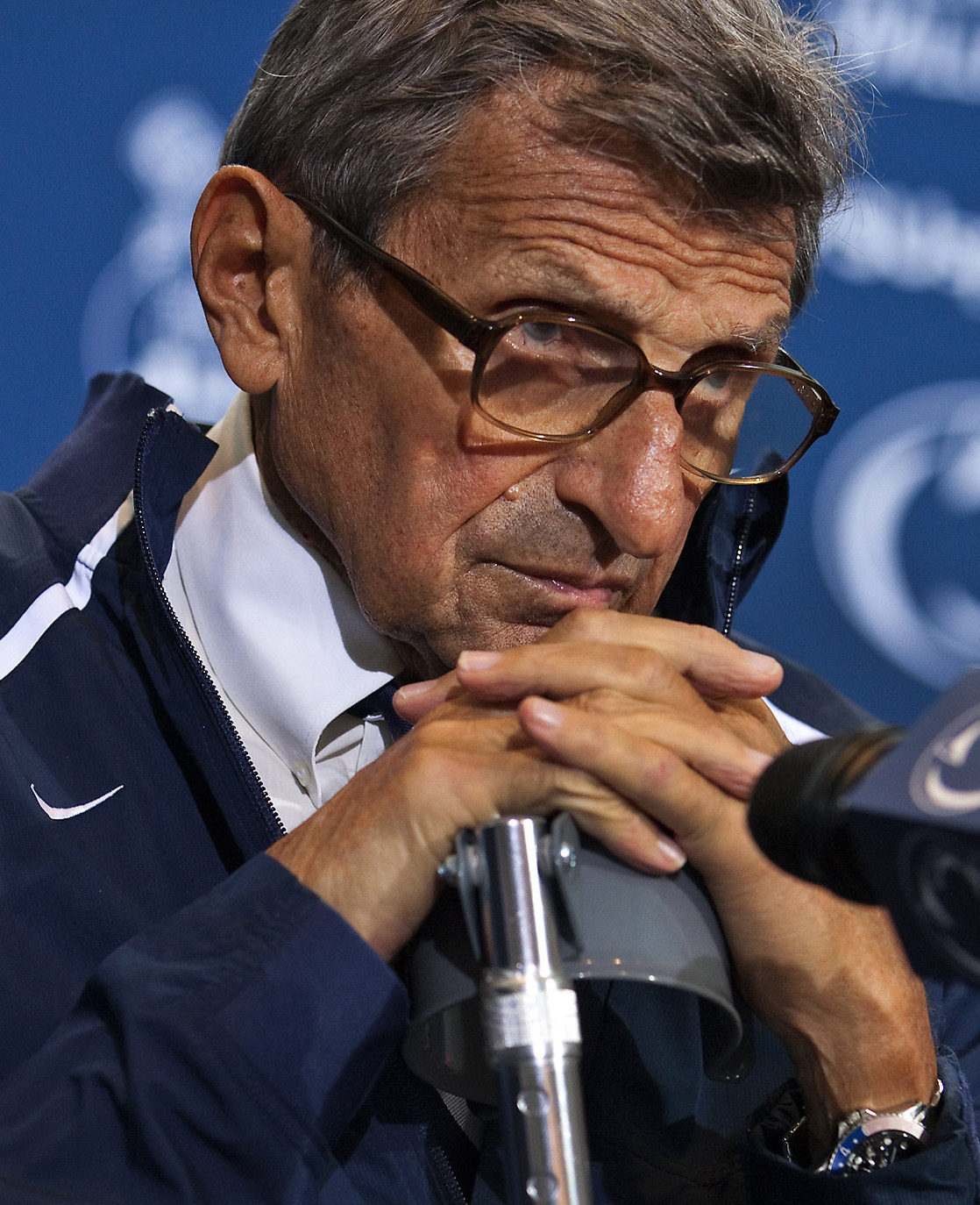
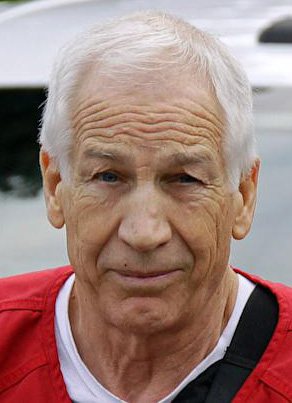
joe paterno penn state unquintessential leaderjerry sandusky penn state unquintessential leaderThe NCAA (National Collegiate Athletic Association) announced yesterday (Monday, September 8, 2014) that it was lifting the sanctions imposed against Penn State University in 2012 when the unquintessential leadership at every level in the university was revealed as well as its complete absence of integrity, morality, and principles in allowing Joe Paterno and Jerry Sandusky to, in the first case, wink at, and in the second case, be guilty of sexually abusing children over the course of decades.

As I discussed in “Absolute Power Corrupts Absolutely” and in “The Tell-Tale Trait of Unquintessential Leadership: Allowing, Tolerating, and Committing Abuse,” the responsibility for a lack of quintessential leadership lies with everyone in a leadership responsibility at Penn State and other universities and colleges who turn a blind eye to the flagrant abandonment of morals, ethics, and integrity.

penn state joe paterno jerry sandusky administration ncaa unquintessential leadersIn 2012, the NCAA imposed sanctions on Penn State that I didn’t believe, at the time, went far enough (I would have permanently dismantled the whole athletic program and immediately fired everyone in positions of leadership at the university), exposing the unquintessential leadership that also existed on the board of the NCAA.

With yesterday’s amendment to the 2012 sanctions, reducing the time and severity of the original restrictions, the NCAA’s lack of quintessential leadership came to the surface again.

nfl unquintessential leadershipThe other example of unquintessential leadership that came back into the spotlight again yesterday happened in the NFL. This unquintessential leadership has existed all along (and it’s not just the unquintessential leadership of Roger Goodell, who has been notoriously inept at providing quintessential leadership as the commissioner of the NFL).

In late July of this year, NFL Commissioner Roger Goodell suspended Baltimore Ravens running back Ray Rice for two games after Rice was indicted on charges following a physical and violent assault in February of this year that rendered his fiancee Janay Palmer unconscious in an elevator in Atlantic City (Rice agreed to a plea bargain in ray rice baltimore ravens unquintessential leadershipMay on the indictment that consisted of community service and counseling).

Upon the announcement of such a weak punishment by Goodell and the NFL, in a sport that is increasingly seeing more violence (and murder, as in the case of former New England Patriots tight end Aaron Hernandez) among its players off the field, a backlash calling for stiffer punishments – mainly from the press – ensued.

Goodell continued to defend the punishment for Rice for a few weeks. Then, in a supposedly-get-tough-position that did nothing but further highlight his unquintessential leadership, Goodell, on August 28, 2014, increased the punishment for violent behavior off-field to a six-game suspension.
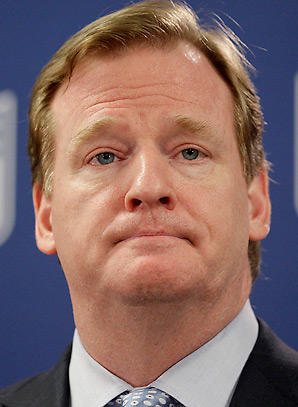
roger goodell NFL commissioner unquintessential leader(It’s important to remember that we’re talking about felonious assault charges, which in the legal system, are punishable by up to a maximum of 25 years in prison.)

Then yesterday, supposedly after seeing the actual video of Rice assaulting Palmer for the first time, the Baltimore Ravens fired Ray Rice and Roger Goodell suspended him from playing in the NFL indefinitely.

The unquintessential leadership is all over this story. Until he had no other choice, Roger Goodell was more than willing – and in both this case and the case of Penn State, the one thing that matters above all else is money (I Timothy 6:10 comes immediately to mind) – to minimize, if not outright ignore, egregious wrong-doing, give a tap on the wrist to the offender, and make sure the coffers stayed full.

But, as quintessential leaders, we must all step back to the bigger picture and ask whether the parties I’ve given an outright fail to in terms of quintessential leadership are the only unquintessential leaders involved.

The answer is “No.” Every single person who makes the choice to support – by watching the games, in person or on TV, by buying team shirts, mugs, flags, etc., by buying the products advertised during the games – these teams (and, both in the NFL and the NCAA, these are just the ones who’ve been caught) is practicing unquintessential leadership.

When we – you and I, fellow quintessential leaders – anywhere in our lives compromise the core principles of quintessential leadership, we are practicing unquintessential leadership.

The overarching questions then emerge. What else are we willing to compromise on in our lives? And what example are we setting for all the teams in our lives?

Because when we practice unquintessential leadership anywhere in our lives, we are giving ourselves permission to compromise on everything and we’re telling all the teams in our lives that it is okay for them to practice unquintessential leadership as well.

Therefore, it should not surprise us when our teams do just that, because by our examples we’ve already said that kind of conduct and behavior is okay.

And we practice hypocrisy if we follow the “do as I say, not as I do” line of reasoning. All the words in the world will never be stronger than what actions we model by our choices and by our examples.

How are we doing?

The society we live in places a high premium on fantasy, on magic, on fiction, on speculation, on dreaming. It seems the human race is drawn like a magnet to the improbable, to the outrageous, to the impossible.

We, it appears, have an irresistible urge to escape as much and as often as possible from reality.

Want to write a book that will get rave reviews and lots of sales? Write science fiction, fairy tales, or about the “dark side” (witches, vampires, werewolves, etc.). Almost every book publisher rates these topic areas as the best revenue streams for authors.

fantasy mindset unquintessential leadershipWant to have a hit movie or series? Set it in a fictional etherworld (on earth or in space), include magic, fantasy, and a good bit of blood, guts and gore and you’ll be well on your way.

And here’s the thing about fantasy that makes it so appealing. It doesn’t require focused attention, investment in time and effort, thoughtful consideration, and responsive application. Instead, it’s a superficial thing that is a blip on the screen that doesn’t change our lives and allows us to keep on going as we are without missing a blink.

I saw a quote today from an author of very short science fiction books and fairy tales that underscored the difference: ” I found the book to be too description-heavy and too wordy for my taste. Normally I would skim books that are so wordy…” and I thought to myself, “Seriously?” and then I realized this person was speaking a truth that seems to apply to most people.

Reality, therefore, has a very low premium, it seems, among the human race. Things that are factual, knowledgeable, useful, practical, and contain wisdom and truth are disdained and largely ignored.

Reality has depth that requires us to think, to process, to comprehend, to understand, and then to apply. Reality also brings us face-to-face with who we are on the inside and how that needs to change reality quintessential leadership mindsetand improve. It deals with the most important things about life and living, and it can sometimes be a hard pill to swallow.

And we humans, it seems, want to avoid all of that at all costs. It requires investment, time, effort, and then a response. It can be hard work. It can be painful. It can be soul-anguishing.

The mindset that people in leadership positions have determines whether they are quintessential leaders or not. If the mindset is fantasy-oriented, then the person is an unquintessential leader. If the mindset is reality-oriented, the person is a quintessential leader.

Why?

Quintessential leaders are not constantly looking for escape, for mindless jaunts into imaginary worlds, with imaginary characters, doing imaginary things.

In fact, quintessential leaders have little patience for fantasy, for improbability, for outrageousness, and for speculation because they know this won’t result in solutions, change, and progress.

In other words, it’s a colossal waste of time in a life that doesn’t have, in the big scheme of things, much of that particular commodity.

Quintessential leaders face life head on and they stay rooted in the perspective and mission of change and progress (change without progress as a complementary perspective and mission is useless and, more often than not, ends with things being even worse than they were before; change for change’s sake is never enough).

Their mindsets, therefore, are reality-oriented in every area of their lives. What’s right? What’s wrong? What’s good? What’s bad? What needs to be done to improve what’s right? What needs to be changed to eliminate what’s wrong? How do we make what’s good better? How do we get rid of what’s bad?

Quintessential leaders are always thinking in terms of the previous questions, no matter what they’re doing, where they are, or who they are with. They are much more observant than those who have fantasy mindsets, and seldom miss anything in their observations.

Even – and most of the time we won’t – if they never say a word, quintessential leaders see, process (consider, evaluate, determine relevance, truth, rightness, goodness, usefulness, wisdom), decide to keep or reject, and if we keep, then apply just about everything that’s important in terms of people and life that crosses our paths.

Fantasy-minded people in leadership positions tend to have almost-nonexistent observation skills, tend to live in the moment only, and have poor and slippery memories. They are, ultimately, then completely untrustworthy.

So, the question that each of us, fellow quintessential leaders must ask ourselves is, “What is my mindset?” 

Am I spending most of my time and energy and effort on things that are fantasy-based, not real, not true, improbable, speculative, outrageous? If the answer is “Yes,” then we have developed a fantasy mindset and are wasting not only our time, but the time of all the teams we lead in our lives. We are not living up to quintessential leadership and need to change. Starting today.

If the answer turns out be that we have a reality mindset, we’re not off the hook. The questions we should immediately ask are how and what can we do to change the degree, the improve the content, and to make progress in developing this mindset further. That also needs to happen today.

How are we doing?


Update: 12/16/14:

42 deaths from car accidents in General Motors models have now been linked to the faulty ignition switch problem. 

Update 11/11/14:

unquintessential leadership gm delphi ignition switch deathEmails uncovered by the Wall Street Journal show that General Motors ordered a half million redesigned ignition switches from Delphi two months before the auto manufacturer issued a recall on some – but not all – vehicles with the defective ignition switch installed.

As of October 30, 2014, the number of deaths acknowledged by GM to be directly linked to the faulty ignition switch has risen from 13 to 30.

However, General Motors continues to maintain that the people in leadership positions – the executive team – in the company had no idea about the ignition switch problem, the order to Delphi for replacement ignition switches that cost GM approximately $3 million, or the need for a general recall.

yellow-dividing-line

General Motors’ 2nd quarter profits, posted yesterday (July 24, 2014), dropped 85% from their 2nd quarter 2013 profits. Frankly, it’s incredulous to me, given the financial hit the U.S. automaker has taken in massive recalls due to years of knowingly using substandard and faulty equipment, which is directly tied to 13 known fatalities, that General Motors (GM) is making any profit at all. 

To those GM customers who’ve been impacted by the lack of quintessential leadership that has been in place at the auto manufacturer for decades – and, in my opinion, still could be with the current GM CEO Mary Barra, who began her career with GM since 1980 with a degree in electrical engineering, and in leadership positions within the company since earning her MBA in 1988 – that GM has any profits at all is likely a bitter pill to swallow.

faulty ignition switch unquintessential leader general motorsI will not recount the entire unquintessential leadership history of GM here. That would be a book to write and with writing a new book already currently in the works, I don’t have time to commit to another. However, I will highlight several areas where unquintessential leadership existed/exists and will include links that provide more detailed information about them.

The paramount unquintessential leadership trait of GM is they routinely put corporate profits above the safety of their customers

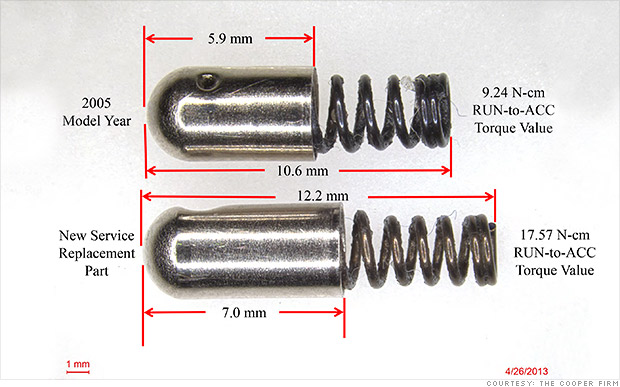
Starting in 2003, GM engineers redesigned and ordered modified ignition switches – with a torque setting that was below GM’s minimum requirements – from its supplier, Delphi. The cost of an ignition switch? 57 cents.

From 2004 to 2013, thirteen fatalities occurred involving GM cars that had the modified ignition switches installed. All but one of the accidents were single-vehicle crashes where the drivers lost control and crashed head-on into something, in most cases a tree. In none of the crashes did the airbags deploy.

Additionally, beginning around the same time period as the first accident, GM car owners began reporting that their midsize and compact-size vehicles were randomly and intermittently shutting off while they were driving them. 

In the 2004 crash involving a Saturn Ion that killed Gene Erickson, GM told federal investigators, who couldn’t understand why the car suddenly swerved into a tree and the airbags didn’t deploy, that the company didn’t have any answers as to why either.

However, just a month before GM talked with federal regulators about the accident, a GM engineer had concluded that the Ion had probably lost power, which would have prevented the airbags from deploying.

Investigations into fatal car accidents where mechanical failure is the most plausible explanation involve the National Highway Traffic Safety Administration contacting the automobile manufacturer to see if (a) they have any similar reports; (b) if their engineers have determined a cause, using the car’s “black box” data; and, (3) whether it is an isolated problem or one that could require a general recall.

GM showed its unquintessential leadership trait of self-centeredness when decided to lie and obfuscate in the Erickson case because of money. Fines for an inexpensive part not meeting the company’s minimum standard, a possible lawsuit by Mr. Erickson’s family, and a large recall would have cut into GM’s profits. The shareholders wouldn’t be happy. People might lose their jobs. 

Therefore, GM’s response to federal inquiries into the subsequent 12 fatalities involving GM cars where mechanical failure was suspected was the same: silence.

Two other unquintessential leadership traits at GM are deception and dishonesty.

faulty ignition switch unquintessential leader gm general motorsIn 2009, despite years of knowledge about the faulty ignition switch and substantial evidence of conscious coverups by GM employees at every level in the company, GM engineers finally began to internally and quietly increase the torque on the faulty ignition switches.  

(And, despite what GM executives have testified to under oath, these engineers had the consent and knowledge of every person in a leadership position in every department – including the legal department, whose head denied any knowledge of the problem until this year – at GM.

To suggest otherwise is dishonest, which is why it remains to be seen if Ms. Barra will become a quintessential leader or will continue in the unquintessential leadership tradition that has, so far, defined GM’s leadership.)

However, when GM’s engineers made the change to the ignition switch, instead of creating a new part number for the ignition switch with the higher torque, which is standard operating procedure when any change is associated with a part or item to distinguish it from similar parts and items, they used the same part number assigned to the faulty ignition switch. This was clearly an act of deception and dishonesty.

(A simple example of distinguishing similar items by part number is how the part numbers of different wattage light bulbs might read: 40-watt bulb (40WBLB); 60-watt bulb (60WBLB); 100-watt bulb (100WBLB); and, 50-100-150-watt bulb (50100150WBLB).) 

The 2.6 billion recall of GM cars now underway is directly related to this deception and dishonesty. Because the two ignition switches didn’t have unique part numbers, there is no way of telling whether GM car owners have the defective switch or the corrected switch. Therefore, GM is having to replace all ignition switches in all GM cars with that part number.

Ms. Barra has a lot left to prove that she is not the latest GM CEO to be an unquintessential leader. When a CEO, who has insurmountable evidence to the contrary, states about a month ago that “I don’t really think there was a cover-up”, followed  by a lot of justifications and excuses, it is clear that Ms. Barra has absorbed a lot of the GM unquintessential leadership in the 34 years she has been employed there and, even if it’s possible, it will take a lot of time and effort to change what to her is a normal definition of leadership.

As always, it’s easy to look at a big corporation like General Motors and objectively see the unquintessential leadership within that company and shake our heads and perhaps even pat ourselves on the backs because “we’re not like that!”

But are we? Maybe not in all areas. Maybe not on the same scale in terms of causing peoples deaths and tanking corporate profits.

But here’s what we need to remember. Even one instance of unquintessential leadership that we don’t learn from and change immediately or just one unquintessential leadership trait that we are unable or unwilling to change, no matter how few people it affects, no matter the scale of the effects, puts us in the same boat as the unquintessential leadership at GM.

There are no degrees of right or wrong, good or bad, quintessential leadership or unquintessential leadership. It either is or isn’t. We either are or aren’t. 

Therefore, my fellow quintessential leaders, we should take a close and thoughful look at why the people in leadership positions at GM are unquintessential leaders and examine ourselves in the light of the unquintessential leadership traits we’ve outlined today.

How are we doing?

Too often people, whether they are in leadership positions or not, refuse to be accountable and take responsibility for their lives, their actions, and their words. We live in a society that encourages and enables blaming everyone and everything else for issues, problems, and mistakes in our lives. This behavior (trait) is called the blame game. Its presence can be seen pervasively everywhere – globally, organizationally, and personally – we look around us.

When people in leadership positions (and this is increasingly the rule rather than the exception) resort to the blame game, the results can be devastating, destructive, and even fatal (I am working on an upcoming post about the past and present unquintessential leadership at General Motors that includes the blame game as one component). malaysian airlines MH17 attack Ukraine unquintessential leadership

The blame game involves a complex web of lies those who employ it tell themselves. While we won’t discuss all the lies involved, we will discuss the two that seem to weigh the most heavily in the blame game.

The first lie is that we are passive victims of our circumstances and we have no power over changing them. As we discussed in “Quintessential Leadership Practically Applied: If Things Aren’t Working, Then Change Them,” none of us are passive observers and participants in our lives.

Each of us has the ability and the responsibility to take action when issues, problems, and mistakes occur. That is the accountability trait of building trust and being trustworthy.

The second lie is that our actions (or words) are the result of others’ actions (words (i.e., “if they didn’t do/say that, I wouldn’t be doing/saying this”). This is the ultimate cop-out. Our actions and words should never be based on what others do and say or don’t do and say. They should instead be based on our core: character, integrity, and principles that are absolute, moral, and right, no matter what.

To see a current example of the unquintessential leader trait of the blame game, we need to look no further than Russian President Vladimir Putin’s response to the surface-to-air missile attack yesterday (July 17, 2014) on Malaysian Airlines Flight MH17 over Ukraine that resulted in the death of all 295 passengers and crew members on the plane:

Russian President Vladimir Putin“Undoubtedly, the government in whose air space this happened bears responsibility for this terrible tragedy” and “this tragedy would not have happened if there were peace in this land, or in any case, if [Kiev] had not renewed hostilities in south-eastern Ukraine.”

Essentially, President Putin is blaming the Ukrainians who want to maintain their independence from Russian for the attack and deaths of MH17’s passengers and crew.

But the reason there is no peace in Ukraine is because of Russia’s invasion of Ukraine earlier this year, aided by pro-Russian Ukrainians, forcing independent Ukrainians to protect their land and their independence.

In other words, there would be peace (as relative as the term “peace” is on a planet that is strongly disposed to war at the slightest provocation) in Ukraine if the Russians had not broken the peace.

Additionally, data and research into the missile attack has revealed that the missile was provided by the Russians to the pro-Russian Ukranians who launched the attack. While the attack was happening, the pro-Russian Ukranians were in contact with the Russian military (there have been several other downed flights in that air space this past week, but none of the other planes were civilian) and had their approval.

So instead of President Putin manning up (the blame game is a coward’s game) and taking responsibility for the attack (in terms of war, it was a mistake, because they had no way of knowing whether they were attacking a military plane or a civilian plane), he shows his unquintessential leadership by putting all the blame on the Ukrainians who were forced into fighting for their independence by President Putin’s and the Russian military’s action against Ukraine earliest this year.

So, the question for us, fellow quintessential leaders, is are we consistently accountable and take responsibility for the issues, problems, and mistakes in our lives (and that sometimes we alone cause and make), or do we, if not all the time, from time to time, exhibit the unquintessential leader trait of playing the blame game?

How are we doing?

Unquintessential leadership is everywhere. Very few people in leadership positions even know, much less understand what quintessential leadership is. 

When we trace back and see how and when these unquintessential leaders were placed in leadership positions, we often find that the people who selected them were also unquintessential leaders and taught and mirrored the unquintessential leadership traits these people now exhibit. We also find that in most cases politics, personality, and a very limited criteria for selection – often superficial or technical – was applied.

The results of unquintessential leadership are reflected in the teams they are supposed to be leading. These results are devastating: to the teams and to the organizations these teams exist in. And yet the unquintessential leaders are oblivious to their responsibility for the carnage they – to a person, among unquintessential leaders, if there is a problem, it’s always the fault of others (“they turned on me,” “they were unmanageable,” “they were not team players,” etc.) leave in their wakes.

Unquintessential leadership, like quintessential leadership, has cause-and-effect results.

exaggerated sense of self-importance narcissism leadershipOne thing that is common and an overarching characteristic of unquintessential leaders is their own exaggerated sense of self-importance. This manifests itself in both subtle ways and obvious ways, but it’s always at the core of what unquintessential leaders do. Or don’t do.

An exaggerated sense of one’s own important is one of the most dangerous character traits a human being can have. It produces pride, arrogance, disdain, control, and the denigration of everyone and everything around it. It produces disaster and is one of the biggest enemies to what successful team-building looks like (cohesion, productivity, satisfaction, progress, growth, and profitability).

Let’s look at some of the specific characteristics that unquintessential leaders exhibit because of their exaggerated senses of their own importance and what the effects of those are, not only on their teams, but on their organizations – and beyond (if an organization is malfunctioning from within, then it is completely impotent and ineffective outside itself).

Unquintessential leaders are micromanagers. Not even the smallest detail can be attended to or decision can be made without their approval. The irony is that unquintessential leaders excel at minutiae, but they are either incapable or unwilling – or both – of handling the big picture and making big and/or tough decisions.

The effect on their teams is that their teams disengage completely and quit, either symbolically or literally. Oh the people may show up, but they are not there. Why bother? Human beings were given reason, creativity, initiative, and a need to produce, to grow, to reach their greatest potentials. When all of that is stifled or eradicated by micromanagement – which is really a lack of trust – a shell exists, but everything else dies. 

Team members who don’t yet have other options to go to will stay, but they are not there. Team members who have other options leave as soon as they’re able to pursue the new options.

Organizations with high attrition rates always have serious micromanagement problems, which, in turn, means they have a lot of unquintessential leaders in place.

quintessential leaders have a compassUnquintessential leaders try to control, through intimidation, threats, manipulation, coercion, and, sometimes, brute force, their teams. They insert themselves into every aspect of their team members’ lives, both inside and outside the organizational context, and try to wield power over each and every outcome.

The primary effect of this on their teams is resistance. No human being has absolute control over another human being. When this kind of control is exerted among human beings, resistance is the natural result. Interestingly, the net effect of this is the same as that of micromanagement: the team quits, internally and/or externally.

What defies logic for me is that often unquintessential leaders recognize that their teams have quit. When they do, unquintessential leaders then micromanage and try to control even more. It’s absolutely absurd. But I’ve seen it happen over and over.

Unquintessential leaders are inconsistent and unreliable. There is absolutely nothing about them that their teams can count on except that they will be inconsistent and unreliable.

The next effect of this is that their teams have no trust in the unquintessential leaders and the unquintessential leaders have proven themselves untrustworthy.

What eventually happens is that their teams end up bypassing them completely and going to others outside the team construct who’ve proven themselves to be quintessential leaders. Unquintessential leaders get angry about this, but their exaggerated senses of self-importance blind them to the fact that their actions have necessitated that their teams go elsewhere for what they need and require.

Unquintessential leaders are never available for their teams when they need them. They’re either too busy, physically absent, or simply unwilling to put the needs of their teams above their own needs and desires. You can never find them when you really need them.

The effect on their teams is disillusionment, anger, and resentment. The disillusionment, anger, and resentment starts building underneath the surface of their teams, but as this particular characteristic is repeated, that anger and resentment is palpable and evident throughout the team. It becomes something you can discern on a very tangible level in words, in body language, in attitudes. It’s an incredibly destructive force.

These are some of the more obvious results of unquintessential leadership (Qualities of Quintessential Leaders offers a stark and refreshing contrast of some of the results of quintessential leadership).

quintessential leaders changeToday’s question for you and me is simple. Am I an unquintessential leader or am I a quintessential leader?

As always, this is a look-in-the-mirror question for you and for me that requires close examination, brutal honesty, and if you and I are not quintessential leaders, immediate steps to change.

I am brave enough to look in that mirror and do the work of looking and changing. Will you join me?


As is usual when I’m writing about a person who’s involved in politics, I will continue to say first that I eschew and hate politics of any kind – governmental, organizational, personal – because politics, by its very nature and at its very core, is both corrupt and corrupting. Politics is self-serving, dishonest, manipulative, and driven by greed and a desire for power. This is universally true. There are no exceptions.

Politics and quintessential leadership are, therefore, incompatible.

This post is not about politics. Any feedback that tries to bring that subject into the discussion will be ignored with the upfront advice that the trolls and hijackers go somewhere else to spew and vent your venom.

This post is instead about a person in a leadership position who is at the crossroads of determining whether he will be a quintessential leader or not. It’s a place that all of us in leadership positions come to at some point, although, fortunately, most of us don’t have to go through the process on a national stage under the intense fishbowl scrutiny of 370,000,000 other people. (more…)