 Disclaimer:
I recognize that the same unquintessential leadership is rampant in almost all American collegiate and professional sports. Many of the same issues I discuss here exist in all the other sports, both at the college level and at the professional level.
However, football has taken center stage in the last several days, so the discussion here will be limited to that sport.
October 1, 2014 update to post:
PBS’s Frontline did a report entitled “League of Denial: The NFL’s Concussion Crisis,” which aired on September 30, 2014, with data that showed that 76 of 79 NFL players who have died had the degenerative neurological disease chronic traumatic encephalopathy (CTE).
That alone should make us as quintessential leaders consider whether supporting a sport that has become so violently aggressive, with conscious intent to harm, is consistent with our values, our ethics, our character, and who and what we are striving to be.
For me, it is totally incompatible with who I am, what I believe, and what, as a quintessential leader, strive to practice 24/7 in my life. Each of you must choose whether supporting this sport is compatible with who you are, what you believe, and what you say you are striving to practice as a quintessential leader.
On Friday, September 5, 2014, after I read this article about the lawsuit by former NFL (National Football League) players against the NFL for compensation to offset the high cost of dementia care (directly related to multiple concussions and other head injuries suffered playing the game) in The Atlantic, I posted it and my analysis on Facebook:
“New update on the legal action by players who’ve suffered traumatic brain injuries while playing for the NFL, and afterwards, have developed cognitive impairment and dementias.
Personally, I hold both parties accountable (although the NFL has, by big-money contracts and the play-no-matter-what-or-you-are-out mentality of the league, contributed to players risking their health and futures).
I don’t like football in its current incarnation (I really stopped watching it, for the most part, as a kid after Tom Landry and Roger Staubach left the game).
As with the increasingly-graphically-violent TV shows and movies that have been emerging over the last couple of decades, I simply cannot stomach the gleeful and massive infliction of pain on my fellow peeps who are playing, nor can I abide the unquenchable (I tend to think of a growling wolf who is feeding on its prey, with teeth bared and blood dripping out of its mouth as an analogy) desire the public has to watch it.
It’s a brutal sport even in K-12 and the coaches, across the board, don’t seem to care much about their players’ safety, health, or well-being. They seem to care only about winning.
Players, from an early age, are tested on their “toughness.” Practices with insane drills in heat in July and August (where dehydration and heat strokes are not uncommon, as are deaths), as well as hit-them-as-hard-you-can scrimmages are the norm.
Football bears a striking resemblance, IMVHO, to Roman gladiators fighting to the death when Rome ruled the known world.
The players have concussions before they ever get to the NFL, from junior high through college, so their NFL experiences just add to existing trauma.
But players also know what they’re signing up for along the way, so they bear responsibility for their choices, just as the NFL bears responsibility for care of those who’ve lined their extensive coffers with billions of dollars.
But you know who else bears responsibility? The public. If there was not a demand for this kind of violence – again, I draw parallels to the gladiators of Rome and the huge crowds of Roman citizens who reveled in watching the gruesome violence, with exhilaration and excitement proportionally upticked to the amount of blood, guts, and gore in the arena – and a genuine, it seems, delight in seeing other humans being harmed, and, in fact, a lot of screaming and shouting for just that outcome, this would be a non-issue.
There are no innocents here. Those who play, those who make a lot of money off of the players, and those who clamor for and watch the players are all culpable.
And, since I’m on my soapbox, that goes for all the violence in sports (boxing comes to mind). If there were not a market for it, money to be made, and a bloodthirsty public to be satisfied, it would not exist.
I’m an athlete so I’m not anti-sports, but when the point is not to play a game and play it cleanly and well, but to hurt, injure, or kill (yep, it’s happened) someone else, that’s not a sport.
And that’s unacceptable to me.“
The majority of the responses were disappointing. It was clear that almost nobody read the article. The overall consensus was “We don’t care. The players knew what they were getting into, so they bear sole responsibility for whatever happened as a result. Plus, they make a ton of money, so they should anticipate these medical expenses down the road and save all their money for that. The NFL takes care of them while they’re under contract, so what more do they want? We love our football.”
While my analysis pointed to shared responsibility among the players, the NFL, and the fans, the responses ignored or denied any culpability except that on the part of the players.
One person responding compared professional football players to firefighters, saying that people who choose these professions know the risks involved, choose them anyway, and deserve nothing if something goes wrong.
That prompted me to ask if the emergency services personnel who responded to the 9/11/01 attacks at the Twin Towers (I lived in New York City at the time, about two miles away from the World Trade Center, and I watched the towers fall in person, so I wasn’t asking this as someone who wasn’t there and watched it on TV) and are now experiencing very serious – and, in some cases, life-threatening – illnesses directly related to their actions on that day in September, since they knew the risks involved when they choose their professions, should not have their medical costs now covered by New York City.
Nobody responded, because, of course the 9/11 emergency services personnel should have their medical costs covered for as long as they live, and so should these players who did fulfill their contractual obligation to the NFL (which did not take care of them while they were under contract because the NFL allowed the unchecked ever-increasing brutality and violence of the game and rushed players back onto the field after injuries, dumping them as soon as their bodies and minds were too irreparably broken to make the league the billions of dollars it pulls in each year).
Since then, two more significant stories involving the sport of football – one collegiate and one professional – are dominating the news.

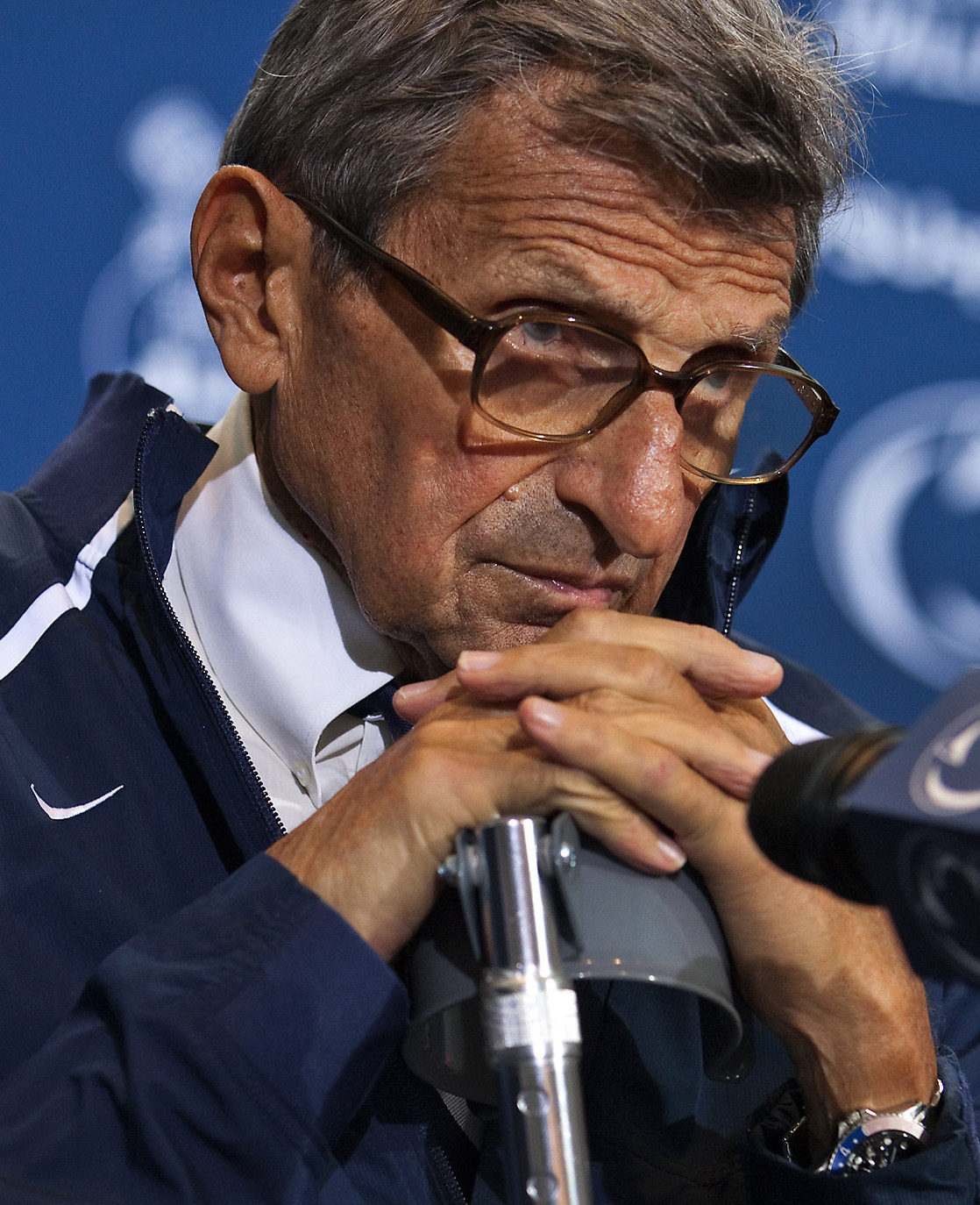
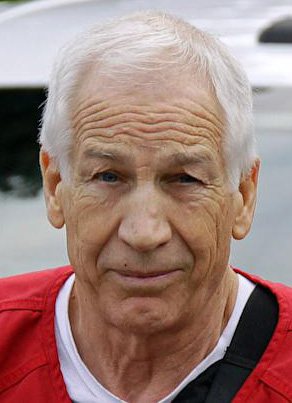
 The NCAA (National Collegiate Athletic Association) announced yesterday (Monday, September 8, 2014) that it was lifting the sanctions imposed against Penn State University in 2012 when the unquintessential leadership at every level in the university was revealed as well as its complete absence of integrity, morality, and principles in allowing Joe Paterno and Jerry Sandusky to, in the first case, wink at, and in the second case, be guilty of sexually abusing children over the course of decades.
As I discussed in “Absolute Power Corrupts Absolutely” and in “The Tell-Tale Trait of Unquintessential Leadership: Allowing, Tolerating, and Committing Abuse,” the responsibility for a lack of quintessential leadership lies with everyone in a leadership responsibility at Penn State and other universities and colleges who turn a blind eye to the flagrant abandonment of morals, ethics, and integrity.
 In 2012, the NCAA imposed sanctions on Penn State that I didn’t believe, at the time, went far enough (I would have permanently dismantled the whole athletic program and immediately fired everyone in positions of leadership at the university), exposing the unquintessential leadership that also existed on the board of the NCAA.
With yesterday’s amendment to the 2012 sanctions, reducing the time and severity of the original restrictions, the NCAA’s lack of quintessential leadership came to the surface again.
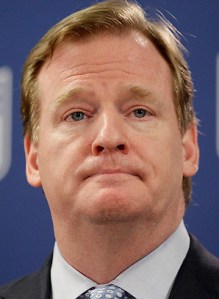
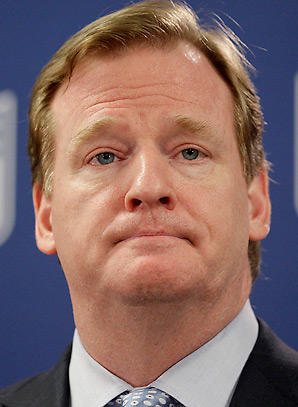
 The other example of unquintessential leadership that came back into the spotlight again yesterday happened in the NFL. This unquintessential leadership has existed all along (and it’s not just the unquintessential leadership of Roger Goodell, who has been notoriously inept at providing quintessential leadership as the commissioner of the NFL).
In late July of this year, NFL Commissioner Roger Goodell suspended Baltimore Ravens running back Ray Rice for two games after Rice was indicted on charges following a physical and violent assault in February of this year that rendered his fiancee Janay Palmer unconscious in an elevator in Atlantic City (Rice agreed to a plea bargain in  May on the indictment that consisted of community service and counseling).
Upon the announcement of such a weak punishment by Goodell and the NFL, in a sport that is increasingly seeing more violence (and murder, as in the case of former New England Patriots tight end Aaron Hernandez) among its players off the field, a backlash calling for stiffer punishments – mainly from the press – ensued.
Goodell continued to defend the punishment for Rice for a few weeks. Then, in a supposedly-get-tough-position that did nothing but further highlight his unquintessential leadership, Goodell, on August 28, 2014, increased the punishment for violent behavior off-field to a six-game suspension.
 (It’s important to remember that we’re talking about felonious assault charges, which in the legal system, are punishable by up to a maximum of 25 years in prison.)
Then yesterday, supposedly after seeing the actual video of Rice assaulting Palmer for the first time, the Baltimore Ravens fired Ray Rice and Roger Goodell suspended him from playing in the NFL indefinitely.
The unquintessential leadership is all over this story. Until he had no other choice, Roger Goodell was more than willing – and in both this case and the case of Penn State, the one thing that matters above all else is money (I Timothy 6:10 comes immediately to mind) – to minimize, if not outright ignore, egregious wrong-doing, give a tap on the wrist to the offender, and make sure the coffers stayed full.
But, as quintessential leaders, we must all step back to the bigger picture and ask whether the parties I’ve given an outright fail to in terms of quintessential leadership are the only unquintessential leaders involved.
The answer is “No.” Every single person who makes the choice to support – by watching the games, in person or on TV, by buying team shirts, mugs, flags, etc., by buying the products advertised during the games – these teams (and, both in the NFL and the NCAA, these are just the ones who’ve been caught) is practicing unquintessential leadership.
When we – you and I, fellow quintessential leaders – anywhere in our lives compromise the core principles of quintessential leadership, we are practicing unquintessential leadership.
The overarching questions then emerge. What else are we willing to compromise on in our lives? And what example are we setting for all the teams in our lives?
Because when we practice unquintessential leadership anywhere in our lives, we are giving ourselves permission to compromise on everything and we’re telling all the teams in our lives that it is okay for them to practice unquintessential leadership as well.
Therefore, it should not surprise us when our teams do just that, because by our examples we’ve already said that kind of conduct and behavior is okay.
And we practice hypocrisy if we follow the “do as I say, not as I do” line of reasoning. All the words in the world will never be stronger than what actions we model by our choices and by our examples.
How are we doing?
 I recently heard a discussion that contrasted the way God and Jesus Christ interact with humanity now (the terms “hands off” and “choice” – or free will – were used interchangeably) and the way the Bible says they will interact with humanity in the future (the term “hands on” was used).
 Force can get the results a leader wants, but while force may win the battle, it loses the war.
  When choices are presented, on the other hand, they require active participation on the part of the people they are presented to. Choices carry responsibility and accountability, and they require logic, reasoning, critical thinking, and action.




 The Quintessential Leader