Posts Tagged ‘integrity’

football nfl penn state baltimore ravens unquintessential leadersDisclaimer:

I recognize that the same unquintessential leadership is rampant in almost all American collegiate and professional sports. Many of the same issues I discuss here exist in all the other sports, both at the college level and at the professional level.

However, football has taken center stage in the last several days, so the discussion here will be limited to that sport.

October 1, 2014 update to post:

PBS’s Frontline did a report entitled “League of Denial: The NFL’s Concussion Crisis,” which aired on September 30, 2014, with data that showed that 76 of 79 NFL players who have died had the degenerative neurological disease chronic traumatic encephalopathy (CTE).

That alone should make us as quintessential leaders consider whether supporting a sport that has become so violently aggressive, with conscious intent to harm, is consistent with our values, our ethics, our character, and who and what we are striving to be.

For me, it is totally incompatible with who I am, what I believe, and what, as a quintessential leader, strive to practice 24/7 in my life. Each of you must choose whether supporting this sport is compatible with who you are, what you believe, and what you say you are striving to practice as a quintessential leader.  

On Friday, September 5, 2014, after I read this article about the lawsuit by former NFL (National Football League) players against the NFL for compensation to offset the high cost of dementia care (directly related to multiple concussions and other head injuries suffered playing the game) in The Atlantic, I posted it and my analysis on Facebook:

New update on the legal action by players who’ve suffered traumatic brain injuries while playing for the NFL, and afterwards, have developed cognitive impairment and dementias.

Personally, I hold both parties accountable (although the NFL has, by big-money contracts and the play-no-matter-what-or-you-are-out mentality of the league, contributed to players risking their health and futures).

I don’t like football in its current incarnation (I really stopped watching it, for the most part, as a kid after Tom Landry and Roger Staubach left the game).

As with the increasingly-graphically-violent TV shows and movies that have been emerging over the last couple of decades, I simply cannot stomach the gleeful and massive infliction of pain on my fellow peeps who are playing, nor can I abide the unquenchable (I tend to think of a growling wolf who is feeding on its prey, with teeth bared and blood dripping out of its mouth as an analogy) desire the public has to watch it.

It’s a brutal sport even in K-12 and the coaches, across the board, don’t seem to care much about their players’ safety, health, or well-being. They seem to care only about winning.

Players, from an early age, are tested on their “toughness.” Practices with insane drills in heat in July and August (where dehydration and heat strokes are not uncommon, as are deaths), as well as hit-them-as-hard-you-can scrimmages are the norm.

Football bears a striking resemblance, IMVHO, to Roman gladiators fighting to the death when Rome ruled the known world.

The players have concussions before they ever get to the NFL, from junior high through college, so their NFL experiences just add to existing trauma.

But players also know what they’re signing up for along the way, so they bear responsibility for their choices, just as the NFL bears responsibility for care of those who’ve lined their extensive coffers with billions of dollars.

But you know who else bears responsibility? The public. If there was not a demand for this kind of violence – again, I draw parallels to the gladiators of Rome and the huge crowds of Roman citizens who reveled in watching the gruesome violence, with exhilaration and excitement proportionally upticked to the amount of blood, guts, and gore in the arena – and a genuine, it seems, delight in seeing other humans being harmed, and, in fact, a lot of screaming and shouting for just that outcome, this would be a non-issue.

There are no innocents here. Those who play, those who make a lot of money off of the players, and those who clamor for and watch the players are all culpable.

And, since I’m on my soapbox, that goes for all the violence in sports (boxing comes to mind). If there were not a market for it, money to be made, and a bloodthirsty public to be satisfied, it would not exist.

I’m an athlete so I’m not anti-sports, but when the point is not to play a game and play it cleanly and well, but to hurt, injure, or kill (yep, it’s happened) someone else, that’s not a sport.

And that’s unacceptable to me.

The majority of the responses were disappointing. It was clear that almost nobody read the article. The overall consensus was “We don’t care. The players knew what they were getting into, so they bear sole responsibility for whatever happened as a result. Plus, they make a ton of money, so they should anticipate these medical expenses down the road and save all their money for that. The NFL takes care of them while they’re under contract, so what more do they want? We love our football.”

While my analysis pointed to shared responsibility among the players, the NFL, and the fans, the responses ignored or denied any culpability except that on the part of the players.

One person responding compared professional football players to firefighters, saying that people who choose these professions know the risks involved, choose them anyway, and deserve nothing if something goes wrong.

That prompted me to ask if the emergency services personnel who responded to the 9/11/01 attacks at the Twin Towers (I lived in New York City at the time, about two miles away from the World Trade Center, and I watched the towers fall in person, so I wasn’t asking this as someone who wasn’t there and watched it on TV) and are now experiencing very serious – and, in some cases, life-threatening – illnesses directly related to their actions on that day in September, since they knew the risks involved when they choose their professions, should not have their medical costs now covered by New York City.

Nobody responded, because, of course the 9/11 emergency services personnel should have their medical costs covered for as long as they live, and so should these players who did fulfill their contractual obligation to the NFL (which did not take care of them while they were under contract because the NFL allowed the unchecked ever-increasing brutality and violence of the game and rushed players back onto the field after injuries, dumping them as soon as their bodies and minds were too irreparably broken to make the league the billions of dollars it pulls in each year).

Since then, two more significant stories involving the sport of football – one collegiate and one professional – are dominating the news.
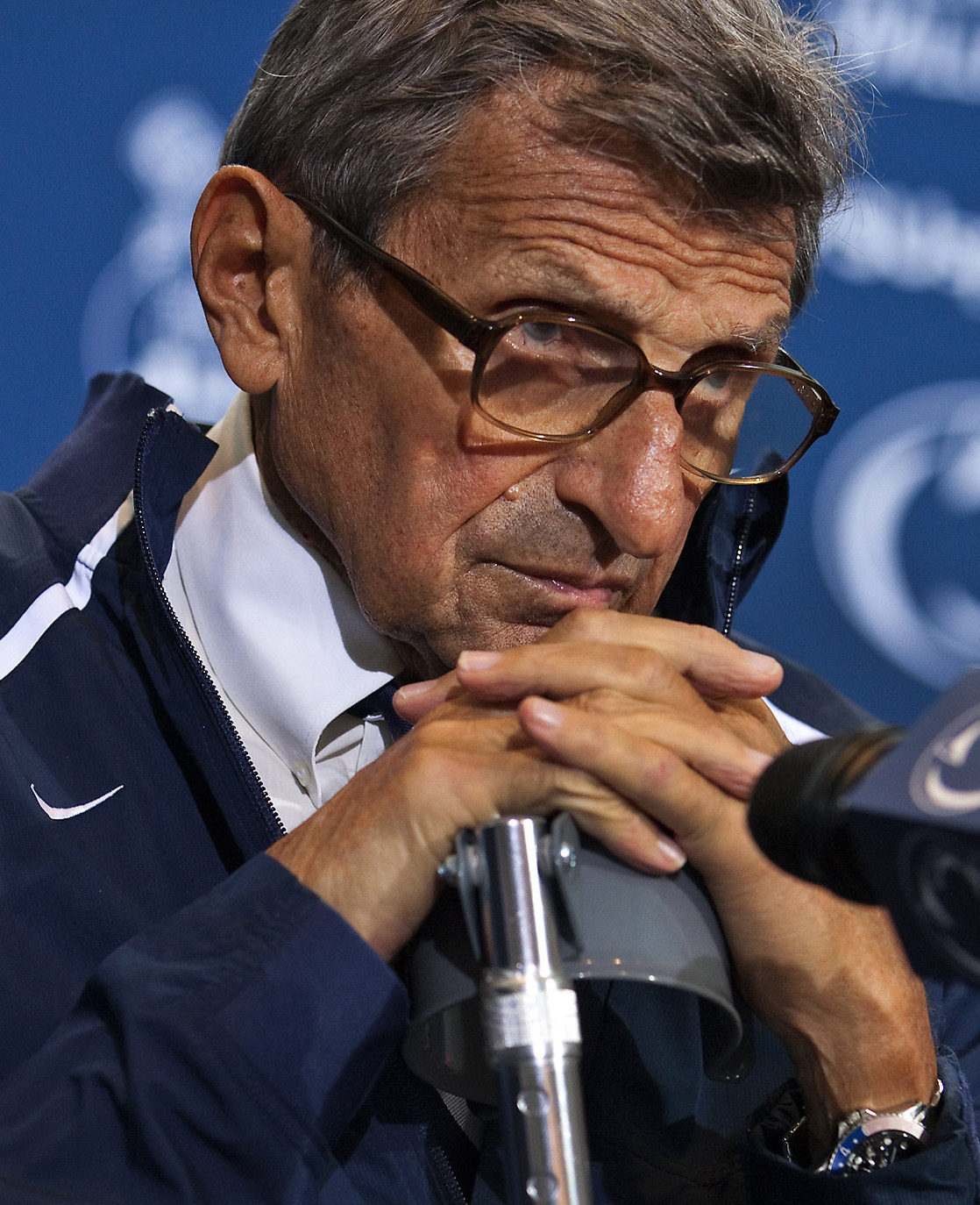
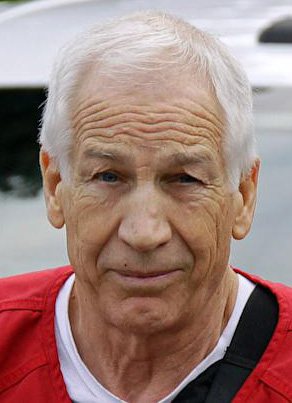
joe paterno penn state unquintessential leaderjerry sandusky penn state unquintessential leaderThe NCAA (National Collegiate Athletic Association) announced yesterday (Monday, September 8, 2014) that it was lifting the sanctions imposed against Penn State University in 2012 when the unquintessential leadership at every level in the university was revealed as well as its complete absence of integrity, morality, and principles in allowing Joe Paterno and Jerry Sandusky to, in the first case, wink at, and in the second case, be guilty of sexually abusing children over the course of decades.

As I discussed in “Absolute Power Corrupts Absolutely” and in “The Tell-Tale Trait of Unquintessential Leadership: Allowing, Tolerating, and Committing Abuse,” the responsibility for a lack of quintessential leadership lies with everyone in a leadership responsibility at Penn State and other universities and colleges who turn a blind eye to the flagrant abandonment of morals, ethics, and integrity.

penn state joe paterno jerry sandusky administration ncaa unquintessential leadersIn 2012, the NCAA imposed sanctions on Penn State that I didn’t believe, at the time, went far enough (I would have permanently dismantled the whole athletic program and immediately fired everyone in positions of leadership at the university), exposing the unquintessential leadership that also existed on the board of the NCAA.

With yesterday’s amendment to the 2012 sanctions, reducing the time and severity of the original restrictions, the NCAA’s lack of quintessential leadership came to the surface again.

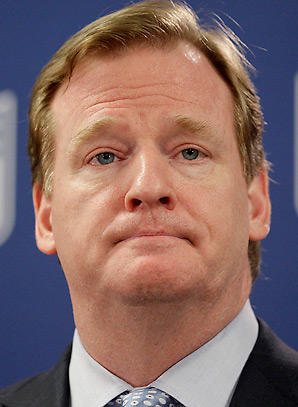
nfl unquintessential leadershipThe other example of unquintessential leadership that came back into the spotlight again yesterday happened in the NFL. This unquintessential leadership has existed all along (and it’s not just the unquintessential leadership of Roger Goodell, who has been notoriously inept at providing quintessential leadership as the commissioner of the NFL).

In late July of this year, NFL Commissioner Roger Goodell suspended Baltimore Ravens running back Ray Rice for two games after Rice was indicted on charges following a physical and violent assault in February of this year that rendered his fiancee Janay Palmer unconscious in an elevator in Atlantic City (Rice agreed to a plea bargain in ray rice baltimore ravens unquintessential leadershipMay on the indictment that consisted of community service and counseling).

Upon the announcement of such a weak punishment by Goodell and the NFL, in a sport that is increasingly seeing more violence (and murder, as in the case of former New England Patriots tight end Aaron Hernandez) among its players off the field, a backlash calling for stiffer punishments – mainly from the press – ensued.

Goodell continued to defend the punishment for Rice for a few weeks. Then, in a supposedly-get-tough-position that did nothing but further highlight his unquintessential leadership, Goodell, on August 28, 2014, increased the punishment for violent behavior off-field to a six-game suspension.
roger goodell NFL commissioner unquintessential leader(It’s important to remember that we’re talking about felonious assault charges, which in the legal system, are punishable by up to a maximum of 25 years in prison.)

Then yesterday, supposedly after seeing the actual video of Rice assaulting Palmer for the first time, the Baltimore Ravens fired Ray Rice and Roger Goodell suspended him from playing in the NFL indefinitely.

The unquintessential leadership is all over this story. Until he had no other choice, Roger Goodell was more than willing – and in both this case and the case of Penn State, the one thing that matters above all else is money (I Timothy 6:10 comes immediately to mind) – to minimize, if not outright ignore, egregious wrong-doing, give a tap on the wrist to the offender, and make sure the coffers stayed full.

But, as quintessential leaders, we must all step back to the bigger picture and ask whether the parties I’ve given an outright fail to in terms of quintessential leadership are the only unquintessential leaders involved.

The answer is “No.” Every single person who makes the choice to support – by watching the games, in person or on TV, by buying team shirts, mugs, flags, etc., by buying the products advertised during the games – these teams (and, both in the NFL and the NCAA, these are just the ones who’ve been caught) is practicing unquintessential leadership.

When we – you and I, fellow quintessential leaders – anywhere in our lives compromise the core principles of quintessential leadership, we are practicing unquintessential leadership.

The overarching questions then emerge. What else are we willing to compromise on in our lives? And what example are we setting for all the teams in our lives?

Because when we practice unquintessential leadership anywhere in our lives, we are giving ourselves permission to compromise on everything and we’re telling all the teams in our lives that it is okay for them to practice unquintessential leadership as well.

Therefore, it should not surprise us when our teams do just that, because by our examples we’ve already said that kind of conduct and behavior is okay.

And we practice hypocrisy if we follow the “do as I say, not as I do” line of reasoning. All the words in the world will never be stronger than what actions we model by our choices and by our examples.

How are we doing?

Recent scientific research has revealed that the brain has a special cell – called a “grid cell” – that functions as a global positioning system (GPS), enabling us to continually know where we are in relationship to all the routes we take while physically moving about and storing those as memories that we retrieve when we traverse a route we have already traveled before.

I am not sure I have this neurological GPS grid cell. From my earliest memories, I have been prone to getting lost, not just my first time going some place, but often every time, especially if it’s a place I travel to infrequently. My lack in this area is so pronounced that – and this is rare, but it’s happened enough to give me pause – in the dark, especially, I get turned around in my own house and walk into the wrong room. 

In addition, I’m directionally-challenged. North, south, east, and west are beyond my scope of understanding in real life (I can tell you where they are on a map). If I have to point in a direction, I usually point in the wrong direction. I have to remind myself of my elementary school science that the sun rises in the east and it sets in the west so that twice a day I know where east and west are.

This directional challenge is even worse when I get directions from someone who uses north, south, east, and west as descriptors to explain how to get from point A to point B.

You know just how directionally-challenged you are when you actually prefer a perplexing propensity (probably not unique to northeast Tennessee, but I haven’t run into as much anywhere else in the country as I have here) to use non-existent landmarks and vague measurements with no road names as driving directions that might be less likely to get you lost.

Even when the directions sound like this: “you go down there (pointing in the direction you need to go), and you go past where that big ol’ tobaccer barn useta be, and then you kinda curve around a little, and then you go to the red light, and then you go right, and it’s just a little ways after that.”

So when I bought my first GPS for the car, I was elated.

It was actually very comforting and soothing for me because I tend to panic when I get lost and the fear of the uncertainty of knowing what to do next – if I stay where I am, I’m still lost, but if I move from where I am, then I may get even more lost – has been a permanent fixture of my life since the day I got my driver’s license.

Never again would I have to worry about getting lost again while driving. Because even if I had no clue where I was and where I needed to go, it did and would get me there reliably. I could trust it to navigate me correctly, no matter what.

Quintessential leaders have a similar GPS that doesn’t come pre-programmed, doesn’t depend on satellites hovering above earth’s atmosphere, and doesn’t have to worry about outages because of sunspots or solar flares.

This GPS is developed over time, the product of having an absolute moral foundation of right and wrong, adhering consistently to that absolute moral foundation of right and wrong, and having that adherence become an integral part of who we are and what we do, no matter what.

character gps system quintessential leaderThe quintessential leader’s GPS is character.

Character tells us what our position is no matter what circumstances we find ourselves in, no matter who we’re with, no matter what other factors, familiar or unfamiliar, are involved. It ensures that we accurately and consistently navigate life, no matter where life takes us or what life throws at us.

But there’s always a caveat with global positioning systems that we as quintessential leaders need to be aware of, recognize, and resist.

The first time I turned my GPS on in my car, I was driving from my house to an interstate on a route that I could drive with my eyes closed. Almost as soon as I’d pulled out of my driveway, the GPS started telling me to go to a different road and take a different route to the interstate. I vividly remember arguing out loud – and with vigor – with the GPS.

“I’m not going that way. I always go this way. I know you think I ought to do something different, but I’m not going to. Enough already!”

The more I resisted going the way the GPS was telling me to go, the more it talked to me telling me I was not going the way it wanted me to go. And the more loudly I responded to it, trying to drown out the voice, trying to get it to be quiet, trying to convince it that I was right and it was wrong, it seemed the louder and more insistent it got.

Similarly, we have to be aware that we can do the same thing with our character GPS. It will always lead us and guide us the right way, but we have to be aware that we can chose to ignore it or override it or even turn it off. It won’t force us to do the right thing. That’s a choice we have to make. Every time.

Going or doing something the way we always have gone or done it may not be wrong. However, it may also not be the best way. What our character GPS does is make us actively stop and be consciously aware and thinking about that more carefully as that internal voice guides our attitudes, our motives, our thoughts, our words, and our actions.

How often do we argue with our character GPS? How often do we rationalize doing something different than what it is telling us to do? How often do we make excuses for not following the directions it’s giving us? How often do we completely ignore it? How often do we just turn it off?

I know we all do at times. I know because I am guilty of having done this and doing this at times. Unfortunately, it seems that is part of being human and the struggle that humans encounter continually. Sometimes we struggle well and succeed. Other times we struggle poorly and we fail.

However, as quintessential leaders, our character global positioning systems should be already very well-developed, with updates being applied as they become available, so that, even though the struggles never go away entirely, we experience them less often and when we do experience them, we succeed much more than we fail.

In conjunction with this on-going development of our character global positioning systems, we will find that we are less apt to argue with, to rationalize around, to make excuses about, to ignore, or to completely turn them off.

Instead, we listen, we pay attention and we follow the route without deviation, without detours, and without exceptions. Every time. All the time.

Developing a character GPS takes commitment. It takes time. It takes a lot of effort. It also, often, means going completely counter to prevailing systems, ideas, methods, social norms, business norms, and life norms.

It’s important to remember that just because everybody else is doing something doesn’t mean everybody else is right.

For quintessential leaders, one of the first things we discover is that, in many cases, everybody else has settled for low standards or no standards. That’s hardly something we’d consider a worthy gauge against which to measure ourselves.

Quintessential leaders must dare to be and to do not only differently than the status quo, but also to replace it with the traits that make up our character global positioning systems: honesty, integrity, consistency, fairness, setting a higher standard, righting wrongs, accountability, sincerity, and setting boundaries.

How are we doing?

As is usual when I’m writing about a person who’s involved in politics, I will continue to say first that I eschew and hate politics of any kind – governmental, organizational, personal – because politics, by its very nature and at its very core, is both corrupt and corrupting. Politics is self-serving, dishonest, manipulative, and driven by greed and a desire for power. This is universally true. There are no exceptions.

Politics and quintessential leadership are, therefore, incompatible.

This post is not about politics. Any feedback that tries to bring that subject into the discussion will be ignored with the upfront advice that the trolls and hijackers go somewhere else to spew and vent your venom.

This post is instead about a person in a leadership position who is at the crossroads of determining whether he will be a quintessential leader or not. It’s a place that all of us in leadership positions come to at some point, although, fortunately, most of us don’t have to go through the process on a national stage under the intense fishbowl scrutiny of 370,000,000 other people. (more…)

People change. Sometimes they change for the better. Sometimes they change for the worse. But, nonetheless, they change.

The physiological way that humans develop indicates that. Each of us starts out basically the same way at birth, then we grow and mature, with similarities to our families as well as things that are unique to us. Different hair colors, eye colors, heights, weights, shapes, interests, personalities, temperaments, and strengths and weaknesses.

While physical growth stops at some point, it is the only way in which we stop changing. Everything else should be directed at changing (growing and maturing) for the better, but, at times, we all get sidetracked and derailed for a little while, and while that is change too, it’s definitely not change for the better. 

However, most of us eventually come back from that sidetracking and those derailments and start moving forward again in the right direction.

quintessential-leaders-see-people-as-moviesQuintessential leaders get sidetracked and derailed sometimes during their lifetimes, so they understand this is part of being human. They also understand that it’s a temporary snapshot in time, like a picture, that does not represent the whole time before and after that time. They understand that people are movies.

(more…)

In one of Mike Myatt’s latest articles for Forbes online, entitled “9 Reasons to Lead in a No-Spin Zone,” this quote caught my attention because it describes quintessential leaders: “The reality is the best leaders are also absolutists when it comes to truth – they view truth as a non-negotiable.” And the first of Myatt’s reasons for this absoluteness is that telling the truth is a habit.

This trait of unwavering, habitual truthfulness is one of the components I identify as being a trust-builder and being viewed as worthy of trust in my book, Building Trust and Being Trustworthy, but what does it mean and what does it look like? (more…)

Listed below is a selection of quintessential leadership articles that caught my attention this week. As I said in my last post of recommended articles, quintessential leaders read widely, but they also read selectively through the criteria that makes them quintessential leaders. Not the least of that criteria is unimpeachable character – who they are.

The difference between quintessential leaders and everyone else is internal authenticity and commitment to what is true and right. Quintessential leaders stand up under the test of time and circumstances, unwavering, undaunted, unwilling to compromise with truth or the right things.

As I’ve read extensively about Benghazi, the IRS, Bloomberg, and the Department of Justice, as well as the continuing “too-big-to-fail-banks” stories this week, it is overwhelmingly evident that there is no shortage of unquintessential leadership everywhere we look.

Being in a leadership position does not make a person a leader, nor does it make a person a quintessential leader. At the core of quintessential leadership – and what makes a person, whether he or she has an official leadership title, a quintessential leader – is unassailable integrity. That is one of the fundamental components of building trust and being trustworthy.

We, as quintessential leaders, make huge mistakes sometimes. We have colossal failures at times. We have serious Integrity Must Be Our Compasslapses in judgment sometimes. We’re very wrong about things at times. That is part of being human. However, the difference between quintessential leaders and everyone else is that quintessential leaders:

  1. Admit mistakes, failures, lapses in judgments, and being wrong quickly
  2. Take full responsibility quickly
  3. Take aggressive action to correct quickly
  4. Apologize to everyone affected quickly
  5. Make amends everywhere they need to be made quickly
  6. Simultaneously, conduct a deep and fearless internal review to see what happened to lead to the outcomes
  7. Commit to and undertake diligently better self-governance and change

That’s what is missing is all the news stories I mentioned above and that is why all the people involved on all sides of the stories are unquintessential leaders. Blaming, justification, excuses, twisting, spinning, angling, and lying are unquintessential leadership traits.

I urge each of us to always look at everything through the quintessential leader lens. Get all the superficial and extraneous stuff out of the picture – emotions are one extraneous  thing – and use the quintessential leader criteria outlined in building trust and being trustworthy to test everything.

In the end, it doesn’t matter how we feel. What matters is what is right. What is true. What is honest. Emotions, as I discussed in “The Quintessential Leadership Balance Between Facts and Feelings,” can obscure right, truth, and honesty.

A sampling of what else I’ve been reading this week:

In Mike Hyatt’s article, “Why You’re Not a Leader,” some of the characteristics of unquintessential leadership are highlighted, including the one of getting results, but doing it through dishonesty and deception, which no matter how “big” the win in the short term, erodes and destroys trust and trustworthiness in the long term. If we are dishonest in how we do things, we cannot be trusted in the what, the why, the when, and the where of any part of our lives either.

6 Categories of Bosses” by Dan McCarthy is an interesting – and one I agree with – graphic breakdown and short description of the six types of people who end up in leadership positions. It’s important, from a quintessential leadership perspective, to remember that the words “boss” (which implies a heavy-handed “do-as-I-say-or-else” role) and “manager” (we manage things and we lead people) are not leadership words, titles, or roles. They are dysfunctional functions created by dysfunctional organizations (all organizations have developed dysfunctionally, because as humans, we’re all dysfunctional to one extent or another, and humans create organizations). As quintessential leaders, we must be vigilant to ensure that we are not bosses or managers, but instead leaders.

In David Peck’s article, “10 Essentials of Great Leadership, many of the facets of quintessential leadership are covered. Two areas that stand out to me – and are integral to the way I lead – are knowing the difference between being “informed” and being “involved” and delegating the “what” and not the “how” to team members.

This second point is one I follow faithfully. Team members cannot grow, nor can they reach their full potential as quintessential leaders – that is the point, after all, of our leadership legacies – if they are forced to operate in somebody else’s box of “how” to do things. Each person on this planet, while having many traits in common, is also unique in approach, perspective, temperament, personality, and gifts.

When people in a leadership positions force their teams to work in their box of “how,” creativity, innovation, progress, change, and success are stifled and, eventually, extinguished. Look at morale problems in organizations and you’ll find that this is one of the root causes.

Glenn Llopis provides a quintessential leadership integral and automatic – this is who we are – to-do list in “Great Leaders Do 15 Things Automatically Every Day.”

TrustIn Tristan Wenmer’s “5 Qualities of a Successful Leader,” a big-picture view of quintessential leadership traits is summarized. As this blog continually reiterates, the first trait on the list is trust.

The final article, “When Leadership Fails,” by Jeremy Statton discusses some of the things that quintessential leaders need to do when they fall short – as discussed earlier – of being quintessential leaders.

I hope our weeks have been productive and I hope that we’ve moved forward in becoming more quintessential leaders than we were last week. As I’ve said before, this is a marathon and not a sprint, and it requires constant, diligent, and courageous work and effort. But never forget, no matter what the ups and downs we encounter along the way – because we do and we will – the final result is absolutely worth it.