Archive for the ‘Quintessential Leadership’ Category

Many readers of this blog have asked how they can help get this blog publicized. Here’s how. 

Subscribe to this blog to get email updates so you don’t miss any posts. There is an email subscription option at the top of right-hand column. That will ensure that you get every new post and it will give you an opportunity to read all of them at your pace. I know the posts are lengthy and we live in a “quick-hit” world, but I strongly encourage you to take the time to read them, think about them, respond to them, and share them.
tql-logoOnce you read them, please share all the blog posts you read and like here with your social media networks (Facebook, Pinterest, Twitter, WordPress, Tumblr, Reddit, etc.).

Think about this each time you read a post. Then do it right then. 

If you press “Like” on a post from this blog on The Quintessential Leader Facebook page, then share the post, with your thoughts or with a quote from the post that resonated with you, on your own Facebook page.

Think about this each time you like a post and do it then. Liking a post is not enough. Sharing a post means more people get to see what you think about, like, and that reflects values and principles you share. If you don’t share the values and principles of this blog or of a particular post, then let me know why you aren’t sharing it.

This blog is interactive. I need your input – comments or messages – to know why you agree or disagree. Please comment on each post. Nothing, short of profane or inflammatory, will not be approved. And I promise to answer each comment with respect and thoughtfulness.

This blog also has links to The Quintessential Leadership eBooks. If you have not read them yourselves, then I ask you to purchase them (they will not break the bank for most of this blog’s readers). I’ve had a lot of endorsements for these books from people who have not purchased nor read them.

If you have purchased and read them, then please leave feedback (at Amazon, on the blog, or here). 

If you have purchased them or do purchase them, and they have provided valuable information for you, then please include links to The Quintessential Leader’s store to share them with others and when you share posts.

One book, Building Trust and Being Trustworthy  is also available on Amazon in paperback version and Kindle version.

For those of you who have already purchased copies of The Quintessential Leadership eBooks or the Amazon versions, thank you!

I encourage you, if you have found them helpful and instructive, to post on your social media sites a direct link to to the eBooks and share why they helped you, or to go to Amazon, if you purchased the book there, and leave a review that explains how the book was helpful to you.

All of this will help us get the word out about quintessential leadership and let people know there are real-world, practical application, and what-it-does-and-doesn’t-look-like examples of quintessential leadership.

Each one of you who reads this blog is part of my team. I cannot do this alone. I need each and every one of you to help me. Know that I appreciate, value, and count on you, just as I know you appreciate, value, and count on me. We’re in this together. It’s a team effort.

As a final note to this blog post, I’ve added a PayPal link to this blog for donations if you, the people who stop by here regularly, find the information presented here informative, helpful and useful. Please carefully consider a small donation to this blog.

There are many costs with running a blog. The information The Quintessential Leader provides is free to you, but not free to provide. To help offset the costs and keep the blog up and running, The Quintessential Leader needs your help.

The Quintessential Leader has only the shares and the donations with which to assess its value. Each of you who read this, in the end, determine what the information here is worth. So the value and the worth comes from the actions of The Quintessential Leader’s readers. You – each of you – must determine what that is to you, personally, and as a quintessential leader.

I thank everyone who stops by and hope and pray that when you leave you always have something of value to take with you. Even if it is a single sentence or a single thought that you take, I am thankful for the opportunity to share that with you. Please be sure to comment to let me know. Again, I will answer each and every comment and hope that we, together, can continue this dialogue for a long time.

I think long, carefully, and prayerfully about what I post here, because I am personally responsible for everything I say, do, and am. I thank you for supporting my efforts and humbly ask that you will continue, as you see fit, to do so.

Thank you all again. 

All of us are part of many teams during our lifetimes: family, schools, social organizations, religious organizations, and business organizations are the major teams we are a part of throughout our lives. And, while we as individuals, are striving to become quintessential leaders, we often find that we are the only or one of a handful of team members on the various teams we are a part of that are.

So today’s post asks each of us to assess the teams we are a part of and determine whether the teams practice quintessential leadership or unquintessential leadership.

If they practice quintessential leadership, then we should encourage and grow that by becoming more quintessential in our personal leadership (modeling and mentoring quintessential leadership).

However, if one or many or all the teams we’re a part of practice unquintessential leadership, then today’s question for each of you to answer – please share your comments here because we who a part of this blog are a team and we can learn from each other – is what do you and I do personally to work to change that?

In Mike Myatt’s article, “30 Outdated Leadership Practices Holding Your Company Back,” he has a chart that, in general, shows unquintessential leadership practices (left column) and quintessential leadership practices (right column):unquintessential leader and quintessential leader practices 2013

Which column, in general, describes each team you’re a part of? And to answer this honestly and accurately, each of us must first ask which column, in general, describes us individually as people and as leaders?

In this earlier post, I discussed how quintessential leaders look into mirrors while unquintessential leaders look through windows. Take a moment and go back to review that post. Because today’s post gives us another opportunity, as quintessential leaders, to look into a mirror. 

The question, then, is will I? Will you?

Today’s post will take a brief look what quintessential leadership and unquintessential leadership look like in terms of character. Increasingly, it seems that both people in leadership positions and the people they lead believe that character is irrelevant to a person’s ability to lead.

However, that is not true.

quintessential leadership character mattersThe type of character a person possesses is the critical component to whether someone is a quintessential leader or an unquintessential leader, because character defines who and what we are as people. Character is something that we are at all times. It is an essential component in determining whether we are building trust and are trustworthy or we are destroying trust and are untrustworthy.

Anthony Weiner and Bob Filner are two people in leadership positions who’ve been in the spotlight recently because of character issues. However, both have proven themselves, not only in what they’ve done, but how they’ve handled what they’ve done, to be unquintessential leaders.

What does a lack of character and unquintessential leadership look like? 

  • Belief that character and the ability to lead are not connected
  • Lack of remorse or guilt
  • Patent inability to admit being wrong
  • Refusal to take responsibility, blaming others
  • Refusal to apologize
  • Refusal to make amends
  • Refusal to change
  • Lack of care or concern about effects of behavior

What does character and quintessential leadership, then, look like?

  • Understanding that character and the ability to lead are intrinsically connected
  • Remorse when wrong
  • Admit when wrong
  • Take responsibility and blame self
  • Apologize
  • Make amends
  • Willingness to change
  • Great care and concern about effects of behavior

We all struggle with character as humans, but as quintessential leaders, we must win that struggle. And that means who we are on the inside must match who we say we are and project ourselves to be on the outside.

Because we live with our internal selves 24/7, each of us has the responsibility to continually:

  • Assess ourselves
  • Admit where we fall short of the character standard
  • Apologize for and fix in our lives, if we are able, whatever’s been broken because of our shortfalls
  • Remove the shortfall
  • Change

Character matters. It always has. It does. It always will.

Are a lot of the people you know – and answer to on the job – in leadership positions psychopaths? Are you a psychopath in a leadership position? Am I? Tough questions for us personally to answer, but not very tough to answer if we’ve worked with psychopaths.

I have worked with several in my career. Each one had a different personality and temperament, but they all shared the same destructive traits of psychopaths.

There seems to be a disproportionate number of psychopaths, compared to the general population, who end up in leadership positions. In “Sometimes the boss really is a psycho,” one researcher found that about 4% of the 203 executives he studied were psychopaths, while psychopaths make up only about 1% of the general population.

Meryl Streep as Miranda Priestly in The Devil Wears PradaWhen I think of the epitome of a psychopathic person in a leadership position, I think of Meryl Streep’s character, Miranda Priestly, in The Devil Wears Prada.

Some of the characteristics of psychopaths in leadership positions include:

  • Skillful and continual manipulation – bullying, threatening, and intimidating subordinates and charming, flattering, and fawning over superiors – of everyone in the organization
  • Over-inflated ego and sense of self-importance
  • Pathological lying
  • Absence of a sense of right and wrong
  • Absence of remorse and regret
  • Absence of empathy and sympathy
  • Toxicity

liam neeson oskar schindler schindler's listWhen I think of the opposite of Miranda Priestly, sticking with the movies here, I think of Oskar Schindler, portrayed by Liam Neeson in Schindler’s List.

Some of the characteristics of real leaders are:

  • Trustworthiness in everything
  • Strong convictions about right and wrong
  • Willingness to do whatever it takes to do the right thing, regardless of personal or professional cost
  • Humility
  • Strong sense of empathy and sympathy
  • Fairness with everyone

Have you worked with a psychopath in a leadership position? How did it affect you and the organization? What characteristics can you add to the list of psychopath traits as something we all need to be aware of?

Have you worked with a real leader? How did it affect you and the organization? What characteristics did he or she have that you learned and can add to the list of characteristics of real leaders?

Your turn.

It is easy to distinguish quintessential leaders from unquintessential leaders by the way they deal with the pressure of a crisis or crises. 

Below I will give a short list of characteristics that quintessential and unquintessential leaders do when a crisis or crises arise.

Each of you who reads this has a two-fold assignment. First, as always, look at your own leadership characteristics in a crisis or crises and see which leadership style you, in general, fall under. The second assignment is that if you read this, I want you to give me input, via a comment, with an additional characteristic for both quintessential and unquintessential leaders’ crisis-management styles.

I’m going to move, for the most part, to shorter blog posts of this interactive format, because if you’re reading this, you have information to share with me and to share with the other readers of this blog, and I want to encourage us to communicate with and help each other grow as quintessential leaders.

quintessential leader crisis crisesSome of the characteristics of an unquintessential leader in a crisis are:

  • Pretend it doesn’t or deny that it does exist
  • Ignore it
  • Avoid it
  • Procrastinate doing anything about it
  • Blame it on someone else
  • Make it someone else’s crisis

Some of the characteristics of a quintessential leader in a crisis are:

  • Acknowledge it
  • Tackle it quickly and honestly (this means the quintessential leader expects and is prepared for a crisis)
  • Take responsibility
  • Be accountable for resolving it

Obviously, these are not comprehensive lists. Now it’s your turn to contribute with a characteristic for each type of leader in a crisis.

What can you to add to these lists?

Today’s post will discuss the mindset of unquintessential leadership and how that mindset gets expressed in actions and words. As quintessential leaders, it’s important that we are reminded from time to time of what quintessential leadership is not, so we can examine our own mindsets (attitudes and motivations) and words and actions to ensure that we’re not letting unquissential leadership creep in.

The reality is that there are far more unquintessential leadership examples around us than quintessential leadership examples.

Most of the people in leadership positions today have a mixture of the two, with more of an unquintessial leadership mindset than a quintessential leadership mindset.

This creates confusion and an atmosphere of constant uncertainty because we never know which to expect under any given circumstance. This mixture engenders continual instability and a pervasive lack of trust.

However, there are some people in leadership positions who have purely unquintessential leadership mindsets (with no quintessential leadership in their mindsets at all). We can readily spot them because their words and actions – indeed, the very core of who they are – ooze with the characteristics of the unquintessential leader mindset.

I always suspect mental illness(es) in these cases because, in general, we humans who are sane – more or less – tend to be, regrettably, a mixture of good and bad, but someone who exhibits nothing but unquintessential leadership has nothing good in his or her thinking, actions, and words. It simply cannot be found.

So let’s take a look at the major characteristics of the unquintessential leadership mindset and what each of them look like in action.

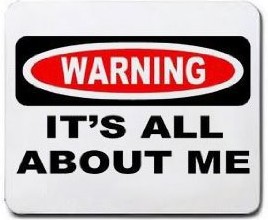
It is ALWAYS all about METhe first is pride and arrogance. The unquintessential leadership mindset is primarily narcissistic, so for the person who has this mindset everything is always all about them. What does this look like in action?

Constant self-promotion and exaggeration of importance, position and status in words and actions is one way this pride and arrogance manifests itself. No one is better, brighter, or more right.

This mindset is one of being superior to and more special than everyone else. The world – no, make that the universe – revolves around the unquintessential leader.

Nothing and no one else matters except for him or her and anyone who doesn’t realize that is the object of the unquintessential leader’s derision and condemnation.

Unquintessential leaders are, in short, legends in their own minds.

Another characteristic of the unquintessential leadership mindset is the need to control everything and everybody. What does this look like in practice?

Absolutely no challenge to the authority, authenticity, correctness, and thoughts, ideas, opinions, and edicts – because that’s what unquintessential leaders issue – is tolerated or allowed. Absolute and complete loyalty to the unquintessential leader is demanded and tested routinely. Action to squelch and remove real or perceived challenges on any of these fronts is swift and brutal.

Threats and intimidation (bullying) are another characteristic of the mindset of unquintessential leadership. This characteristic in action is a constant barrage of harassment and haranguing. An atmosphere of fear is created by the continual reminders that those under unquintessential leadership have tenuous positions and one “wrong” word or move will result in their eliminations and expulsions.

Language is the primary weapon in this characteristic, with repetition on a constant basis of what the negative consequences are that the unquissential leader holds over the heads of those cross him or her.

Manipulation is another characteristic of the unquintessential leadership mindset. Manipulation is accomplished by spin doctoring everything to make everything support what the unquintessential leader believes about him or herself.

Its effectiveness depends on a lack of critical thinking, fear, and the everpresent specter of punishment. It can be quite effective with people who either can’t, won’t, and don’t know how to think for themselves.

This is one of the most subtle characteristics, and, therefore, in my opinion, one of the most dangerous.

Another characteristic of the unquintessential leadership is the creation and maintenance of an atmosphere of suspicion and war anywhere the unquintessential leader is able to. What does this look like?

There are constant words and actions that pit people against each other, creating first suspicion, then war among those people. Unquintessential leaders will constantly find targets to attack personally and set up for everyone else to attack.

This tends to be the way unquintessential leaders get rid of people who challenge them, who disagree with them, who call them out when they are being unquintessential leaders.

Because of all the characteristics of the unquintessential leader mindset, the inability to handle the truth (for an unquintessential leader, the only truth that exists is the truth as he or she has constructed it) is universally the one that usually becomes the most obvious early on because anyone who confronts the unquintessential leader is quickly – and usually very publicly and visibly as a warning to everyone else – hunted down, forced out, and completely destroyed, if possible.

People can usually hide the other characteristics for quite some time, but not being able to face or admit the truth is almost impossible to ever hide.

As quintessential leaders, it is imperative that we are constantly examining our mindsets – our motives, our attitudes, our words, our actions, who we are – to ensure that we are not letting these characteristics of the unquintessential leadership mindset to come in and become part of us and how we lead.

This is the battle we all fight constantly, but it is a battle we must never abandon and a battle we must win. For ourselves and for our teams in every area of our lives. 

Yes. It’s that important.