Archive for the ‘Qualities of a Quintessential Leader’ Category

This month, in U.S. news, two prominent people in leadership positions in the sports world who have shown themselves to be thoroughly unquintessential leaders have emerged. One of the ties between these two people – Lance Armstrong (7-time Tour de France winner) and Manti Te’o (the highly-touted former Notre Dame linebacker and Heisman Trophy runner-up) – is that of broken trust as a result of blatant dishonesty, spin, angling, the blame game, and outright deception.

As quintessential leaders, it is absolutely imperative that we understand how trust is built and how we become and stay trustworthy, because as is the case with Lance Armstrong and Manti Te’o, once trust is destroyed and trustworthiness is gone, it is difficult, if not impossible, to ever get back.

My eBook, “Trust & Trustworthiness” provides a compellingly insightful and comprehensive compilation of the quintessential leadership components of building and keeping trust and becoming and being trustworthy and what they look like in practice.

Although I enjoy sports, professional cycling and college football are two sports I don’t have any interest in nor do I really understand exactly what the mass appeal of them is.

However, I would have had to have lived under a rock for the past twenty years or so not to have a fairly good knowledge about Lance Armstrong and his career. The interesting thing about Armstrong, though, is that years ago, when he really hit his stride and became a household name, I observed a certain disconnectedness and ruthless coldness about him that made me uncomfortable. His eyes, I think, betrayed him. When the then-rumors about his doping began to swirl, I believed they were more than just rumors and were probably credible.

Armstrong vehemently insisted for years that he had never used drugs to enhance his physical performance and continued that steadfast denial even in the face of the irrefutable proof of his usage of banned substances and his distribution of those substances to others in the cycling world in the 1000+-page report from the United States Anti-Doping Agency (USADA) released in June 2012.

One of the most disturbing things I observed about Lance Armstrong during this period of accusations and denials was his viciousness and his determination to destroy as many lives as possible along the way. His behavior seemed more like that of a sociopath than of a man defending himself against unfounded and baseless claims. He spent a lot of time and energy ridding himself of accusers and, in his mind, enemies, fingering them as being cheaters and liars and claiming to be a victim of vindictiveness spurred by jealousy over his accomplishments.

After seeing portions of Lance Armstrong’s interview with Oprah Winfrey and reading the full transcript, it turns out that Armstrong was the cheater and the liar all along. Watching his body language and his eyes and observing the calculated and emotionless responses to Winfrey’s questions, it’s clear that Armstrong has strong sociopathic tendencies and that is the epitome of unquintessential leadership.

The first thing that I noticed about Lance Armstrong in the actual interview clips was that he still doesn’t believe he did anything wrong – and he never will. There is no contrition. There is no regret. There is no remorse. There is no guilt.

There is nothing behind the very feeble gestures that he’d like us to believe are admissions of dishonesty, wrong-doing, and cheating. No one who knows this man should ever expect a genuine apology from him. Whenever someone starts this statement: “I guess I’ll have to apologize…,” that person is not convicted within him or herself of his or her guilt, culpability, or the need to right a wrong. 

In Lance Armstrong’s mind and heart, he’s innocent of any wrong-doing. One of his claims to defend his doping is that “everyone else was doing it.” That’s the oldest excuse in the world, but only unquintessential leaders use it. All the other wrongs in the world don’t make a quintessential leader’s wrong right. Wrong is wrong and right is right.

People in leadership positions set the example for those they are responsible for leading. So when Lance Armstrong dopes, lies, cheats, and blames and crushes other people, what example is he setting? It’s unquintessential leadership on steroids, pun intended.

The most telling quote for me of Lance Armstrong’s interview with Oprah Winfrey was this one about cheating: “At the time, no. I kept hearing I’m a drug cheat, I’m a cheat, I’m a cheater. I went in and just looked up the definition of cheat and the definition of cheat is to gain an advantage on a rival or foe that they don’t have. I didn’t view it that way. I viewed it as a level playing field.”

This is the heart, core, soul of Lance Armstrong. He has no integrity and he epitomizes the very worst – the opposite of quintessential leadership – of unquintessential leadership.

Manti Te’o, the former Notre Dame linebacker and Heisman Trophy contender, has a shorter, but equally unquintessential leadership track as that of Lance Armstrong. Another appalling aspect to this story is the same kind of unquintessential leadership being shown by Notre Dame’s executive staff, most notably athletic director, Jack Swarbrick, who has countered Deadspin’s revelation of the fraud and dishonesty perpetrated by Te’o by continuing to assert that Te’o was the victim of a hoax.

Te’o’s story of the death of his grandmother and girlfriend within a 12-hour period of each other fueled sympathy and admiration both by the media and the public for the young football player in September of 2012.

However, as Deadspin revealed this week, the story was a lie. Te’o’s grandmother did die in September 2012, but there was no girlfriend and no subsequent death from leukemia. It turns out that this was a publicity move of dishonesty and fraud – probably to up the chances of Te’o winning the Heisman Trophy and being drafted higher in the NFL – that, no matter what the assertions of Te’o and Notre Dame officials are, Te’o was intimately involved in and continually purported to be true.

The fact that Te’o actively participated in the fraud is what highlights his own and Notre Dame’s lack of quintessential leadership. How Notre Dame’s athletic director can keep telling people that Te’o is an innocent victim of a hoax when Te’o’s own words convict him and show him to be thoroughly involved in the web of deceit is beyond comprehension. It seems that once people go down the road of dishonesty, eventually they begin to believe their own lies to the point that truth is never and can never be within their grasps again.

Te’o’s dishonesty, with Notre Dame’s apparent approval and backing, has destroyed any credibility – and that includes trust and trustworthiness – he had. Even if he is drafted by the NFL (personally, I think they’d be crazy to draft him), no one will ever trust him again. He has proven himself to be an unquintessential leader: unreliable, undependable, dishonest, untrustworthy, and selfish, self-centered, and self-absorbed.

Te’o, in the end, like Lance Armstrong, and like every other unquintessential leader, is all about himself. They don’t care about the team or the truth. They have no integrity. They lack any authenticity. They are pretenders, wannabe’s, and examples of the opposite of what we as quintessential leaders want to be, should be, and, indeed, must be.

I made a rare trip to a movie theater recently to see the Steven Spielberg movie, Lincoln. Having read Doris Kearns Goodwin’s Team of Rivals: the Political Genius of Abraham Lincoln a few years back, I was curious to see how Spielberg, who acquired the movie rights before the book was ever written, would treat the book and President Abraham Lincoln and his interaction with his Cabinet and with Congress.

If you’ve read the book and are expecting a visual rehash of it, you will be disappointed. But if you want to see a close-up view that in many ways summarizes Goodwin’s book and some real quintessential leadership moments from President Lincoln in the last four months of his life, this is the movie to watch.

Lincoln is one of those rare movies that I had to spend time processing on a lot of different levels. It is a heavy and intense movie, but very rich in things to think about and lessons to learn.

I will do my best not give away any spoilers here, but I would like to highlight the quintessential-leadership-in-action aspects of the movie. 

The primary subject of the movie is the all-out effort, spearheaded by President Lincoln, to get the 13th Amendment – which abolished slavery – to the U.S. Constitution passed by the House of Representatives by January 31, 1865 (just before the newly-elected representatives took office). In the backdrop are the last and equally-blood days of the Civil War, a possible negotiated peace with the Confederacy, and the outer and inner turmoil of the many burdens President Lincoln found himself encumbered with.

One of the quintessential leadership traits that made President Lincoln stand head and shoulders above everyone else was his ability to communicate vision. For an in-depth look at this quintessential leadership trait in President Lincoln and three other well-known public figures, you can purchase the downloadable eBook, “Communicating Vision,” from my store.

Another quintessential leadership trait that President Lincoln had was the ability to see the big picture and to stay committed to that goal, no matter what. President Lincoln understood that abolishing slavery was the underlying action that needed to be done to begin the path to ending the Civil War and start the slow – and still-not-completed – path toward the equality of all people the preamble to the US Constitution covers and refers to.

Lincoln shows how heavily this focus and determination weighed on President Lincoln and it also shows the strength of his commitment in the face of constant attempts to undermine and derail the goal.

Another quintessential leadership trait that President Lincoln had was respect for everyone, even his most fierce opponents, and his willingness to seek input from and listen to people outside of Washington and politics. By showing respect to everyone, President Lincoln was able to gain keen insights into what his policies and legislation would mean and look like in practice. 

One of the most moving scenes in the movie is when General Robert E. Lee leaves the Appomattox home of Wilmer and Virginia McClean after signing the documents of surrender with General Ulysses S. Grant. General Grant and the Union army members who are with him all gather on the porch to watch General Lee leave. They show their respect for General Lee, no doubt at the urging of President Lincoln, by simultaneously removing their hats in a gesture of deference to General Lee.

Another quintessential leadership trait that President Lincoln had was the ability to fight when he had to, but always with an eye to conciliation and making the outcome win-win, if possible. One of the prime examples of this in the movie is his pardoning of a young Confederate soldier, when President Lincoln says “I don’t want to hang a boy for being frightened. What good would it be for him?”

President Lincoln also possessed the quintessential leadership trait of strategic planning accompanied by flexibility and adaptability. He understood that planning is critical to success, but the plan cannot possibly see all the twists and turns and contingencies that will crop up during its execution and quintessential leaders must be equipped to handle those deftly and swiftly without impeding or halting progress. President Lincoln’s quote on this subject should be something we all think about often: “The compass points you true north but does not warn you of obstacles and swamps along the way.”

Another quintessential leadership trait that President Abraham Lincoln possessed was that he never stopped learning. There is an intriguing scene in the movie where he takes a mathematical concept from a book he’d read and applied it in a philosophical way as an explanation for why what was important to him was so important.

Quintessential leaders must be life-long students and spend time reading widely and well. This means reading outside the scope of our skills, abilities, and fields of work. There are so many things that can enhance our abilities as quintessential leaders and help us gain different perspectives and angles on the bigger issues we face each day as leaders. Don’t waste your time on anything that isn’t going to enhance your knowledge and understanding so that you become a more quintessential leader.

President Lincoln set an example of quintessential leadership when he assembled teams. First among these was his Cabinet, which included William H. Seward, Salmon P. Chase, Simeon Cameron, and Edward Bates. All of these men had been Abraham Lincoln’s rivals in the 1860 U.S. presidential race. President Lincoln had a chance to evaluate their strengths – and the support that including each of them on the team would bring to his presidency – and, in what is widely considered an improbable stroke of genius, brought them together as a team of allies when he won the presidential election.

President Lincoln did a lot of team-building – often one-on-one and in very personal ways that showed he was a careful listener and observer with the intent of trying to understand what was important to other people and why they did and thought and believed what they did – outside of the White House as well. It’s surprising, especially in Goodwin’s book, to see some of the teams that President Lincoln forged in Washington and in Congress, with a level of diversity and complexity that only a quintessential leader could have brought and kept them together.

I strongly recommend Lincoln. It gives us quintessential leaders a lot of food for thought and hopefully it will help us to redouble our efforts to acquire and hone not only the quintessential leadership traits that President Lincoln had (and these certainly are not all of them), but also the other quintessential leader traits that we have already discussed and the ones we will discuss in the future.

If you like what you’re reading here, then check out our store at The Quintessential Leader where you can purchase, for a nominal fee, eBooks about the components of trust and trustworthiness, examples of communicating vision, how to build teams using performance planning, evaluations, and reviews, styles of control that exemplify unquintessential leadership, and unquintessential leadership pitfalls we all need to avoid.

These eBooks are worth far more in experience and the time taken to put them together than they are priced at. You, as a quintessential leader, can’t afford the cost of not having the information they contain.

You have a choice. Save a few dollars and fail to be a quintessential leader, or spend a few dollars and learn what are some of the things quintessential leaders look like – and don’t look like – and what some of the things quintessential leaders do and are – and don’t do and aren’t. This is an investment in yourself and your team.

I don’t have all the answers either. I am learning just like you. But as I learn, I share my knowledge and my experience. That’s how I become a more quintessential leader. I believe in paying forward. What do you do to become a more quintessential leader? How do you pay forward what you’ve learned and experienced?

Whether you buy my eBooks or not is not important. But what you do with what you learn and what your experience has taught, is teaching, and will teach you is.

Think about that. When it’s all said and said, that’s all we’re left with. It’s a legacy. What is your legacy going to look like?

Quintessential leaders never have to – nor in fact, would – promote their efforts, a piece of a larger picture and larger plan. They are interested in outcomes and their contributions, as leaders, are devoted to successful outcomes for their teams, business units, organizations, and society at large. That is where their focus, their attention, and their efforts are directed.

So, when you hear people continually promote themselves as leaders, constantly touting their sole accomplishments, pointing everything back to themselves, you are seeing someone who is not only not a quintessential leader, but who is not even in a leadership position, except in his or her own mind. Everything the person is about is self-aggrandizement

Although self-aggrandizers are abundant throughout society, they seem to be even most prolific in business, sports, donald trump self-aggrandizementand religion. Donald Trump in business comes to mind. Muhammad Ali in his heyday in boxing comes to mind. The world of religious organizations is so full of these types of muhammad ali cassius clay self-aggrandizementpeople that it is difficult to pinpoint a single example. And the so-called religious types are the easiest to recognize and unmask because they all claim to be some sort of “only” representative of God and yet none of them agrees with each other or God.

Self-aggrandizers have an exaggerated and unsubstantiated view of their accomplishments and their contributions. They are legends in their own minds. They are completely self-absorbed and everything they say and do is from a “the world revolves around me” perspective. The prominent words their vocabularies are Imy, and me.

Self-aggrandizers believe they are superior to the rest of the human race. They also believe that they are unfairly treated and under-recognized by everyone else, primarily because, in their delusional , self-important opinions, everyone else is too ignorant and too blind to see how great and awesome they really are.

So, instead of spending time actually accomplishing the results that quintessential leaders are known for, the self-aggrandizers spend all their time promoting themselves. We’ve all worked with people who are self-aggrandizers and they are a detriment and an obstacle to productivity and success because they are consumed with nothing but being seen and heard and constant attention-seeking. These people suck up all the energy of whatever environment they are in and frequently stall or stop any progress if they’re allowed to continue unchecked.

The roots of self-aggrandizement are strong delusion, an overinflated ego (pride, vanity, arrogance), and insecurity. When a person has to spend all his or her time telling everyone how special, great, wonderful, awesome, superior he or she is – when in reality, if a person really is any or some or all of those things, it is readily apparent to everyone as a pattern of behavior and as just who that person is all the time and usually the person doesn’t even see those qualities in themselves, but it is other people who point them out – that person is first trying to convince him or herself those things are true – insecurity – and second trying to convince everyone else they are true as well.

The strong delusion is a contextual issue. Everything said to or about the self-aggrandizer gets assimilated through the “I, my, me” filter that dominates his or her thinking, and comes out, at best, twisted completely out of or spun completely away from its original context, or, at worst, completely invented (a lie). Regardless of which way the self-aggrandizer comes to his or her conclusions, he or she is always right and everyone else is always wrong.

An overinflated ego will argue, fight, contest, and keep conflict going. The ironic thing is that most people will tire of the endless arguing, fighting, contesting, and conflict after a while because they realize, at some point, that there’s no reasoning with a self-aggrandizer and the continuation of the discussion is a waste of time, but because the self-aggrandizng person gets the last word, so to speak, this boosts his or her ego even more and further convinces him or her that he or she is right. It’s a vicious circle, not based on evidence or fact, but simply based on the self-aggrandizer’s ability to out talk and outlast everyone else.

Insecurity is the knock of reality on a self-aggrandizer’s door. But since self-aggrandizers live in a world of strong delusions and super-sized egos, they will never allow this reality to get any further than the door. They lock insecurity out with even more self-aggrandizement.

So, if you see or hear someone who is always making presumptuous and momentous claims about him or herself, their positions, their accomplishments and who and what they are, you should recognize that that person is a self-aggrandizer. He or she is not any kind of leader and not a quintessential leader.

We as quintessential leaders need to recognize self-aggrandizement and remove it from among our teams and remove ourselves as far from it as possible. It is one of the most toxic and destructive forces that we will face in life. Giving it any attention will only encourage it and make it worse. We don’t need that. Our teams, our business units, our organizations don’t need that.

Anakin Skywalker Before He Became Darth VaderRecently, I sat down and watched, for the second time, back-to-back, the last two movies of the Star Wars prequel trilogy – Episode II: Attack of the Clones and Episode III: Revenge of the Sith. I had not seen either movie in several years, but wanted to review them after a recent Star Wars marathon on Spike TV during the Thanksgiving weekend when I saw most of all the three Star Wars movies in the original trilogy.

As I watched these two movies, I was amazed to see a lot of quintessential leadership – the presence or lack of presence – issues emerge. I decided to do an analysis of how Anakin Skywalker became Darth Vader, because in looking at the transformation, we can learn some important lessons about quintessential leadership – what it is and what it isn’t and how the presence or absence of the components of trust and trustworthiness, which I’ve discussed in detail in this blog, determine whether even the most competent, gifted, and capable people are also quintessential leaders.

Luke SkywalkerOne of the first things I noticed this time is how much Anakin and Luke Skywalker were alike in temperament and thinking. Both men were extremely gifted, but both also overestimated their gifts and their abilities and it created a recklessness and pride in them that clouded their ability to think clearly, to be humble, and to exercise self-control.

Both Anakin and Luke Skywalker were inconsistent in performance. At times, they both did the right thing, and at other times, they both did the wrong thing. Emotionally, they were both out of control, and they both lived their lives based on their feelings, which is why they both had an inconsistent level of performance. In short, they were unreliable and unpredictable, which are traits of unquintessential leaders.

Additionally, both Anakin and Luke Skywalker shared the trait of impatience. This came in part from pride and their overestimation of themselves, but it also came from a lack of contentment with where they were and what they were doing and the ability to see each step as part of a big-picture process. They both wanted, for example, to be Jedi knights – and both pretended to be before they were – before they had met all the qualifications through training and experience to actually be a Jedi knight.

This is a common character flaw that we find in unquintessential leaders. They want to positions, the titles, but they are either unwilling or unable to patiently do the work and take the time to be qualified to have those positions and titles. When they find a way – as Anakin did – to take a shortcut to where they believe they should be and want to be, the results are always disastrous.

Luke, in spite of sharing many of the unquintessential character traits of his father, turned out to, when push came to shove, avoid the same path his father had chosen. But it occurred to me that even though he did the right thing in the end, he still had the character flaw that he shared with Anakin of questioning the fairness of things as it related to him and he never completely learned to control his emotions, so Luke, as a force for good, long-term, remains questionable in my mind. Doing one right thing one time doesn’t make a person’s character. Right character is developed through a lifetime of making the right choices every time, all the time.

Granted, none of us does this perfectly, but a quintessential leader has this at the front of his or her intent and purpose at all times. That’s the quality of integrity.

So let’s look briefly at the unquintessential leader traits that Anakin Skywalker had that led him to choose to become Darth Vader. Notice that I purposefully used the word choose, because that is a crucial element in this discussion: the totality of all the choices in life that each of us makes is an integral component of whether we are quintessential leaders or unquintessential leaders at our core. Granted, there are gifts, abilities, talents that contribute to this equation, but even there, we have the choice to develop them or ignore them, use them or not use them, and to decide how we’re going to use them, so choice is always involved at the fundamental level.

In Episode II: Attack of the Clones, we see Anakin Skywalker as a young adult and in an apprenticeship with Obi-Wan Kenobi to become a Jedi knight. One of the things that stands out about Anakin’s character, even here, is how forcefully he is led by his emotions. He’s a no-holds-barred kind of person when it comes to how he feels. His pursuit of love is untamed and relentless. His fears rule his days and nights. His anger is fierce and hot. His resentments about the things he believes aren’t fair seethe steadily just under the surface, occasionally spewing out in volcanic outbursts.

Yoda LeadershipInterestingly, both Yoda and Obi-Wan Kenobi – as they would years later with his son – are constantly warning Anakin about self-control in all areas of his life (choices), but especially with regard to his emotions. Anakin doesn’t realize that being led by his emotions is the destabilizing force in his life. 

Emotional thinking crowds out objective thinking and the ability to observe things are they are instead of things from – as Obi-Wan ironically tells Luke to explain not revealing Darth Vader as Luke’s father – from a “certain point of view.” Emotional thinking leads to inconsistency, which is an unquintessential leader trait.

The roots of Anakin’s discontent, which is fueled by his rampant and conflicting, at times, emotions are evident in this episode.

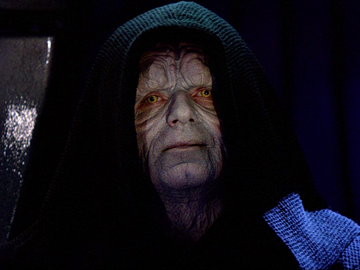
He doesn’t see, for example, Lord Palpatine clearly, and believes he is one of the good guys, while Lord Palpatine is slowly and deliberately using Anakin’s emotional thinking and lack of objectivity to surreptitously manipulate Anakin. 

Anakin believes that things the Jedi are or aren’t doing for him, with him, and to him are not fair and are holding him back. This belief is fully cemented in Episode III: Revenge of the Sith, and it becomes the underpinning of all the choices he makes from there on out. 

As a result of Anakin’s lack of self-control, not only with his emotions, but in the rest of his life, where we see the same vacillation between extremes that his emotions have start appearing, we see three other unquintessential traits appear: a lack of integrity, a lack of honesty, and a lack of authenticity.

Anakin becomes dishonest with everyone, including himself, in these two episodes. Anakin isn’t even truthful with his wife, even though his fear – uncontrolled emotion – of her dying in childbirth leads him to choose to become Darth Vadar, because Lord Palpatine offers Anakin the power to prevent her death. This dishonesty also points to Anakin’s self-absorption, self-centeredness, and selfishness.

No longer is he focused on the big picture of why he is there and what the mission of the Jedi is. It no longer is important to Anakin by the end, only what he wants and what he feels and what he needs. In a sense, even his wife and twin children go off Anakin’s radar because his choices will dramatically and negatively affect them.

Lord Palpatine aka The EmporerNear the end of Anakin’s road to choosing to become Darth Vadar, he straddles the line between being a Jedi apprentice and being Lord Palpatine’s apprentice. He is thoroughly inauthentic, double-minded, and we watch as he walks the tightrope of trying to be someone that he has already abandoned being in his mind and in his emotions. The Jedi sense that something’s wrong, as does Anakin’s wife, but Anakin has gotten so good at pretending to be something he’s not that no one realizes what is really wrong until it’s too late.

Anakin’s issue with integrity was always there, but he made choices in both episodes which eroded and destroyed his integrity completely. A simple – and yet not simple when we examine it – example is his marriage to Padmé Amidala. The Jedi code forbade close attachments because of the emotions those attachments engendered and which the Jedi realized could dilute a Jedi’s obligation to his primary duty and could make him a vulnerable target for the dark side of the force.

But Anakin made a choice to deliberately break the Jedi code and marry Padmé in secret, and then further chose to hide their marriage and lie about their marriage, and encouraged Padmé to do the same. I think this is the defining event that destroyed any integrity that Anakin had left.

So, by the end of the third episode, we have seen all the choices along the way that Anakin Skywalker made that led him to choose to become Darth Vader. He had tremendous gifts, great abilities, and a lot of potential. But he lacked the traits of a quintessential leader, so, in the end, all that Anakin possessed naturally didn’t matter. We see the the same lack of quintessential leadership traits in the machine-driven-Darth Vader in the first Star Wars trilogy: his outside has changed, he’s got more power, but the inside – what he lacked or destroyed by choice to begin with – remained remarkably the same.

The question I leave with you is what are all the choices that are we making today? Are they choices that will enhance our quintessential leadership potential and realization, or are they choices that are eroding our quintessential leadership potential and are cumulatively making us unquintessential leaders?

Every choice matters. Let’s make every choice count toward quintessential leadership. 


I’ve been observing for the last four years an emerging and accurate identification of an obstacle that exists that has contributed to the ever-present gridlock between the current president of the United States, President Barack Obama, and the United States Congress (the U.S. Senate and the U.S. House of Representatives). However, one of the things that is missing from the conversation is the real what and why behind the obstacle and the solution to removing it. The people who’ve identified the symptom talk and write about it without understanding the cause and how to address that in an effective way.

Let me say up front that this is not a post about politics. Politics is a game of lies and spin and I have no time or use for all that, nor will I waste my time talking about it. This post, instead, is about how temperament can affect quintessential leadership negatively and this post also drills down to how an introverted leader needs to modify his or her behavior to ensure that teamwork is in play and goals are successfully achieved.

Joe Scarborough, of MSNBC’s “Morning Joe,” seems to consistently and accurately define the obstacle (i.e., the symptom of the problem) that stands between President Barack Obama and the United States Congress. Ironically, when Scarborough points to the symptom of the solution, without realizing it, he is talking about two extremes in temperament: strong introversion and strong extroversion.

The solution, realistically, lies somewhere in the middle, but the solution can be found in the comparison and contrast between the strongly-introverted person that President Obama is and the strongly-extroverted person that Scarborough points to again and again as the model for teamwork and getting things done.

Joe Scarborough describes the obstacle to getting things done legislatively as an unwillingness by President Obama to reach out to anybody in Congress, including members of his own Democrat party, and an unwillingness to sit down and talk face-to-face, either one-on-one or in a group, to either members of his own party or members of the Republican party. And every time Scarborough describes this obstacle, he brings up former President Bill Clinton to show the contrast of how someone, probably more successfully than any other American president, countered and removed all gridlock by doing just the opposite of what President Obama is doing.

And what Scarborough is pointing to when he contrasts these two men is temperament and how President Clinton used his strong extroversion to ensure that the country’s goals were achieved and how President Obama’s strong introversion is inhibiting his ability to do the same. An analysis of how temperament can get in the way of quintessential leadership, then, and what can be done to moderate and counter that is, therefore, the sole topic of discussion in this post.

Before addressing the temperaments of these two men and the things that separate them temperamentally in their leadership styles, a short discussion of temperaments and how they play into how each of us sees and relates to the world around us is critical. An invaluable – I personally think this book ought to be a “must read” for everyone who is a leadership position – resource for quintessential leaders to understand both extroversion and introversion and leadership is Susan Cain‘s “Quiet: The Power of Introverts in a World That Can’t Stop Talking.”

Commonly-accepted proportions, based on extensive research, of extroverts to introverts in the human population show a 75%-extrovert to 25%-introvert ratio (one in every four people is an introvert).  Cain’s book, while showing that general temperament dominance can also be a function of culture, shows that all of us are genetically and neurologically predisposed to either extroversion or introversion. She also shows how extroversion as “normal” and preferred and introversion as “abnormal” and undesirable – as well as needing to be “fixed” or “changed” – developed into the mindset and culture of the Western world.

Another important part of this conversation is that, because of temperament, it is very difficult – and impossible for people with strong and extreme tendencies in this temperament – for extroverts to ever really understand introverts, while introverts – even though it makes no sense to them – have a quite good understanding of extroverts. Extroverts can’t understand any temperament that is not like theirs, so much of the “abnormal” kinds of labeling – loner, weird, unsociable, etc. – that is typically applied to introverts – who, by the way, are none of these – we see in general cultural views expressed by extroverts.

Please take some time to read Jonathan Rauch’s article, “Caring for Your Introvert,” published in The Atlantic in March 2003 because it does a good job of dispelling some of these incorrect ideas and shows why the labels don’t match up with the reality.

Introversion and extroversion can be measured by scientific instruments such as the Myers-Briggs test, which is often a prerequisite to acceptance into post-graduate programs at many U. S. universities and colleges, and the Myers-Briggs Type Indicator which identifies 16 temperament types.

And even though all people can be typed within these 16 temperament types, where each person falls on the spectrum of the various components that make up the temperament is what makes no two same-temperament people exactly alike. In other words, each of us is unique. An additional note, which Susan Cain makes sure to point out, is that even though a person is characterized by a temperament type, even strongly, not all the attributes of that type may actually apply or be present. Again, each of us is unique. And that’s the most important thing to remember when discussing generalities, which the topic of temperament types is.

Since I’m taking this topic on – and to show the truth embedded in the cautions in my last paragraph – I will share my temperament type (which, no matter how many times I’ve been tested and how much experience and time is accrued between the tests, the type and proportions remain the same) with you and tell you a little bit about why I am  in a position to bring temperament as the source of the obstacle that Joe Scarborough has identified. If you click on the graph below, you’ll see it in its original size, which will make it easier to read.

quintessentialldr Myers-Briggs Temperament Indicator Graph

As you can see, I’m an INTJ, so I’ve got an introvert temperament. You’ll also noticed that I fall into the strong/extreme range of introversion. This is important, because this is a temperament characteristic that President Obama and I share. While I don’t know the exact temperament type of President Obama, I suspect that he is also an INTJ, and his unique temperament type lies in where he falls along each of the measurement scales.

One of the paradoxes that I’ve read and seen noted about President Obama time and again is that of the seemingly two different people he is in front of big crowds versus in front of small groups or one-on-one. It really isn’t a paradox, because since I’ve noticed the same paradox in myself – and this is something I’ve had to learn how to change in the second setting – I know why he is more comfortable in front of a large, mostly anonymous crowd instead of in a small and well-known group and individual setting.

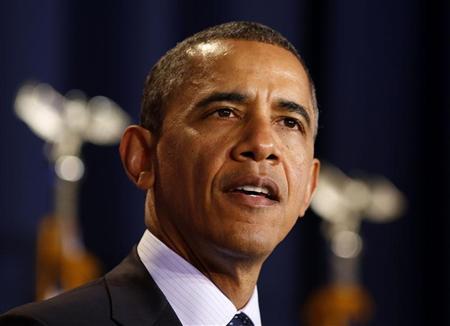
In front of a large, mostly anonymous group, President Obama is doing a presentation about something he believes, is a part of who he is, and he is an expert on. He’s written about, thought about, and is a subject-matter expert, from his perspective, about it. It’s not a conversation, which would require him to process information quickly and U.S. President Barack Obama speaks at the National Defense University in Washingtonverbalize eloquently just as quickly his response – which introverts simply cannot do (look at how poorly he did in the Q & A debates in this year’s election process). Therefore, there’s no pressure on him, and is relaxed and confident, and even almost passionate.

However, in the give-and-take of ad hoc verbal conversation and negotiation in face-to-face meetings with groups and individuals President Obama knows, he is so uncomfortable that he avoids it altogether. I read about what he’s done proposal-wise with the current fiscal cliff negotiations and that he’s incredulous about why it’s not done already. I don’t know the details of the proposal – nor is that important here. However, here’s what I’ve read and seen about what President Obama has done. He’s composed – that’s in writing – a document that says what he wants and sent it to Congress to get passed.

That’s how introverts are most comfortable communicating and he’d be delighted to have Congress put their proposal in writing, send it to him – introverts understand information much more easily when they read it than when they hear it -, give him some solitude to digest it, make written changes, if needed, then send the revised proposal back in writing. He’s probably the best emailing president we’ve ever had. 🙂

And that’s the problem. If we consider the 4:1 ratio of extroverts to introverts, then applied generally, 75% of Congress are extroverts and they are the majority that want a face-to-face sit-down with President Obama to hammer out an agreement (not to mention that, except for President Jimmy Carter, who was probably as strongly introverted as President Obama, this is how Washington has traditionally gotten things done at the end of the day).

And this is why former President Bill Clinton represents the key to the solution. President Clinton is clearly an extrovert on the strong-to-extreme end of the spectrum.  I suspect this “polar opposites” temperament difference between President Obama and him has been why there are constant suggestions that the two men don’t like eachPresident-Bill-Clinton other and their relationship has seemed frosty at best.

The fact is that President Clinton doesn’t understand President Obama, temperamentally, and President Obama, while he understands President Clinton temperamentally, can’t wrap his head around embracing it or doing it.

There’s another possible component that may explain the seeming distance between the presidents. As a strong-to-extreme extrovert, President Clinton most likely (and some of his personal behavior lends credibility to this) has no concept of personal space and physical (not visible, but discernible) boundaries – both of which are important and critical to introverts.

And I guarantee you that President Clinton has unknowingly invaded President Obama’s personal space and ignored his physical boundaries way too many times, and President Obama’s response, which is an introvert response, has been to literally and figuratively back up to create a safe distance – for him – between the two men. That’s the heart of the dynamic you can see going on between these two presidents, who probably don’t really dislike each other, but are in totally different universes temperamentally.

But Joe Scarborough, who is also a strong extrovert, is right in pointing to President Clinton as someone from whom President Obama needs to draw on his playbook to get anything accomplished. This means President Obama, who has been time and again characterized as “leading from behind,” which is what INTJ’s typically do, needs to get out of his comfort zone. The reality is that President Obama doesn’t see a need to do this and doesn’t think it’s going to accomplish anything. He knows that he will be at a disadvantage in the verbalization part of the process.

But, if President Obama doesn’t do these face-to-face small group and individual meetings with members of both parties – understanding that 75% of Congress needs to talk to him and be heard (listening is one of his strengths) and also understanding that it is okay to say “I want to think about what you’ve said and let’s meet again to discuss it” to offset his fear of being put on the spot – then he’s not going to be able to garner the support he needs to meet the country’s goals and objectives legislatively.

And that’s where quintessential leadership comes in. One of the defining characteristics of a quintessential leader is being able to understand what other people need and being able to find ways to accommodate those needs in a way that is win-win for everyone. It doesn’t mean being a chameleon, nor does it mean being insincere. It also doesn’t mean compromising principles, integrity, authenticity, or ethics. But it does mean moving, taking the necessary steps first to meet others halfway, and having the confidence in your understanding, discernment, and experience to ensure that the right and best possible outcome will be achieved.