Archive for the ‘Examples and Analyses of Quintessential Leadership’ Category

Please take some some time to read the Quintessential Leadership article recommendations for the week of May 10, 2013 that are listed below.

In Josh Bersin’s article, he asks the valid and relevant question of whether the traditional – and unproductive and archaic – annual performance appraisal system that most organizations still use should be replaced with a different system. The traditional performance appraisal system is tied to monetary raises and is a once-a-year-event where team members hear – or read – what their supervisor liked and didn’t like about their past year’s job performances. Usually, the only outcome of this system is frustration because this is the first time team members are hearing about things they did that didn’t work, needed to change, or needed to improve. 

Lack of communication, which I believe is an intrinsic problem in all organizations, is inherent in this “hammer-over-the-head” method of evaluating team members. It does not produce positive results and often leads to attrition among the most gifted and talented team members an organization has. In my eBook, Building Teams for Performance, I give a detailed “what-it-looks-like-in-practice” guide to using performance evaluation systems the way that Josh Bersin correctly concludes they should be used.

Quintessential Leader Articles Review 5-10-13Todd Smith gives a quintessential leadership trait in “Making Your Weaknesses Relevant,” by challenging all of us, as quintessential leaders, not to make excuses for our weaknesses – which we all have – but to face them and change them.

Does it ever seem like you’re in over your head? As quintessential leaders, we will have times that we are in over our heads, but Mike Myatt gives some very practical advice about how to be in over our heads without drowning.

In my post, “Quintessential Leadership News for Week Ending 3-15-13,” I challenged each of us, as quintessential leaders, to look into mirrors, not through windows as we examine ourselves and our path as quintessential leaders to make sure there’s a total match-up between what we say and what we do and are. John Baldoni offers an excellent followup to that post with this article.

In Michael McKinney’s article, Better Decision Making, he discusses the quintessential leadership balance between facts and feelings as being a key determinant in the quality of our decision-making. Feelings and emotions have their place, but they should never be the engine that drives us because they are transient and unreliable. Decisions made using feelings and emotions as the primary driving force often leave us in a worse position than if we had done nothing at all.

The Quintessential Leader blog routinely looks at why unquintessential leadership makes organizations dysfunctional. John Bossong rejoins this discussion with his article that looks at how we can identify unquintessential leadership through the signs of an unhealthy organizational culture.

The last article recommendation this week, written by Kristina Lacida, highlights, as “The Mysteries of Quintessential Leadership Revealed” discusses in detail, the differences between being a “boss” and being a “leader.” 

I hope all of us have had productive, forward-looking and forward-moving quintessential leadership weeks. I’m sure we’ve had our challenges, our missteps, and our failures. But each of those give us an opportunity to learn and to grow.

And, when it’s all said and done, we get back up and we recommit to our goal, our purpose, one step, one choice, one decision at a time. This, my friends, is a marathon, not a sprint.

May the distance we cover between now and the next time we get together be better in every way than the distance we’ve covered already.

As is the case with all quintessential leaders, I read a lot and I read widely. I read very little fiction, but when I do, I’m very selective, looking for substance and relevant rather than fluff and popularity. 

As an aside, I am one of those rare, it seems, people who eschews the idea of escapism and “feel good” when I am investing my time, energy, and effort into something.

If I don’t learn something or there are not some deep and meaningful principles I can come away with to think about and apply, then I’m simply not going to spend my time with it.

Because I am human, there’s a limit on time for me. I certainly don’t want to come to the end of my quota to discover that I wasted the majority of it.  

In pursuit of my commitment to quintessential leadership and my desire to be, at all times, in all ways, a quintessential leader, I am constantly reading articles on leadership and thinking about how and if they fit the quintessential leadership criteria.

Here is a summary of some articles I’ve read recently that certainly point to the quintessential leadership model in some way. I’d like to share those with you and encourage you to read them.

This article on 8 ways leaders undermine themselves from Forbe’s is a good overview of the subject I discuss in-depth in Building Trust and Being Trustworthy.

In conjunction, part of building trust and being trustworthy includes the ability to admit we are wrong when we are and taking responsibility for fixing what we’ve broken quickly, without blame, without excuses. This article by Amy Rees Anderson on this quintessential leader trait is excellent.

Mike Myatt’s article on why organizations suffer from leadership dysfunction offers a very good tie-in to the subject of organizational dysfunction, which I elaborate on in the Quintessential Leader blog post, “Organization Dysfunction – A Total Absence of Quintessential Leadership at the Top.” I encourage everyone to read both articles because, as Myatt correctly observes, we’re seeing leadership dysfunction become the organizational norm, instead of the exception.

Another must-read article from Mike Myatt demands that each of us examine our commitment to be quintessential leaders. Why? Because he discusses the 10 things every leader should challenge. These 10 things must be on our minds continually and the challenges to them must be continual.

This separates quintessential leaders from everyone else. As I ask myself constantly, I urge you to ask yourself: am I a quintessential leader or am I everyone else?

As I discuss in “Quintessential Leaders and Investment, Action, and Authenticity,” what you and I do and are reveals how great our investment in quintessential leadership is and how authentically we are living and being quintessential leaders.

A thought-provoking article by Manie Bosman on how unquintessential leadership traits – bullying and micromanaging among others, which I cover comprehensively in “Unquintessential Leadership” – affect us neurologically and lead to measurable negative outcomes, and if not changed or eliminated, will eventually lead to catastrophic and total failure.

An atmosphere of fear, intimidation, threats, and power plays is not something a quintessential leader will either create or tolerate. This is all around us in every part of our lives to one degree or another. What do you and I, as quintessential leaders, do about it?

The last article, by Dan McCarthy, is entitled “Is it Time to Create Your Own Succession Plan?” As quintessential leaders, this must be an integral part of our team-building process. For a framework of what this looks like in practice, I recommend “Building Teams for Performance.”

Each time I acquire a new team to build and lead, this is one of the first things on my to-do list: to identify the person or people who have the qualities that, combined with my coaching and leadership, will enable them to replace me.

No one is irreplaceable. And nothing is certain in life but death and taxes.

Therefore, a quintessential leader who wants to ensure that the legacy and foundation he or she is laying continues after he or she is out of the picture, must identify, coach, and grow his or her potential successor(s). To do anything else is unquintessential leadership. 

This post gives some good resources for quintessential leaders. I hope they will provide benefits, insights, and growth as we continue on the path of quintessential leadership.

This blog post caught my attention today. I think this is something that we, as quintessential leaders, need to think deeply about.

I know a lot of us are “busy.” But the question we need to ask is ourselves is “doing what?” Are we busy for the sake of being busy and accomplishing little? Are we busy to the point that we have wrecked our lives in pursuit of for, what in the end, will be nothing? Or are we busy in a productive, life-changing – for ourselves and others – way that will have tangible results in the long-term? Or is our “busyness” simply nothing more than a waste of our and others’ time?

Tough questions. Tough answers.

But, my fellow quintessential leaders, we must ask and answer these questions. Honestly. If the answers find our efforts to be mere busyness and not life, team, personally-changing, then I challenge each of us to take a step back to focus on our priorities, what is important, and what matters.

After all, the only thing we take out of this life is our character and how well we have managed all the relationships we’ve committed to: to God and Jesus Christ first because every other relationship we manage and commit to is based on this. To our spouses. To our families. To our teams. To humanity.

I certainly know I have a lot of work to do in each of these. What about you?

sofagirl's avatarCampari and Sofa

Stop the glorification of busy.My friend Gavin was telling me about a conversation he had with some Dutch colleagues. Gavin, and his compadre Georgina, find that the sheer volume of work they are confronted with on a weekly basis is just un-doable within the confines of a normal 8-hour work day. So they regularly put in 10-hour days at the office. And another couple of hours at home picking up emails. This causes all sorts of problems: they’re tired all the time, their spouses feel ignored, they don’t want to go out at night or over the weekend and they lose touch with friends.

Hmmfff…”, said their pals, “In Holland, if you were to work like that we would think you were not coping.”

“Am I”, he wondered, “not coping? Or am I doing more than I should? And if I am doing more than I should –  what should I stop doing? And…

View original post 1,063 more words

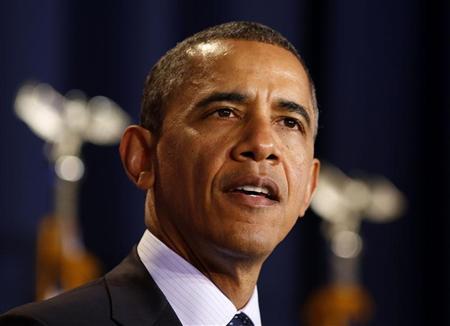
President Barack Obama, Secretary of State John Kerry, Attorney General Eric Holder and a few other top administration officials gave a nod to quintessential leadership this week by giving back a portion 0f their salaries as U.S. federal government worker furloughs begin to take effect from the sequestration that began March 1, 2013.

U.S. President Barack ObamaPresident Obama will write a check for 5% of his salary to the U.S. Treasury each month,Secretary of State John Kerry while Secretary Kerry will donate his 5% to a charity that helps U.S. State Department employees. Attorney General Holder will write a check to the US Treasury for 14 days worth of his annual salary. Details of how the other members of the president’s Cabinet who are forfeiting a portion of their salaries have not been finalized.

While the actual amounts on money these three people in U.S. leadership positions is small, the symbolism of their gestures – and the quintessential leadership statement they make, is large. And the example they’ve set for the rest of those in leadership positions in the U.S. government is powerful.

To date, I have not read of anyone in the U.S. Congress following President Obama’s, Secretary John Kerry’s, Attorney General Holder’s, and the other Cabinet members’ examples by giving back a portion of his or her salary.

I have always found it interesting that time and again the United States Congress shows how devoid it is of quintessential leadership. While the governing body itself is a chaotic and ineffective mess, they routinely give themselves pay raises – while the people they supposedly represent continue to lose jobs, homes, and sometimes families because of the global economic crisis, which the U.S. Congress had no small part in contributing to because of all the financial lobbying money backing many of its members – and make sure they have the best of health care, consistent income, and guaranteed retirement. 

I doubt this was what the Founding Fathers envisioned when they spelled out the three branches of U.S. government in Article 1 of the U.S. Constitution. What was supposed to have been a legislative body made up of the people, by the people, and for the people has become a cloister of the most wealthy and connected, by the most wealthy and connected, for the most wealthy and connected.

As with every human political system, the Grand Experiment was doomed to descend to its present state because of ever-present human nature, greed, and selfishness, and the inability of human beings to always strive to successfully go through the narrow gate of quintessential leadership consistently and continually.

As quintessential leaders, we should always be mindful that we are human beings too and we must always be checking our own positions as leaders, making sure that our intents, our attitudes, our motives, our actions, and our words are meeting the higher standard of quintessential leadership.

Have we done our check today?

No doubt by now everyone has read and/or heard about Colleen, the nurse who Brookdale Senior Livingrefused to do CPR on an 87-year-old woman who collapsed in the dining room of Glenwood Gardens, a Brookdale Senior Living facility located in Bakersfield, CA. The elderly woman later died at a local hospital.

The partial transcript of the 911 call is almost unbelievable, especially in the nurse’sGlenwood Gardens - Brookdale Senior Living - Bakersfield, California refusal, with her boss concurring with her refusal, to let the dispatcher talk someone – anyone – else through doing CPR – saying it was against company policy – to aid the elderly woman, who was barely breathing.

After reading this story, I contacted a friend of mine who is the director of nursing at the Brookdale Senior Living facility where my mom lived until she came home to live with me until her death. I asked if this was really company policy. She confirmed that it was.

Even though my mom had a DNR, so this would not have applied to her, I told my nurse friend that I didn’t remember anyone telling us that during the admissions process, since that would be something that should be clearly stated at the outset for people considering a Brookdale Senior Living facility as a choice for themselves or a family member.

She said she had brought that up to the admissions person there who basically said that telling people wasn’t required because it was explicitly stated in the mountain of paperwork that was signed and given at the time of admission. I admitted I hadn’t read every word of mine because my sister and I asked all the important questions we needed answers to during the admissions process, but that I didn’t think that was a responsible answer, because that, for a lot of people, would be a deciding factor in determining living arrangements.

I then asked my nurse friend what she would have done. She said she didn’t care what the legal issues were because this was a moral and ethical issue and she would have broken the company policy and put her employment in jeopardy to do the CPR. She made an interesting statement about how she would not be able to live with her conscience if she could help someone and didn’t. She also reminded me that in nursing school, she took The Florence Nightingale Pledge, which is similar to the Hippocratic Oath that doctors take, which includes the intent of doing no harm to those in their care. 

So what does this have to do with quintessential leadership or the lack of quintessential leadership? Everything.

We’ll start with the nurse because it’s the easier of the two to clearly see a lack of quintessential leadership. As a nurse, she took the same pledge my friend did. The welfare of that 87-year-old lady – even if any efforts at CPR didn’t, in the end, save her life – should have been her only concern. The dispatcher gave her an opportunity to let somebody else do CPR and the nurse refused everything. She lost – or maybe never had – the vision of what being a nurse means. At the very least, her nursing license should be immediately and permanently voided in all 50 states.

Brookdale Senior Living is also being operated and run by unquintessential leadership. That this policy is in place at all, in assisted living facilities, is not only absurd, but reprehensible and irresponsible. But the company’s unquintessential leadership goes far beyond this one incident.

It is important to take a big-picture look at this company – and all others like it – to see what their priorities are (I know a lot about Brookdale Senior Living, which is why I am singling them out, but it would be naive to say they are the only senior community company that has these policies and operating models). While seniors and their families are encouraged to believe that these companies care about them and put “our residents first,” that is, in fact, not the truth. What these companies care about most is profit (the monthly charges, for the bare minimum of services, start around $5000 in the south, so it makes sense that it’s much higher in other parts of the country) and no legal liability. If the residents happen to fall in the mix pleasantly, that’s okay, but if they don’t, then the company comes first.

The lack of honesty and the greed and self-interests of the companies are all unquintessial leadership traits. So, buyer beware, which quintessential leaders don’t have to worry about, applies to anyone considering one of these facilities.

Brookdale Senior Living lacks quintessential leadership in many areas beyond this, based on my experience with them and subsequent first-hand knowledge that I have had of their activities. They have policies in place that don’t protect the residents, the interests of the residents, and the families of the residents. And the puzzling part of this is that some of these policies leave them wide open for lawsuits, if someone wanted to pursue them.

In my mom’s case, while she was living there – and this precipitated (among other things affecting her health that I had discussed and been promised over and over would be done and never were), after Mama emphatically told me she wanted to live with me and didn’t want to go back there, Mama coming home to live with me until her death in August of last year – she had a very bad fall in the middle of the night.

(I don’t know what happened in Mama’s brain during the month between her diagnosis with vascular dementia and the hospitalization in a geriatric psychiatric facility after a couple of the most bizarre weeks of her life and my twin sister’s and my lives, but the first thing I noticed on my first visit with her there was that she was suddenly turning around counter-clockwise. Because of that, she would lose her balance. That became her way of turning her body, and as the diseases – Lewy Body dementia was also present – worsened and her balance in general got worse, she was more prone to falling.)

The problem – and quintessential leadership failure – was that I didn’t hear about the fall until 8:30 the next morning when I called Mama to tell her I was on my way (I was there every day, often for hours at a time, just to keep an eye on things and make sure she was okay) and she told me she’d fallen and her ankle was hurting badly. I was livid as she told me that a CNA had come in and found her on the floor, asked her if she was okay, and when Mama said she was, lifted her up and put her back in bed.

The unquintessential leadership in this scenario abounds. The first is asking someone, who, by the way, had a serious hearing loss and did not have her hearing aids on, with dementias and Alzheimer’s Disease to accurately assess her condition. The second was not calling EMS to take her to the emergency room to check for broken bones (fortunately, she didn’t break anything, but she had a serious ankle sprain), then call me to tell me to go to the ER. The third was the CNA moving her without confirmation that nothing was broken.

I got calmed down enough to go in and talk with the director of nursing, because I had explicitly said early on that if anything happened to Mama, I wanted to know immediately, no matter what time of the day or night it was. It was in the record and it wasn’t done. I got a lot of excuses about why the CNA didn’t call – also unquintessential leadership – but finally the director of nursing agreed that she should have and told me she’d get mobile x-rays done just to make sure Mama was okay.

I ended up spending almost two weeks pretty much living there with Mama to ensure she was healing and safe (I understood that it was assisted living, so I couldn’t expect someone other than me to be there 24/7).

About a week after that, I went in early one morning – several people had been in and out of the room and Mama had gone to breakfast, so a lot of people had an opportunity to observe her – and I immediately noticed she was having a really hard time breathing. The fact that no one else saw it or said anything to me about it was unquintessential leadership. I got her to the doctor and the determination was either pneumonia or the beginnings of congestive heart failure.

The doctor treated it as pneumonia since the chest x-ray seemed to indicate that, but it was in fact congestive heart failure, which landed Mama in the hospital a week after that (she’d been staying with me that week and I grew more concerned as I saw her breathing getting more and more labored). It was after that hospitalization that Mama came to live with me for good.

I didn’t blame all of Mama’s issues with high blood pressure and congestive heart failure on the Brookdale Senior Living facility. It wasn’t all their fault. However, the lack of quintessential leadership at the facility definitely contributed to Mama’s condition.

Her doctor had ordered a very strict diet to try to deal with blood pressure and weight and I had talked to everyone there for about a year trying to ensure that the diet was followed.

Everybody from the top down gave me lip-service that they would follow the doctor’s orders, but no one followed up and no one ensured it was done. I saw time and again, with my own eyes, that it wasn’t being done. Each time I brought it to the attention of those in leadership positions there, I heard blame and then the same old promises, which were never kept.

That was unquintessential leadership on so many levels.

But the most unquintessential leadership story that I heard about this particular facility was recounted to me (and I will not recount the details here to protect the person, who is a good friend, who told me in excruciating details one of the most horrific stories I think I’ve ever heard in my life) months later and it is damning evidence that Brookdale Senior Living is under unquintessential leadership from the very top down.

This story involved a serious medical emergency with a resident – whom Mama and I both knew and who was vivacious, healthy, and said to me every time she saw me, “I just love your little mama” – brought on by a criminal act by another resident, that occurred on a Sunday morning. The registered nurse was asked to call 911, but instead of calling 911, the RN started trying to call the executive director and the director of nursing. Finally, because the RN wouldn’t call 911, one of the staff members did.

The resident with the serious medical emergency was transported to the hospital, where she died a week later. The staff member told 911 what had happened, but immediately the RN started disputing her story. The executive director finally came in and the cover-up of what actually happened began in earnest. The staff member was put on notice because she’d “broken the chain of command,” which she had not, but the RN, who was at the top of the chain of command, didn’t do what she should have done, which was to have called 911, and then called facility leadership to let them know what happened.

The family was lied to about what happened and the circumstances under which it happened. No action was taken against the resident who committed the criminal act, which jeopardized every other resident still there. And eventually the staff member who did the right thing was fired for insubordination.

You might wonder why and what all this has to do with us as quintessential leaders. The answer is “everything!” This is both a strong caution for those of us who are now the quintessential leaders who are entrusted with our aging parents’ care and for those of us who are striving to be quintessential leaders in every aspect of our lives.

This is what unquintessential leadership looks like in action, with specifics that have broad application throughout our professional, personal, and spiritual lives. As quintessential leaders, we have the responsibility to ensure we are not following in the footsteps of the examples given above. Please be sure to read an excellent companion blog article to this one entitled “Quintessential Selfishness.”

That requires us to have the commitment, the determination, and the courage to do the right thing all the time, no matter what the personal cost is to us. It requires us to have an immovable and unshakable moral and ethical foundation that is the basis of everything we are, we do, we say, and we think. It requires all the components of Building Trust and Being Trustworthy to be an active and living part of our very beings all the time.

It’s prudent to look in the mirror quite frequently and make sure we are the quintessential leaders we say we are and are striving to become better at. Too often, we can all get lazy or complacent and believe, as Paul Simon so eloquently wrote, “that we’re gliding down the highway when, in fact, we’re slip slidin’ away.” 

Today’s post has been on my mind quite some time, as I’ve spent a lot of time observing, processing, analyzing how prevalent groupthink has become and how the majority of people, it seems, have adapted that as the norm, and, in the process, just checked their brains at the door.

It’s important to remember that the brain is part of the body and it must be exercised just as the rest of the body is exercised to stay sharp, to stay aware, and to be discerning.

It doesn’t mean that every thought we have is right. But how do you know for yourself what right and wrong thinking is, if you’re not thinking at all? It doesn’t mean that every conclusion we draw from thinking is feasible, doable, or practical. But, again, how do you know for yourself whether conclusions – yours or others – are feasible, doable, or practical if you’re not in the habit of thinking in objective terms about costs and benefits, pros and cons, and outcomes?

We are becoming a society that is content to let others do our thinking for us. And there are a lot of individuals and organizations that want to do our thinking for us. It seems that most of us prefer to just go with the flow and agree to whatever all the things we’re attached to in our lives tell us are right, good, and true. And that’s a very, very dangerous place to be.

As quintessential leaders, we must be on constant guard against groupthink and what it conveys about trust and trustworthiness. My book, Building Trust and Being Trustworthy, is an in-depth discussion of the components that make up building trust and being trustworthy. Get your copy today!

There is not a human being on this planet who can afford not to know and understand this subject. Too many people don’t. That is, in part, why we are seeing the dominance of  groupthink – enforced and accepted – and we are seeing a steep and rapid degradation in moral and ethical standards everywhere we turn.

As a refresher for those who may not have read George Orwell’s 1984 – a book that I also believe should be required reading for everyone on the planet – let me briefly define the idea behind groupthink.

Groupthink, generally, refers to a collective of people all thinking the exact same thing, with no deviation. The underlying desire and professed aim is harmony and unity, so to avoid possible disruption of that, individuals are discouraged and sometimes threatened from objective analysis and truth and proof tests of the accepted thinking.

Loyalty to the group is emphasized over everything else, including truth, and any questioning of the group thinking is seen as disloyal. Therefore, all creativity, all objective analysis, and all truth and proof testing is squashed and, if it occurs, the individual is deemed dangerous and untrustworthy.

The problem with groupthink is that when bad ideas, old ideas that didn’t work the first time around, wrong ideas, unworkable ideas, not-very-smart ideas, and untrue ideas come in, since no dissension, no checks and balances, no questioning is allowed, they become part and parcel of the working body of information within the group.

And bad groupthink becomes badthink and the derailing of the entire group has begun.

Individuals in this environment, such as Orwell’s Winston Smith, know that their mental – and these are rarely, if ever verbalized, and when they are, they are verbalized very, very carefully (if you watch The Tudors, think of how Thomas More handled a groupthink he was not a part of – I would definitely take the same road he took until I was left no choice, as he was not, and then I’d lay it out as concisely and concretely as it has been written and rewritten in my thinking ) – reality checks, proving, testing for truths are very dangerous and that elimination – whether literally with their lives or symbolically by being cast out and banned from the group – is inevitable. There is no other outcome at some point. It’s an accepted fact.

Why is groupthink such a powerful card that some people in leadership positions want to play? Why do they play it? What does it say about trust and trustworthiness? What does it say about respect?

Groupthink is imposed because of fear. Fear of losing power, fear of losing stature, and fear of being proven wrong. It is imposed as a means of complete control. It says to those its imposed upon that they are not trusted and they are not trustworthy. It also says they have no value and, therefore, are not worthy of any respect.

However, you’ll never hear those reasons stated out loud. Instead, you’ll hear words like “loyalty,” “unity,” “collaboration,” and statements about “being on the same page.” There is always a certain amount of coercion and guilt that accompanies these words and statements that play on the emotions of a species – that’s us humans – who have a strong desire for connection and attachment to other humans. And the possible deprivation of that is why groupthink is so powerful for a lot of people and why society accepts it, in general, hook, line, and sinker.

There are way too many examples of groupthink and its repercussions in our society that is literally saturated with it now to discuss them all here.

Marissa Mayer - CEO - Yahoo!But the story about Marissa Mayer’s banning of telecommuting at Yahoo! this week encapsulates groupthink in such as way that it put the icing on the cake of my thinking about this subject for me. I’ll give a few examples of why.

One of the banes of groupthink is the reintroduction of archaic and unfeasible ideas from the past repackaged and remarketed as “new and fresh” thinking. It really shows outdated and stale or no thinking, and it shows the absence of quintessential leadership.

I’ve read widely on this decision by Mayers and have been thinking about it a lot with my own professional background in technology. It makes no sense for a lot of reasons.

Yahoo!’s business, as are all high-tech companies, is encompassed by mobile computing – having the technology to do whatever you need to whenever it needs to be done. Its benefit is specifically what she is banning in this memo.

The everybody-has-to-be-in-the-same-physical-location-or-nothing-will-get-done is not only an archaic idea, but it also has been proven untrue.

Telecommuting workers, on the whole – if you’re lazy telecommuting, you’ll be lazy at an office – are more productive and contribute a higher yield of results to companies because they’re not in an office, going to meetings all day, answering inane phone calls and emails all day, listening to their coworkers talk – and much of that talk is not about work – all day.

Meetings can still take place, face-to-face, with current and emerging technology, so nothing’s lost if someone needs that face time. To say otherwise is dishonest. I say that because I’ve heard this as the kingpin argument too many times and it’s simply untrue.

But the meetings tend to be focused and shorter and not the colossal wastes of time that most meetings in the office are when all the disorganized thinkers who also have a penchant and need to talk out every single random thought in their heads take over and kill productivity for hours at a time.

Telecommuting also represents a huge reduction in overhead for companies and for employees. For companies, it means less equipment, less office space, and less office consumables, which represents a significant cost savings and a better bottom line. Employees save money and time – that they can spend working – by not having to drive, often, long distances to an office. Employees are also eligible for tax benefits by having and maintaining a home office. It’s a win-win situation.

Mayer’s contention that Yahoo!’s employees will be more collaborative, more innovative and more productive by all being in the same physical location is badthink.

The reality is that if employees aren’t productive, collaborative when the need arises, and innovative as telecommuters, then they will not be productive, collaborative, or innovative anywhere else. That’s a skill set issue, not a location issue.

But what Mayer misses in this edict is the lack of quintessential leadership that has been in Yahoo! for years. If those in leadership positions don’t communicate vision, don’t develop and communicate strategies and goals, then all the employees basically end up doing their own thing, whether they are working from home or working at the office.

Instead of Mayer taking ownership for her responsibility as CEO – and admitting the lack of quintessential leadership in the past – she is essentially blaming Yahoo!’s problems on the employees. That is badthink and that is unquintessential leadership.

Another aspect of groupthink in the Yahoo! example comes from Mayer’s “one-size-fits-all” perspective. That is not only a foolish perspective, but it is an unquintessential leader perspective. Mayer is clearly an extrovert. She thinks like an extrovert. She acts like an extrovert. And she expects everyone in Yahoo! to think and act like an extrovert.

Mayer gets her energy from interaction with other people. She took only two weeks of maternity leave when her son was born last year and got back into the office, where she was surrounded by a lot of people. And that’s fine, because that’s what extroverts do.

However, with her faulty groupthink – which is believing all her employees will be energized by all the people around them 10-12 hours a day – she doesn’t realize that an inordinately high percentage of people in technology are introverts. Introverts get drained quickly of resources by a steady and continuous stream of people interaction and it reduces their productivity, innovation, and collaboration.

So here’s an example of the result of badthink. The introverts who are forced to come into the office now will not be roaming the halls, sharing lunches with their colleagues, or all the other random “here’s-a-spark” encounters that Mayer envisions happening when everyone’s onsite. Instead, the introverts will hole up in their cubes, earbuds and iPods engaged, and work alone. If they venture out for food, drink, and bathroom breaks, they will choose times when they are least likely to be hung up, and the food and drinks will come back to the cube with them.

And they’ll be somewhat less productive, somewhat less inclined to spend extra time working on projects, and very unhappy. What will most likely happen at Yahoo! because of this new rule is that they will lose some of their best employees, who will go to other high-tech firms who recognize the value of telecommuting.

Mayer will be left, then, with the same telecommuters who didn’t work when they were at home, but now they’re in the office not working, and she’ll also be left with a lot of disgruntled employees, who would normally be good workers, with morale issues because even if they haven’t telecommuted, they always knew it was an option if something unexpected came up, and now they’ve basically been told “come to the office or else.”

Groupthink is something that we as quintessential leaders must be aware of, must resist, and must ensure is not how we lead our teams. It’s a subtle enemy. It’s a dangerous enemy. It’s a destructive enemy.