Archive for the ‘Examples and Analyses of Lack of Leadership and Unquintessential Leadership’ Category

In “The Mindset of Unquintessential Leadership and What It Looks Like in Action,” one of the characteristics that I identified as part of that mindset is bullying.

I think it’s fair to say that we’ve all been exposed to bullying at some point during our lives. However, not all of us have been victims of bullying. For a bully to succeed, the person being bullied has to give his or her power to the bully.

Not everyone who gives this power to bullies is inherently weak. Sometimes the surrender simply comes from long-term battle fatigue and being completely worn down over time.

It takes tenacity, an exceptionally-strong will, and a very thick skin sometimes not to give power to someone else, especially with threats that sometimes go as far as the possibility of losing one’s life. (more…)

One of the hallmark signs of unquintessential leadership in an organization is the lack or misuse of performance management systems. Today’s post will talk about both scenarios and how they destroy individual performance and morale, team performance and morale, organizational performance and morale, and customer – the reason organizations are in business to begin with – trust and loyalty. 

What is a performance management system? If designed and used properly, it is the single best tool an organization has to ensure increased commitment, productivity, and success within the organization as well as increased customer trust, loyalty, and growth. Performance management systems require buy-in, continuous effort, accountability, and consequences for everyone involved in the process.  (more…)

This is a good post on quintessential leadership.

What it is. What it isn’t.

The best quote: “Charismatic leaders create followers. Great leaders create leaders.”

Dan Rockwell's avatarLeadership Freak

charisma

Charismatic leaders are bigger than life. You aren’t one of them.

Very few leaders move people through charisma, personality, and up front skills. It’s not likely you have enough charisma to lead through charisma.

Successful leadership doesn’t require charisma.

Weak people want leaders to be bigger, brighter, and prettier than they are. But, everyone’s a mess somewhere. Those who’ve arrived haven’t! Drop the façade. Everyone’s on a journey.

Charismatic leaders create followers.
Great leaders create leaders.

Hypocrites say leadership is about others and then say look at me.

Do you enjoy someone:

  1. Looking over your shoulder?
  2. Telling you what to do?
  3. Rushing to fix?

How do you like it when someone “helps” you? I hope you hate it! Potential leaders hate it too.

If they don’t hate being helped, you’ve trained them to be helpless monkeys looking for bananas from their zookeeper.

Create leaders by asking questions like:

  1. What are…

View original post 163 more words

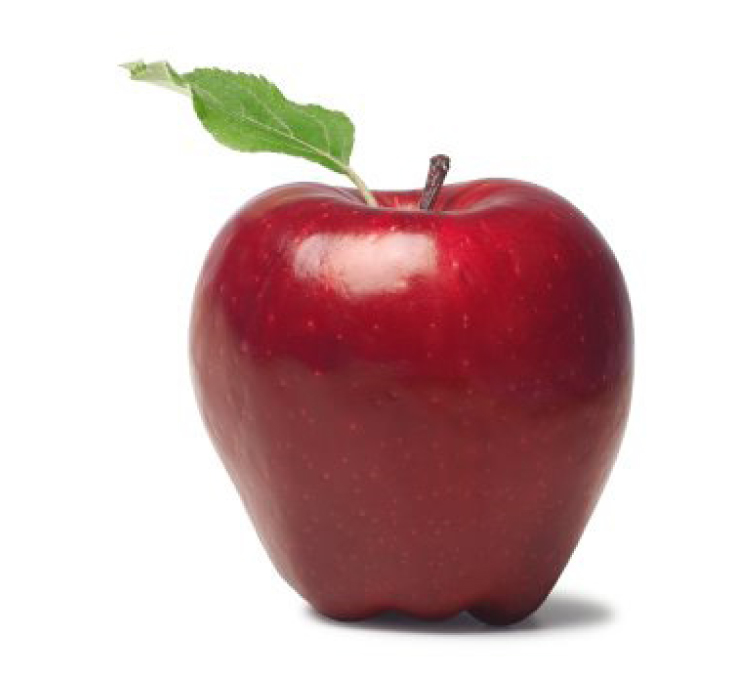
green apple unquintessential leaderIn Dan Rockwell’s latest blog post, he describes the characteristics and the effects of “green apple” (unquintessential) leaders on organizations. He contrasts that with the attributes and effects of “ripe apple” (quintessential) leaders.

Please take a few minutes to read Rockwell’s post.

Then, as always, because this is what quintessential leaders do, let’s each assess ourselves to see whether we are green apples or ripe apples. As individuals. As team members. As leaders.

As Rockwell states, we all can exhibit green apple traits at times. That’s part of being human, unfortunately. But my request of each of us today is not to evaluate someone else – as Rockwell proposes at the end of his post – but to evaluate ourselves.

Then via comments here on the blog, share with us a green apple trait that you have successfully turned into a ripe apple trait and tell us how you accomplished that. There is much we have to share with each other in our collective journeys to become quintessential leaders.

I’ll put the first one out there. I’ve struggled with anger – sometimes rage – all my life and still do at times. I’ve always worked hard, thanks to a late-night heartfelt talk with my mom when I was around eight years old about it, to contain, control, and eliminate my anger in every part of my life. Sometimes I’m successful. Sometimes I’m not.

But in the course of doing some really stupid and potentially dangerous things during my life when anger and rage got the best of me, I realized along the way that not only was I hurting myself by getting so worked up, but I had the potential to hurt others because of my lack of self-control.

So, I learned and am still learning that anger is my dangerous emotion. I always need to be conscious of that and be aware when it makes its sudden and flashpoint appearance. I immediately extricate myself from the situation that causes it. I walk away. I breathe deeply. I walk and talk myself through it until I get calmed down. Most of the time, this takes less than half an hour today (it used to take a whole lot longer, so I know I’m making progress here overall).

But, within the last year, I got a needed reality check that this is something that still is a pretty deep-rooted green apple trait that I have not completely succeeded in turning into a ripe apple trait.

I had a deeply personal situation where it took months to get over my anger and rage about the events surrounding it. red-appleEvery time I thought I was over it, it came back in full force – and, at times, even more strongly than when the situation and events happened – and consumed me all over again.

But the upside of this is that I was aware of it and my wholehearted desire was to eventually overcome it. So instead of giving up, quitting, and accepting it, I really worked very very hard and diligently on changing it, and with time and diligence, I made progress in ripening this trait.

But I know it’s still there and I know it’s a green-red apple trait, so my work is not done.

What is the green apple trait you are actively working on to turn into a ripe apple trait?

All of us are part of many teams during our lifetimes: family, schools, social organizations, religious organizations, and business organizations are the major teams we are a part of throughout our lives. And, while we as individuals, are striving to become quintessential leaders, we often find that we are the only or one of a handful of team members on the various teams we are a part of that are.

So today’s post asks each of us to assess the teams we are a part of and determine whether the teams practice quintessential leadership or unquintessential leadership.

If they practice quintessential leadership, then we should encourage and grow that by becoming more quintessential in our personal leadership (modeling and mentoring quintessential leadership).

However, if one or many or all the teams we’re a part of practice unquintessential leadership, then today’s question for each of you to answer – please share your comments here because we who a part of this blog are a team and we can learn from each other – is what do you and I do personally to work to change that?

In Mike Myatt’s article, “30 Outdated Leadership Practices Holding Your Company Back,” he has a chart that, in general, shows unquintessential leadership practices (left column) and quintessential leadership practices (right column):unquintessential leader and quintessential leader practices 2013

Which column, in general, describes each team you’re a part of? And to answer this honestly and accurately, each of us must first ask which column, in general, describes us individually as people and as leaders?

In this earlier post, I discussed how quintessential leaders look into mirrors while unquintessential leaders look through windows. Take a moment and go back to review that post. Because today’s post gives us another opportunity, as quintessential leaders, to look into a mirror. 

The question, then, is will I? Will you?

Are a lot of the people you know – and answer to on the job – in leadership positions psychopaths? Are you a psychopath in a leadership position? Am I? Tough questions for us personally to answer, but not very tough to answer if we’ve worked with psychopaths.

I have worked with several in my career. Each one had a different personality and temperament, but they all shared the same destructive traits of psychopaths.

There seems to be a disproportionate number of psychopaths, compared to the general population, who end up in leadership positions. In “Sometimes the boss really is a psycho,” one researcher found that about 4% of the 203 executives he studied were psychopaths, while psychopaths make up only about 1% of the general population.

Meryl Streep as Miranda Priestly in The Devil Wears PradaWhen I think of the epitome of a psychopathic person in a leadership position, I think of Meryl Streep’s character, Miranda Priestly, in The Devil Wears Prada.

Some of the characteristics of psychopaths in leadership positions include:

  • Skillful and continual manipulation – bullying, threatening, and intimidating subordinates and charming, flattering, and fawning over superiors – of everyone in the organization
  • Over-inflated ego and sense of self-importance
  • Pathological lying
  • Absence of a sense of right and wrong
  • Absence of remorse and regret
  • Absence of empathy and sympathy
  • Toxicity

liam neeson oskar schindler schindler's listWhen I think of the opposite of Miranda Priestly, sticking with the movies here, I think of Oskar Schindler, portrayed by Liam Neeson in Schindler’s List.

Some of the characteristics of real leaders are:

  • Trustworthiness in everything
  • Strong convictions about right and wrong
  • Willingness to do whatever it takes to do the right thing, regardless of personal or professional cost
  • Humility
  • Strong sense of empathy and sympathy
  • Fairness with everyone

Have you worked with a psychopath in a leadership position? How did it affect you and the organization? What characteristics can you add to the list of psychopath traits as something we all need to be aware of?

Have you worked with a real leader? How did it affect you and the organization? What characteristics did he or she have that you learned and can add to the list of characteristics of real leaders?

Your turn.