yoda star wars leadershipUnless you’re God, Jesus Christ, or a fictional character (whose record, unlike the first two, is not perfect) in a Star Wars movie, the answer is “no.”

If you answered anything but “no,” then this post is for you.

Even if you answered “no,” this post is for you.

Because just saying “no” without understanding why doesn’t make you any more knowledgeable, any wiser, or any more of a quintessential leader than anyone who answered “yes” or “maybe.”

To discuss this topic cogently and thoroughly, we need to first look at the big picture and understand that there are different categories of questions we’re asked. These include factual questions, informational questions, moral questions, ethical questions, and life questions.

Moral questions and ethical questions should never be, for a quintessential leader, questions that we don’t have an immediate answer for and an explanation for our answers.

Consistent, unwavering, and unimpeachable moral and ethical character is a defining trait of quintessential leaders. It is literally a part of who and what we are and it is one of the traits that makes us trustworthy.

However, there are some factual questions and informational questions that we may not know the answers to, but we know we can find the answers.

When we are asked these kinds of questions, our responses are “Let me find the answers and get back to you.” Our responsibility then is to do what we say we’re going to do promptly.

life questions quintessential leaderBut the questions that will be the ones we will not know or have all the answers for are life questions. And how and if we answer those questions accurately and compassionately will determine if we’re quintessential leaders or not.

There is a leadership myth that people who are in positions of leadership are required to have all the answers and know everything or they are not leaders.

Many people in leadership positions tend to fall into the traps of this myth. And the results are devastating because more hurt and damage is done by trying to live up to the myth than simply saying “I don’t know, but…”

Because the reality is that when it comes to life questions, none of us have or know all the answers. Ever. There are many things in life that are beyond our human understanding, knowledge, and comprehension.

To pretend that we have all the answers or to believe that we can find all the answers is, at its root, dishonest.

Sometimes it’s unintentional dishonesty. We are trying to do what we think we’re supposed to be doing – the myth. There are several ways this unintentional dishonesty happens.

One way is that we simply don’t understand the nature of the question and we believe we’re answering it when in fact we’re answering another question altogether.

Another way is that we haven’t been where the person asking the question has been or is. In other words, we haven’t experienced firsthand either exactly or to the degree of what that person has or is experiencing, so we have no frame of reference from which to answer their question. But we try to answer it anyway.

And then sometimes it’s intentional dishonesty because of pride, arrogance, and the need to maintain control. We know we don’t know, but we don’t care.

So we make things up, we lie without blinking, and we fool enough of the people enough of the time to gain a lot of people who believe us until our fantasies and our lies fall apart, as all fantasies and lies do in time, and in the wake of them is a bigger swath of destruction and damage than any hurricane, earthquake, volcanic eruption, or tsunami could even begin to touch because we’ve destroyed lives from the inside out.

Destruction and damage to stuff is difficult to deal with and, while some losses are permanent and unrecoverable, a viable measure of recovery is still possible.
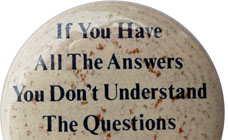
no one has all the answers quintessential leaderDestruction and damage to the soul and to the psyche, on the other hand is excruciating, and often times, the possibility of any kind of meaningful recovery is slim to none.

The reality of life is that some things in life simply don’t have answers – at least that are available to us peeps on the planet.

With many life questions, it’s impossible to make a nice, neat list and say, “If you do a, b, c, this will answer x life question.” Life and the unique situations that each of us experience – which generates the questions – as we go through life are not that simple.

If any of us thinks it is, then we simply don’t get it.

So when we are trying to live up to the “leader-knows-all” myth, we not only hurt ourselves and do more damage by “answering” life questions, but we hurt and do a lot of damage to those we’re “answering.”

What, then, do quintessential leaders do? 

This came up recently in a discussion about an “answered” life question that I didn’t – and wouldn’t – ask, but that I have been and am experiencing 24/7 for a long time. And I’ll share with you what I shared in the discussion.

The “answer” was well-intentioned but it had some noticeable flaws and, in the end, was the answer to another question.

I had a physical reaction – my chest tightened up and I really had to work hard for a few minutes to get a grip and calm myself down – at the very beginning of the “answer,” because I knew it wasn’t the answer to the question.

There were disconcerting statements made that literally caused anxiety in me because I knew what was being said – and I’m not even sure the person answering the question realized they said what they said – showed a lack of knowledge, experience, and intimate understanding, even though the person answering the question is very compassionate, caring, and empathetic.

On a personal note, in some ways, at least for me, that’s much, much harder to deal with than someone you know doesn’t care.

And, yet, there would be no way to explain to this person or any other person who has not walked intimately and long-term in the shoes of this – or any other, for that matter – life question that the answers, if there are any, are not always so cut and dry, “this” or “that,” and that, in the big scheme of things, there are a lot of aspects that there are no answers for. 

But as I listened to the “answer,” it became apparent that the life question being answered was not the one that had been asked. I have done and am doing all the things contained in that answer and none of them has answered my life question (which is the same life question the person was attempting to answer).

Quintessential leaders, first and foremost, recognize their limitations. And when it comes to life questions, we are all limited. We don’t have or know all the answers to life questions and we won’t as long as we breathe for a living.

And that’s okay. It doesn’t mean we’re less of a leader. It doesn’t mean we’ve failed. It doesn’t mean that we’ve let other people down. It means that we’re human.

I was asked during the discussion how I would have answered this life question. Since it’s a predominant life question for me right now, I gave the answer I’ve come to accept, but I added what someone who hasn’t walked in the shoes of this life question isn’t really able to in a meaningful way.

My answer? “I don’t know the answer, but I’m asking the same question myself because I’m going through the same thing. I completely understand exactly what you’re asking, why you’re asking it, and what a crushing, 24/7 weight it is on your mind and your life. I can’t solve it for you. I can’t fix it for you. But I can walk, step for step, with you and beside you through it. You are not completely alone.”

My fellow quintessential leaders, “I don’t know” in the matter of life questions is the next best thing to silence if we don’t know or have the answers. It is the product of wisdom. It is also the product of humility.

An abundance of words about something we haven’t experienced firsthand, know little or nothing about in a meaningful way, or simply don’t understand is the worst thing we can do.

Life questions are tough for everyone. Except for the people being intentionally dishonest in answering them, the motivation to find answers is not malicious (in fact, it’s the opposite because we really want to help), but when the answers are hollow or wrong or to a different question altogether, we do more harm than good. 

How are we doing?
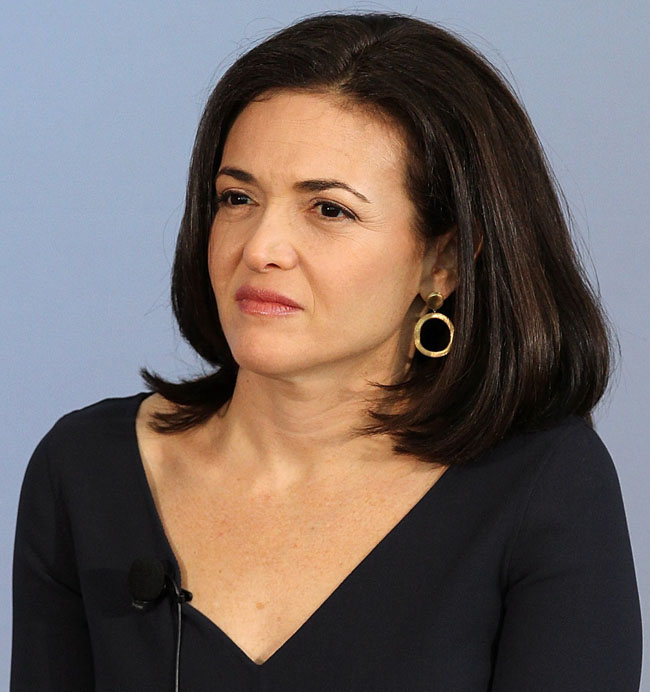


Sheryl Sandberg bossy equals unquintessential leadership “I want every little girl who’s told she’s bossy to be told instead that she has leadership skills.” – Sheryl Sandberg

Sheryl Sandberg is quite disappointing, not just as a role model for women, but also as a role model for leaders, because this quote illustrates – as does her 2013 book, Lean In – that she doesn’t really know a whole lot about what leadership really entails and that she isn’t a quintessential leader.

Sandberg is an example of someone who’s in a leadership position – she’s the Chief Operating Officer at Facebook – who isn’t a leader. In fact, she’s an example of an unquintessential leader.

Why?

This quote encapsulates Sandberg’s philosophy and lifeview. And her philosopy and lifeview are dead wrong.

But I also realize, that from time to time, we all need a refresher on and a reminder of the basics, especially as our society blurs more lines between “this” and “that” and as our language morphs into opposites suddenly equaling each other.

This is a responsibility that I, as a striving quintessential leader, have to my teams. And that includes each of you.

So let’s examine why bossiness and leadership are not the same thing and why they are, in fact, completes opposites of each other. 

While the list of differences between what bossiness and leadership are is lengthy, I’ve chosen to highlight a few of the more important differences between the two.

One important difference between bossiness and leadership is that bossiness seeks to control, while leadership seeks to guide.bossy attributes unquintessential leadershipThe trait of of bossiness is always about control – and the bossy person getting their way at all costs. This is a byproduct of narcissism, of pride, of insecurity, of fear, and of internal inadequacy.

This is also a black-and-white view of outcomes: if I don’t get my way, I lose (control and everything else) and if I do get my way, I win (control and everything else). In fact, there are no processes with bossiness, just outcomes. Everything in life is a tick in the W or L column, and ticks in the L column are unacceptable.

Leadership, on the other hand, is about guidance. It creates frameworks and teams. It recognizes that there are multiple ways to achieve the same goal and it clearly delineates guidelines (ethical, moral, functional, etc.) within which the teams are free to navigate, making the best use of their talents, their abilities, their education, and their experience.

Leadership is the glue that ensures that the dots get connected, but it doesn’t legislate every step the teams take to connect those dots.

There are failures, but not losses. There are mistakes, but not catastrophes (the guidance of leadership sees catastrophes in the making and stops them before they become catastrophes). There are successes, but not wins. Inherent in the processes of each of these areas, however, are the more important things in terms of leadership: the lessons of experience and the education of future leaders.

A second important difference between bossiness and leadership is that bossiness forces, while leadership persuades.

A bossy person has a “my way or the highway” attitude. Bossy people, who never see a reason to explain their edicts and view people who have questions about their edicts as mortal enemies, always threaten dire consequences to force people to do things their way.

This can come in the form of threats (“if you don’t do it my way, you’ll be fired/shunned/excluded/removed”), intimidation (“you won’t get that promotion/grade/position if you don’t do it my way”), and bullying (“I can make every waking moment of your life hell for you if you don’t do it my way”).

As I’ve said before, forcing people to do something may seem to work in the short-term, but it is not leadership nor is it an effective strategy for the long-term.

Leaders, on the hand, motivate their teams by persuasion. Leaders explain everything they are able to explain. They also invite input from their teams on how to address and tackle problems, issues, projects, and goals. Leaders are there to keep the big picture on track, but they are not there to force a single solitary way to meet challenges.

There is generally a best path to success, and leaders persuade their teams to adhere to that path – this is where coaching comes in – while the team works together to build the steps on that path. It’s a very interactive process where everybody on the team is invited, everybody on the team is included, and everybody on the team is expected to make a contribution.

And questions are encouraged. Every time someone starts to ask me a question with some variation of “This may be a dumb/stupid question, but…?,” I always answer first with “The only dumb/stupid question is the one you don’t ask.” I believe that and I practice that. If you don’t know the answer to something, it’s not very smart not to try to get the answer.

quintessential leadership is not bossyA final critical difference between bossiness and leadership is how things are managed. Bossy people micromanage everything and everybody, while leaders macromanage the big things and coach and help their teams as the need arises.

Bossy people literally look over everyone’s shoulders all the time. This is because when you have to force people to do things in a rigid, inflexible way, because people are individual and unique, you can’t trust everybody to adhere perfectly to that rigid inflexibility.

Most of this is a result of the “square peg in a round hole” principle: some people just don’t have the skills or abilities to follow a rigid and inflexible pattern that is diametrically opposite to how they think and work. It’s not that those people aren’t fully capable of doing the task or job right and well, but instead because they would accomplish it a different way that uses their gifts and strengths.

Leaders, on the other hand, build diverse teams that purposefully include people with unique talents and abilities so that when the teams work as units all the bases are covered. In other words, there are no gaps in knowledge, experience, and skills. Leaders trust their teams.

Leaders and their teams work together to plan and execute at the macro level. Each team member is given autonomy and authority over his or her part of the project or goal (again, within the big-picture framework in terms of scope and function and in terms of what’s ethical and what’s moral) with the understanding of how his or her part fits in with the other parts.

Leaders take care of the macro things like budgets, resources, time, as well as ensuring that things – and people – not only move forward, but move forward to successful completion. Again, it’s an interactive, but not intrusive process.

So the question I leave you with today, my fellow quintessential leaders, is are you bossy or are you a leader? 


Dan Rockwell summarizes and I expound and our leadership blogs often complement each other very well.

So, while Dan Rockwell’s post doesn’t explore the depths of the differences between unquintessential leaders and quintessential leaders, this list is a very good overview.

world series 2014 san francisco giants kansas city royals quintessential leaderI’ll get this out of the way up front. If I watch a baseball team play an entire game (which is rare because I don’t often want to give up three or more hours of my life to something that, in the end, doesn’t move me forward in some way in the rest of my life) during the regular baseball season, that team is the New York Yankees.

Although I grew up in the South, my dad – who grew up listening to Yankees baseball games on the radio in Burlington, NC – was a Yankees fan and he passed that on to me. The things I loved about watching Yankees’ games with my dad when I was a kid was to see how much he enjoyed and knew about the game and how much he enjoyed sharing that with his family.

After Daddy died, I let baseball pretty much slip away from my active radar because it just didn’t hold any appeal without him to watch it with. Now I’m an extremely passive Yankees fan. I might catch an inning or two a couple of times a year – although I occasionally check their standings throughout the season – but that’s most of the extent of my baseball consumption these days.

However, during the World Series each year, no matter who is playing, I try to watch at least a couple of innings of each game until a clear winner emerges because I want to see what it was that got those teams there that year.

Why?

Because beyond the exceptional skills of a few players on each team, there has to be leadership and teamwork to get all of the players and coaches synced up enough over the course of the season to play the kind of baseball that consistently makes its way successfully through the playoffs to get to the World Series.

Last year, when the Boston Red Sox outperformed the St. Louis Cardinals to win the World Series, there was a distinctive outward manifestation of the team-building that had taken place during the regular season – every Red Sox player grew a beard and none of the players shaved their beards until the World Series was over.

2014 world series jake peavy pitcher quintessential leadershipThere is an interesting link between the 2013 World Series and the 2014 World Series. That link is Jake Peavy, a starting pitcher for the Boston Red Sox in 2013 and for the San Francisco Giants in 2014.

The quality of a baseball team’s pitching staff is often a determining factor in how well the team gels together and how far the team extends its season. Starting pitchers are critical in this mix and, while they may not be the official team captains (leaders), they are often the de facto leaders on the field during games.

Peavy had good pitching stats going into his stint with the Red Sox, but after a dismal two-year performance, he was traded to the Giants in 2014. Peavy has not done much better in his first year there, including in the World Series.

And here’s where leadership and team-building and teamwork come into play. No one respects Jake Peavy.

I was very surprised to hear how the sports commentators basically trashed Peavy in the first game he pitched this year against the Kansas City Royals in the World Series.

Supposedly the objective and unbiased presenters of the games, these commentators made it clear that they didn’t expect anything but failure out of Peavy with their disparaging comments from the get-go.

The body language, facial gestures, and actions of the Giants on the field and in the dugout during game 2 and game 6 of this year’s World Series showed the entire team’s – including the coaches and manager – contempt for Peavy when he was pitching.

Although he was the de facto leader on the field, it was clear no one wanted him there and it led to the beginning of the Royals’ rout of the Giants when no one paid any attention to him during a crucial play in last night’s game (game 6).

The crucial play came during Peavy’s disastrous second inning when Peavy was telling Giants first baseman Brandon Belt to throw home and Belt completely ignored him and decided to run down the tag of the Royals Eric Hosmer at first base. Hosmer beat the tag.

In that moment, the lack of leadership, teamwork, and team-building among the Giants organization was crystal clear to me. It replayed in slow motion in my mind as I thought how those few seconds showed me all I needed to see as a quintessential leader to know that Giants don’t have it.

san francisco giants logoOh, the Giants may win the 2014 World Series, because they have a few great hitters and one great pitcher – who may be a clutch reliever tonight if starting pitcher Tim Hudson gets behind in the early innings – who might get lucky enough to pull it off.

kansas city royals logoHowever, the odds favor the Royals, who clearly have leadership, teamwork, and team-building in place. They look like a time, they act like a team, and they play like a team.

It’s taken the Royals 29 years to get another World Series-ready team in place, but the organization carefully and skillfully, over the course of several years (one of last night’s commentators said that professional baseball is different from any other sport in that it takes a lot longer to bring an athlete up to the skill level and capability to play at the professional level), ensured that the leadership, the team-building – individually and collectively – and the teamwork is in place for just such a moment as this.

Based on my experience as someone who strives to practice and continues to grow toward quintessential leadership in every part of who I am and in my life every day, I know that what the Royals have in place – and the Giants don’t have in place – gives the Royals the advantage of being successful.

What about us? You and me. Do we strive to be and work at being quintessential leaders continuously in every part of our lives? Do we even know what it is? Can we recognize it when we see it or don’t see it, no matter where we see it? 

The reality is that if we don’t live, do, and are something 24/7, then it’s not a part of us, of who and what we are. We’re pretenders.

And because we’re pretenders, we don’t know what the real thing looks like and are susceptible to falling for counterfeits and believing they’re the real thing, when it fact they’re not.

To know what quintessential leadership does and doesn’t look like, we must be actively striving to be and practicing quintessential leadership everywhere in our lives, even those areas and places and moments where nobody’s looking (those count more, in many ways, than the ones in which somebody or everybody’s looking).

How are we doing?


key component of quintessential leadershipI recently heard a discussion that contrasted the way God and Jesus Christ interact with humanity now (the terms “hands off” and “choice” – or free will – were used interchangeably) and the way the Bible says they will interact with humanity in the future (the term “hands on” was used).

Words are important. The way we construct and present words to present ideas are important. And the way we define relationships (such as similarity and contrasts) with words is important.

Equally important is whether we listen, how we listen, and whether we are critically thinking about what we hear or we just accept it at face value as being accurate.

Quintessential leaders pay very close attention to both sides of this equation at all times.

Therefore, for example, if someone sets up a contrast, then they present two opposite things. If  interchangeable words are used on one side of the contrast, then there are, either expressly stated or implied, interchangeable words on the other side of the contrast. Since it’s a contrast, the words (stated or implied) on each side are opposites of each other.

So, in the discussion I talked about above, if “hand’s off” equals “choice” (which was expressly stated) then, in contrast, “hand’s on” implicitly equals “no choice.” And the lack of choice equals force.

But is that true?

Is it accurate?

And is it consistent with the written record we have that shows how God and Jesus Christ (whom we are repeatedly assured are consistent, don’t lie, and have the same character and characteristics forever) have interacted with humanity, who they created, from the beginning?

The answer is “no.” While I could go to many places in the Bible to prove this, I will use the first example I immediately thought about to refute this, which is in Genesis 4:3-7.

The conversation (and I have no doubt it was a lengthy one but we just see the summary here) between the Lord and Cain shows explicitly how God and Jesus Christ lead humans and what that relationship has looked like, looks like, and will always look like.

The Lord (I AM in the Old Testament and Jesus Christ in the New Testament) had the ability to force Cain to do the right thing. But He didn’t do that.

Instead, He laid out the big picture of the framework within which Cain had to operate. He educated Cain on the options he had and what the consequences of executing those options were. Then He coached Cain on which option would lead to a successful outcome.

But Cain had to choose which option he wanted to pursue. Why?

force unquintessential leadershipForce can get the results a leader wants, but while force may win the battle, it loses the war.

A person who is forced to do something, whether by fear, intimidation, coercion, or bullying, is passively participating, but they have no investment, no commitment, no heart, soul, and mind conviction behind their actions. 

Using force puts all the accountability and responsibility on the shoulders of the person exerting the force.

Finally, force requires a total shutdown of logic, reasoning, and critical thinking (all attributes that humans were created with and are expected to use). Essentially, force creates rote action accompanied by suspension of all the unique elements of our brains and our consciences that make us human. 

In other words, force creates the same superficial and unknowing conditioned responses in humans that Pavlov’s famous experiments created in dogs.

choice quintessential leadershipWhen choices are presented, on the other hand, they require active participation on the part of the people they are presented to. Choices carry responsibility and accountability, and they require logic, reasoning, critical thinking, and action.

Not all choices carry the same weight and, therefore, may not require a total heart, soul, and mind investment and commitment (for example, choosing between eggs and toast or cereal for breakfast), but all choices, when they are executed, have some level of investment and commitment.

Choices also create a partnership between leaders and their teams. There are obligations on both sides and there are rewards on both sides. One of the greatest rewards can be growth as good choices are made that lead to greater progress and productivity, resulting in successful outcomes for everyone.

Even bad choices serve a vital purpose. They help us to learn what not to do the next time. As we deal with the accountability and responsibility of the consequences of bad choices, it spurs us to critically think about what we did that led to those consequences and to think about what we will change in the future to produce different – and, hopefully, better – results.

God and Jesus Christ are the epitomes of quintessential leadership and the models we as human quintessential leaders strive to perfectly and totally emulate in who we are, what we are, how we are, and how we lead.

So, choice or force: which is quintessential leadership?

quintessential leader foundations matterFoundations matter. Because no matter what kind of foundation we have as the basis for what we build the rest of our lives on, it will be assaulted, sometimes violently, from the day we take our first breaths to the day we take our last ones.

How well we weather the continuous assaults will be determined by the kind of foundation we’re building on.

For the purpose of this discussion, we will not address people who have no foundation they build on, because the outcomes they face are pretty cut and dry.

Instead, we want to look at the types of foundations that people generally build their lives upon. We then will look at how each foundation affects the building process, as well as how much protection each offers from the assaults that come from breathing for a living.

And we’ll see, in the process, which foundation quintessential leaders build their lives on and why that matters.

The three kinds of foundations that people build their lives on are:

  1. Shifting
  2. Unstable
  3. Solid

quintessential-leader-shifting-foundationA shifting foundation is a constantly moving foundation. It literally shifts based on which way the wind blows.

People who build their lives on a shifting foundation are in constant motion as to what they believe, what – and who – they like, what they do, what they think, and how they are.

These people are chameleons. They tend to make all their decisions based on how they feel in the present tense, disregarding or uninterested in facts, reason, and logic.

They are exuberantly and quickly enthusiastic about every “next best thing” that comes their way, jumping headlong into whatever it is, but that completely disappears as soon as a new “next best thing” arrives at their doorstep.

They are constantly jumping from one thing to another physically, mentally, emotionally, and spiritually.

People who build their lives on shifting foundations are particularly vulnerable to gimmicks, cons, misinformation (any shade of dishonesty, including spinning, angling, omission, and outright lying), and emotional manipulation.

Because their foundations shift, these people have no core mindset against which to weigh everything that comes at them (discernment) and no filters to block anything out. They tend to be gullible, innately believing everything they hear, often being convinced that something is true when it is not.

These people are the target audience for advertisers and marketers because they react and respond emotionally. Advertisers and marketers use emotional words like “love,” “embrace,” and “care,” as well as pinnacle words like “all,” “best,” and “great.”

Advertisers and marketers also use appealing personal phrases like “you deserve,” “you owe it to yourself,” and “you’ll be happy if…” If you don’t believe me, pay close attention to a few commercials on TV or read a few product descriptions for things being sold online.

And people whose lives are built on shifting foundations fall for it hook, line, and sinker. Every time.

People who are building their lives on a shifting foundation are disastrous when they end up in leadership positions. It is impossible to get straight answers from them and it is impossible to get consistent answers from them.

Because they immediately and enthusiastically jump into every “next best thing,” and jump out just as quickly when the “next best thing” appears, people in leadership positions who have shifting foundations constantly change projects and goals for their teams, often on a dime, leaving their teams in chaos with morale in the toilet.

quintessential leader unstable foundation sinkholeAn unstable foundation is one that looks solid on the surface, but just underneath are major issues, weaknesses, flaws, and problems that make the foundation unstable.

While a shifting foundation is visible to the naked eye, an unstable foundation is not. Only the passing of time and continual pressure will make an unstable foundation evident.

People who are building their lives on unstable foundations are typically very superficial. They are also dishonest with everyone, including themselves. People who are building their lives on unstable foundations are consummate actors and are able to imitate anything flawlessly, often to the point of believing they are the role they are playing.

They seem to, on the surface, embody the ideal in every area of their lives and they seem to be “perfect.” They also tend to attract a lot of followers and admirers because they put on such a good show of being it all and having it all. F. Scott Fitzgerald‘s Jay Gatsby is a literary example of a person whose life was built on an unstable foundation.

People who have built their lives on unstable foundations also tend to need a lot of devotees around them all the time to attest to their skills as first-rate actors. These groupies must be “yes” people, though, and they must never question anything.

Two more hand-in-hand aspects of people who’ve built their lives on unstable foundations are the need to control everything and everybody as well as being expert history revisionists.

People who are building their lives on unstable foundations crack completely – and often suddenly and without warning – under pressure and over time and when they crack, the massiveness of the flaws, the issues, the problems and the weaknesses in their foundation is exposed.

But people who have built their lives on unstable foundations also leave a lot of collateral damage – their followers – when their foundations fail. Nobody comes out unscathed and damages range from total to minor, depending on the proximity of the followers to the people who’ve built on unstable foundations.

When people who are building their lives on unstable foundations are in leadership positions, catastrophic loss is the ultimate outcome. Bernie Madoff, Ivan Boesky, and Richard Whitney are well-known examples of people in leadership positions who built their lives on unstable foundations.

quintessential leader solid foundationSolid foundations are strong, deep, and can withstand the intensity of time, pressure, and scrutiny.

With solid foundations, what you see is what you get. Solid foundations are reliable and they are trustworthy. You can depend on a solid foundation holding up, staying in place, and being consistent, no matter what else happens.

People who are building their lives on solid foundations are people who, first and foremost, have a core mindset and code of absolute integrity and truth against which everything they encounter is measured. Anything that does not meet that standard is rejected.

People who are building their lives on a solid foundation always strive to be objective, knowledgeable, and discerning. They tend to be thinking people who will take the time they need to be fully informed so that they understand the depth and complexities of everything that comes their way.

Because people who’ve built their lives on a solid foundation habitually do this all their lives, they develop the skill of doing this quickly in most situations – and when they need more time, they will tell you and will not be pushed or bullied into a snap decision – because the reality is that while circumstances and characters change over time, the core issues that we humans face in life do not.  

People who are building their lives on a solid foundation are not led by their emotions and feelings, nor do they make decisions based on emotions and feelings. It is not that these people don’t have emotions and feelings, but they don’t rely on them as a standard or a guide for living life.

People who’ve built their lives on a solid foundation have an uncompromising moral code that they apply to everything in their lives. When they see dishonesty, misinformation, spinning, angling, omission from others, they will correct it because they know that other people may be making decisions based on that and lies and erroneous information will lead them to a wrong or bad decision.

This trait doesn’t always make people who are building their lives on a solid foundation the most popular people on the block, especially when they correct these forms of dishonesty with popular people and authority figures.

They become even more unpopular, even with undeniable proof of facts and truth, when they debunk things that people hold near and dear in their beliefs and in their lives and refuse to let go of.

I always wondered why that was the case. It occurred to me recently that we call these kinds of things “sacred cows.” It dawned on me one day not long ago where the reference comes from: the cow that Aaron made for the Israelites when Moses went up the first time to get the 10 Commandments from God.

And then I realized why. Forty-plus years later, after having God literally with the Israelites day (cloud) and night (pillar of fire), Joshua had to tell the 2nd generation out of Egypt to get rid of their foreign gods (among which were some little cow statues, I’m sure) before going into the Promised Land

The more things change, the more they stay the same.

When people who are building their lives on a solid foundation are in leadership positions, you have quintessential leaders.

Unlike the disastrousness and catastrophic loss that people who’ve built their lives on shifting and unstable foundations leave in their wake, quintessential leaders leave a legacy: a team of quintessential leaders who can, in turn, build their own teams of quintessential leaders.

That matters because any entity from you or me to organizations to nations reflects the kind of foundation it has been built on.

Since quintessential leaders develop quintessential leaders, they ensure that everywhere they touch and are in life has the opportunity to build on a solid foundation. Not everyone will take the opportunity. Some are too comfortable with or too afraid to change their shifting and unstable foundations to switch to building on a solid foundation, but those that do will be the next iteration of quintessential leaders.

Foundations matter. What kind of foundation are your life and your beliefs built on? Is it shifting? Is it unstable? Or is it solid?

The answer matters too.