the quintessential leader building trust and being trust worthy book

In the first post of this series, the excerpt from chapter 1 included a list of all the components we must develop and have to build trust and be trustworthy.

The second post in this series, which included an excerpt from chapter 2 of Building Trust and Being Trustworthy, looked at the component of honesty in building trust and being trustworthy.

This post will include an excerpt from chapter 3 of Building Trust and Being Trustworthy

Another component of building trust and being trustworthy that we must have is integrity.

Most people don’t realize that integrity and honesty are two distinct but complementary components of building trust and being trustworthy. This chapter defines and shows what integrity does and doesn’t look like.

Building trust and being trustworthy is an integrated trait of quintessential leaders.

It is also an integrated trait that all of us – because each and every one of us leads at least one team, small or large, of people in our lives – need to develop and have as part of the core of who we are and what we are. In essence, this trait is at the center of exemplary character and conduct, and none of us should settle for anything less than this in ourselves and others.

Unfortunately, most of us settle for less. A lot less. In ourselves. In others. 

The majority of people in leadership positions today are not trust builders and they are not trustworthy. Many of us, frankly, are also not trust builders and trustworthy.

We live in a world that with no moral code as its foundation that expects trust to be non-existent or broken. Look around. It’s everywhere, including, in many cases, very close to you.

And society has become so accustomed to this that it glorifies it instead of condemning it.

Politicians who lie routinely, who line their pockets with money and perks while making decisions that hurt and destroy the people they are supposed to represent, who cheat on their wives because they can.

Arts and sports celebrities who have no regard for faithfulness to their spouses, who live hedonistic lifestyles that destroy their families, the people around them, and, eventually their lives.

Religious leaders who cheat on their wives, who cheat on their taxes, and who scam their congregations both in how they deceitfully handle the word of God and in coercive and corrupt financial matters, acquiring wealth and power in the process.

Business leaders who destroy millions of lives by deceit, fraud, and illegal actions that result in their employees and customers losing everything while they escape any kind of punitive action and instead reap obscene profits and end their tenures – only to go to another financially lucrative position – with golden parachutes that are equally obscene.

And we, as individual leaders for our teams, who cheat on our taxes, who are routinely dishonest with the children (our own and others) and other people entrusted to us, who routinely steal things from our workplaces (you most likely didn’t pay for that pen you’re using at work, so it doesn’t belong to you), who routinely break traffic laws, who will walk out of stores with something we were not charged for and never think twice about it, who will take extra money that we’re not owed in financial transactions without blinking an eye, who cheat on our spouses, who marry until “divorce do us part,” and who, as a course of habit, break confidences of family and friends, gossip about family and friends behind their backs, and destroy reputations in the process.

Maybe we haven’t thought about building trust and being trustworthy at this kind of nitty gritty level.

But until we do – and we develop and have this trait as the core of who and what we are – we will not build trust and we will not be trustworthy. And we will not be quintessential leaders.

Trust and trustworthiness is probably the single most important trait we can possess. And it is also the most fragile.

It can take a long time to build and be, but it can be broken irreparably in a single second.

Therefore, this is a lifetime work on and in ourselves that we must commit to making an integral part of our character by continually developing it, maintaining it, and growing it. 

This goal should be our goal.

But it requires courage. It requires diligence. It requires vigilance. It requires continual self-examination. It requires continual change. It requires the ability to, much of the time, stand alone to maintain.

It is not for the faint-hearted. It is not for the vacillators. It is not for the crowd-pleasers. It is not for the pretenders. It is not for the wannabes. It is not for the weak.

But if you’re reading this, I know that you’re not any of those kinds of people. Those kinds of people won’t even read this because it requires time, effort, change, and commitment, and too many of us are, sadly, either just too lazy or we just don’t care. 

Building Trust and Being Trustworthy takes an in-depth look at the “this is what it looks like in practice” aspect of each of the components we need to develop and have to build trust and be trustworthy. The second chapter discusses the component of honesty in building trust and being trustworthy.

olive-horizontal-line

Excerpt from”Chapter 3: The Integrity Component of Trust and Trustworthiness”

We have already looked in-depth at the honesty component of trust and trustworthiness, and now we will look a corresponding and complementary component: integrity. They are not the same, although both must be present in quintessential leaders. To separate them more logically in thinking, honesty is how a person is (conduct), while integrity is who and what a person is (values and standards).

Generally, one doesn’t exist without the other because they depend on each other. If you observe someone who’s habitually dishonest with him or herself and others in any and/or every part of his or her life, you will find upon further observation, that person also lacks integrity. On the other hand, if you see someone who’s habitually honest with him or herself in any and/or every part of his or her life, upon further observation of that person, you will learn that he or she possesses integrity.

The word integrity comes from the root word integral, which means, among other things, entirecomplete, or whole. And that is a strong part of what integrity actually is. It is undivided and unwavering with regard to moral principles, to right and wrong, to right values and standards.

There  is no deviation, regardless of circumstances or costs. It is a systemic quality that affects everything in life. If it’s not a part of a person, life is perpetually chaotic, a free-for-all, and completely unpredictable in terms of directions and outcomes. If it is part of a person, there’s an unchangeable and dependable framework that can be trusted and counted on no matter what’s going on inside the frame.

So, what does integrity look like in action? It first has an intrinsic set of immutable values and standards and adheres to those values and standards, no matter what. Second, it is a conscious and deliberate choice of service – selflessness – over self-interest.

Integrity, by default, is encapsulated by Spock’s famous statement before sacrificing his life to save the rest of the Enterprise crew in The Wrath of Khan: “The needs of the many outweigh the needs of the one.” A quintessential leader will have the integrity to do what’s best for everyone, not just what’s best for him or herself. There is never a component of self-interest as a guiding principle in decision-making.

Integrity is also demonstrated by good stewardship. A quintessential leader will use resources correctly and judiciously and will acquire and allocate them fairly and skillfully, maximizing the benefit to all, based on needs, not wants.

Additionally, a quintessential leader will guard and protect those resources, ensuring that they are not diluted or wasted (this includes people – a good team can be undone by just one person that is not contributing or is actively creating divisions and disruptions).”

the quintessential leader building trust and being trust worthy book

In the first post of this series, the excerpt from chapter 1 included a list of all the components we must develop and have to build trust and be trustworthy.

This post, which includes an excerpt from the second chapter of Building Trust and Being Trustworthy, begins to look at each of those components extensively in terms of what they are and aren’t and what they look like and don’t look like in practice. 

The first component of building trust and being trustworthy that we must have is honesty.

Building trust and being trustworthy is an integrated trait of quintessential leaders.

It is also an integrated trait that all of us – because each and every one of us leads at least one team, small or large, of people in our lives – need to develop and have as part of the core of who we are and what we are. In essence, this trait is at the center of exemplary character and conduct, and none of us should settle for anything less than this in ourselves and others.

Unfortunately, most of us settle for less. A lot less. In ourselves. In others. 

The majority of people in leadership positions today are not trust builders and they are not trustworthy. Many of us, frankly, are also not trust builders and trustworthy.

We live in a world that with no moral code as its foundation that expects trust to be non-existent or broken. Look around. It’s everywhere, including, in many cases, very close to you.

And society has become so accustomed to this that it glorifies it instead of condemning it.

Politicians who lie routinely, who line their pockets with money and perks while making decisions that hurt and destroy the people they are supposed to represent, who cheat on their wives because they can.

Arts and sports celebrities who have no regard for faithfulness to their spouses, who live hedonistic lifestyles that destroy their families, the people around them, and, eventually their lives.

Religious leaders who cheat on their wives, who cheat on their taxes, and who scam their congregations both in how they deceitfully handle the word of God and in coercive and corrupt financial matters, acquiring wealth and power in the process.

Business leaders who destroy millions of lives by deceit, fraud, and illegal actions that result in their employees and customers losing everything while they escape any kind of punitive action and instead reap obscene profits and end their tenures – only to go to another financially lucrative position – with golden parachutes that are equally obscene.

And we, as individual leaders for our teams, who cheat on our taxes, who are routinely dishonest with the children (our own and others) and other people entrusted to us, who routinely steal things from our workplaces (you most likely didn’t pay for that pen you’re using at work, so it doesn’t belong to you), who routinely break traffic laws, who will walk out of stores with something we were not charged for and never think twice about it, who will take extra money that we’re not owed in financial transactions without blinking an eye, who cheat on our spouses, who marry until “divorce do us part,” and who, as a course of habit, break confidences of family and friends, gossip about family and friends behind their backs, and destroy reputations in the process.

Maybe we haven’t thought about building trust and being trustworthy at this kind of nitty gritty level.

But until we do – and we develop and have this trait as the core of who and what we are – we will not build trust and we will not be trustworthy. And we will not be quintessential leaders.

Trust and trustworthiness is probably the single most important trait we can possess. And it is also the most fragile.

It can take a long time to build and be, but it can be broken irreparably in a single second.

Therefore, this is a lifetime work on and in ourselves that we must commit to making an integral part of our character by continually developing it, maintaining it, and growing it. 

This goal should be our goal.

But it requires courage. It requires diligence. It requires vigilance. It requires continual self-examination. It requires continual change. It requires the ability to, much of the time, stand alone to maintain.

It is not for the faint-hearted. It is not for the vacillators. It is not for the crowd-pleasers. It is not for the pretenders. It is not for the wannabes. It is not for the weak.

But if you’re reading this, I know that you’re not any of those kinds of people. Those kinds of people won’t even read this because it requires time, effort, change, and commitment, and too many of us are, sadly, either just too lazy or we just don’t care. 

Building Trust and Being Trustworthy takes an in-depth look at the “this is what it looks like in practice” aspect of each of the components we need to develop and have to build trust and be trustworthy. The second chapter discusses the component of honesty in building trust and being trustworthy.

olive-horizontal-line

Excerpt from”Chapter 2: The Honesty Component of Trust and Trustworthiness”

Let’s look at some specific examples of what the quintessential leader trait of honesty looks – and doesn’t look – like. Maybe a leader is honest with his team not hiding any truth from them. But what if his or her team routinely sees the leader exhibit dishonest behavior outside the confines of the team?

Is the leader honest with his or her superiors, or does the leader routinely fudge, obfuscate, tell “little white lies” (there is no such thing: a lie is a lie is a lie) to them about things? This routinely occurs in most organizations. Sometimes it done under the guise of protecting the team and sometimes it’s done out of habit. Either way, it’s dishonest.

Is the leader honest with his or her peers or is he or she known to exaggerate or embellish on a regular basis? This is ego-driven dishonesty and comes from a spirit of competition and one-upmanship. This is definitely not a quintessential leader we’re talking about, but it reflects a lot of the people we see in leadership positions in organizations.

Does the leader respect company property and use it honestly? For example, if the leader has a company credit card does he or she use it strictly for company/business-related expenses or does the leader do things like put personal expenditures on it from time to time or use it to take everyone out for a night on the town during a business trip? Is their computer, phone, car – and anything else the company might provide – used solely for business or are they routinely employed for the leader’s personal use? If company property is used for anything other than directly-related-to-business purposes and things, then those uses are an example of dishonesty.

And here’s the net effect of these areas of dishonesty. Even if a leader is honest with his or her team, because he or she is dishonest in every other part of his or her life, the team can’t trust him or her. The team will question even the things that are true and will never trust the leader. The evidence is too compelling that, in the balance of things, he or she is untrustworthy.”

the quintessential leader building trust and being trust worthy bookBuilding trust and being trustworthy is an integrated trait of quintessential leaders.

It is also an integrated trait that all of us – because each and every one of us leads at least one team, small or large, of people in our lives – need to develop and have as part of the core of who we are and what we are. In essence, this trait is at the center of exemplary character and conduct, and none of us should settle for anything less than this in ourselves and others.

Unfortunately, most of us settle for less. A lot less. In ourselves. In others. 

The majority of people in leadership positions today are not trust builders and they are not trustworthy. Many of us, frankly, are also not trust builders and trustworthy.

We live in a world that with no moral code as its foundation that expects trust to be non-existent or broken. Look around. It’s everywhere, including, in many cases, very close to you.

And society has become so accustomed to this that it glorifies it instead of condemning it.

Politicians who lie routinely, who line their pockets with money and perks while making decisions that hurt and destroy the people they are supposed to represent, who cheat on their wives because they can.

Arts and sports celebrities who have no regard for faithfulness to their spouses, who live hedonistic lifestyles that destroy their families, the people around them, and, eventually their lives.

Religious leaders who cheat on their wives, who cheat on their taxes, and who scam their congregations both in how they deceitfully handle the word of God and in coercive and corrupt financial matters, acquiring wealth and power in the process.

Business leaders who destroy millions of lives by deceit, fraud, and illegal actions that result in their employees and customers losing everything while they escape any kind of punitive action and instead reap obscene profits and end their tenures – only to go to another financially lucrative position – with golden parachutes that are equally obscene.

And we, as individual leaders for our teams, who cheat on our taxes, who are routinely dishonest with the children (our own and others) and other people entrusted to us, who routinely steal things from our workplaces (you most likely didn’t pay for that pen you’re using at work, so it doesn’t belong to you), who routinely break traffic laws, who will walk out of stores with something we were not charged for and never think twice about it, who will take extra money that we’re not owed in financial transactions without blinking an eye, who cheat on our spouses, who marry until “divorce do us part,” and who, as a course of habit, break confidences of family and friends, gossip about family and friends behind their backs, and destroy reputations in the process.

Maybe we haven’t thought about building trust and being trustworthy at this kind of nitty gritty level.

But until we do – and we develop and have this trait as the core of who and what we are – we will not build trust and we will not be trustworthy. And we will not be quintessential leaders.

Trust and trustworthiness is probably the single most important trait we can possess. And it is also the most fragile.

It can take a long time to build and be, but it can be broken irreparably in a single second.

Therefore, this is a lifetime work on and in ourselves that we must commit to making an integral part of our character by continually developing it, maintaining it, and growing it. 

This goal should be our goal.

But it requires courage. It requires diligence. It requires vigilance. It requires continual self-examination. It requires continual change. It requires the ability to, much of the time, stand alone to maintain.

It is not for the faint-hearted. It is not for the vacillators. It is not for the crowd-pleasers. It is not for the pretenders. It is not for the wannabes. It is not for the weak.

But if you’re reading this, I know that you’re not any of those kinds of people. Those kinds of people won’t even read this because it requires time, effort, change, and commitment, and too many of us are, sadly, either just too lazy or we just don’t care. 

Building Trust and Being Trustworthy takes an in-depth look at the “this is what it looks like in practice” aspect of each of the components we need to develop and have to build trust and be trustworthy. The first chapter gives a comprehensive description of what building trust and being trustworthy is.

olive-horizontal-line

Excerpt from”Chapter 1: Trust and Trustworthiness – A Quintessential Leader Trait”

Trust and trustworthiness – one is from others to us while the other is our state of being – are core quintessential leader traits. This book defines the components a quintessential leader must have in order to have trust and be trustworthy.

Since trust is, both from us and toward us, a by-product of being trustworthy, I want to look in today’s post at a brief summary of characteristics – I plan to discuss most, if not all, of these individually in depth in upcoming posts – that make a leader trustworthy. 

There are two main components of trustworthiness. One is character and the second is competency. If either of these is missing or deficient, there is no trustworthiness.

Character, which Steven M. R. Covey (Speed of Trust) summarizes as doing the right thing, is who we are, while competency, which Covey summarizes as doing things the right way, is what we do.

Character, good or bad, is the first and last impression the people our lives intersect with carry with them. Competency is harder to gauge and is something that is revealed more slowly over time.

As a leader, I often make hiring decisions based on character rather than competency, knowing that character is usually set long before a person ever darkens the door of an office building, and if it’s bad or deficient, it will be difficult, if not impossible, to change. Competency, on the other hand, can be taught and can be learned at any stage in life.

So what character traits engender others’ trust in us and establish us as being trustworthy, and therefore, quintessential leaders?

  • Honesty – Being truthful in every aspect of life
  • Integrity – Possessing and adhering to morally-right and ethical principles no matter what
  • Fairness – Treating all people the same way and holding them to the same standards
  • Respect – Showing care and concern for and kindness to all people
  • Accountability –  Taking full responsibility for what is within your control and expecting the same from your team
  • Sincerity – Being genuine, authentic, and real
  • Focus on adding value – Ensuring that you give as much or more than you get in all relationships
  • Right wrongs – Being willing to quickly fix problems and mistakes
  • Moral courage – Doing the right thing all the time
  • Consistency – Being the same at all times in who you are, how you are, and what you are
  • Trust – Showing others that you trust them
  • Setting boundaries – Establishing what is acceptable and unacceptable and adhering to it with no exceptions
  • Raising the bar – Holding yourself to a higher standard of conduct at all times

In the area of competencies that are required for the Quintessential Leader trait of trustworthiness, some of these come naturally, but others don’t because they require us to put our egos away and that’s is a hard thing for us all to do sometimes, but it is absolutely necessary if we are going to be trustworthy. These competencies are:

  • Listening – Being willing to hear the good, the bad, and the ugly…even if it’s about you
  • Taking criticism well – Learning to handle all criticism with grace instead of defensiveness
  • Responsiveness – Being quick to do what you say you’re going to do and to deal correctly with issues, problems, mistakes, surprises, and needs
  • Reliability – Being dependable all the time
  • Being present – Being 100% – no multitasking allowed! –engaged with people who are communicating with you”

cia torture unquintessential leadershipWith the United States Senate Intelligence Committee’s report released on December 10, 2014 about the methods the CIA used to gather national security information in the post-September-11-2001 era and the subsequent responses, it is profoundly evident that there was and is unquintessential leadership all the way around.

Let’s look at why.

The reality is that the business of humanly-devised governments – any humanly-devised government in any context – is the business of unquintessential leadership.

Humanly-devised governments attract people who crave and chase power and will do anything to get it. For these people, “being in charge” means ruling over, crushing, dictating, and dominating others. These people are expert liars and manipulators.

They also hold the belief that everyone except them is non-thinking, gullible, and ignorant. Therefore, they believe they can do and say anything and get away with it because nobody will even notice.

While there may be quintessential leaders even in humanly-devised governments, they will not not be the public names and the public faces associated with these governments.

Quintessential leaders don’t want the limelight. Quintessential leaders are not power-hungry. Quintessential leaders will not compromise their principles for positions and money. And, generally, quintessential leaders are few and far between in humanly-devised government structures.

While we generally associate team-building with quintessential leadership, there is a team structure in unquintessential leadership as well. However, the type of team and the purpose of the team is diametrically opposite that of quintessential leadership.

At the heart of unquintessential leadership are intricate, deeply-entangled webs of deceit. To successfully support these webs of deceit, a team of three types of people must be in place:

  • Architects
  • Executors
  • Scapegoats

The architects devise the plans. However, no single architect has access to or responsibility for the entire web of deceit. Instead each architect is given a piece of the web to build in isolation (and sometimes ignorance) of all the other pieces.

One reason for this is to ensure that the unquintessential leader has complete control, because whoever has all the information has all the power (quintessential leaders, by contrast, ensure their teams have all the information and each team member knows and understands how their part fits and works with all the other parts).

The other reason is that if the webs of deceit are ever discovered, everyone involved can claim plausible deniability. In other words, nobody is accountable and no one can be blamed.

The executors are the ones who carry out the plans. They are not given anything but orders and they are expected to carry them out as they are designed and without questioning.

This is the mentality that first came to light with the Nazis under Adolph Hitler and his team in Germany during World War II. The standard refrain for executors? “I was just doing what I was told to do.”

The scapegoats are the people who fall on their swords if any part of these webs of deceit comes to light (never are any of these webs of deceit fully untangled in part because of their design and in part because, in the end, most of us don’t really want to know or care about the whole truth). The scapegoats know their roles and they are generously rewarded and taken care of for fulfilling them.

With the components of webs of deceits defined, let’s now look at a few specific examples of how unquintessential leadership permeates humanly-devised governments in the instance of this report on the CIA’s activities after 9/11/01.

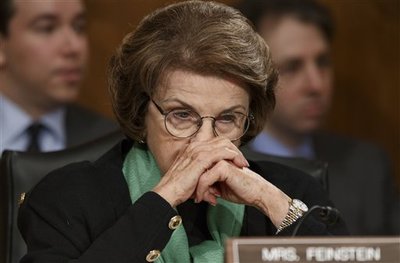
dianne feinstein senate intelligence committee unquintessential leadershipDianne Feinstein, who is the chairman of the United States Senate Intelligence Committee, spearheaded this report and pushed for its public release, despite concerns that its contents could result in terrorist activity against United States’ interests abroad and at home.

The fear of what could happen when it became public alone, if you’re a thinking person, should tell you that everyone involved knew enough very specific details about what the CIA was doing in its detention and interrogation program.

And yet there are three main threads of denial: complete ignorance, complete acceptance, and complete immorality. Each of these is a product of unquintessential leadership.

The report suggests that the United States Senate Intelligence Committee had no idea about the specific detention and interrogation methods the CIA employed after the 9/11/01 attacks. Feinstein herself in her statement releasing the report suggests that she and the Committee were shocked by what they found and had the Committee known exactly what the CIA was doing, they would have never authorized it. 

If you believe that, I’ve got beach front property in Omaha, Nebraska I’d like to sell to you.

This is an example of the absolute ignorance response of unquintessential leadership.

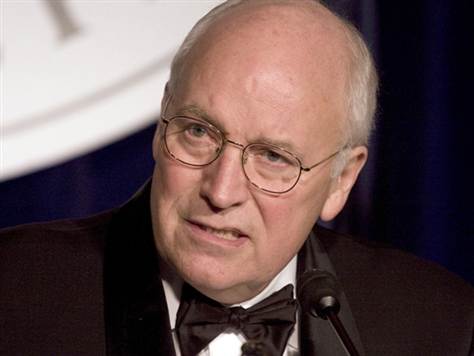
Former Vice-President Dick CheneyOn the other side of the equation – the complete acceptance response of unquintessential leadership – is former Vice-President Dick Cheney. Calling the report, which he admittedly hadn’t read in full, “a piece of crap,” Vice-President Cheney fully supported everything the CIA did as being the right thing to do.

Watching his response, I was struck as I am every time I see Vice-President Cheney with the sense that he didn’t believe it was as bad as it should have been and, had he been unfettered and unchallenged, he would have pulled out all the stops and let the CIA do anything and everything the human mind could conjure up to constitute torturing another human being.

This, too, is unquintessential leadership. On steroids.

Former CIA Director Michael HaydenThe third response – complete immorality – is, at least for me, unfathomable unquintessential leadership. When I first heard Former CIA Director Michael Hayden say, “I was in government for ten years after 9/11, and let me tell ya, a phrase I never heard from anybody in any position of authority: ‘Whatever you guys do about this terrorism threat, please, please don’t overreact.’ Never heard it,…,” I was dumbfounded.

This means Hayden knew that what the CIA was doing with regard to detentions and interrogations was overreacting, and, yet, on his watch as head of the agency, he sanctioned and authorized it anyway.

The lack of any moral values and objections in this point of view and way of being is also unquintessential leadership.

These are just a few examples from the big picture of this story. There are many more.

As quintessential leaders, we should always be analyzing stories like this and asking ourselves whether quintessential leadership or unquintessential leadership is involved. We should know which is which and why it is one or the other. That line is drawn, not in sand, but in concrete.

More importantly, we should be carefully and exhaustively studying our own leadership through the lenses of these stories to see if there are any reflections of areas in our lives in which we are being unquintessential leaders.

We may be very surprised at what we find if we’re willing to do the work and be brutally honest with ourselves about ourselves, but without this continual work, we cannot change what is unquintessential to what is quintessential.

How are we doing?


The majority of articles and blogs about leadership talk about a single aspect – as if it exists and operates in a vacuum – of leadership. It is the public face of leadership: businesses, religious organizations, political organizations, social organizations, schools, and non-profit organizations.

Except for this blog and these books, I have not found any other resource on leadership that discusses it in terms of the whole of spectrum of our lives: it’s who we are, what we are, how we are everywhere in life.

That’s what makes this blog and these books unique. Most people don’t think a blog or books about leadership apply to them: to their lives, to who they are, what they are, and how they are.

They are wrong.

Because they’ve bought into the mainstream idea of what leadership is in a public sense, and since they’re not in one of those positions, then any discussion of leadership doesn’t apply to them.

(And most of the mainstream ideas of leadership are actually “management” instead of “leadership,” which fails time and time again because there are very few people strong enough and courageous enough to get outside of the MBA-fueled tiny, uninnovative, rigid, and constrictive box that confines them to failure).

The reality is that quintessential leadership applies to everyone who lives and breathes. No matter where we are in life or what we are doing, we all lead at least one team, if not several.

Everything we do, we say, and we are is setting an example for the others in our lives, and that, my friends, is leadership. How we do that determines whether we are quintessential leaders or unquintessential leaders.

It is that simple. And that hard.

A close friend and fellow blogger, remarking on “The Quintessential Leader Perspective: Expressing and Showing Genuine and Authentic Appreciation,” said “A tall order! It’s difficult to be thankful towards those who are difficult, yet it is the only right answer.”

Becoming a quintessential leader is the road not taken. It is the hard way, the difficult way, the way that demands that we look at leadership in terms of every and all aspects of our lives, not just a single part.

It requires rigorous self-examination without excuses, justifications, or blaming others. It requires constant, continuous, and momentous change from the inside out.

It requires a complete metamorphosis and transformation at the very foundational core of who and what we are, our intents, our attitudes, our motives, how we think, what we think, how we speak, what we speak, how we act, what we choose to do or not do, and how we set that example for others.

It requires fearless commitment and unwavering fortitude.

There is no room for the pretenders, the wannabes, the half-hearted, the sometimes-maybe, for the lackadaisical, and for the here-but-not-there.

We are either all in or all out.

One of the tests – of veracity, of genuineness, of authenticity – for whether we are quintessential leaders or not is how we consistently handle the good, the bad, and the ugly in life.

All of life.

From our most private internal lives to our most public external lives.

It is important to remember that this is the ideal, the goal that quintessential leaders strive for and to. None of us will execute this perfectly all the time, but there must be aggregate and continual evidence in our lives that this is who and what we are committed to – no matter how many failures, setbacks, and falls along the way we make and encounter -becoming.

Quintessential leadership is hardest to see when life is good. Humanity, in general, tends to be at its best when everything’s going well and life presents no challenges, no upsets, no hairpin turns in the road. We all, at least on the surface, can seem to be charitable, thoughtful, caring, concerned, kind, generous, gentle, merciful, and magnanimous.

It is in the good times, though, that the inner character of quintessential leaders separates them from everyone else.

One component of that character is humility.

Quintessential leaders never elevate themselves above others, nor do they constantly talk about how much they’ve accomplished, achieved, acquired (and, by extension, how much wealth they have by enumerating the amount of money those acquisitions cost), and how awesome and great they are.

Instead, quintessential leaders continue to live life modestly and quietly. They realize that the good times are part of the cycle of life and will not last.

Quintessential leaders also understand that the good times are a gift they did not earn, do not deserve, and are not entitled to, so in an attitude of service and thankfulness for them, quintessential leaders use the blessings of good times to help and assist others, often anonymously, and always silently and without any fanfare.

Another three-pronged component of the quintessential leader’s character that you’ll see in the good times in life is understanding and sensitivity combined with empathy.

Quintessential leaders are always cognizant that although they may be experiencing good times in their lives at that moment, many of the people with whom their lives intersect – and for whom they are examples and, therefore, leaders – may not be.

Quintessential leaders are excellent and accurate observers of life by nature. Because they listen more than they speak and watch more than they engage, they miss virtually nothing about what people say (or don’t say), do (or don’t do), and are (or are not), although they seldom, if ever, say anything about it.

They learn to understand and to relate to others in a tangible and meaningful way that includes the rare quality of being able to empathize by putting themselves into the situations that others are experiencing.

As a result, quintessential leaders are acutely sensitive to the circumstances of other people and how their behavior, words, and actions could affect them, not because they are inherently wrong, but because of what other people may be experiencing (for example, if someone is going through a relationship loss, quintessential leaders would not be talking on and on in bubbly, bouyant, and bouncy conversations with this person about all the great things in their wonderful and fantastic relationships).

Anything other than this kind of understanding, empathy, and sensitivity – deep awareness of others and genuinely and authentically relating to them – would be out of character for quintessential leaders during the good times of life.

Why?

Because quintessential leaders always have the big picture in the front of their minds. Good times come and go. Anything that’s happened to someone else could or may happen to us. How would we want to be treated when we are walking in those shoes?

It is always an others-perspective, not a me-perspective, that defines who, what, and how quintessential leaders are. In the good times in life. And in the bad and ugly times.

It is in the bad times and the ugly times in life that quintessential leaders become more apparent, because the bad times and the ugly times in life are the times that try our souls, our hearts, our minds and our character to their outermost limits.

The bad times and the ugly times present ample opportunities to be unquintessential leaders, to set and be bad examples for the people with whom our lives intersect.

The bad times and the ugly times in life can give rise to unfair criticisms, harsh and inaccurate evaluations and condemnations, rejections, resentments, mockery, stinging and hurtful putdowns (usually guised as “jokes” or followed by smiley faces), spitefulness, jealousies, pettiness, and defensiveness – all of which are not intrinsic character traits of quintessential leaders.

The reality is that we all have to deal with these kinds of attitudes, motives, words, and actions during the bad times and the ugly times in life, whether we are quintessential leaders or not.

They are hard-wired into our human nature and it is in the worst of times that we either fight and subdue them or we embrace and use them.

Unquintessential leaders embrace and use them.

Quintessential leaders fight and subdue them.

In other words, quintessential leaders exercise self-control (and, at times, this is the most exhausting work in the world, because it literally takes every ounce of energy and effort we have) and choose what is right instead of what seems easy, justified, and, at least temporarily, very self-satisfying.

These are very often epic behind-the-scenes battles that end in victories or capitulations, character developments or character destructions, good or bad choices, and wise or unwise decisions.

The outcome of what goes on in the private and inner workings of our hearts, souls, and minds is only apparent in what we do (or don’t do) and say (or don’t say) out in the open.

And it’s in the outward manifestation, in bad times and ugly times, that we can truly distinguish between quintessential leaders and unquintessential leaders.

Again, in bad times and ugly times in life, we all experience failure in being quintessential leaders.

There is not a human being who has ever lived, who lives, or who will live – except for the Son of God – who has, does, or will get it right 100% of the time. It’s impossible in our current configuration.

However, the hallmark difference between quintessential leaders and unquintessential leaders is that quintessential leaders are actively living – consciously and deliberately thinking, practicing, being in every part of their lives all the time – with the goal always directly in front of them.

It is a way of life – an integrated part of who, what, and how they consciencely (that’s not a misspelling – because the state of our consciences is directly related to quintessential leadership) and consciously are and are becoming.

In other words, quintessential leaders are well aware when they fail. Nobody else needs to point their failures out to them. The consciences of quintessential leaders are so finely-tuned and sensitive to what they should and want to be – the ideal – that their consciences are immediately stricken when they fall short in any way.

Quintessential leaders are devastated when they fail because they know that not only have they missed the mark of quintessential leadership, but they have failed the people whose lives intersect with theirs by setting a wrong and bad example.

Quintessential leaders, again, stand out in this area from unquintessential leaders.

Quintessential leaders first admit they failed, to themselves and to their teams. They then apologize and ask for forgiveness.

Quintessential leaders will next immediately undertake an exhaustive post-mortem on what happened and why it happened. In the process, quintessential leaders identify tangible and definitive steps to correct the failure, from the inside out, and actively start taking those steps.

Quintessential leaders often do one more thing: they use their failures and the process of identifying the causes and the corrective actions as teachable moments for their teams.

Unquintessential leaders can’t do this because they don’t even recognize a failure (and if someone pointed it out to them, they’d deny it and get defensive and start attacking the poor, unfortunate soul who dared to say anything), so their bad examples are all their teams get.

And their teams perpetuate those bad examples to their teams, and so it goes until we find ourselves in the world in its present tense surrounded by an overwhelming majority of unquintessential leaders.

But we are not them. Or are we?


At the heart of gratitude lies genuine and authentic appreciation. We live in an entitled society. As a result, there is a pervasive mindset of believing and expecting that when we receive good (words, actions, gifts), we deserve it – it’s our right just because we exist – and we owe nothing in return.

quintessential leaders show and express genuine and authentic appreciationWe, as a society, don’t know how to be thankful and how to express and show genuine and authentic appreciation to and for everyone and everything that intersects with our lives.

Instead, we have devolved into a culture of mutual admiration societies, where we acknowledge only, in an insincere and superficial manner, the people and the things that make us feel good, smart, funny, important, and interesting.

This is not genuine and authentic appreciation.

Instead, it is a revolving door of platitudes dependent on each participant continuing to walk in the endless and small circle of flattery and fawning that strokes our egos and our pride.

It is empty. It is meaningless. And when someone in the circle gets bored because they need a new retinue of genuflectors, they will leave and it will end.

This is also a characteristic of unquintessential leadership, which is entrenched in our society as well.

When is the last time someone in a leadership position said “thank you” to you for something or anything just because?

Does the only meaningless gesture of appreciation you get from an unquintessential leader happen when they need or want something from you or you can be useful to them? What happens when they don’t need or want something or you’re not useful in the moment?

Are you appreciated?

The answer is “no.” If you can’t do something for them or be something to them, you are invisible, useless, and worthless. Tough words. Real words. True words.

So how do quintessential leaders differ? How will you know?

quintessential leaders are genuineFirst and foremost, quintessential leaders are genuine and authentic as people: who, what, and how they are. They are also humble and grateful for the gifts they’ve been given. They know they aren’t entitled to them. They know they don’t deserve them. And they know they are not owed anything.

Because of their character, their understanding of themselves in the big picture, and their ability to recognize that everything and everyone in their lives is ultimately a blessing – whether to teach a lesson, to advise for or against a path of life, to sharpen discernment, or to develop and grow the characteristics and character traits that build trust and make them trustworthy – quintessential leaders are continually expressing and showing genuine and authentic appreciation to everyone and for everything in their lives.

One difference that highlights their genuineness and the authenticity is that, most of the time, quintessential leaders show and express their appreciation in the background in an one-on-one interaction.

quintessential leaders are authenticThe other difference is that quintessential leaders show and express their genuine and authentic appreciation across the board for all the people and things in their lives. 

And much of that appreciation, especially when there are difficult people and difficult things in a quintessential leader’s life that are put there as opportunities to choose the right way, to teach eternal lessons, to make the heart, soul, and mind more merciful because of the mercy received, ends up being for God’s ears only.

What does genuine and authentic appreciation look like?

It means being respectful and kind when you are treated rudely and contemptuously. It means not answering when you are threatened or challenged or deliberately goaded. It means being silent when you are having insults, condemnations, unfounded accusations, and unrepeatable names and labels showered on you.

It means being polite and expressing thanks to someone who you know, at the very least, doesn’t like you, and, at the very most, hates you. It means being gracious to everyone regardless of how they treat you. It means consciously, and sometimes with great effort, silencing the fickleness of emotions and answering instead the consistency of a highly-developed and sensitive conscience.

It means consistently choosing to do the right thing and the moral thing, even in those moments where the temptation is strongest and most urgent for anger, revenge, and ingratitude.

In other words, in the end, expressing and showing genuine and authentic appreciation is a product of striving to master self-control.

As always, I’ve expressed the ideal here. Even those of us who are consciously striving to be quintessential leaders fail to meet the ideal all the time.

But what distinguishes quintessential leaders from everyone else is that the ideal is always at the front of our lives and it is what we live by, strive for, and attain to.

How are we doing?