Archive for the ‘Team Building & Development’ Category

As is the case with all quintessential leaders, I read a lot and I read widely. I read very little fiction, but when I do, I’m very selective, looking for substance and relevant rather than fluff and popularity. 

As an aside, I am one of those rare, it seems, people who eschews the idea of escapism and “feel good” when I am investing my time, energy, and effort into something.

If I don’t learn something or there are not some deep and meaningful principles I can come away with to think about and apply, then I’m simply not going to spend my time with it.

Because I am human, there’s a limit on time for me. I certainly don’t want to come to the end of my quota to discover that I wasted the majority of it.  

In pursuit of my commitment to quintessential leadership and my desire to be, at all times, in all ways, a quintessential leader, I am constantly reading articles on leadership and thinking about how and if they fit the quintessential leadership criteria.

Here is a summary of some articles I’ve read recently that certainly point to the quintessential leadership model in some way. I’d like to share those with you and encourage you to read them.

This article on 8 ways leaders undermine themselves from Forbe’s is a good overview of the subject I discuss in-depth in Building Trust and Being Trustworthy.

In conjunction, part of building trust and being trustworthy includes the ability to admit we are wrong when we are and taking responsibility for fixing what we’ve broken quickly, without blame, without excuses. This article by Amy Rees Anderson on this quintessential leader trait is excellent.

Mike Myatt’s article on why organizations suffer from leadership dysfunction offers a very good tie-in to the subject of organizational dysfunction, which I elaborate on in the Quintessential Leader blog post, “Organization Dysfunction – A Total Absence of Quintessential Leadership at the Top.” I encourage everyone to read both articles because, as Myatt correctly observes, we’re seeing leadership dysfunction become the organizational norm, instead of the exception.

Another must-read article from Mike Myatt demands that each of us examine our commitment to be quintessential leaders. Why? Because he discusses the 10 things every leader should challenge. These 10 things must be on our minds continually and the challenges to them must be continual.

This separates quintessential leaders from everyone else. As I ask myself constantly, I urge you to ask yourself: am I a quintessential leader or am I everyone else?

As I discuss in “Quintessential Leaders and Investment, Action, and Authenticity,” what you and I do and are reveals how great our investment in quintessential leadership is and how authentically we are living and being quintessential leaders.

A thought-provoking article by Manie Bosman on how unquintessential leadership traits – bullying and micromanaging among others, which I cover comprehensively in “Unquintessential Leadership” – affect us neurologically and lead to measurable negative outcomes, and if not changed or eliminated, will eventually lead to catastrophic and total failure.

An atmosphere of fear, intimidation, threats, and power plays is not something a quintessential leader will either create or tolerate. This is all around us in every part of our lives to one degree or another. What do you and I, as quintessential leaders, do about it?

The last article, by Dan McCarthy, is entitled “Is it Time to Create Your Own Succession Plan?” As quintessential leaders, this must be an integral part of our team-building process. For a framework of what this looks like in practice, I recommend “Building Teams for Performance.”

Each time I acquire a new team to build and lead, this is one of the first things on my to-do list: to identify the person or people who have the qualities that, combined with my coaching and leadership, will enable them to replace me.

No one is irreplaceable. And nothing is certain in life but death and taxes.

Therefore, a quintessential leader who wants to ensure that the legacy and foundation he or she is laying continues after he or she is out of the picture, must identify, coach, and grow his or her potential successor(s). To do anything else is unquintessential leadership. 

This post gives some good resources for quintessential leaders. I hope they will provide benefits, insights, and growth as we continue on the path of quintessential leadership.

This blog post caught my attention today. I think this is something that we, as quintessential leaders, need to think deeply about.

I know a lot of us are “busy.” But the question we need to ask is ourselves is “doing what?” Are we busy for the sake of being busy and accomplishing little? Are we busy to the point that we have wrecked our lives in pursuit of for, what in the end, will be nothing? Or are we busy in a productive, life-changing – for ourselves and others – way that will have tangible results in the long-term? Or is our “busyness” simply nothing more than a waste of our and others’ time?

Tough questions. Tough answers.

But, my fellow quintessential leaders, we must ask and answer these questions. Honestly. If the answers find our efforts to be mere busyness and not life, team, personally-changing, then I challenge each of us to take a step back to focus on our priorities, what is important, and what matters.

After all, the only thing we take out of this life is our character and how well we have managed all the relationships we’ve committed to: to God and Jesus Christ first because every other relationship we manage and commit to is based on this. To our spouses. To our families. To our teams. To humanity.

I certainly know I have a lot of work to do in each of these. What about you?

sofagirl's avatarCampari and Sofa

Stop the glorification of busy.My friend Gavin was telling me about a conversation he had with some Dutch colleagues. Gavin, and his compadre Georgina, find that the sheer volume of work they are confronted with on a weekly basis is just un-doable within the confines of a normal 8-hour work day. So they regularly put in 10-hour days at the office. And another couple of hours at home picking up emails. This causes all sorts of problems: they’re tired all the time, their spouses feel ignored, they don’t want to go out at night or over the weekend and they lose touch with friends.

Hmmfff…”, said their pals, “In Holland, if you were to work like that we would think you were not coping.”

“Am I”, he wondered, “not coping? Or am I doing more than I should? And if I am doing more than I should –  what should I stop doing? And…

View original post 1,063 more words

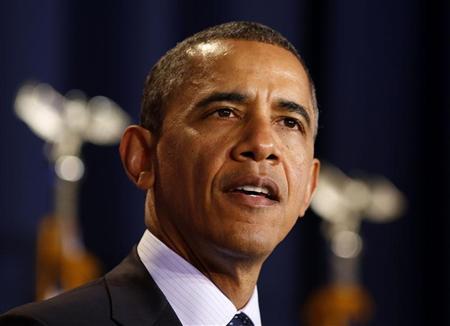
President Barack Obama, Secretary of State John Kerry, Attorney General Eric Holder and a few other top administration officials gave a nod to quintessential leadership this week by giving back a portion 0f their salaries as U.S. federal government worker furloughs begin to take effect from the sequestration that began March 1, 2013.

U.S. President Barack ObamaPresident Obama will write a check for 5% of his salary to the U.S. Treasury each month,Secretary of State John Kerry while Secretary Kerry will donate his 5% to a charity that helps U.S. State Department employees. Attorney General Holder will write a check to the US Treasury for 14 days worth of his annual salary. Details of how the other members of the president’s Cabinet who are forfeiting a portion of their salaries have not been finalized.

While the actual amounts on money these three people in U.S. leadership positions is small, the symbolism of their gestures – and the quintessential leadership statement they make, is large. And the example they’ve set for the rest of those in leadership positions in the U.S. government is powerful.

To date, I have not read of anyone in the U.S. Congress following President Obama’s, Secretary John Kerry’s, Attorney General Holder’s, and the other Cabinet members’ examples by giving back a portion of his or her salary.

I have always found it interesting that time and again the United States Congress shows how devoid it is of quintessential leadership. While the governing body itself is a chaotic and ineffective mess, they routinely give themselves pay raises – while the people they supposedly represent continue to lose jobs, homes, and sometimes families because of the global economic crisis, which the U.S. Congress had no small part in contributing to because of all the financial lobbying money backing many of its members – and make sure they have the best of health care, consistent income, and guaranteed retirement. 

I doubt this was what the Founding Fathers envisioned when they spelled out the three branches of U.S. government in Article 1 of the U.S. Constitution. What was supposed to have been a legislative body made up of the people, by the people, and for the people has become a cloister of the most wealthy and connected, by the most wealthy and connected, for the most wealthy and connected.

As with every human political system, the Grand Experiment was doomed to descend to its present state because of ever-present human nature, greed, and selfishness, and the inability of human beings to always strive to successfully go through the narrow gate of quintessential leadership consistently and continually.

As quintessential leaders, we should always be mindful that we are human beings too and we must always be checking our own positions as leaders, making sure that our intents, our attitudes, our motives, our actions, and our words are meeting the higher standard of quintessential leadership.

Have we done our check today?

Beneath today’s termination of Mike Price’s contract as head basketball coach at Rutgers University lies a very common story about the way many people in leadership positions now function and operate day-in and day-out.

Rutgers' head coach Mike Rice It’s interesting to see how much indignation about this.one.incident comes pouring forth, while the larger problem – and the bigger picture – is virtually ignored.

The reality is that this is a vivid example of a now very-common story line that shows how abuse of all kinds is allowed (and, often, encouraged), tolerated, and committed by people in leadership positions throughout every segment of society today. Committing abuse is present in some shape or form in every organizational construct today. It’s a reflection of a society that has come to accept the existence of abuse as being normal. As quintessential leaders, it is imperative that we are discerning and attentive so that we recognize abuse, no matter how subtly-shaded it is, and reject it as wrong and eliminate it wherever it exists.

Mike Price’s story as an abusive coach at the collegiate level is not unfamiliar. Bobby Knight at Indiana University and Woody Hayes at Ohio State come to mind almostBobby Knight Indiana University immediately.

Woody Hayes Ohio State UniversityHowever, as I discussed last year in “Absolute Power Corrupts Absolutely,” regarding Penn State and which I discuss in detail in one of the components of Building Trust and Being Trustworthyall of the people in leadership positions at Rutgers have shown unquintessential leadership in this matter. Because this is the second time in 16 years, that we know of, this kind of abuse has occurred with Rutgers’ athletic program – it is obvious that allowing, tolerating, and committing abuse is accepted as standard operating procedure among those in leadership positions at Rutgers. And when those in leadership positions at an organization accept abuse, abusive behavior spreads throughout the organization.

But frequency of occurrence is not the most damning evidence that those in leadership positions at Rutgers University accept abusive behavior as being normal and okay. The back story to Mike Rice’s termination today, however, is.

One of Rice’s coaching assistants, Eric Murdock, brought Rice’s abusive behavior toward players – recorded on video from practices from 2010-2012 – to the attention of Rutgers University’s athletic director, Tim Pernetti, early last summer. Rice fired Murdock in July 2012. Pernetti suspended Rice for three games and fined him $50,000 in December 2012 after the attorneys for Murdock, who sued Rutgers University for wrongful termination, produced video proof of Rice’s abusive behavior toward his players in November 2012.

If Murdock had not threatened to release the video tape to larger audiences, this would have been the only action that Rutgers University would have taken against Mike Rice. However, once the video became public, then those in leadership positions at Rutgers University – and this includes those in executive leadership positions outside the athletic department – decided the behavior of Rice was egregious enough to terminate his contract with the university.

And therein lies an unquintessential leadership philosophy: it’s okay to do the wrong thing as long as you don’t get caught and/or no one else knows or finds out about it. Everyone in a leadership position at Rutgers University clearly embraces and believes this philosophy. By extension, this philosophy is being passed on as acceptable and normal to every student who attends Rutgers University. What does this say about how these students will act and behave when they get into leadership positions in their careers?

Think about that carefully for a while. It should make all of us in leadership positions and we, who are striving to be quintessential leaders in every aspect of our lives, stop and take stock of our own actions, behaviors and beliefs. Do we allow abuse? Do we tolerate abuse? Do we encourage abuse? Do we commit abuse? If we do, then we need to change completely. If we don’t, then we need to stay vigilant to ensure that what has become normal and acceptable behavior among those in leadership positions doesn’t sneak into our behaviors, beliefs, and actions or into the behaviors, beliefs, and actions of our teams.

Inevitably, many people in leadership positions may look at Mike Rice’s behavior and think “well, I’ve never cursed at, thrown things at, or physically pushed around those I lead, so I have never been abusive to anyone I’ve led or lead.” That is very dangerous thinking, because abuse has many faces.

We, as quintessential leaders, as I’ve said many times must be brutally honest with ourselves in examining who and what we are and do to ensure that the person we’re not the most dishonest with is ourselves. This is not easy, but it is absolutely necessary. Let’s all ask and answer the following questions about ourselves in our fearless self-examination of whether we have been or are abusive.

Have I ever implicitly or explicitly threatened someone because that person pointed out something wrong or flawed or inconsistent in me or my behavior?

Have I ever publicly embarrassed or harassed someone to try to force that person to agree with me or see things from my point of view under the guise of helping that person?

Have I ever used the “I’m in charge and if you don’t like it, you can leave” statement to try to intimidate someone who had a different – but not wrong – perspective and/or opinion than I did?

Have I ever used the “silent treatment” to try to manipulate someone into agreeing with or going along with me?

Have I ever talked over someone’s head in an attempt to make that person feel inferior or ignorant?

Have I made general disparaging comments about the intelligence, the quality, the substance, and the efficacy of my teams to put them or keep them “in their place?”

If we answered “yes,” to any of these questions, we’re guilty of having been abusive. And this list of questions is not exhaustive. I urge all of us to think deeply about this subject and identify abuse so that we understand what it is we are fighting and must not allow to become part of our way of being or thinking or doing or speaking.

As human beings, we all tend toward abuse as a defense. It seems to be hard-wired into who and what we are. But, as quintessential leaders, we hold ourselves to a higher standard and part of that higher standard is treating everyone as we ourselves want to be treated. You don’t want to be abused. I don’t want to be abused. And it must be our highest priority not to be abusive in any part of our lives.

I spoke of the courage that quintessential leaders must have in my last post. This is a concrete example of what that courage looks like.

Today’s post has been on my mind quite some time, as I’ve spent a lot of time observing, processing, analyzing how prevalent groupthink has become and how the majority of people, it seems, have adapted that as the norm, and, in the process, just checked their brains at the door.

It’s important to remember that the brain is part of the body and it must be exercised just as the rest of the body is exercised to stay sharp, to stay aware, and to be discerning.

It doesn’t mean that every thought we have is right. But how do you know for yourself what right and wrong thinking is, if you’re not thinking at all? It doesn’t mean that every conclusion we draw from thinking is feasible, doable, or practical. But, again, how do you know for yourself whether conclusions – yours or others – are feasible, doable, or practical if you’re not in the habit of thinking in objective terms about costs and benefits, pros and cons, and outcomes?

We are becoming a society that is content to let others do our thinking for us. And there are a lot of individuals and organizations that want to do our thinking for us. It seems that most of us prefer to just go with the flow and agree to whatever all the things we’re attached to in our lives tell us are right, good, and true. And that’s a very, very dangerous place to be.

As quintessential leaders, we must be on constant guard against groupthink and what it conveys about trust and trustworthiness. My book, Building Trust and Being Trustworthy, is an in-depth discussion of the components that make up building trust and being trustworthy. Get your copy today!

There is not a human being on this planet who can afford not to know and understand this subject. Too many people don’t. That is, in part, why we are seeing the dominance of  groupthink – enforced and accepted – and we are seeing a steep and rapid degradation in moral and ethical standards everywhere we turn.

As a refresher for those who may not have read George Orwell’s 1984 – a book that I also believe should be required reading for everyone on the planet – let me briefly define the idea behind groupthink.

Groupthink, generally, refers to a collective of people all thinking the exact same thing, with no deviation. The underlying desire and professed aim is harmony and unity, so to avoid possible disruption of that, individuals are discouraged and sometimes threatened from objective analysis and truth and proof tests of the accepted thinking.

Loyalty to the group is emphasized over everything else, including truth, and any questioning of the group thinking is seen as disloyal. Therefore, all creativity, all objective analysis, and all truth and proof testing is squashed and, if it occurs, the individual is deemed dangerous and untrustworthy.

The problem with groupthink is that when bad ideas, old ideas that didn’t work the first time around, wrong ideas, unworkable ideas, not-very-smart ideas, and untrue ideas come in, since no dissension, no checks and balances, no questioning is allowed, they become part and parcel of the working body of information within the group.

And bad groupthink becomes badthink and the derailing of the entire group has begun.

Individuals in this environment, such as Orwell’s Winston Smith, know that their mental – and these are rarely, if ever verbalized, and when they are, they are verbalized very, very carefully (if you watch The Tudors, think of how Thomas More handled a groupthink he was not a part of – I would definitely take the same road he took until I was left no choice, as he was not, and then I’d lay it out as concisely and concretely as it has been written and rewritten in my thinking ) – reality checks, proving, testing for truths are very dangerous and that elimination – whether literally with their lives or symbolically by being cast out and banned from the group – is inevitable. There is no other outcome at some point. It’s an accepted fact.

Why is groupthink such a powerful card that some people in leadership positions want to play? Why do they play it? What does it say about trust and trustworthiness? What does it say about respect?

Groupthink is imposed because of fear. Fear of losing power, fear of losing stature, and fear of being proven wrong. It is imposed as a means of complete control. It says to those its imposed upon that they are not trusted and they are not trustworthy. It also says they have no value and, therefore, are not worthy of any respect.

However, you’ll never hear those reasons stated out loud. Instead, you’ll hear words like “loyalty,” “unity,” “collaboration,” and statements about “being on the same page.” There is always a certain amount of coercion and guilt that accompanies these words and statements that play on the emotions of a species – that’s us humans – who have a strong desire for connection and attachment to other humans. And the possible deprivation of that is why groupthink is so powerful for a lot of people and why society accepts it, in general, hook, line, and sinker.

There are way too many examples of groupthink and its repercussions in our society that is literally saturated with it now to discuss them all here.

Marissa Mayer - CEO - Yahoo!But the story about Marissa Mayer’s banning of telecommuting at Yahoo! this week encapsulates groupthink in such as way that it put the icing on the cake of my thinking about this subject for me. I’ll give a few examples of why.

One of the banes of groupthink is the reintroduction of archaic and unfeasible ideas from the past repackaged and remarketed as “new and fresh” thinking. It really shows outdated and stale or no thinking, and it shows the absence of quintessential leadership.

I’ve read widely on this decision by Mayers and have been thinking about it a lot with my own professional background in technology. It makes no sense for a lot of reasons.

Yahoo!’s business, as are all high-tech companies, is encompassed by mobile computing – having the technology to do whatever you need to whenever it needs to be done. Its benefit is specifically what she is banning in this memo.

The everybody-has-to-be-in-the-same-physical-location-or-nothing-will-get-done is not only an archaic idea, but it also has been proven untrue.

Telecommuting workers, on the whole – if you’re lazy telecommuting, you’ll be lazy at an office – are more productive and contribute a higher yield of results to companies because they’re not in an office, going to meetings all day, answering inane phone calls and emails all day, listening to their coworkers talk – and much of that talk is not about work – all day.

Meetings can still take place, face-to-face, with current and emerging technology, so nothing’s lost if someone needs that face time. To say otherwise is dishonest. I say that because I’ve heard this as the kingpin argument too many times and it’s simply untrue.

But the meetings tend to be focused and shorter and not the colossal wastes of time that most meetings in the office are when all the disorganized thinkers who also have a penchant and need to talk out every single random thought in their heads take over and kill productivity for hours at a time.

Telecommuting also represents a huge reduction in overhead for companies and for employees. For companies, it means less equipment, less office space, and less office consumables, which represents a significant cost savings and a better bottom line. Employees save money and time – that they can spend working – by not having to drive, often, long distances to an office. Employees are also eligible for tax benefits by having and maintaining a home office. It’s a win-win situation.

Mayer’s contention that Yahoo!’s employees will be more collaborative, more innovative and more productive by all being in the same physical location is badthink.

The reality is that if employees aren’t productive, collaborative when the need arises, and innovative as telecommuters, then they will not be productive, collaborative, or innovative anywhere else. That’s a skill set issue, not a location issue.

But what Mayer misses in this edict is the lack of quintessential leadership that has been in Yahoo! for years. If those in leadership positions don’t communicate vision, don’t develop and communicate strategies and goals, then all the employees basically end up doing their own thing, whether they are working from home or working at the office.

Instead of Mayer taking ownership for her responsibility as CEO – and admitting the lack of quintessential leadership in the past – she is essentially blaming Yahoo!’s problems on the employees. That is badthink and that is unquintessential leadership.

Another aspect of groupthink in the Yahoo! example comes from Mayer’s “one-size-fits-all” perspective. That is not only a foolish perspective, but it is an unquintessential leader perspective. Mayer is clearly an extrovert. She thinks like an extrovert. She acts like an extrovert. And she expects everyone in Yahoo! to think and act like an extrovert.

Mayer gets her energy from interaction with other people. She took only two weeks of maternity leave when her son was born last year and got back into the office, where she was surrounded by a lot of people. And that’s fine, because that’s what extroverts do.

However, with her faulty groupthink – which is believing all her employees will be energized by all the people around them 10-12 hours a day – she doesn’t realize that an inordinately high percentage of people in technology are introverts. Introverts get drained quickly of resources by a steady and continuous stream of people interaction and it reduces their productivity, innovation, and collaboration.

So here’s an example of the result of badthink. The introverts who are forced to come into the office now will not be roaming the halls, sharing lunches with their colleagues, or all the other random “here’s-a-spark” encounters that Mayer envisions happening when everyone’s onsite. Instead, the introverts will hole up in their cubes, earbuds and iPods engaged, and work alone. If they venture out for food, drink, and bathroom breaks, they will choose times when they are least likely to be hung up, and the food and drinks will come back to the cube with them.

And they’ll be somewhat less productive, somewhat less inclined to spend extra time working on projects, and very unhappy. What will most likely happen at Yahoo! because of this new rule is that they will lose some of their best employees, who will go to other high-tech firms who recognize the value of telecommuting.

Mayer will be left, then, with the same telecommuters who didn’t work when they were at home, but now they’re in the office not working, and she’ll also be left with a lot of disgruntled employees, who would normally be good workers, with morale issues because even if they haven’t telecommuted, they always knew it was an option if something unexpected came up, and now they’ve basically been told “come to the office or else.”

Groupthink is something that we as quintessential leaders must be aware of, must resist, and must ensure is not how we lead our teams. It’s a subtle enemy. It’s a dangerous enemy. It’s a destructive enemy. 

There have been a lot of examples of unquintessential leadership in this week’s news, and I will highlight the ones that have caught my attention – some you may be aware of and others you may not be – and give a brief summary of each of them with links so you can review the stories yourselves and glean the lessons from each of them that we, as quintessential leaders, must always be diligent to look for and learn from.

Lance ArmstrongThe first story is the news, which, frankly, is no surprise to me, that Lance Armstrong has refused to meet with the U.S. Anti-Doping Agency (USADA) and testify under oath about his use of illegal substances during his career as a professional cyclist. In light of this development – which was a necessary step in his path to be able compete athletically in any sport and any hopes of redemption from his fall from grace – it seems to bear out that all that he said in his interview with Oprah Winfrey last month was nothing more than lies accompanied by crocodile tears. Purely unquintessential leadership on every level with this man.

Another unquintessential leadership story that caught my Alex (A-Rod) Rodriguez - New York Yankeesinterest this week was about Alex Rodriguez, third baseman for my favorite baseball team, the New York Yankees. Joe Posnanski does a very good job of showing the unquintessential leadership traits that have led to his demise, not only as a baseball player, but as a role model for young kids playing the game of baseball. Mr. Posnanski lists several things that contributed to where A-Rod finds himself now, but from a quintessential leader point of view, three character traits – pride, cheating, and dishonesty – are at the core of what makes Alex Rodriguez an unquintessential leader.

Another unquintessential leadership news story from this week was the revelation that the FBI – anyone who knows the real history of the FBI from its inception and anything at all about the tactics of its first director, J. Edgar Hoover, should really not be surprised by this latest story – has a lot of employees using government-issued equipment to engage in sexting. Not only is this behavior immoral, but it’s also illegal under federal law, which the FBI is the enforcing agency of.

The next instance of unquintessential leadership to get a lot of press this week has global implications, as well as terrorist implications. Government systems and corporate systems were the target – from China and Pakistan to the U.S. and from the U.S. to Iran (that we know of). This high-profile story also introduced the general public to a new term – spear phishing – which is already well-known in the cyber security field. In general terms, the unquintessential leadership behavior is hacking or trying to hack computers and networks.

Hacking – one famous hacking group is Anonymous – involves several unquintessential leadership traits: the deliberate breaking into and breaching, if possible, of computers and networks; distributing malicious or harmful software to either steal information or destroy information or incapacitate the computer or network; and, a lot of pride and arrogance in taking credit for the breach.

President Barack ObamaThe last unquintessential leadership news story I’ll cover for this week is the looming sequestration if President Obama and the US Congress don’t reach a budget agreement.

While both sides bear responsibility for the lack of an agreement, President Obama, as Commander-in-Chief, has shown an unquintessential leadership trait side of his introverted temperament – he’s an INTJ –  which I also am, so I understand what’s happened and why, but the unquintessential leadership aspect of his decision is a faulty cost-benefit analysis.

When INTJ’s have done everything in their power to try to resolve, negotiate, change, and conclude an impasse or breach, whether with an individual or a group of individuals, and nothing happens, as their energy levels get depleted and they get tired of hitting their heads against a brick wall, so to speak, they do a cost (how much am I putting into this?)-benefit (what is the best I can expect as a result?) analysis, and if the cost outweighs the benefit, they stop, close the door, and walk away for good.

Once that door is closed, it can’t be reopened, because the INTJ has moved on to things he or she can resolve, negotiate, change and conclude, and the last effort is no longer a part of their lives, literally. It’s over. Period.

That’s a part of the temperament and it drives all the other people in our lives crazy because it’s the only temperament that does this and none of the other temperaments understand it. Trust me, I’ve heard it enough to know it doesn’t make sense to anyone who’s not an INTJ.

That appears to be the point that President Obama has reached with the U.S. Congress.

The problem here with the lack of an agreement and the possible automatic sequester is that whatever the cost is to President Obama personally, it does not outweigh the benefits of continuing the resolution process, the negotiating, the change,  and successful conclusion needed to get past the breaches and impasses that exist. One of the traits of quintessential leadership is understanding that the needs of the many outweigh the needs of the one, and as the leader of the United States, President Obama needs to remember – and keep at it, now matter how it affects him personally, because this is the job that he has – the needs of the American people outweigh any personal needs that he has.

President Obama doesn’t get the luxury of being an ordinary INTJ where the stakes aren’t all that high if he walks away for good. At least not until 2017.