Archive for the ‘Team Building & Development’ Category

All of us are part of many teams during our lifetimes: family, schools, social organizations, religious organizations, and business organizations are the major teams we are a part of throughout our lives. And, while we as individuals, are striving to become quintessential leaders, we often find that we are the only or one of a handful of team members on the various teams we are a part of that are.

So today’s post asks each of us to assess the teams we are a part of and determine whether the teams practice quintessential leadership or unquintessential leadership.

If they practice quintessential leadership, then we should encourage and grow that by becoming more quintessential in our personal leadership (modeling and mentoring quintessential leadership).

However, if one or many or all the teams we’re a part of practice unquintessential leadership, then today’s question for each of you to answer – please share your comments here because we who a part of this blog are a team and we can learn from each other – is what do you and I do personally to work to change that?

In Mike Myatt’s article, “30 Outdated Leadership Practices Holding Your Company Back,” he has a chart that, in general, shows unquintessential leadership practices (left column) and quintessential leadership practices (right column):unquintessential leader and quintessential leader practices 2013

Which column, in general, describes each team you’re a part of? And to answer this honestly and accurately, each of us must first ask which column, in general, describes us individually as people and as leaders?

In this earlier post, I discussed how quintessential leaders look into mirrors while unquintessential leaders look through windows. Take a moment and go back to review that post. Because today’s post gives us another opportunity, as quintessential leaders, to look into a mirror. 

The question, then, is will I? Will you?

Today’s post will discuss the mindset of unquintessential leadership and how that mindset gets expressed in actions and words. As quintessential leaders, it’s important that we are reminded from time to time of what quintessential leadership is not, so we can examine our own mindsets (attitudes and motivations) and words and actions to ensure that we’re not letting unquissential leadership creep in.

The reality is that there are far more unquintessential leadership examples around us than quintessential leadership examples.

Most of the people in leadership positions today have a mixture of the two, with more of an unquintessial leadership mindset than a quintessential leadership mindset.

This creates confusion and an atmosphere of constant uncertainty because we never know which to expect under any given circumstance. This mixture engenders continual instability and a pervasive lack of trust.

However, there are some people in leadership positions who have purely unquintessential leadership mindsets (with no quintessential leadership in their mindsets at all). We can readily spot them because their words and actions – indeed, the very core of who they are – ooze with the characteristics of the unquintessential leader mindset.

I always suspect mental illness(es) in these cases because, in general, we humans who are sane – more or less – tend to be, regrettably, a mixture of good and bad, but someone who exhibits nothing but unquintessential leadership has nothing good in his or her thinking, actions, and words. It simply cannot be found.

So let’s take a look at the major characteristics of the unquintessential leadership mindset and what each of them look like in action.

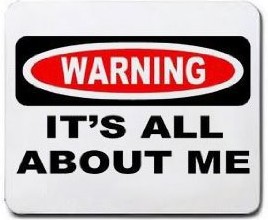
It is ALWAYS all about METhe first is pride and arrogance. The unquintessential leadership mindset is primarily narcissistic, so for the person who has this mindset everything is always all about them. What does this look like in action?

Constant self-promotion and exaggeration of importance, position and status in words and actions is one way this pride and arrogance manifests itself. No one is better, brighter, or more right.

This mindset is one of being superior to and more special than everyone else. The world – no, make that the universe – revolves around the unquintessential leader.

Nothing and no one else matters except for him or her and anyone who doesn’t realize that is the object of the unquintessential leader’s derision and condemnation.

Unquintessential leaders are, in short, legends in their own minds.

Another characteristic of the unquintessential leadership mindset is the need to control everything and everybody. What does this look like in practice?

Absolutely no challenge to the authority, authenticity, correctness, and thoughts, ideas, opinions, and edicts – because that’s what unquintessential leaders issue – is tolerated or allowed. Absolute and complete loyalty to the unquintessential leader is demanded and tested routinely. Action to squelch and remove real or perceived challenges on any of these fronts is swift and brutal.

Threats and intimidation (bullying) are another characteristic of the mindset of unquintessential leadership. This characteristic in action is a constant barrage of harassment and haranguing. An atmosphere of fear is created by the continual reminders that those under unquintessential leadership have tenuous positions and one “wrong” word or move will result in their eliminations and expulsions.

Language is the primary weapon in this characteristic, with repetition on a constant basis of what the negative consequences are that the unquissential leader holds over the heads of those cross him or her.

Manipulation is another characteristic of the unquintessential leadership mindset. Manipulation is accomplished by spin doctoring everything to make everything support what the unquintessential leader believes about him or herself.

Its effectiveness depends on a lack of critical thinking, fear, and the everpresent specter of punishment. It can be quite effective with people who either can’t, won’t, and don’t know how to think for themselves.

This is one of the most subtle characteristics, and, therefore, in my opinion, one of the most dangerous.

Another characteristic of the unquintessential leadership is the creation and maintenance of an atmosphere of suspicion and war anywhere the unquintessential leader is able to. What does this look like?

There are constant words and actions that pit people against each other, creating first suspicion, then war among those people. Unquintessential leaders will constantly find targets to attack personally and set up for everyone else to attack.

This tends to be the way unquintessential leaders get rid of people who challenge them, who disagree with them, who call them out when they are being unquintessential leaders.

Because of all the characteristics of the unquintessential leader mindset, the inability to handle the truth (for an unquintessential leader, the only truth that exists is the truth as he or she has constructed it) is universally the one that usually becomes the most obvious early on because anyone who confronts the unquintessential leader is quickly – and usually very publicly and visibly as a warning to everyone else – hunted down, forced out, and completely destroyed, if possible.

People can usually hide the other characteristics for quite some time, but not being able to face or admit the truth is almost impossible to ever hide.

As quintessential leaders, it is imperative that we are constantly examining our mindsets – our motives, our attitudes, our words, our actions, who we are – to ensure that we are not letting these characteristics of the unquintessential leadership mindset to come in and become part of us and how we lead.

This is the battle we all fight constantly, but it is a battle we must never abandon and a battle we must win. For ourselves and for our teams in every area of our lives. 

Yes. It’s that important.

The articles that Quintessential Leader is recommending in this week’s reading are very interrelated. One of the things that quintessential leaders do that makes them stand out from people who just have leadership titles but are not leaders is to think outside the box.

Thinking outside the box means the status quo – “that’s the way we’ve always done things” – is constantly being evaluated, challenged, and changed to better, smarter, more effective, and more efficient ways of growing and succeeding.

Overwhelmingly, the lack of leadership and the stagnation that seems to be epidemic in organizations today is because of the limitations people in leadership positions impose on the organizations. There is very little original thinking, very little innovation, and very little forward motion.

A lot of organizations are stuck in mindsets and methodologies of the past (theirs or others) and they operate from that outdated and unproductive viewpoint, all the while bemoaning the lackluster and tepid, at best, results of their efforts.

The fear of change and what change means to our comfort zones is part of the problem. The other part is that a lot of people in leadership positions are afraid of not being in control, which inviting and encouraging change will inevitably threaten.

But quintessential leaders are not egocentric. We understand that we are not the sole source of value in our organizations and teams and that when we involve – and grow – everyone on the team and in the organization in a meaningful way that uses each person’s gifts and talents to their fullest potentials, everybody wins and our organizations succeed. 

Quintessential leaders will surround themselves with people who are smarter than they are, know more than they know, and who will, in the collective effort of the team, ensure successful outcomes. This is the heart of leadership. And it is why there are so few quintessential leaders in most organizations.

In the article “Leader or Hero? Learning to Delegate,” Gordon Tredgold discusses a key component of quintessential leadership, which is delegation. Heroes insist on doing everything themselves. They are the ultimate examples of needing to be in complete control of everything. Heroes also get overwhelmed, stressed out, develop martyr complexes, and end up either doing many things poorly or, worse, not doing things that should be done at all.

Quintessential leaders are not heroes. They assemble competent teams, identify or develop (recognizing potential is one of the most common thinking-outside-the-box areas missing in recruiting and hiring in most organizations today) the strengths and abilities of those team members and then delegate accordingly.

I’ll give you an example of what this looks like. In one organization I worked for part of my teams’ responsibilities included detailed numbers work and reporting. While I can do that if push comes to shove, it’s not my forte and I don’t enjoy it and I usually end up making mistakes because, although I know it’s necessary, I dislike it so much that I rush through it to get it over with.

One of my team members, on the other hand, was excellent with this kind of work and really enjoyed it. So, guess who got to run with all the reporting and numbers work for the teams…and who also got all the credit?

And because it was appropriate and responsible delegation, we developed a high-trust relationship. I didn’t tell her how to do it – she knew better ways than I did of how it could best be accomplished – only what the final results needed to include. We teamed up and communicated well and often.

She knew she could count on me anytime she needed resources she didn’t have or needed me to pull some weight or run interference so she could get her job done. I knew her work was accurate and high-quality and it was one area I didn’t have to worry about.

I believe one of the reasons that so many people in leadership positions are heroes is because they don’t hire well (or are too insecure to hire someone who is better at doing something than they are). So they have no one to appropriately delegate too.

If you’re a leader who finds him or herself in a “hero” role, look at the team you’ve assembled and see if you’re overlooking talent or potential that you could delegate areas of responsibility to.

If you look at your team and don’t find anyone that you could delegate appropriately and responsibly to, then you’ve done a poor job of assembling your team and fixing that is the immediate priority on your to-do list.

Aad Boot’s “Mindset and Attitude Affect How We Lead Change (And How We Make Think outside the boxChanges in Ourselves) is very insightful about the difference in mindsets and attitudes in quintessential leaders and unquintessential leaders. Change is inevitable. How we, as quintessential leaders, approach, handle, and lead change is critical. As you’re reading this article, think about which of the two mindsets/attitudes that are presented in each of the bullet points describes your attitude and mindset toward change in every area of life. None of us handle change as well as we could, but the key to improving is to fix how we see and respond to change.

In the article, “6 Reasons Leaders Make Bad Decisions,” Glenn Lopis highlights six unquintessential leadership traits that we, as quintessential leaders, must always be on guard against. Our teams depend on us to lead. When we show that something other than leading our teams (which, again, means thinking outside the box all the time) is more important to us than that, then we become unquintessential leaders.

One of Lopis’s reasons for leaders making bad decisions is not seeing the opportunity. This goes back to mindset and reminds me of the twelve spies from Israel that were sent into Canaan to scout out the land. Only two, Joshua and Caleb, saw the opportunity. The other ten saw the problems. You can read the rest of the story for yourself to see why unquintessential leadership prevailing brings disastrous results.

Mike Myatt’s article, “The Most Common Leadership Model – And Why It’s Broken,” reiterates a topic I’ve discussed here before and also which represents not thinking outside the box. I’ve often described the extensive experience I bring to the table for any organization contemplating hiring me is comprised mostly of “soft skills” that are embedded in the competency areas of that same experience. One of the key areas I look for in team members is “soft skills.”

I’ve always said and will continue to say, because I believe it, that I can teach anyone the technical competencies a job requires, but I can’t teach them the “soft skills.” They either have them or they don’t. If they have them, all other things being equal, they’ll be on my team. I’m usually willing to take chances on people who possess “soft skills” and no technical competency because I know the value of “soft skills” and how they can be difficult to find, especially in highly-technical fields.

I’ll let Mike analyze the value of “soft skills” compared to “competency” from here because he gives a credible voice to what I’ve experienced most organizations never take into consideration: “Any organization that over weights the importance of technical competency fails to recognize the considerable, and often-untapped value contained in the whole of the person. It’s the cumulative power of a person’s soft skills, the sum of the parts if you will, that creates real value. It not what a person knows so much as it is how they’re able to use said knowledge to inspire and create brilliance in others that really matters.”

Once again, this is thinking outside the box. That is a vital requirement for us as quintessential leaders. Without it, we will fail our organizations, our teams, and ourselves.

I hope you’ve all had a good week and that your journey toward quintessential leadership has been fruitful and productive!

Listed below are The Quintessential Leader’s recommendations for articles that all of us quintessential leaders should read and think about this week.

A note about these article recommendations. I am very careful in selecting these and their inclusion here means that I agree with the premise and gist of the article, not necessarily with every single thing that the writer says. 

That’s the purpose of reading and critically thinking. Reading should ignite our thinking and it should cause us to process, weigh, question, answer, accept and reject. I believe that the reasons why groupthink is so prevalent everywhere in society today are because:

(a) most people don’t read substantively

(b) most people have stopped – if they ever knew how – critically thinking about everything

(c) most people have been subtly conditioned to not question anything and everything for its truthfulness and accuracy

(d) most people have not developed an internal database of truth to find answers in (they depend on others to tell them what truth is)

(e) most people don’t have a clue how to accept or reject information coming at them, so everything comes in and stays (and creates confusion). 

Quintessential Leadership is About Breaking ThingsThis quote from “Leadership is About Breaking Things” by Michael Myatt sums up one of the hallmark differences between quintessential leadership and unquintessential leadership: “If you’re more interested in protecting what is than you are finding the answer to what if  you might be in a leadership role, but you’re likely not leading well. Order isn’t all it’s cracked-up to be. In fact, I’d go so far as to say routine is the great enemy of leaders. Conformity to the norm does little more than pour the foundation of obsolescence by creating an environment that shuns change rather than embraces it. Disruption is never found by maintaining the status quo, but it’s most commonly revealed in the chaos that occurs by shattering the status quo. Smart leaders don’t think ‘best’ practices – they focus their attention on discovering ‘next’ practices. The simple fact of the matter is too many leaders are concerned with fixing things, when what they should be doing is breaking things.” 

Note that it is things quintessential leaders break, not people. Unquintessential leaders desperately maintain the status quo and spend all their time and energy on breaking people into yielding and submitting to ways of doing things that often are archaic, inefficient, ineffective, inexplicable, and weren’t even good or right to begin with. 

As quintessential leaders, we must never fall into the trap of “that’s the way we’ve always done it, so that’s the way we’ll continue to do it.” Quintessential leaders know why they’re doing everything and are able to, in their own words, explain, quantify, and show the tangible results – honestly and authentically (no dog-and-pony shows and no smoke and mirrors)- to anyone and everyone.

Quintessential leaders are forward-looking and forward-moving. They never rest on their laurels and they never stop asking “why” and “how.” Quintessential leadership is never static, but instead it is always dynamically improving.

In “Why Leaders Must ‘Get Real’ – 5 Ways to Unlock Authentic Leadership,” by Margie Warrell, the link between authenticity and quintessential leadership is summed up in five key areas where we must be “real.” 

While Guari Sharma’s article, “How to Grow a Small Team: Nine Best Hiring Practices,” focuses on building small teams in a start-up environment, these nine best hiring practices should be part of the way we as quintessential leaders hire.

I am always surprised at how little effort can sometimes be expended in the hiring process as well as how little potential employers think outside of the box with regard to hiring and then the moaning and groaning that comes when the new hires are, at best, mediocre, in key areas of their responsibilities, or, at worst, abysmally poor in all areas of their responsibilities, initiating the 90-day “let’s find a way to get rid of them while we can” probational period that most jobs now have attached to them.

Quintessential leaders are high-level and performance-oriented teambuilders. We understand that investing well and at a high time (and perhaps monetary) cost up front will pay off for everyone involved. Too many people in leadership positions have no long-term and big-picture vision for themselves, their teams, and their organizations, so they hire randomly and sloppily and everyone suffers in terms of progress, success, and profits.

In Dan Rockwell’s, “The Surprising Path to the Top,” the quintessential leadership trait of growing others is discussed. Quintessential leaders are always growing other people in their lives, not just their team members. That is an intrinsic part of who quintessential leaders are. Because quintessential leaders are big-picture thinkers, we realize that helping everyone we have the opportunity to help grow in whatever forms that takes is part of our responsibilities and legacies. 

The reality is that the only thing we take out of this temporary, physical life is our character and the net results of our relationships with God and others. Quintessential leaders take this knowledge to heart and that is where the focus of every aspect of our lives is. And that is why we are always growing others where we are able. We understand it’s never all about “me.”

We understand that our lives and the gifts we’ve been given didn’t originate with us and are not ours to use selfishly. Power and pride and money are never part of the equation. We want financial security, but we will not sell our souls or throw others under the bus time and again to get and keep it. We value integrity, truth, and honesty more highly than anything else in the world. And sometimes that means we take – and they can be big – physical losses and hits. Sometimes we recover and sometimes we don’t on a physical level. But a character loss and hit, while theoretically recoverable, is something we’re not willing to take, because that destroys everything in terms of trust and trustworthiness

This quote from “The Single Greatest Secret of Leadership – Fail Up” by Daniel K. Williams illustrates how quintessential leaders approach failures (their own and those of others): “As leaders, we serve our employees best by not focusing attention on their weaknesses and mistakes. Instead we should encourage them to navigate through challenges on their journey. We can help by asking questions like ‘How do you learn best?’ ‘What could you do better?’ or ‘How can the team better support you in the future?’

The most important thing is to strive to move forward continually. Some days we make great progress in some areas; other days we seem to slide a bit. If we were to chart our progress on a board, it has ups and downs, but overall it should move upward as we live and learn from our mistakes and failures.

Peaks and Valleys of LifeQuintessential leaders understand that this thing called life, which includes our work, is never a straight line, but a series of mountains and valleys that represent our successes and our failures. However, it should be through our failures that we find the greatest opportunities to grow, to change, to move forward, or as Williams puts it “to fail up.”

Quintessential leaders seize those opportunities and do that, not just with themselves, but with everyone on all the teams they lead in life.

May we continue along the quintessential leader path, navigating the mountains and valleys with equanimity and courage, growing ourselves and growing others along the way.

We are in the middle of an incredible process that begins with who we are internally on a foundational level, proceeds with wisdom, knowledge, and application (growth), and results in not only our quintessential leadership being perfected, but also planted and cultivated in everyone with whom our lives intersects.

Listed below is a selection of quintessential leadership articles that caught my attention this week. As I said in my last post of recommended articles, quintessential leaders read widely, but they also read selectively through the criteria that makes them quintessential leaders. Not the least of that criteria is unimpeachable character – who they are.

The difference between quintessential leaders and everyone else is internal authenticity and commitment to what is true and right. Quintessential leaders stand up under the test of time and circumstances, unwavering, undaunted, unwilling to compromise with truth or the right things.

As I’ve read extensively about Benghazi, the IRS, Bloomberg, and the Department of Justice, as well as the continuing “too-big-to-fail-banks” stories this week, it is overwhelmingly evident that there is no shortage of unquintessential leadership everywhere we look.

Being in a leadership position does not make a person a leader, nor does it make a person a quintessential leader. At the core of quintessential leadership – and what makes a person, whether he or she has an official leadership title, a quintessential leader – is unassailable integrity. That is one of the fundamental components of building trust and being trustworthy.

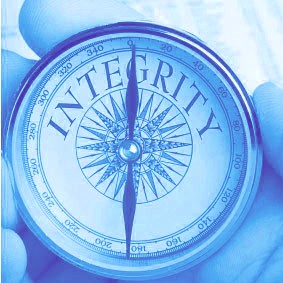
We, as quintessential leaders, make huge mistakes sometimes. We have colossal failures at times. We have serious Integrity Must Be Our Compasslapses in judgment sometimes. We’re very wrong about things at times. That is part of being human. However, the difference between quintessential leaders and everyone else is that quintessential leaders:

  1. Admit mistakes, failures, lapses in judgments, and being wrong quickly
  2. Take full responsibility quickly
  3. Take aggressive action to correct quickly
  4. Apologize to everyone affected quickly
  5. Make amends everywhere they need to be made quickly
  6. Simultaneously, conduct a deep and fearless internal review to see what happened to lead to the outcomes
  7. Commit to and undertake diligently better self-governance and change

That’s what is missing is all the news stories I mentioned above and that is why all the people involved on all sides of the stories are unquintessential leaders. Blaming, justification, excuses, twisting, spinning, angling, and lying are unquintessential leadership traits.

I urge each of us to always look at everything through the quintessential leader lens. Get all the superficial and extraneous stuff out of the picture – emotions are one extraneous  thing – and use the quintessential leader criteria outlined in building trust and being trustworthy to test everything.

In the end, it doesn’t matter how we feel. What matters is what is right. What is true. What is honest. Emotions, as I discussed in “The Quintessential Leadership Balance Between Facts and Feelings,” can obscure right, truth, and honesty.

A sampling of what else I’ve been reading this week:

In Mike Hyatt’s article, “Why You’re Not a Leader,” some of the characteristics of unquintessential leadership are highlighted, including the one of getting results, but doing it through dishonesty and deception, which no matter how “big” the win in the short term, erodes and destroys trust and trustworthiness in the long term. If we are dishonest in how we do things, we cannot be trusted in the what, the why, the when, and the where of any part of our lives either.

6 Categories of Bosses” by Dan McCarthy is an interesting – and one I agree with – graphic breakdown and short description of the six types of people who end up in leadership positions. It’s important, from a quintessential leadership perspective, to remember that the words “boss” (which implies a heavy-handed “do-as-I-say-or-else” role) and “manager” (we manage things and we lead people) are not leadership words, titles, or roles. They are dysfunctional functions created by dysfunctional organizations (all organizations have developed dysfunctionally, because as humans, we’re all dysfunctional to one extent or another, and humans create organizations). As quintessential leaders, we must be vigilant to ensure that we are not bosses or managers, but instead leaders.

In David Peck’s article, “10 Essentials of Great Leadership, many of the facets of quintessential leadership are covered. Two areas that stand out to me – and are integral to the way I lead – are knowing the difference between being “informed” and being “involved” and delegating the “what” and not the “how” to team members.

This second point is one I follow faithfully. Team members cannot grow, nor can they reach their full potential as quintessential leaders – that is the point, after all, of our leadership legacies – if they are forced to operate in somebody else’s box of “how” to do things. Each person on this planet, while having many traits in common, is also unique in approach, perspective, temperament, personality, and gifts.

When people in a leadership positions force their teams to work in their box of “how,” creativity, innovation, progress, change, and success are stifled and, eventually, extinguished. Look at morale problems in organizations and you’ll find that this is one of the root causes.

Glenn Llopis provides a quintessential leadership integral and automatic – this is who we are – to-do list in “Great Leaders Do 15 Things Automatically Every Day.”

TrustIn Tristan Wenmer’s “5 Qualities of a Successful Leader,” a big-picture view of quintessential leadership traits is summarized. As this blog continually reiterates, the first trait on the list is trust.

The final article, “When Leadership Fails,” by Jeremy Statton discusses some of the things that quintessential leaders need to do when they fall short – as discussed earlier – of being quintessential leaders.

I hope our weeks have been productive and I hope that we’ve moved forward in becoming more quintessential leaders than we were last week. As I’ve said before, this is a marathon and not a sprint, and it requires constant, diligent, and courageous work and effort. But never forget, no matter what the ups and downs we encounter along the way – because we do and we will – the final result is absolutely worth it. 

Please take some some time to read the Quintessential Leadership article recommendations for the week of May 10, 2013 that are listed below.

In Josh Bersin’s article, he asks the valid and relevant question of whether the traditional – and unproductive and archaic – annual performance appraisal system that most organizations still use should be replaced with a different system. The traditional performance appraisal system is tied to monetary raises and is a once-a-year-event where team members hear – or read – what their supervisor liked and didn’t like about their past year’s job performances. Usually, the only outcome of this system is frustration because this is the first time team members are hearing about things they did that didn’t work, needed to change, or needed to improve. 

Lack of communication, which I believe is an intrinsic problem in all organizations, is inherent in this “hammer-over-the-head” method of evaluating team members. It does not produce positive results and often leads to attrition among the most gifted and talented team members an organization has. In my eBook, Building Teams for Performance, I give a detailed “what-it-looks-like-in-practice” guide to using performance evaluation systems the way that Josh Bersin correctly concludes they should be used.

Quintessential Leader Articles Review 5-10-13Todd Smith gives a quintessential leadership trait in “Making Your Weaknesses Relevant,” by challenging all of us, as quintessential leaders, not to make excuses for our weaknesses – which we all have – but to face them and change them.

Does it ever seem like you’re in over your head? As quintessential leaders, we will have times that we are in over our heads, but Mike Myatt gives some very practical advice about how to be in over our heads without drowning.

In my post, “Quintessential Leadership News for Week Ending 3-15-13,” I challenged each of us, as quintessential leaders, to look into mirrors, not through windows as we examine ourselves and our path as quintessential leaders to make sure there’s a total match-up between what we say and what we do and are. John Baldoni offers an excellent followup to that post with this article.

In Michael McKinney’s article, Better Decision Making, he discusses the quintessential leadership balance between facts and feelings as being a key determinant in the quality of our decision-making. Feelings and emotions have their place, but they should never be the engine that drives us because they are transient and unreliable. Decisions made using feelings and emotions as the primary driving force often leave us in a worse position than if we had done nothing at all.

The Quintessential Leader blog routinely looks at why unquintessential leadership makes organizations dysfunctional. John Bossong rejoins this discussion with his article that looks at how we can identify unquintessential leadership through the signs of an unhealthy organizational culture.

The last article recommendation this week, written by Kristina Lacida, highlights, as “The Mysteries of Quintessential Leadership Revealed” discusses in detail, the differences between being a “boss” and being a “leader.” 

I hope all of us have had productive, forward-looking and forward-moving quintessential leadership weeks. I’m sure we’ve had our challenges, our missteps, and our failures. But each of those give us an opportunity to learn and to grow.

And, when it’s all said and done, we get back up and we recommit to our goal, our purpose, one step, one choice, one decision at a time. This, my friends, is a marathon, not a sprint.

May the distance we cover between now and the next time we get together be better in every way than the distance we’ve covered already.