Archive for the ‘General Things about Quintessential Leadership’ Category

I’ve often said that quintessential leadership is an art. It can be learned by anyone, but some of us are more naturally inclined by personality, temperament, perspective, and experience to being quintessential leaders. For us, it’s an extension of who and what we are.

For those to whom this doesn’t come naturally, it’s hard work a lot of the time. But, no matter how we’re naturally constructed, this is not impossible work for anyone.

Whether we become quintessential leaders depends on whether we want to be and whether we’re committed to it no matter what and we diligently apply and grow in that commitment, with the evidence of that clearly visible in who and what we’re becoming.

So let’s talk about a few tangible ways that quintessential leaders think and do differently from others. I will be identifying and discussing these from time to time and today’s post is the first discussion.

All of these should be things that each of us looks at in our own leadership mirrors to see how much we’re reflecting them. If the reflection is clear, then we need to continue to keep that clear. If it’s dim or absent, then we’ve still got a lot of work to do.

Spoiler alert: we all still have a lot of work to do. None of us are perfect at any of these all the time.

However, these are a few of the baseline benchmarks against which we should routinely measure, in-depth, how our journey to quintessential leadership is going: where we’ve been, where we are, and where we need to go. (more…)

People don’t always make sense. Those people, by the way, include you and me, fellow quintessential leaders, at times. It’s just a universal side effect of being human, it seems.

people don't make senseHowever, there are ways that people don’t make sense sometimes that go beyond the normal foibles we all exhibit from time to time (quintessential leaders learn what theirs are and stay alert and aware so that they can either eliminate them completely or shut them down before they get the upper hand).

It is in these ways that quintessential leaders stand out from everybody else, because these situations require an equanimity that few people have mastered and a big-picture objectivity that can easily separate facts from fiction. The fiction in these situations where people don’t make sense beyond the norm is what our own mental and emotional conditioned reactions try to convince us is true, while the reality is something quite different.

Let’s take a look at some examples in which people don’t make sense outside of the norm and then we’ll look at how we, as quintessential leaders, handle these situations. (more…)

All quintessential leaders need a strong inner circle that they choose, because as Rockwell points out failure in leadership occurs in both isolation and control. The right inner circle – and this only comes through time, experience, interaction, and observation – enhances us as quintessential leaders and as people.

Quintessential leaders understand that they have areas of weakness, gaps in knowledge, and lack certain skills. Their inner circles will supplement and fill the voids.

Everyone we include in our inner circles should bring a lot to the table. This generally includes strong personalities and opinions (there is a HUGE difference between strong and argumentative – quintessential leaders will not add those who debate or argue for the sake of debating or arguing to their inner circles because this is a recipe for disaster and destruction). People with strong personalities and opinions will be successful when their focus is on goals, not themselves, and not winning at all costs.

Too many organizations mistake strong personalities and opinions that are self-centered, as well as isolation (I’m the “one and only”) and control (“my way or the highway”) as leadership. In reality this is the antithesis of leadership. It’s just self-absorption, self-aggrandizement, and self-centeredness.

Our inner circles should have passion, but they should be able to back that passion up with substance: truth, facts, logic, and focus. Passion for the sake of passion is never enough.

Rockwell lists three types of people who should be in our quintessential leadership circles. “You need a:

Visionary who is never satisfied.
Tender-heart who nurtures people.
Doer who is fanatical about execution.

Note: Include at least one old (visionary or nurturer) and one young (doer).”

Think today about the three people who fill these roles in your inner circles. If you don’t have all three, then think about who you would choose to fill these roles.

Dan Rockwell's avatarLeadership Freak

The enemy of success is isolation. The higher you go the easier isolation becomes, but, it’s a devastating problem at all levels of leadership.

isolation

Isolated leaders fear conspiracies and feel misunderstood. Worse yet, ivory-tower leaders resort to control through authority.

Us/them thinking destroys influence.

Defeat isolation and enhance success by developing a high-power inner circle.

Choose:

Don’t take volunteers. Choose your inner circle.

Three people are enough. Six is too many and two is too few. You need a:

  1. Visionary who is never satisfied.
  2. Tender-heart who nurtures people.
  3. Doer who is fanatical about execution.

Note: Include at least one old and one young.

Strengths:

  1. Hard working. Doers trump thinkers.
  2. Strong opinions and emotions. Lapdogs feel good but won’t take you far.
  3. Unflinching alignment with organizational values.
  4. Comfort saying no. Good manners are nice but not essential.
  5. Dedication to serve the organization before serving themselves.
  6. Strength to confront brutal facts.

View original post 139 more words

People change. Sometimes they change for the better. Sometimes they change for the worse. But, nonetheless, they change.

The physiological way that humans develop indicates that. Each of us starts out basically the same way at birth, then we grow and mature, with similarities to our families as well as things that are unique to us. Different hair colors, eye colors, heights, weights, shapes, interests, personalities, temperaments, and strengths and weaknesses.

While physical growth stops at some point, it is the only way in which we stop changing. Everything else should be directed at changing (growing and maturing) for the better, but, at times, we all get sidetracked and derailed for a little while, and while that is change too, it’s definitely not change for the better. 

However, most of us eventually come back from that sidetracking and those derailments and start moving forward again in the right direction.

quintessential-leaders-see-people-as-moviesQuintessential leaders get sidetracked and derailed sometimes during their lifetimes, so they understand this is part of being human. They also understand that it’s a temporary snapshot in time, like a picture, that does not represent the whole time before and after that time. They understand that people are movies.

(more…)

mark-zuckerberg-facebookOverwhelmingly today, in most organizations, all the focus, all the recognition, all the accolades go to one person or a few people within the organizations who have become the face or faces of the organization. This superstar limelight is generated internally and promoted externally, but it is a troubling sign of unquintessential leadership.

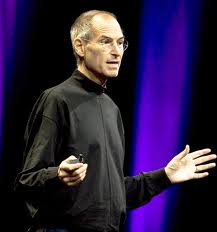
steve-jobs-appleA few examples are names that we probably know better than the names of some of our neighbors, some of our colleagues, and some of our more distant relatives: Steve Jobs, Bill Gates, Jeff Bezos, and Mark Zuckerberg

Let me ask you a question. Have you ever heard any of these people give credit to and recognize the teams behind their organizations’ successes? (more…)

In “The Mindset of Unquintessential Leadership and What It Looks Like in Action,” one of the characteristics that I identified as part of that mindset is bullying.

I think it’s fair to say that we’ve all been exposed to bullying at some point during our lives. However, not all of us have been victims of bullying. For a bully to succeed, the person being bullied has to give his or her power to the bully.

Not everyone who gives this power to bullies is inherently weak. Sometimes the surrender simply comes from long-term battle fatigue and being completely worn down over time.

It takes tenacity, an exceptionally-strong will, and a very thick skin sometimes not to give power to someone else, especially with threats that sometimes go as far as the possibility of losing one’s life. (more…)