Building Trust and Being Trustworthy is available on Amazon in both paperback and Kindle versions.
Recent scientific research has revealed that the brain has a special cell – called a “grid cell” – that functions as a global positioning system (GPS), enabling us to continually know where we are in relationship to all the routes we take while physically moving about and storing those as memories that we retrieve when we traverse a route we have already traveled before.
I am not sure I have this neurological GPS grid cell. From my earliest memories, I have been prone to getting lost, not just my first time going some place, but often every time, especially if it’s a place I travel to infrequently. My lack in this area is so pronounced that – and this is rare, but it’s happened enough to give me pause – in the dark, especially, I get turned around in my own house and walk into the wrong room.
In addition, I’m directionally-challenged. North, south, east, and west are beyond my scope of understanding in real life (I can tell you where they are on a map). If I have to point in a direction, I usually point in the wrong direction. I have to remind myself of my elementary school science that the sun rises in the east and it sets in the west so that twice a day I know where east and west are.
This directional challenge is even worse when I get directions from someone who uses north, south, east, and west as descriptors to explain how to get from point A to point B.
You know just how directionally-challenged you are when you actually prefer a perplexing propensity (probably not unique to northeast Tennessee, but I haven’t run into as much anywhere else in the country as I have here) to use non-existent landmarks and vague measurements with no road names as driving directions that might be less likely to get you lost.
Even when the directions sound like this: “you go down there (pointing in the direction you need to go), and you go past where that big ol’ tobaccer barn useta be, and then you kinda curve around a little, and then you go to the red light, and then you go right, and it’s just a little ways after that.”
So when I bought my first GPS for the car, I was elated.
It was actually very comforting and soothing for me because I tend to panic when I get lost and the fear of the uncertainty of knowing what to do next – if I stay where I am, I’m still lost, but if I move from where I am, then I may get even more lost – has been a permanent fixture of my life since the day I got my driver’s license.
Never again would I have to worry about getting lost again while driving. Because even if I had no clue where I was and where I needed to go, it did and would get me there reliably. I could trust it to navigate me correctly, no matter what.
Quintessential leaders have a similar GPS that doesn’t come pre-programmed, doesn’t depend on satellites hovering above earth’s atmosphere, and doesn’t have to worry about outages because of sunspots or solar flares.
This GPS is developed over time, the product of having an absolute moral foundation of right and wrong, adhering consistently to that absolute moral foundation of right and wrong, and having that adherence become an integral part of who we are and what we do, no matter what.
 The quintessential leader’s GPS is character.
Character tells us what our position is no matter what circumstances we find ourselves in, no matter who we’re with, no matter what other factors, familiar or unfamiliar, are involved. It ensures that we accurately and consistently navigate life, no matter where life takes us or what life throws at us.
But there’s always a caveat with global positioning systems that we as quintessential leaders need to be aware of, recognize, and resist.
The first time I turned my GPS on in my car, I was driving from my house to an interstate on a route that I could drive with my eyes closed. Almost as soon as I’d pulled out of my driveway, the GPS started telling me to go to a different road and take a different route to the interstate. I vividly remember arguing out loud – and with vigor – with the GPS.
“I’m not going that way. I always go this way. I know you think I ought to do something different, but I’m not going to. Enough already!”
The more I resisted going the way the GPS was telling me to go, the more it talked to me telling me I was not going the way it wanted me to go. And the more loudly I responded to it, trying to drown out the voice, trying to get it to be quiet, trying to convince it that I was right and it was wrong, it seemed the louder and more insistent it got.
Similarly, we have to be aware that we can do the same thing with our character GPS. It will always lead us and guide us the right way, but we have to be aware that we can chose to ignore it or override it or even turn it off. It won’t force us to do the right thing. That’s a choice we have to make. Every time.
Going or doing something the way we always have gone or done it may not be wrong. However, it may also not be the best way. What our character GPS does is make us actively stop and be consciously aware and thinking about that more carefully as that internal voice guides our attitudes, our motives, our thoughts, our words, and our actions.
How often do we argue with our character GPS? How often do we rationalize doing something different than what it is telling us to do? How often do we make excuses for not following the directions it’s giving us? How often do we completely ignore it? How often do we just turn it off?
I know we all do at times. I know because I am guilty of having done this and doing this at times. Unfortunately, it seems that is part of being human and the struggle that humans encounter continually. Sometimes we struggle well and succeed. Other times we struggle poorly and we fail.
However, as quintessential leaders, our character global positioning systems should be already very well-developed, with updates being applied as they become available, so that, even though the struggles never go away entirely, we experience them less often and when we do experience them, we succeed much more than we fail.
In conjunction with this on-going development of our character global positioning systems, we will find that we are less apt to argue with, to rationalize around, to make excuses about, to ignore, or to completely turn them off.
Instead, we listen, we pay attention and we follow the route without deviation, without detours, and without exceptions. Every time. All the time.
Developing a character GPS takes commitment. It takes time. It takes a lot of effort. It also, often, means going completely counter to prevailing systems, ideas, methods, social norms, business norms, and life norms.
It’s important to remember that just because everybody else is doing something doesn’t mean everybody else is right.
For quintessential leaders, one of the first things we discover is that, in many cases, everybody else has settled for low standards or no standards. That’s hardly something we’d consider a worthy gauge against which to measure ourselves.
Quintessential leaders must dare to be and to do not only differently than the status quo, but also to replace it with the traits that make up our character global positioning systems: honesty, integrity, consistency, fairness, setting a higher standard, righting wrongs, accountability, sincerity, and setting boundaries.
How are we doing?
People don’t always make sense. Those people, by the way, include you and me, fellow quintessential leaders, at times. It’s just a universal side effect of being human, it seems.
 However, there are ways that people don’t make sense sometimes that go beyond the normal foibles we all exhibit from time to time (quintessential leaders learn what theirs are and stay alert and aware so that they can either eliminate them completely or shut them down before they get the upper hand).
It is in these ways that quintessential leaders stand out from everybody else, because these situations require an equanimity that few people have mastered and a big-picture objectivity that can easily separate facts from fiction. The fiction in these situations where people don’t make sense beyond the norm is what our own mental and emotional conditioned reactions try to convince us is true, while the reality is something quite different.
Let’s take a look at some examples in which people don’t make sense outside of the norm and then we’ll look at how we, as quintessential leaders, handle these situations. (more…)
People change. Sometimes they change for the better. Sometimes they change for the worse. But, nonetheless, they change.
The physiological way that humans develop indicates that. Each of us starts out basically the same way at birth, then we grow and mature, with similarities to our families as well as things that are unique to us. Different hair colors, eye colors, heights, weights, shapes, interests, personalities, temperaments, and strengths and weaknesses.
While physical growth stops at some point, it is the only way in which we stop changing. Everything else should be directed at changing (growing and maturing) for the better, but, at times, we all get sidetracked and derailed for a little while, and while that is change too, it’s definitely not change for the better.
However, most of us eventually come back from that sidetracking and those derailments and start moving forward again in the right direction.
 Quintessential leaders get sidetracked and derailed sometimes during their lifetimes, so they understand this is part of being human. They also understand that it’s a temporary snapshot in time, like a picture, that does not represent the whole time before and after that time. They understand that people are movies.
 Overwhelmingly today, in most organizations, all the focus, all the recognition, all the accolades go to one person or a few people within the organizations who have become the face or faces of the organization. This superstar limelight is generated internally and promoted externally, but it is a troubling sign of unquintessential leadership.
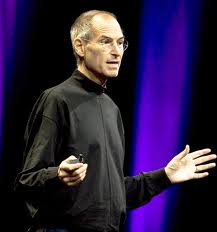 A few examples are names that we probably know better than the names of some of our neighbors, some of our colleagues, and some of our more distant relatives: Steve Jobs, Bill Gates, Jeff Bezos, and Mark Zuckerberg.
Let me ask you a question. Have you ever heard any of these people give credit to and recognize the teams behind their organizations’ successes? (more…)
 The Quintessential Leader