In life and in leadership, even among quintessential leaders, many of the upsets, mishaps, implosions, and irreparable fissures that we experience are begun and ended by communication.
Communication is perhaps the one thing we all struggle – and I do hope that we, at least as quintessential leaders, do struggle, because this means thinking before we speak or write, choosing our words carefully before we speak or write them to avoid misunderstanding and to exactly convey our exact meaning – mightily with at every turn in this thing called life.(more…)
Team-building is one of greatest challenges that quintessential leaders face. I believe this is because quintessential leaders do something that most people in leadership positions don’t do: they actually build a team thoughtfully and carefully, looking for individuals who will both complement each other’s strengths and weaknesses and who will be able to work together well and gel to form an integrated whole that can move forward successfully together. (more…)
We all screw up from time to time. And, sadly, because it’s part and parcel of being human, we screw up a lot more than most of us are willing or honest enough to admit to ourselves and to others.
However, the difference between quintessential leaders and unquintessential leaders is what we do after we’ve screwed up.
Since screwing up is inevitable at some point, we all have to decide if, when, and how we handle it.
And what we choose to do after our screw-ups will demonstrate whether we are quintessential leaders or not, because this is the true test of our character and this is the accurate measure of who we are and what we are in every aspect of our lives.
Consistently choosing a path of dealing with our screw-ups will establish a pattern of behavior and, with time, that pattern of behavior will become our habit.
So the choice we make to address our screw-ups is the key to whether we are becoming quintessential leaders or unquintessential leaders.
Let’s look at what the unquintessential leadership path of dealing with screw-ups looks like.
Unfortunately, this unquintessential leadership consistency of choice that leads to a pattern of behavior that becomes a habit in dealing with screw-ups is no better exemplified than with the public lives of President Bill Clinton and his wife, 2016 presidential candidate, Hillary Clinton.
Since the Clintons began a life in public service, they individually and together have an established pattern – now a habit – of dealing with screw-ups:
Ignore it
Deflect attention elsewhere
Deny it
Dance around it with technicalities to suggest no screw-up
Point to all the other people doing it
Call it an unjustified attack by enemies
Joke about it
Sort of admit it finally, but with excuses and justifications
Sort of apologize, but clearly don’t mean it or believe it
I will not rehash the many past instances of this pattern/habit during the Clintons’ many years of public service. It’s not my intention to make them the subject of this post, but to point out that they represent unquintessential leadership in dealing with screw-ups.
However, I will show how this looks right now with how Hillary Clinton has handled the issue of using a private email server and private email account for State Department communication during her time as United States Secretary of State.
Quite simply, Hillary Clinton screwed up. Although the policy of using State Department servers and emails was not in effect when Clinton became Secretary of State (a point she keeps invoking and twisting to justify and excuse why she did what she did), it was within just a few short months into her tenure.
Despite the government policy – and one of the unquintessential leadership traits common to not just the Clintons, but almost everyone in public office around the world, is “the rules don’t apply to me” – going into effect, Secretary Clinton ignored it and continued to use her private email server and private email account throughout her term as Secretary of State.
When it was finally revealed publicly (don’t believe that everybody in the U.S. government didn’t know about it already and just turned a blind eye until the media got wind of it), Hillary Clinton executed the unquintessential leadership habit of dealing with screw-ups that she has perfected perhaps over a lifetime.
Hillary Clinton, this week, finally got the the last step of this unquintessential leadership habit of dealing with screw-ups.
However, Clinton’s last step looks, in the video of her sort-of apology, as if someone’s got a gun to her head and is forcing her to make a statement that Clinton doesn’t agree with and doesn’t believe.
The irony is that it seems the poll numbers – in favorability and with other present and potential Democrat candidates for president – have pushed Hillary Clinton to the last step of the unquintessential leadership habit that she and her husband have developed for dealing with screw-ups.
But if took this long and this much drama and avoidance to deal with, in the big scheme of what presidents have to deal with both nationally and internationally, a less significant screw-up in personal conduct and following the rules, then the essential issues become Hillary Clinton’s character and trustworthiness in everything.
How, then, do quintessential leaders deal with screw-ups?
To be fair, there are times that we don’t know right away that we’ve screwed up.
But those cases are more rare than we can sometimes lead ourselves to believe because quintessential leaders have very sensitive consciences that knock on our brains pretty quickly when we’ve messed up and don’t stop knocking until we fix it.
As soon as quintessential leaders realize they’ve screwed up, they take immediate action to:
Admit it
Own it completely (no excuses or justifications)
Sincerely apologize for it
Make amends for it by taking action to fix it
Learn from it so they don’t repeat it
This is the tangible evidence of who is and who isn’t a quintessential leader. In the process of doing this as a consistent pattern of behavior, it becomes the quintessential leader’s habit for dealing with screw-ups.
In the process, trust and trustworthiness is established and things get resolved quickly and correctly, instead of snowballing into something way bigger than whatever the original screw-up was.
And this affects the bottom line for quintessential leaders, their teams and their organizations because they don’t waste their time, their energy, and their resources constantly firefighting ignored easily-quenchable embers that blow up into 5-alarm fires that threatens to destroy everything.
So what path do you and I choose to handle the screw-ups we inevitably make in our lives, personally and professionally?
Do our patterns of behavior look like that of an unquintessential leader?
Do our patterns of behavior look like that of a quintessential leader?
Or are our patterns of behavior a mixture of unquintessential leadership and quintessential leadership?
I daresay this is one area where we all need to change and improve to make our patterns of behavior – which builds the lifelong habit – reflect quintessential leadership.
It seems to me that the term “leader” has now begun to ring hollow because it’s applied to anybody and everybody in the world who emerges in the top tier of the heap of any social, religious, academic, governmental, or organizational structure, regardless of how they got there.
The reality is that how they got to the top of the heap matters. A lot. Just because people end up in the top tier of any of these venues does not automatically mean they are leaders. Anymore, it often means just the opposite.
Why?
Because how people get to the top of the heap shows the kind of ethical-moral foundation they have. Or don’t have.
While we seem to routinely disconnect how people behave from their intellect, knowledge, and skills, we do ourselves a huge disservice when we don’t consider the whole person, especially when they’re begging us to unconditionally (which, by the way, is unquintessential leadership) follow them.
The presence or absence of an ethical-moral foundation in a person is directly proportional to whether they build trust and are trustworthy or they destroy trust and are not trustworthy.
The reality is that there is very little trust and trustworthiness in the world today. Time and again, most of us prove, often in what we believe are “little things,” that we cannot be trusted and we are not trustworthy.
“Little things,” it turns out, are symptomatic of big things and those big things show whether we have an ethical-moral foundation or not. How is this translated practically? In a word, character. Character embodies these elements: who we are, what we are, our motives, our attitudes, our thoughts, our words, and our actions.
If one or more of those elements doesn’t sync up with the rest, or what we claim to be, then we have a problem with our ethical-moral foundation and we are deficient in character.
There are certain external behaviors that reveal more than others whether we have an ethical-moral foundation. They are:
A pattern of questionable and surreptitious actions that have built-in plausible deniability;
A history of deflecting responsibility and/or changing the subject (avoiding the subject altogether) when confronted with substantiated actions and words;
A prevailing sense of anger and outrage each time these kinds of actions and words occur and we are called on it;
A history of twisting, spinning, angling, deception, and dishonesty that threads through our entire lives;
An overarching pride and arrogance that literally oozes from our pores continually;
An inability to ever admit we are wrong, we’ve done something wrong, and we need to make amends and change those wrongs in a demonstrable way.
I am very rarely completely on the same page as New York Times columnist David Brooks (I find him to be myopic, elitist, and without an objective view of the big picture most of the time, and that leads him to conclusions that are generally lopsided and not entirely accurate), but in his April 28, 2015 op-ed piece, “Goodness and Power,” Brooks nails the integrated relationship between quintessential leadership and an ethical-moral foundation.
Brooks began the piece with the results of a Quinnipiac Poll that showed that 60% of independent voters rated Hillary Clinton as a strong leader. But 61% of those same voters said that Hillary Clinton is not honest and is not trustworthy (here’s the disconnect I referred to before between behavior and intellect, knowledge, and skills).
Then Brooks moves out to the long view that the real ability to lead is directly tied to honesty and trustworthiness by asking the right question: “Can you be a bad person but a strong leader?”
As those of us who are striving to be quintessential leaders know already, the answer is “no.” To paraphrase Brooks, putting “…someone with bad private morals [in a leadership position] is like setting off on a battleship with awesome guns and a rotting hull. There’s a good chance you’re going to sink before the voyage is over.”
Why?
As Brooks notes, people who have no ethical-moral foundation are Machiavellian in their behavior and the end always justifies the means, and in the end what we get is not leadership, but tyranny and despotism.
The lust for power and control is the driving force behind these unquintessential leaders. The dishonesty is that they obscure their real motives with platitudes that sound like they are selfless, sacrificing, giving, and doing this for the good of the people that they actually want power over and want to control.
And here’s the proof. They’ll talk a good talk until they get what they want, but there are always shadows of impropriety, of shadiness, of manipulation, and of deception hanging around them. Nobody trusts them, even if they manage to get a leadership position.
Once they do get a leadership position, these unquintessential leaders reveal their total lack of an ethical-moral foundation in everything they are, they say, and they do.
What does that look like in practice? As we strive to become quintessential leaders, we must be able to not only know what quintessential leadership looks like, but also what it doesn’t look like and we need to make sure we’re always monitoring ourselves to make sure we’re on the right path and haven’t veered off onto the wrong one.
When people without an ethical-moral foundation get into leadership positions, these are the tell-tale signs:
Tightened control over everything and everyone (it will be loose during their campaign to be in charge and promises of egalitarianism will abound)
A closed inner circle that is an existing network and that is severely limited with very specific criteria so that only those who are already in it can meet them
All-or-nothing demands for loyalty and allegiance
Constrictive and restrictive rules and regulations
Continual threats of retribution and adverse actions if rules and regulations are believed to be broken
Constant assertion of authority and superiority to everyone else
Constant devaluing of others in attempts to promote and enhance their own value
Mistrust and suspicion of everyone else
Look around in your life and see if this looks familiar. It does in my life, because, unfortunately, this is the general tenor of the kind of people in leadership positions in every area of our lives.
It’s become acceptable to not have an ethical-moral foundation and be in a leadership position. Not only is it acceptable, but it is, indeed, preferred.
But as we strive to become quintessential leaders, we can’t just follow the crowd. We can’t use the excuse that everybody else is doing it. We can’t allow ourselves, even if it means we end up being the only person on the planet doing the right thing because we have and we hold on to the right foundation, to ever lose sight of what makes us quintessential leaders.
We are rare for a reason. But there are people, those whom we serve on every team in our lives, who count on the rarity of us having, continuing to fortify, and adhering to an unshakeable ethical-moral foundation.
The majority of articles and blogs about leadership talk about a single aspect – as if it exists and operates in a vacuum – of leadership. It is the public face of leadership: businesses, religious organizations, political organizations, social organizations, schools, and non-profit organizations.
Except for this blog and these books, I have not found any other resource on leadership that discusses it in terms of the whole of spectrum of our lives: it’s who we are, what we are, how we are everywhere in life.
That’s what makes this blog and these books unique. Most people don’t think a blog or books about leadership apply to them: to their lives, to who they are, what they are, and how they are.
They are wrong.
Because they’ve bought into the mainstream idea of what leadership is in a public sense, and since they’re not in one of those positions, then any discussion of leadership doesn’t apply to them.
(And most of the mainstream ideas of leadership are actually “management” instead of “leadership,” which fails time and time again because there are very few people strong enough and courageous enough to get outside of the MBA-fueled tiny, uninnovative, rigid, and constrictive box that confines them to failure).
The reality is that quintessential leadership applies to everyone who lives and breathes. No matter where we are in life or what we are doing, we all lead at least one team, if not several.
Everything we do, we say, and we are is setting an example for the others in our lives, and that, my friends, is leadership. How we do that determines whether we are quintessential leaders or unquintessential leaders.
Becoming a quintessential leader is the road not taken. It is the hard way, the difficult way, the way that demands that we look at leadership in terms of every and all aspects of our lives, not just a single part.
It requires rigorous self-examination without excuses, justifications, or blaming others. It requires constant, continuous, and momentous change from the inside out.
It requires a complete metamorphosis and transformation at the very foundational core of who and what we are, our intents, our attitudes, our motives, how we think, what we think, how we speak, what we speak, how we act, what we choose to do or not do, and how we set that example for others.
It requires fearless commitment and unwavering fortitude.
There is no room for the pretenders, the wannabes, the half-hearted, the sometimes-maybe, for the lackadaisical, and for the here-but-not-there.
We are either all in or all out.
One of the tests – of veracity, of genuineness, of authenticity – for whether we are quintessential leaders or not is how we consistently handle the good, the bad, and the ugly in life.
All of life.
From our most private internal lives to our most public external lives.
It is important to remember that this is the ideal, the goal that quintessential leaders strive for and to. None of us will execute this perfectly all the time, but there must be aggregate and continual evidence in our lives that this is who and what we are committed to – no matter how many failures, setbacks, and falls along the way we make and encounter -becoming.
Quintessential leadership is hardest to see when life is good. Humanity, in general, tends to be at its best when everything’s going well and life presents no challenges, no upsets, no hairpin turns in the road. We all, at least on the surface, can seem to be charitable, thoughtful, caring, concerned, kind, generous, gentle, merciful, and magnanimous.
It is in the good times, though, that the inner character of quintessential leaders separates them from everyone else.
One component of that character is humility.
Quintessential leaders never elevate themselves above others, nor do they constantly talk about how much they’ve accomplished, achieved, acquired (and, by extension, how much wealth they have by enumerating the amount of money those acquisitions cost), and how awesome and great they are.
Instead, quintessential leaders continue to live life modestly and quietly. They realize that the good times are part of the cycle of life and will not last.
Quintessential leaders also understand that the good times are a gift they did not earn, do not deserve, and are not entitled to, so in an attitude of service and thankfulness for them, quintessential leaders use the blessings of good times to help and assist others, often anonymously, and always silently and without any fanfare.
Another three-pronged component of the quintessential leader’s character that you’ll see in the good times in life is understanding and sensitivity combined with empathy.
Quintessential leaders are always cognizant that although they may be experiencing good times in their lives at that moment, many of the people with whom their lives intersect – and for whom they are examples and, therefore, leaders – may not be.
Quintessential leaders are excellent and accurate observers of life by nature. Because they listen more than they speak and watch more than they engage, they miss virtually nothing about what people say (or don’t say), do (or don’t do), and are (or are not), although they seldom, if ever, say anything about it.
They learn to understand and to relate to others in a tangible and meaningful way that includes the rare quality of being able to empathize by putting themselves into the situations that others are experiencing.
As a result, quintessential leaders are acutely sensitive to the circumstances of other people and how their behavior, words, and actions could affect them, not because they are inherently wrong, but because of what other people may be experiencing (for example, if someone is going through a relationship loss, quintessential leaders would not be talking on and on in bubbly, bouyant, and bouncy conversations with this person about all the great things in their wonderful and fantastic relationships).
Anything other than this kind of understanding, empathy, and sensitivity – deep awareness of others and genuinely and authentically relating to them – would be out of character for quintessential leaders during the good times of life.
Why?
Because quintessential leaders always have the big picture in the front of their minds. Good times come and go. Anything that’s happened to someone else could or may happen to us. How would we want to be treated when we are walking in those shoes?
It is always an others-perspective, not a me-perspective, that defines who, what, and how quintessential leaders are. In the good times in life. And in the bad and ugly times.
It is in the bad times and the ugly times in life that quintessential leaders become more apparent, because the bad times and the ugly times in life are the times that try our souls, our hearts, our minds and our character to their outermost limits.
The bad times and the ugly times present ample opportunities to be unquintessential leaders, to set and be bad examples for the people with whom our lives intersect.
The bad times and the ugly times in life can give rise to unfair criticisms, harsh and inaccurate evaluations and condemnations, rejections, resentments, mockery, stinging and hurtful putdowns (usually guised as “jokes” or followed by smiley faces), spitefulness, jealousies, pettiness, and defensiveness – all of which are not intrinsic character traits of quintessential leaders.
The reality is that we all have to deal with these kinds of attitudes, motives, words, and actions during the bad times and the ugly times in life, whether we are quintessential leaders or not.
They are hard-wired into our human nature and it is in the worst of times that we either fight and subdue them or we embrace and use them.
Unquintessential leaders embrace and use them.
Quintessential leaders fight and subdue them.
In other words, quintessential leaders exercise self-control (and, at times, this is the most exhausting work in the world, because it literally takes every ounce of energy and effort we have) and choose what is right instead of what seems easy, justified, and, at least temporarily, very self-satisfying.
These are very often epic behind-the-scenes battles that end in victories or capitulations, character developments or character destructions, good or bad choices, and wise or unwise decisions.
The outcome of what goes on in the private and inner workings of our hearts, souls, and minds is only apparent in what we do (or don’t do) and say (or don’t say) out in the open.
And it’s in the outward manifestation, in bad times and ugly times, that we can truly distinguish between quintessential leaders and unquintessential leaders.
Again, in bad times and ugly times in life, we all experience failure in being quintessential leaders.
There is not a human being who has ever lived, who lives, or who will live – except for the Son of God – who has, does, or will get it right 100% of the time. It’s impossible in our current configuration.
However, the hallmark difference between quintessential leaders and unquintessential leaders is that quintessential leaders are actively living – consciously and deliberately thinking, practicing, being in every part of their lives all the time – with the goal always directly in front of them.
It is a way of life – an integrated part of who, what, and how they consciencely (that’s not a misspelling – because the state of our consciences is directly related to quintessential leadership) and consciously are and are becoming.
In other words, quintessential leaders are well aware when they fail. Nobody else needs to point their failures out to them. The consciences of quintessential leaders are so finely-tuned and sensitive to what they should and want to be – the ideal – that their consciences are immediately stricken when they fall short in any way.
Quintessential leaders are devastated when they fail because they know that not only have they missed the mark of quintessential leadership, but they have failed the people whose lives intersect with theirs by setting a wrong and bad example.
Quintessential leaders, again, stand out in this area from unquintessential leaders.
Quintessential leaders first admit they failed, to themselves and to their teams. They then apologize and ask for forgiveness.
Quintessential leaders will next immediately undertake an exhaustive post-mortem on what happened and why it happened. In the process, quintessential leaders identify tangible and definitive steps to correct the failure, from the inside out, and actively start taking those steps.
Quintessential leaders often do one more thing: they use their failures and the process of identifying the causes and the corrective actions as teachable moments for their teams.
Unquintessential leaders can’t do this because they don’t even recognize a failure (and if someone pointed it out to them, they’d deny it and get defensive and start attacking the poor, unfortunate soul who dared to say anything), so their bad examples are all their teams get.
And their teams perpetuate those bad examples to their teams, and so it goes until we find ourselves in the world in its present tense surrounded by an overwhelming majority of unquintessential leaders.
“I want every little girl who’s told she’s bossy to be told instead that she has leadership skills.” – Sheryl Sandberg
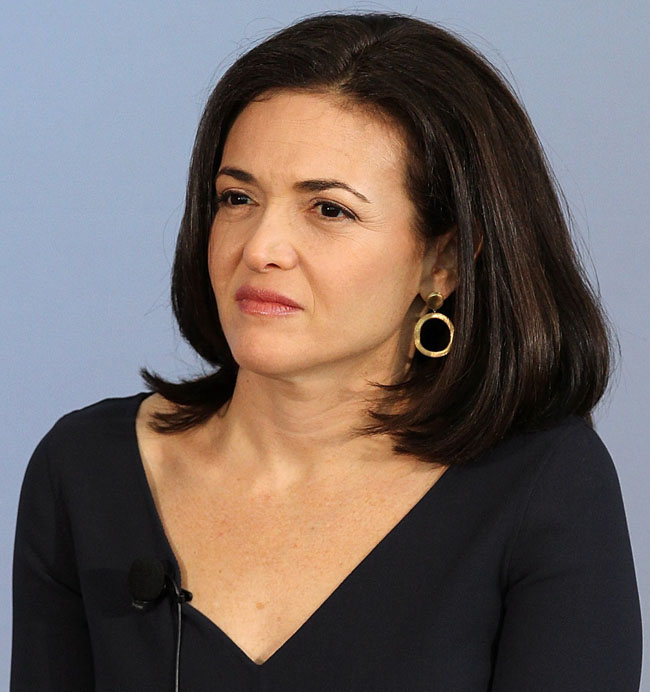
Sheryl Sandberg is quite disappointing, not just as a role model for women, but also as a role model for leaders, because this quote illustrates – as does her 2013 book, Lean In – that she doesn’t really know a whole lot about what leadership really entails and that she isn’t a quintessential leader.
Sandberg is an example of someone who’s in a leadership position – she’s the Chief Operating Officer at Facebook – who isn’t a leader. In fact, she’s an example of an unquintessential leader.
Why?
This quote encapsulates Sandberg’s philosophy and lifeview. And her philosopy and lifeview are dead wrong.
But I also realize, that from time to time, we all need a refresher on and a reminder of the basics, especially as our society blurs more lines between “this” and “that” and as our language morphs into opposites suddenly equaling each other.
This is a responsibility that I, as a striving quintessential leader, have to my teams. And that includes each of you.
So let’s examine why bossiness and leadership are not the same thing and why they are, in fact, completes opposites of each other.
While the list of differences between what bossiness and leadership are is lengthy, I’ve chosen to highlight a few of the more important differences between the two.
One important difference between bossiness and leadership is that bossiness seeks to control, while leadership seeks to guide.The trait of of bossiness is always about control – and the bossy person getting their way at all costs. This is a byproduct of narcissism, of pride, of insecurity, of fear, and of internal inadequacy.
This is also a black-and-white view of outcomes: if I don’t get my way, I lose (control and everything else) and if I do get my way, I win (control and everything else). In fact, there are no processes with bossiness, just outcomes. Everything in life is a tick in the W or L column, and ticks in the L column are unacceptable.
Leadership, on the other hand, is about guidance. It creates frameworks and teams. It recognizes that there are multiple ways to achieve the same goal and it clearly delineates guidelines (ethical, moral, functional, etc.) within which the teams are free to navigate, making the best use of their talents, their abilities, their education, and their experience.
Leadership is the glue that ensures that the dots get connected, but it doesn’t legislate every step the teams take to connect those dots.
There are failures, but not losses. There are mistakes, but not catastrophes (the guidance of leadership sees catastrophes in the making and stops them before they become catastrophes). There are successes, but not wins. Inherent in the processes of each of these areas, however, are the more important things in terms of leadership: the lessons of experience and the education of future leaders.
A second important difference between bossiness and leadership is that bossiness forces, while leadership persuades.
A bossy person has a “my way or the highway” attitude. Bossy people, who never see a reason to explain their edicts and view people who have questions about their edicts as mortal enemies, always threaten dire consequences to force people to do things their way.
This can come in the form of threats (“if you don’t do it my way, you’ll be fired/shunned/excluded/removed”), intimidation (“you won’t get that promotion/grade/position if you don’t do it my way”), and bullying (“I can make every waking moment of your life hell for you if you don’t do it my way”).
As I’ve said before, forcing people to do something may seem to work in the short-term, but it is not leadership nor is it an effective strategy for the long-term.
Leaders, on the hand, motivate their teams by persuasion. Leaders explain everything they are able to explain. They also invite input from their teams on how to address and tackle problems, issues, projects, and goals. Leaders are there to keep the big picture on track, but they are not there to force a single solitary way to meet challenges.
There is generally a best path to success, and leaders persuade their teams to adhere to that path – this is where coaching comes in – while the team works together to build the steps on that path. It’s a very interactive process where everybody on the team is invited, everybody on the team is included, and everybody on the team is expected to make a contribution.
And questions are encouraged. Every time someone starts to ask me a question with some variation of “This may be a dumb/stupid question, but…?,” I always answer first with “The only dumb/stupid question is the one you don’t ask.” I believe that and I practice that. If you don’t know the answer to something, it’s not very smart not to try to get the answer.
A final critical difference between bossiness and leadership is how things are managed. Bossy people micromanage everything and everybody, while leaders macromanage the big things and coach and help their teams as the need arises.
Bossy people literally look over everyone’s shoulders all the time. This is because when you have to force people to do things in a rigid, inflexible way, because people are individual and unique, you can’t trust everybody to adhere perfectly to that rigid inflexibility.
Most of this is a result of the “square peg in a round hole” principle: some people just don’t have the skills or abilities to follow a rigid and inflexible pattern that is diametrically opposite to how they think and work. It’s not that those people aren’t fully capable of doing the task or job right and well, but instead because they would accomplish it a different way that uses their gifts and strengths.
Leaders, on the other hand, build diverse teams that purposefully include people with unique talents and abilities so that when the teams work as units all the bases are covered. In other words, there are no gaps in knowledge, experience, and skills. Leaders trust their teams.
Leaders and their teams work together to plan and execute at the macro level. Each team member is given autonomy and authority over his or her part of the project or goal (again, within the big-picture framework in terms of scope and function and in terms of what’s ethical and what’s moral) with the understanding of how his or her part fits in with the other parts.
Leaders take care of the macro things like budgets, resources, time, as well as ensuring that things – and people – not only move forward, but move forward to successful completion. Again, it’s an interactive, but not intrusive process.
So the question I leave you with today, my fellow quintessential leaders, is are you bossy or are you a leader?
 In life and in leadership, even among quintessential leaders, many of the upsets, mishaps, implosions, and irreparable fissures that we experience are begun and ended by communication.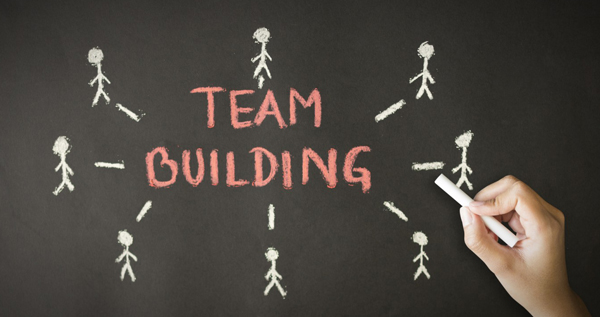







 The Quintessential Leader