Posts Tagged ‘bullying’

In “The Mindset of Unquintessential Leadership and What It Looks Like in Action,” one of the characteristics that I identified as part of that mindset is bullying.

I think it’s fair to say that we’ve all been exposed to bullying at some point during our lives. However, not all of us have been victims of bullying. For a bully to succeed, the person being bullied has to give his or her power to the bully.

Not everyone who gives this power to bullies is inherently weak. Sometimes the surrender simply comes from long-term battle fatigue and being completely worn down over time.

It takes tenacity, an exceptionally-strong will, and a very thick skin sometimes not to give power to someone else, especially with threats that sometimes go as far as the possibility of losing one’s life. (more…)

These value-priced quintessential leadership eBooks are available for download on The Quintessential Leader blog’s business website:

Building Trust and Being TrustworthyBuilding Trust and Being Trustworthy is also available from Amazon in print and Kindle versions.

If you don’t read another book this year, I highly recommend that you read Building Trust and Being Trustworthy. These are not just leadership or quintessential leadership principles. These are essential life principles that each of us should be incorporating into who we are and who we are becoming. Each of us. You. Me. Our children. Our grandchildren. Because we are all current quintessential leaders and we are responsible for cultivating, mentoring, and growing future quintessential leaders.

A mother shared these words with me after reading Building Trust and Being Trustworthy: “Just finished reading this book….EXCELLENT! In fact I’m going to make it a required read for my girls this year! Mine’s all marked in and highlighted…so I may have to get a new copy for them! Thank you, Sandra, for all the time and effort you put into this book or manual for life!”

Building Trust and Being Trustworthy is written for all of us in quintessential leadership positions: leaders of organizations, leaders of business units, leaders of teams, leaders of education, leaders of congregations, leaders of social organizations, leaders of civic organizations, leaders of families, leaders of ourselves, and those we lead.

Today’s post will discuss the mindset of unquintessential leadership and how that mindset gets expressed in actions and words. As quintessential leaders, it’s important that we are reminded from time to time of what quintessential leadership is not, so we can examine our own mindsets (attitudes and motivations) and words and actions to ensure that we’re not letting unquissential leadership creep in.

The reality is that there are far more unquintessential leadership examples around us than quintessential leadership examples.

Most of the people in leadership positions today have a mixture of the two, with more of an unquintessial leadership mindset than a quintessential leadership mindset.

This creates confusion and an atmosphere of constant uncertainty because we never know which to expect under any given circumstance. This mixture engenders continual instability and a pervasive lack of trust.

However, there are some people in leadership positions who have purely unquintessential leadership mindsets (with no quintessential leadership in their mindsets at all). We can readily spot them because their words and actions – indeed, the very core of who they are – ooze with the characteristics of the unquintessential leader mindset.

I always suspect mental illness(es) in these cases because, in general, we humans who are sane – more or less – tend to be, regrettably, a mixture of good and bad, but someone who exhibits nothing but unquintessential leadership has nothing good in his or her thinking, actions, and words. It simply cannot be found.

So let’s take a look at the major characteristics of the unquintessential leadership mindset and what each of them look like in action.

It is ALWAYS all about METhe first is pride and arrogance. The unquintessential leadership mindset is primarily narcissistic, so for the person who has this mindset everything is always all about them. What does this look like in action?

Constant self-promotion and exaggeration of importance, position and status in words and actions is one way this pride and arrogance manifests itself. No one is better, brighter, or more right.

This mindset is one of being superior to and more special than everyone else. The world – no, make that the universe – revolves around the unquintessential leader.

Nothing and no one else matters except for him or her and anyone who doesn’t realize that is the object of the unquintessential leader’s derision and condemnation.

Unquintessential leaders are, in short, legends in their own minds.

Another characteristic of the unquintessential leadership mindset is the need to control everything and everybody. What does this look like in practice?

Absolutely no challenge to the authority, authenticity, correctness, and thoughts, ideas, opinions, and edicts – because that’s what unquintessential leaders issue – is tolerated or allowed. Absolute and complete loyalty to the unquintessential leader is demanded and tested routinely. Action to squelch and remove real or perceived challenges on any of these fronts is swift and brutal.

Threats and intimidation (bullying) are another characteristic of the mindset of unquintessential leadership. This characteristic in action is a constant barrage of harassment and haranguing. An atmosphere of fear is created by the continual reminders that those under unquintessential leadership have tenuous positions and one “wrong” word or move will result in their eliminations and expulsions.

Language is the primary weapon in this characteristic, with repetition on a constant basis of what the negative consequences are that the unquissential leader holds over the heads of those cross him or her.

Manipulation is another characteristic of the unquintessential leadership mindset. Manipulation is accomplished by spin doctoring everything to make everything support what the unquintessential leader believes about him or herself.

Its effectiveness depends on a lack of critical thinking, fear, and the everpresent specter of punishment. It can be quite effective with people who either can’t, won’t, and don’t know how to think for themselves.

This is one of the most subtle characteristics, and, therefore, in my opinion, one of the most dangerous.

Another characteristic of the unquintessential leadership is the creation and maintenance of an atmosphere of suspicion and war anywhere the unquintessential leader is able to. What does this look like?

There are constant words and actions that pit people against each other, creating first suspicion, then war among those people. Unquintessential leaders will constantly find targets to attack personally and set up for everyone else to attack.

This tends to be the way unquintessential leaders get rid of people who challenge them, who disagree with them, who call them out when they are being unquintessential leaders.

Because of all the characteristics of the unquintessential leader mindset, the inability to handle the truth (for an unquintessential leader, the only truth that exists is the truth as he or she has constructed it) is universally the one that usually becomes the most obvious early on because anyone who confronts the unquintessential leader is quickly – and usually very publicly and visibly as a warning to everyone else – hunted down, forced out, and completely destroyed, if possible.

People can usually hide the other characteristics for quite some time, but not being able to face or admit the truth is almost impossible to ever hide.

As quintessential leaders, it is imperative that we are constantly examining our mindsets – our motives, our attitudes, our words, our actions, who we are – to ensure that we are not letting these characteristics of the unquintessential leadership mindset to come in and become part of us and how we lead.

This is the battle we all fight constantly, but it is a battle we must never abandon and a battle we must win. For ourselves and for our teams in every area of our lives. 

Yes. It’s that important.

Paula Deen, in the way she has conducted herself at every step of the way in her current situation, has shown herself to be an unquintessential leader.

First, Paula Deen showed – in case you think this is “no big deal” – herself to be a bully (this falls under the unquintessential leadership trait of bullying) and to have a prevailing lack of personal integrity and self-discipline.

Part of personal integrity is having and demonstrating respect for everyone. Personal integrity also has high standards of conduct and will not engage in – or allow – behavior or speech that denigrates and disrepects another human being. Self-discipline enforces personal integrity.

Second, after Paula Deen had failed on this part of quintessential leadership, although she had opportunities to redeem herself and prove that she was a quintessential leader who made a mistake, but was eager to rectify it and make it right immediately, she continues to show unquintessential leadership.

The first thing a quintessential leader does when he or she realizes they’ve screwed up – and we all do it as long as we breathe for a living – is to correct it and make amends. Matthew 5:25 gives quintessential leadership advice on how to handle someone suing you.

Had Paula Deen been a quintessential leader, she would have initiated a one-on-one meeting with her former employee as soon as she learned of the lawsuit and Paula Deenapologized and asked her former employee how she could make amends to her. Granted that takes a lot of humility, which quintessential leaders also have, but it would have resolved the issue between them and the general public would have probably never heard about it.

Instead, Paula Deen responded to the lawsuit in a deposition that made it even more clear how little personal integrity and self-discipline she possesses. It’s enough to make all of us who are striving to be quintessential leaders cringe most of the way through it.

Her inability to see the seriousness and hurtfulness of her mindset – because how we think is how we talk and act – in her speech and behavior and to accept it as “okay” or “normal” is more proof that Paula Deen is an unquintesssential leader.

Inset statement here: All of us who are Southerners should be cringing as well and putting a lot of distance between ourselves and Paula Deen. Paula Deen does not and will never represent me as a Southerner. We are not all like that. I apologize on behalf of Paula Deen and tell you that her speech and her behavior is wrong, unacceptable, and should not and will not, by me anyway, be tolerated in any way, shape, or form.

After Paula Deen’s deposition became public, she once again had an opportunity to own up and make it right all the way around, as quintessential leaders will eventually do. She failed again.

Instead of taking responsibility and correcting everything on the spot, Paula Deen showed the unquintessential leadership trait of pointing the finger everywhere but at herself. She blamed the South and the time she grew up in as the reason she is a bigot and disrepectful in her treatment of and behavior and speech toward African-Americans.

When that statement became public, Paula Deen yet again had an opportunity to humble herself and be a quintessential leader and take full responsibility and commit to changing herself and making amends.

And, once again, she failed. Her three anemic attempts to “apologize” were not apologies. They did not include a sincere and heartfelt apology where she acknowledged that she was wrong, she needs to and will change, and she will make amends to everybody affected (not just her former employee who is suing).

Paula Deen made it obvious that, in her mind, she stills believes what she demonstrated in her speech and behavior toward this employee and her deposition, but she felt forced to do something to try to save her gig with the Food Network and keep her $17 million dollar brand from imploding.

But there was nothing real, sincere, humbled, or changed behind any of her words. As with all unquintessential leaders, it was talking the talk with no intention of walking the walk.

food-networkAfter seeing these three videos, the Food Network did indeed say they would not renew her contract when it expires at the end of the month.

That was the right thing for the Food Network to do.

And, you know what, I really hope at some point that Paula Deen comes around and understands, acknowledges, really apologizes, makes amends, and makes the changes she needs to make. That’s my prayer for her. She’s got a lot of talent, but a lot of talent doesn’t make you a good person, nor does it make you right, nor does it make you a quintessential leader. 

Now, as quintessential leaders, we need to take some time  to review our own mindsets and how that comes out in our speech and behavior. Do we have personal integrity and self-discipline? Do we care? Or do we just go along with whatever the people around us are doing?

Quintessential leaders set the highest standards for ourselves. And we adhere to them, not when it’s convenient, not when we feel like it, but all the time. Even if it means we’re standing all by ourselves. It’s an act of courage, as indeed our lives are lived by many acts of courage that often swim constantly against the prevailing tide of unquintessential leadership that exists just about everywhere today.

So, let’s be courageous and be the quintessential leaders we say we are striving to be. It’s not the easy path and it’s not a whole lot of fun sometimes, especially when we screw up, but it’s the only way that we’ve committed ourselves to be.

As is the case with all quintessential leaders, I read a lot and I read widely. I read very little fiction, but when I do, I’m very selective, looking for substance and relevant rather than fluff and popularity. 

As an aside, I am one of those rare, it seems, people who eschews the idea of escapism and “feel good” when I am investing my time, energy, and effort into something.

If I don’t learn something or there are not some deep and meaningful principles I can come away with to think about and apply, then I’m simply not going to spend my time with it.

Because I am human, there’s a limit on time for me. I certainly don’t want to come to the end of my quota to discover that I wasted the majority of it.  

In pursuit of my commitment to quintessential leadership and my desire to be, at all times, in all ways, a quintessential leader, I am constantly reading articles on leadership and thinking about how and if they fit the quintessential leadership criteria.

Here is a summary of some articles I’ve read recently that certainly point to the quintessential leadership model in some way. I’d like to share those with you and encourage you to read them.

This article on 8 ways leaders undermine themselves from Forbe’s is a good overview of the subject I discuss in-depth in Building Trust and Being Trustworthy.

In conjunction, part of building trust and being trustworthy includes the ability to admit we are wrong when we are and taking responsibility for fixing what we’ve broken quickly, without blame, without excuses. This article by Amy Rees Anderson on this quintessential leader trait is excellent.

Mike Myatt’s article on why organizations suffer from leadership dysfunction offers a very good tie-in to the subject of organizational dysfunction, which I elaborate on in the Quintessential Leader blog post, “Organization Dysfunction – A Total Absence of Quintessential Leadership at the Top.” I encourage everyone to read both articles because, as Myatt correctly observes, we’re seeing leadership dysfunction become the organizational norm, instead of the exception.

Another must-read article from Mike Myatt demands that each of us examine our commitment to be quintessential leaders. Why? Because he discusses the 10 things every leader should challenge. These 10 things must be on our minds continually and the challenges to them must be continual.

This separates quintessential leaders from everyone else. As I ask myself constantly, I urge you to ask yourself: am I a quintessential leader or am I everyone else?

As I discuss in “Quintessential Leaders and Investment, Action, and Authenticity,” what you and I do and are reveals how great our investment in quintessential leadership is and how authentically we are living and being quintessential leaders.

A thought-provoking article by Manie Bosman on how unquintessential leadership traits – bullying and micromanaging among others, which I cover comprehensively in “Unquintessential Leadership” – affect us neurologically and lead to measurable negative outcomes, and if not changed or eliminated, will eventually lead to catastrophic and total failure.

An atmosphere of fear, intimidation, threats, and power plays is not something a quintessential leader will either create or tolerate. This is all around us in every part of our lives to one degree or another. What do you and I, as quintessential leaders, do about it?

The last article, by Dan McCarthy, is entitled “Is it Time to Create Your Own Succession Plan?” As quintessential leaders, this must be an integral part of our team-building process. For a framework of what this looks like in practice, I recommend “Building Teams for Performance.”

Each time I acquire a new team to build and lead, this is one of the first things on my to-do list: to identify the person or people who have the qualities that, combined with my coaching and leadership, will enable them to replace me.

No one is irreplaceable. And nothing is certain in life but death and taxes.

Therefore, a quintessential leader who wants to ensure that the legacy and foundation he or she is laying continues after he or she is out of the picture, must identify, coach, and grow his or her potential successor(s). To do anything else is unquintessential leadership. 

This post gives some good resources for quintessential leaders. I hope they will provide benefits, insights, and growth as we continue on the path of quintessential leadership.

Beneath today’s termination of Mike Price’s contract as head basketball coach at Rutgers University lies a very common story about the way many people in leadership positions now function and operate day-in and day-out.

Rutgers' head coach Mike Rice It’s interesting to see how much indignation about this.one.incident comes pouring forth, while the larger problem – and the bigger picture – is virtually ignored.

The reality is that this is a vivid example of a now very-common story line that shows how abuse of all kinds is allowed (and, often, encouraged), tolerated, and committed by people in leadership positions throughout every segment of society today. Committing abuse is present in some shape or form in every organizational construct today. It’s a reflection of a society that has come to accept the existence of abuse as being normal. As quintessential leaders, it is imperative that we are discerning and attentive so that we recognize abuse, no matter how subtly-shaded it is, and reject it as wrong and eliminate it wherever it exists.

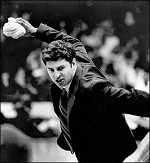
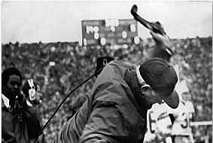
Mike Price’s story as an abusive coach at the collegiate level is not unfamiliar. Bobby Knight at Indiana University and Woody Hayes at Ohio State come to mind almostBobby Knight Indiana University immediately.

Woody Hayes Ohio State UniversityHowever, as I discussed last year in “Absolute Power Corrupts Absolutely,” regarding Penn State and which I discuss in detail in one of the components of Building Trust and Being Trustworthyall of the people in leadership positions at Rutgers have shown unquintessential leadership in this matter. Because this is the second time in 16 years, that we know of, this kind of abuse has occurred with Rutgers’ athletic program – it is obvious that allowing, tolerating, and committing abuse is accepted as standard operating procedure among those in leadership positions at Rutgers. And when those in leadership positions at an organization accept abuse, abusive behavior spreads throughout the organization.

But frequency of occurrence is not the most damning evidence that those in leadership positions at Rutgers University accept abusive behavior as being normal and okay. The back story to Mike Rice’s termination today, however, is.

One of Rice’s coaching assistants, Eric Murdock, brought Rice’s abusive behavior toward players – recorded on video from practices from 2010-2012 – to the attention of Rutgers University’s athletic director, Tim Pernetti, early last summer. Rice fired Murdock in July 2012. Pernetti suspended Rice for three games and fined him $50,000 in December 2012 after the attorneys for Murdock, who sued Rutgers University for wrongful termination, produced video proof of Rice’s abusive behavior toward his players in November 2012.

If Murdock had not threatened to release the video tape to larger audiences, this would have been the only action that Rutgers University would have taken against Mike Rice. However, once the video became public, then those in leadership positions at Rutgers University – and this includes those in executive leadership positions outside the athletic department – decided the behavior of Rice was egregious enough to terminate his contract with the university.

And therein lies an unquintessential leadership philosophy: it’s okay to do the wrong thing as long as you don’t get caught and/or no one else knows or finds out about it. Everyone in a leadership position at Rutgers University clearly embraces and believes this philosophy. By extension, this philosophy is being passed on as acceptable and normal to every student who attends Rutgers University. What does this say about how these students will act and behave when they get into leadership positions in their careers?

Think about that carefully for a while. It should make all of us in leadership positions and we, who are striving to be quintessential leaders in every aspect of our lives, stop and take stock of our own actions, behaviors and beliefs. Do we allow abuse? Do we tolerate abuse? Do we encourage abuse? Do we commit abuse? If we do, then we need to change completely. If we don’t, then we need to stay vigilant to ensure that what has become normal and acceptable behavior among those in leadership positions doesn’t sneak into our behaviors, beliefs, and actions or into the behaviors, beliefs, and actions of our teams.

Inevitably, many people in leadership positions may look at Mike Rice’s behavior and think “well, I’ve never cursed at, thrown things at, or physically pushed around those I lead, so I have never been abusive to anyone I’ve led or lead.” That is very dangerous thinking, because abuse has many faces.

We, as quintessential leaders, as I’ve said many times must be brutally honest with ourselves in examining who and what we are and do to ensure that the person we’re not the most dishonest with is ourselves. This is not easy, but it is absolutely necessary. Let’s all ask and answer the following questions about ourselves in our fearless self-examination of whether we have been or are abusive.

Have I ever implicitly or explicitly threatened someone because that person pointed out something wrong or flawed or inconsistent in me or my behavior?

Have I ever publicly embarrassed or harassed someone to try to force that person to agree with me or see things from my point of view under the guise of helping that person?

Have I ever used the “I’m in charge and if you don’t like it, you can leave” statement to try to intimidate someone who had a different – but not wrong – perspective and/or opinion than I did?

Have I ever used the “silent treatment” to try to manipulate someone into agreeing with or going along with me?

Have I ever talked over someone’s head in an attempt to make that person feel inferior or ignorant?

Have I made general disparaging comments about the intelligence, the quality, the substance, and the efficacy of my teams to put them or keep them “in their place?”

If we answered “yes,” to any of these questions, we’re guilty of having been abusive. And this list of questions is not exhaustive. I urge all of us to think deeply about this subject and identify abuse so that we understand what it is we are fighting and must not allow to become part of our way of being or thinking or doing or speaking.

As human beings, we all tend toward abuse as a defense. It seems to be hard-wired into who and what we are. But, as quintessential leaders, we hold ourselves to a higher standard and part of that higher standard is treating everyone as we ourselves want to be treated. You don’t want to be abused. I don’t want to be abused. And it must be our highest priority not to be abusive in any part of our lives.

I spoke of the courage that quintessential leaders must have in my last post. This is a concrete example of what that courage looks like.