Posts Tagged ‘Building Trust and Being Trustworthy’

the quintessential leader building trust and being trust worthy book

In the first post of this series, the excerpt from chapter 1 included a list of all the components we must develop and have to build trust and be trustworthy.

In the subsequent chapter excerpts detailing the components we need to have and develop to build trust and be trustworthy, chapter 2 discusses honesty, chapter 3 discusses integrity, and chapter 4 discusses fairness.

This post, which includes an excerpt from chapter 5, discusses the component of righting wrongs that builds trust and makes us trustworthy.

It seems for us humans that admitting we were wrong, made a mistake, or totally screwed up is the hardest thing for us to do.

However, if we are not able to do this, then we can’t fix what we’ve broken and we can’t right what and/or we’ve wronged.

The ability to immediately own and immediately make right being wrong, the mistakes we make, and those colossal screw-ups that we all have in our lives is a part of character that is sadly lacking in most people in leadership positions today. 

That is one of the reasons why things spiral further out of control in a negative direction, why things get even more broken to the point of being beyond repair, and why there is so little trust in people in leadership positions. 

It doesn’t do any good to say “trust me” when all we’ve shown is an inability to be trustworthy at all, because we continue to leave ever-growing trails of unadmitted and unfixed breaks, wrongs, and disasters behind us.

Actions will always speak louder than words.

Building trust and being trustworthy is an integrated trait of quintessential leaders.

It is also an integrated trait that all of us – because each and every one of us leads at least one team, small or large, of people in our lives – need to develop and have as part of the core of who we are and what we are. In essence, this trait is at the center of exemplary character and conduct, and none of us should settle for anything less than this in ourselves and others.

Unfortunately, most of us settle for less. A lot less. In ourselves. In others. 

The majority of people in leadership positions today are not trust builders and they are not trustworthy. Many of us, frankly, are also not trust builders and trustworthy.

We live in a world that with no moral code as its foundation that expects trust to be non-existent or broken. Look around. It’s everywhere, including, in many cases, very close to you.

And society has become so accustomed to this that it glorifies it instead of condemning it.

Politicians who lie routinely, who line their pockets with money and perks while making decisions that hurt and destroy the people they are supposed to represent, who cheat on their wives because they can.

Arts and sports celebrities who have no regard for faithfulness to their spouses, who live hedonistic lifestyles that destroy their families, the people around them, and, eventually their lives.

Religious leaders who cheat on their wives, who cheat on their taxes, and who scam their congregations both in how they deceitfully handle the word of God and in coercive and corrupt financial matters, acquiring wealth and power in the process.

Business leaders who destroy millions of lives by deceit, fraud, and illegal actions that result in their employees and customers losing everything while they escape any kind of punitive action and instead reap obscene profits and end their tenures – only to go to another financially lucrative position – with golden parachutes that are equally obscene.

And we, as individual leaders for our teams, who cheat on our taxes, who are routinely dishonest with the children (our own and others) and other people entrusted to us, who routinely steal things from our workplaces (you most likely didn’t pay for that pen you’re using at work, so it doesn’t belong to you), who routinely break traffic laws, who will walk out of stores with something we were not charged for and never think twice about it, who will take extra money that we’re not owed in financial transactions without blinking an eye, who cheat on our spouses, who marry until “divorce do us part,” and who, as a course of habit, break confidences of family and friends, gossip about family and friends behind their backs, and destroy reputations in the process.

Maybe we haven’t thought about building trust and being trustworthy at this kind of nitty gritty level.

But until we do – and we develop and have this trait as the core of who and what we are – we will not build trust and we will not be trustworthy. And we will not be quintessential leaders.

Trust and trustworthiness is probably the single most important trait we can possess. And it is also the most fragile.

It can take a long time to build and be, but it can be broken irreparably in a single second.

Therefore, this is a lifetime work on and in ourselves that we must commit to making an integral part of our character by continually developing it, maintaining it, and growing it. 

This goal should be our goal.

But it requires courage. It requires diligence. It requires vigilance. It requires continual self-examination. It requires continual change. It requires the ability to, much of the time, stand alone to maintain.

It is not for the faint-hearted. It is not for the vacillators. It is not for the crowd-pleasers. It is not for the pretenders. It is not for the wannabes. It is not for the weak.

But if you’re reading this, I know that you’re not any of those kinds of people. Those kinds of people won’t even read this because it requires time, effort, change, and commitment, and too many of us are, sadly, either just too lazy or we just don’t care. 

Building Trust and Being Trustworthy takes an in-depth look at the “this is what it looks like in practice” aspect of each of the components we need to develop and have to build trust and be trustworthy. The second chapter discusses the component of honesty in building trust and being trustworthy.

olive-horizontal-line

Excerpt from”Chapter 5: The Righting Wrongs Component of Trust and Trustworthiness”

This chapter is one in which we’ll tackle a subject that addresses the heart of a quintessential leader. It is true that no one really knows our hearts completely except for God. However, behavior (actions and words) indicates the state of our character (good or bad) and character indicates the state of our inner selves – the heart.

I believe one of the most difficult things for all of us to do is to admit we made a mistake, we were wrong, or we screwed up. There is something intrinsic in us that wants to avoid that, deny that, excuse that, justify that, or even blame it on someone else.

This reticence to own up, to take responsibility for all of our words and actions will be addressed fully in an upcoming chapter on another of the components of trust and trustworthiness, which is accountability.

But the fact that we all wrestle with the admission of wrong-doing, in whatever form those words and/or actions took – and until we admit wrong-doing, we cannot right wrong-doing – shows that this is a quintessential leader trait we must be consciously working to both acquire and practice consistently. Without it, we will not be quintessential leaders. 

There are many examples of the fallout from being unwilling to admit and then to right wrongs that we can look at to see, as quintessential leaders, what not to do.

I will briefly summarize a few here, but I strongly encourage you to research on your own the many more examples from history, religion, society, and public life where wrongs were not admitted to and corrected to see how devastating the results were and to understand the things that each of us must be on guard to not repeat in our own lives and leadership of others.

I also strongly encourage each of us to look at our own lives for examples where we have not exhibited this quintessential leader trait.

Unfortunately, we all have them. We may not be in a position to go back and fix them all – if we are, we should – but we have the opportunity to learn the lessons and change so that we are consistently admitting, without excuses and blame, and righting our wrongs immediately.

There are two examples of people in leadership positions who lacked this quintessential leader trait in the Bible that stand out in my mind every time I read about them and I literally shake my head that they were unwilling to do anything about it, even though the consequences were dire and long-term.

the quintessential leader building trust and being trust worthy book

In the first post of this series, the excerpt from chapter 1 included a list of all the components we must develop and have to build trust and be trustworthy.

In the subsequent chapter excerpts detailing the components we need to have and develop to build trust and be trustworthy, chapter 2 discusses honesty, and chapter 3 discusses integrity.

This post, which includes an excerpt from chapter 4, discusses the component of fairness that builds trust and makes us trustworthy. 

A lack of fairness when dealing with people and situations destroys their trust in us and our trustworthiness to them. It’s unusual to see fairness in application anywhere in society today. Favoritism and partiality abounds wherever we look and wherever we are.

And that is unquintessential leadership. No matter who does it. No matter how it occurs. No matter how many excuses and justifications are given for the unfairness (and there are plenty). 

In the end, being unfair in our treatment of people is a trust and trustworthy breaker.

Building trust and being trustworthy is an integrated trait of quintessential leaders.

It is also an integrated trait that all of us – because each and every one of us leads at least one team, small or large, of people in our lives – need to develop and have as part of the core of who we are and what we are. In essence, this trait is at the center of exemplary character and conduct, and none of us should settle for anything less than this in ourselves and others.

Unfortunately, most of us settle for less. A lot less. In ourselves. In others. 

The majority of people in leadership positions today are not trust builders and they are not trustworthy. Many of us, frankly, are also not trust builders and trustworthy.

We live in a world that with no moral code as its foundation that expects trust to be non-existent or broken. Look around. It’s everywhere, including, in many cases, very close to you.

And society has become so accustomed to this that it glorifies it instead of condemning it.

Politicians who lie routinely, who line their pockets with money and perks while making decisions that hurt and destroy the people they are supposed to represent, who cheat on their wives because they can.

Arts and sports celebrities who have no regard for faithfulness to their spouses, who live hedonistic lifestyles that destroy their families, the people around them, and, eventually their lives.

Religious leaders who cheat on their wives, who cheat on their taxes, and who scam their congregations both in how they deceitfully handle the word of God and in coercive and corrupt financial matters, acquiring wealth and power in the process.

Business leaders who destroy millions of lives by deceit, fraud, and illegal actions that result in their employees and customers losing everything while they escape any kind of punitive action and instead reap obscene profits and end their tenures – only to go to another financially lucrative position – with golden parachutes that are equally obscene.

And we, as individual leaders for our teams, who cheat on our taxes, who are routinely dishonest with the children (our own and others) and other people entrusted to us, who routinely steal things from our workplaces (you most likely didn’t pay for that pen you’re using at work, so it doesn’t belong to you), who routinely break traffic laws, who will walk out of stores with something we were not charged for and never think twice about it, who will take extra money that we’re not owed in financial transactions without blinking an eye, who cheat on our spouses, who marry until “divorce do us part,” and who, as a course of habit, break confidences of family and friends, gossip about family and friends behind their backs, and destroy reputations in the process.

Maybe we haven’t thought about building trust and being trustworthy at this kind of nitty gritty level.

But until we do – and we develop and have this trait as the core of who and what we are – we will not build trust and we will not be trustworthy. And we will not be quintessential leaders.

Trust and trustworthiness is probably the single most important trait we can possess. And it is also the most fragile.

It can take a long time to build and be, but it can be broken irreparably in a single second.

Therefore, this is a lifetime work on and in ourselves that we must commit to making an integral part of our character by continually developing it, maintaining it, and growing it. 

This goal should be our goal.

But it requires courage. It requires diligence. It requires vigilance. It requires continual self-examination. It requires continual change. It requires the ability to, much of the time, stand alone to maintain.

It is not for the faint-hearted. It is not for the vacillators. It is not for the crowd-pleasers. It is not for the pretenders. It is not for the wannabes. It is not for the weak.

But if you’re reading this, I know that you’re not any of those kinds of people. Those kinds of people won’t even read this because it requires time, effort, change, and commitment, and too many of us are, sadly, either just too lazy or we just don’t care. 

Building Trust and Being Trustworthy takes an in-depth look at the “this is what it looks like in practice” aspect of each of the components we need to develop and have to build trust and be trustworthy. The second chapter discusses the component of honesty in building trust and being trustworthy.

olive-horizontal-line

Excerpt from”Chapter 4: The Fairness Component of Trust and Trustworthiness”

There is no simple definition of fairness, but it can best be described as having objective standards and rules that apply – and are applied – to everyone across the board without exception and being unbiased and unprejudiced in dealing with all people.

Quintessential leaders must have this trait in order to earn trust and to become trustworthy, because people will always respond favorably – even when there is a negative consequence for non-adherence – to someone who doesn’t bend the rules, play favorites, or have different sets of standards and rules for different people or groups of people.

The reality is we all encounter issues with fairness very early in life.

Often we first experience it within our families, where consciously or unconsciously, parents may have a “favorite” child and that child seemingly can do no wrong and gets away with murder, so to speak, while the other children are routinely held accountable for adhering to the family rules.

This sets up sibling rivalry, which can have devastatingly divisive consequences for the family far into the future.

We next experience it our extra-familial settings: school, sports, church, clubs, etc. We’ve all seen this first-hand in the form of teachers’ pets, the star athletes, pastors’ kids (PK’s), and within social and civic clubs like Boy Scouts, Girl Scouts, etc. If we weren’t among any of these groups of people, then we often saw and experienced first-hand the unfairness of treatment.

Teachers’ pets, for example, never had to write “I will not talk in class.” 500 times, while we, even if we weren’t talking, had to write the hand-numbing sentences along with the people who were actually talking.

Star athletes could flagrantly break all the team rules and still be on the team and playing, while we, if we broke just one and were caught, were either suspended for several games or kicked off the team altogether.

Pastors’ kids – and I have a lot of good friends who grew up PK’s, so I’m not picking on them because they’re pretty acutely aware of both the preferential treatment they received as well as the fishbowl scrutiny they lived under – were often the wildest kids in church, yet they were not punished, while most of us, if we broke the rules and got caught, had the heavy hand of punishment dropped on us like a ton of bricks.

And in our adult lives, we experience the same kind of unfairness in the workplace. We watch colleagues, who are friends with or liked by their superiors, get special advantages, promotions that are not related to ability and suitability, and no consequences for circumventing or breaking organizational rules and policies or for doing illegal and immoral things.

We have worked among brown-nosers and suck-ups who take advantage of the lack of fairness that is prevalent among many people who are in leadership positions and we watch them rise through the ranks, not on merit or hard work, but because of their attachment or affiliation with upper management.

In the South, for example, there seems to be an unwritten law that, regardless of experience and qualifications, a person will not gain employment with an organization unless he or she is “from around here,” is related to someone in the organization, knows someone well-placed in the organization, or is friends with someone well-placed in the organization.”

the quintessential leader building trust and being trust worthy book

In the first post of this series, the excerpt from chapter 1 included a list of all the components we must develop and have to build trust and be trustworthy.

The second post in this series, which included an excerpt from chapter 2 of Building Trust and Being Trustworthy, looked at the component of honesty in building trust and being trustworthy.

This post will include an excerpt from chapter 3 of Building Trust and Being Trustworthy

Another component of building trust and being trustworthy that we must have is integrity.

Most people don’t realize that integrity and honesty are two distinct but complementary components of building trust and being trustworthy. This chapter defines and shows what integrity does and doesn’t look like.

Building trust and being trustworthy is an integrated trait of quintessential leaders.

It is also an integrated trait that all of us – because each and every one of us leads at least one team, small or large, of people in our lives – need to develop and have as part of the core of who we are and what we are. In essence, this trait is at the center of exemplary character and conduct, and none of us should settle for anything less than this in ourselves and others.

Unfortunately, most of us settle for less. A lot less. In ourselves. In others. 

The majority of people in leadership positions today are not trust builders and they are not trustworthy. Many of us, frankly, are also not trust builders and trustworthy.

We live in a world that with no moral code as its foundation that expects trust to be non-existent or broken. Look around. It’s everywhere, including, in many cases, very close to you.

And society has become so accustomed to this that it glorifies it instead of condemning it.

Politicians who lie routinely, who line their pockets with money and perks while making decisions that hurt and destroy the people they are supposed to represent, who cheat on their wives because they can.

Arts and sports celebrities who have no regard for faithfulness to their spouses, who live hedonistic lifestyles that destroy their families, the people around them, and, eventually their lives.

Religious leaders who cheat on their wives, who cheat on their taxes, and who scam their congregations both in how they deceitfully handle the word of God and in coercive and corrupt financial matters, acquiring wealth and power in the process.

Business leaders who destroy millions of lives by deceit, fraud, and illegal actions that result in their employees and customers losing everything while they escape any kind of punitive action and instead reap obscene profits and end their tenures – only to go to another financially lucrative position – with golden parachutes that are equally obscene.

And we, as individual leaders for our teams, who cheat on our taxes, who are routinely dishonest with the children (our own and others) and other people entrusted to us, who routinely steal things from our workplaces (you most likely didn’t pay for that pen you’re using at work, so it doesn’t belong to you), who routinely break traffic laws, who will walk out of stores with something we were not charged for and never think twice about it, who will take extra money that we’re not owed in financial transactions without blinking an eye, who cheat on our spouses, who marry until “divorce do us part,” and who, as a course of habit, break confidences of family and friends, gossip about family and friends behind their backs, and destroy reputations in the process.

Maybe we haven’t thought about building trust and being trustworthy at this kind of nitty gritty level.

But until we do – and we develop and have this trait as the core of who and what we are – we will not build trust and we will not be trustworthy. And we will not be quintessential leaders.

Trust and trustworthiness is probably the single most important trait we can possess. And it is also the most fragile.

It can take a long time to build and be, but it can be broken irreparably in a single second.

Therefore, this is a lifetime work on and in ourselves that we must commit to making an integral part of our character by continually developing it, maintaining it, and growing it. 

This goal should be our goal.

But it requires courage. It requires diligence. It requires vigilance. It requires continual self-examination. It requires continual change. It requires the ability to, much of the time, stand alone to maintain.

It is not for the faint-hearted. It is not for the vacillators. It is not for the crowd-pleasers. It is not for the pretenders. It is not for the wannabes. It is not for the weak.

But if you’re reading this, I know that you’re not any of those kinds of people. Those kinds of people won’t even read this because it requires time, effort, change, and commitment, and too many of us are, sadly, either just too lazy or we just don’t care. 

Building Trust and Being Trustworthy takes an in-depth look at the “this is what it looks like in practice” aspect of each of the components we need to develop and have to build trust and be trustworthy. The second chapter discusses the component of honesty in building trust and being trustworthy.

olive-horizontal-line

Excerpt from”Chapter 3: The Integrity Component of Trust and Trustworthiness”

We have already looked in-depth at the honesty component of trust and trustworthiness, and now we will look a corresponding and complementary component: integrity. They are not the same, although both must be present in quintessential leaders. To separate them more logically in thinking, honesty is how a person is (conduct), while integrity is who and what a person is (values and standards).

Generally, one doesn’t exist without the other because they depend on each other. If you observe someone who’s habitually dishonest with him or herself and others in any and/or every part of his or her life, you will find upon further observation, that person also lacks integrity. On the other hand, if you see someone who’s habitually honest with him or herself in any and/or every part of his or her life, upon further observation of that person, you will learn that he or she possesses integrity.

The word integrity comes from the root word integral, which means, among other things, entirecomplete, or whole. And that is a strong part of what integrity actually is. It is undivided and unwavering with regard to moral principles, to right and wrong, to right values and standards.

There  is no deviation, regardless of circumstances or costs. It is a systemic quality that affects everything in life. If it’s not a part of a person, life is perpetually chaotic, a free-for-all, and completely unpredictable in terms of directions and outcomes. If it is part of a person, there’s an unchangeable and dependable framework that can be trusted and counted on no matter what’s going on inside the frame.

So, what does integrity look like in action? It first has an intrinsic set of immutable values and standards and adheres to those values and standards, no matter what. Second, it is a conscious and deliberate choice of service – selflessness – over self-interest.

Integrity, by default, is encapsulated by Spock’s famous statement before sacrificing his life to save the rest of the Enterprise crew in The Wrath of Khan: “The needs of the many outweigh the needs of the one.” A quintessential leader will have the integrity to do what’s best for everyone, not just what’s best for him or herself. There is never a component of self-interest as a guiding principle in decision-making.

Integrity is also demonstrated by good stewardship. A quintessential leader will use resources correctly and judiciously and will acquire and allocate them fairly and skillfully, maximizing the benefit to all, based on needs, not wants.

Additionally, a quintessential leader will guard and protect those resources, ensuring that they are not diluted or wasted (this includes people – a good team can be undone by just one person that is not contributing or is actively creating divisions and disruptions).”

the quintessential leader building trust and being trust worthy book

In the first post of this series, the excerpt from chapter 1 included a list of all the components we must develop and have to build trust and be trustworthy.

This post, which includes an excerpt from the second chapter of Building Trust and Being Trustworthy, begins to look at each of those components extensively in terms of what they are and aren’t and what they look like and don’t look like in practice. 

The first component of building trust and being trustworthy that we must have is honesty.

Building trust and being trustworthy is an integrated trait of quintessential leaders.

It is also an integrated trait that all of us – because each and every one of us leads at least one team, small or large, of people in our lives – need to develop and have as part of the core of who we are and what we are. In essence, this trait is at the center of exemplary character and conduct, and none of us should settle for anything less than this in ourselves and others.

Unfortunately, most of us settle for less. A lot less. In ourselves. In others. 

The majority of people in leadership positions today are not trust builders and they are not trustworthy. Many of us, frankly, are also not trust builders and trustworthy.

We live in a world that with no moral code as its foundation that expects trust to be non-existent or broken. Look around. It’s everywhere, including, in many cases, very close to you.

And society has become so accustomed to this that it glorifies it instead of condemning it.

Politicians who lie routinely, who line their pockets with money and perks while making decisions that hurt and destroy the people they are supposed to represent, who cheat on their wives because they can.

Arts and sports celebrities who have no regard for faithfulness to their spouses, who live hedonistic lifestyles that destroy their families, the people around them, and, eventually their lives.

Religious leaders who cheat on their wives, who cheat on their taxes, and who scam their congregations both in how they deceitfully handle the word of God and in coercive and corrupt financial matters, acquiring wealth and power in the process.

Business leaders who destroy millions of lives by deceit, fraud, and illegal actions that result in their employees and customers losing everything while they escape any kind of punitive action and instead reap obscene profits and end their tenures – only to go to another financially lucrative position – with golden parachutes that are equally obscene.

And we, as individual leaders for our teams, who cheat on our taxes, who are routinely dishonest with the children (our own and others) and other people entrusted to us, who routinely steal things from our workplaces (you most likely didn’t pay for that pen you’re using at work, so it doesn’t belong to you), who routinely break traffic laws, who will walk out of stores with something we were not charged for and never think twice about it, who will take extra money that we’re not owed in financial transactions without blinking an eye, who cheat on our spouses, who marry until “divorce do us part,” and who, as a course of habit, break confidences of family and friends, gossip about family and friends behind their backs, and destroy reputations in the process.

Maybe we haven’t thought about building trust and being trustworthy at this kind of nitty gritty level.

But until we do – and we develop and have this trait as the core of who and what we are – we will not build trust and we will not be trustworthy. And we will not be quintessential leaders.

Trust and trustworthiness is probably the single most important trait we can possess. And it is also the most fragile.

It can take a long time to build and be, but it can be broken irreparably in a single second.

Therefore, this is a lifetime work on and in ourselves that we must commit to making an integral part of our character by continually developing it, maintaining it, and growing it. 

This goal should be our goal.

But it requires courage. It requires diligence. It requires vigilance. It requires continual self-examination. It requires continual change. It requires the ability to, much of the time, stand alone to maintain.

It is not for the faint-hearted. It is not for the vacillators. It is not for the crowd-pleasers. It is not for the pretenders. It is not for the wannabes. It is not for the weak.

But if you’re reading this, I know that you’re not any of those kinds of people. Those kinds of people won’t even read this because it requires time, effort, change, and commitment, and too many of us are, sadly, either just too lazy or we just don’t care. 

Building Trust and Being Trustworthy takes an in-depth look at the “this is what it looks like in practice” aspect of each of the components we need to develop and have to build trust and be trustworthy. The second chapter discusses the component of honesty in building trust and being trustworthy.

olive-horizontal-line

Excerpt from”Chapter 2: The Honesty Component of Trust and Trustworthiness”

Let’s look at some specific examples of what the quintessential leader trait of honesty looks – and doesn’t look – like. Maybe a leader is honest with his team not hiding any truth from them. But what if his or her team routinely sees the leader exhibit dishonest behavior outside the confines of the team?

Is the leader honest with his or her superiors, or does the leader routinely fudge, obfuscate, tell “little white lies” (there is no such thing: a lie is a lie is a lie) to them about things? This routinely occurs in most organizations. Sometimes it done under the guise of protecting the team and sometimes it’s done out of habit. Either way, it’s dishonest.

Is the leader honest with his or her peers or is he or she known to exaggerate or embellish on a regular basis? This is ego-driven dishonesty and comes from a spirit of competition and one-upmanship. This is definitely not a quintessential leader we’re talking about, but it reflects a lot of the people we see in leadership positions in organizations.

Does the leader respect company property and use it honestly? For example, if the leader has a company credit card does he or she use it strictly for company/business-related expenses or does the leader do things like put personal expenditures on it from time to time or use it to take everyone out for a night on the town during a business trip? Is their computer, phone, car – and anything else the company might provide – used solely for business or are they routinely employed for the leader’s personal use? If company property is used for anything other than directly-related-to-business purposes and things, then those uses are an example of dishonesty.

And here’s the net effect of these areas of dishonesty. Even if a leader is honest with his or her team, because he or she is dishonest in every other part of his or her life, the team can’t trust him or her. The team will question even the things that are true and will never trust the leader. The evidence is too compelling that, in the balance of things, he or she is untrustworthy.”

At the heart of gratitude lies genuine and authentic appreciation. We live in an entitled society. As a result, there is a pervasive mindset of believing and expecting that when we receive good (words, actions, gifts), we deserve it – it’s our right just because we exist – and we owe nothing in return.

quintessential leaders show and express genuine and authentic appreciationWe, as a society, don’t know how to be thankful and how to express and show genuine and authentic appreciation to and for everyone and everything that intersects with our lives.

Instead, we have devolved into a culture of mutual admiration societies, where we acknowledge only, in an insincere and superficial manner, the people and the things that make us feel good, smart, funny, important, and interesting.

This is not genuine and authentic appreciation.

Instead, it is a revolving door of platitudes dependent on each participant continuing to walk in the endless and small circle of flattery and fawning that strokes our egos and our pride.

It is empty. It is meaningless. And when someone in the circle gets bored because they need a new retinue of genuflectors, they will leave and it will end.

This is also a characteristic of unquintessential leadership, which is entrenched in our society as well.

When is the last time someone in a leadership position said “thank you” to you for something or anything just because?

Does the only meaningless gesture of appreciation you get from an unquintessential leader happen when they need or want something from you or you can be useful to them? What happens when they don’t need or want something or you’re not useful in the moment?

Are you appreciated?

The answer is “no.” If you can’t do something for them or be something to them, you are invisible, useless, and worthless. Tough words. Real words. True words.

So how do quintessential leaders differ? How will you know?

quintessential leaders are genuineFirst and foremost, quintessential leaders are genuine and authentic as people: who, what, and how they are. They are also humble and grateful for the gifts they’ve been given. They know they aren’t entitled to them. They know they don’t deserve them. And they know they are not owed anything.

Because of their character, their understanding of themselves in the big picture, and their ability to recognize that everything and everyone in their lives is ultimately a blessing – whether to teach a lesson, to advise for or against a path of life, to sharpen discernment, or to develop and grow the characteristics and character traits that build trust and make them trustworthy – quintessential leaders are continually expressing and showing genuine and authentic appreciation to everyone and for everything in their lives.

One difference that highlights their genuineness and the authenticity is that, most of the time, quintessential leaders show and express their appreciation in the background in an one-on-one interaction.

quintessential leaders are authenticThe other difference is that quintessential leaders show and express their genuine and authentic appreciation across the board for all the people and things in their lives. 

And much of that appreciation, especially when there are difficult people and difficult things in a quintessential leader’s life that are put there as opportunities to choose the right way, to teach eternal lessons, to make the heart, soul, and mind more merciful because of the mercy received, ends up being for God’s ears only.

What does genuine and authentic appreciation look like?

It means being respectful and kind when you are treated rudely and contemptuously. It means not answering when you are threatened or challenged or deliberately goaded. It means being silent when you are having insults, condemnations, unfounded accusations, and unrepeatable names and labels showered on you.

It means being polite and expressing thanks to someone who you know, at the very least, doesn’t like you, and, at the very most, hates you. It means being gracious to everyone regardless of how they treat you. It means consciously, and sometimes with great effort, silencing the fickleness of emotions and answering instead the consistency of a highly-developed and sensitive conscience.

It means consistently choosing to do the right thing and the moral thing, even in those moments where the temptation is strongest and most urgent for anger, revenge, and ingratitude.

In other words, in the end, expressing and showing genuine and authentic appreciation is a product of striving to master self-control.

As always, I’ve expressed the ideal here. Even those of us who are consciously striving to be quintessential leaders fail to meet the ideal all the time.

But what distinguishes quintessential leaders from everyone else is that the ideal is always at the front of our lives and it is what we live by, strive for, and attain to.

How are we doing?


football nfl penn state baltimore ravens unquintessential leadersDisclaimer:

I recognize that the same unquintessential leadership is rampant in almost all American collegiate and professional sports. Many of the same issues I discuss here exist in all the other sports, both at the college level and at the professional level.

However, football has taken center stage in the last several days, so the discussion here will be limited to that sport.

October 1, 2014 update to post:

PBS’s Frontline did a report entitled “League of Denial: The NFL’s Concussion Crisis,” which aired on September 30, 2014, with data that showed that 76 of 79 NFL players who have died had the degenerative neurological disease chronic traumatic encephalopathy (CTE).

That alone should make us as quintessential leaders consider whether supporting a sport that has become so violently aggressive, with conscious intent to harm, is consistent with our values, our ethics, our character, and who and what we are striving to be.

For me, it is totally incompatible with who I am, what I believe, and what, as a quintessential leader, strive to practice 24/7 in my life. Each of you must choose whether supporting this sport is compatible with who you are, what you believe, and what you say you are striving to practice as a quintessential leader.  

On Friday, September 5, 2014, after I read this article about the lawsuit by former NFL (National Football League) players against the NFL for compensation to offset the high cost of dementia care (directly related to multiple concussions and other head injuries suffered playing the game) in The Atlantic, I posted it and my analysis on Facebook:

New update on the legal action by players who’ve suffered traumatic brain injuries while playing for the NFL, and afterwards, have developed cognitive impairment and dementias.

Personally, I hold both parties accountable (although the NFL has, by big-money contracts and the play-no-matter-what-or-you-are-out mentality of the league, contributed to players risking their health and futures).

I don’t like football in its current incarnation (I really stopped watching it, for the most part, as a kid after Tom Landry and Roger Staubach left the game).

As with the increasingly-graphically-violent TV shows and movies that have been emerging over the last couple of decades, I simply cannot stomach the gleeful and massive infliction of pain on my fellow peeps who are playing, nor can I abide the unquenchable (I tend to think of a growling wolf who is feeding on its prey, with teeth bared and blood dripping out of its mouth as an analogy) desire the public has to watch it.

It’s a brutal sport even in K-12 and the coaches, across the board, don’t seem to care much about their players’ safety, health, or well-being. They seem to care only about winning.

Players, from an early age, are tested on their “toughness.” Practices with insane drills in heat in July and August (where dehydration and heat strokes are not uncommon, as are deaths), as well as hit-them-as-hard-you-can scrimmages are the norm.

Football bears a striking resemblance, IMVHO, to Roman gladiators fighting to the death when Rome ruled the known world.

The players have concussions before they ever get to the NFL, from junior high through college, so their NFL experiences just add to existing trauma.

But players also know what they’re signing up for along the way, so they bear responsibility for their choices, just as the NFL bears responsibility for care of those who’ve lined their extensive coffers with billions of dollars.

But you know who else bears responsibility? The public. If there was not a demand for this kind of violence – again, I draw parallels to the gladiators of Rome and the huge crowds of Roman citizens who reveled in watching the gruesome violence, with exhilaration and excitement proportionally upticked to the amount of blood, guts, and gore in the arena – and a genuine, it seems, delight in seeing other humans being harmed, and, in fact, a lot of screaming and shouting for just that outcome, this would be a non-issue.

There are no innocents here. Those who play, those who make a lot of money off of the players, and those who clamor for and watch the players are all culpable.

And, since I’m on my soapbox, that goes for all the violence in sports (boxing comes to mind). If there were not a market for it, money to be made, and a bloodthirsty public to be satisfied, it would not exist.

I’m an athlete so I’m not anti-sports, but when the point is not to play a game and play it cleanly and well, but to hurt, injure, or kill (yep, it’s happened) someone else, that’s not a sport.

And that’s unacceptable to me.

The majority of the responses were disappointing. It was clear that almost nobody read the article. The overall consensus was “We don’t care. The players knew what they were getting into, so they bear sole responsibility for whatever happened as a result. Plus, they make a ton of money, so they should anticipate these medical expenses down the road and save all their money for that. The NFL takes care of them while they’re under contract, so what more do they want? We love our football.”

While my analysis pointed to shared responsibility among the players, the NFL, and the fans, the responses ignored or denied any culpability except that on the part of the players.

One person responding compared professional football players to firefighters, saying that people who choose these professions know the risks involved, choose them anyway, and deserve nothing if something goes wrong.

That prompted me to ask if the emergency services personnel who responded to the 9/11/01 attacks at the Twin Towers (I lived in New York City at the time, about two miles away from the World Trade Center, and I watched the towers fall in person, so I wasn’t asking this as someone who wasn’t there and watched it on TV) and are now experiencing very serious – and, in some cases, life-threatening – illnesses directly related to their actions on that day in September, since they knew the risks involved when they choose their professions, should not have their medical costs now covered by New York City.

Nobody responded, because, of course the 9/11 emergency services personnel should have their medical costs covered for as long as they live, and so should these players who did fulfill their contractual obligation to the NFL (which did not take care of them while they were under contract because the NFL allowed the unchecked ever-increasing brutality and violence of the game and rushed players back onto the field after injuries, dumping them as soon as their bodies and minds were too irreparably broken to make the league the billions of dollars it pulls in each year).

Since then, two more significant stories involving the sport of football – one collegiate and one professional – are dominating the news.

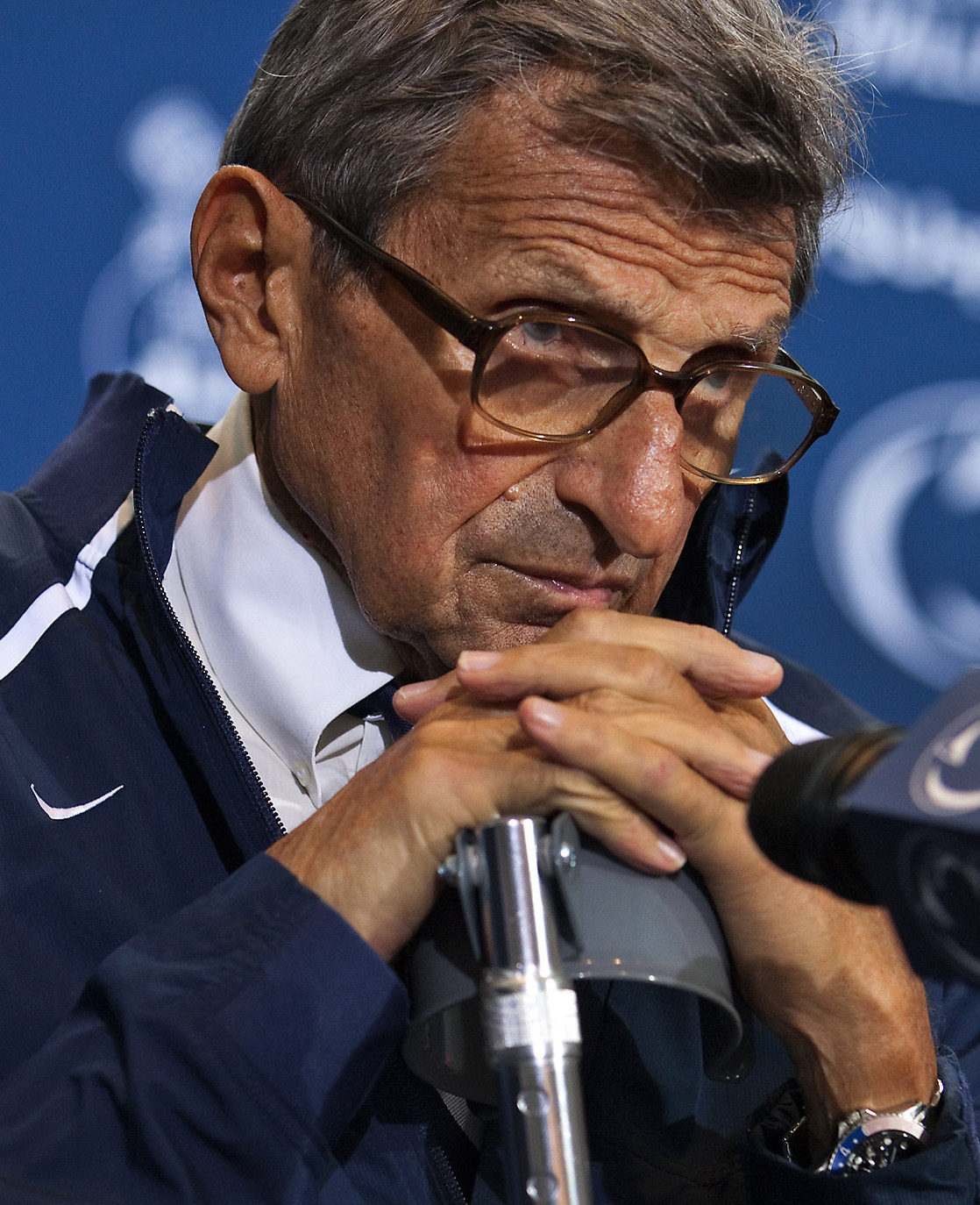
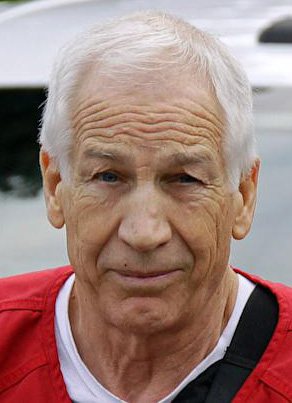
joe paterno penn state unquintessential leaderjerry sandusky penn state unquintessential leaderThe NCAA (National Collegiate Athletic Association) announced yesterday (Monday, September 8, 2014) that it was lifting the sanctions imposed against Penn State University in 2012 when the unquintessential leadership at every level in the university was revealed as well as its complete absence of integrity, morality, and principles in allowing Joe Paterno and Jerry Sandusky to, in the first case, wink at, and in the second case, be guilty of sexually abusing children over the course of decades.

As I discussed in “Absolute Power Corrupts Absolutely” and in “The Tell-Tale Trait of Unquintessential Leadership: Allowing, Tolerating, and Committing Abuse,” the responsibility for a lack of quintessential leadership lies with everyone in a leadership responsibility at Penn State and other universities and colleges who turn a blind eye to the flagrant abandonment of morals, ethics, and integrity.

penn state joe paterno jerry sandusky administration ncaa unquintessential leadersIn 2012, the NCAA imposed sanctions on Penn State that I didn’t believe, at the time, went far enough (I would have permanently dismantled the whole athletic program and immediately fired everyone in positions of leadership at the university), exposing the unquintessential leadership that also existed on the board of the NCAA.

With yesterday’s amendment to the 2012 sanctions, reducing the time and severity of the original restrictions, the NCAA’s lack of quintessential leadership came to the surface again.

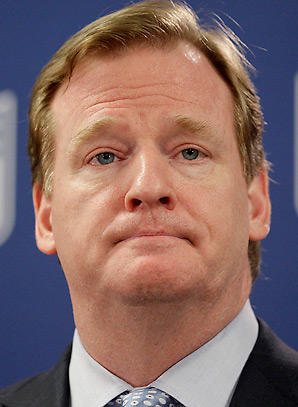
nfl unquintessential leadershipThe other example of unquintessential leadership that came back into the spotlight again yesterday happened in the NFL. This unquintessential leadership has existed all along (and it’s not just the unquintessential leadership of Roger Goodell, who has been notoriously inept at providing quintessential leadership as the commissioner of the NFL).

In late July of this year, NFL Commissioner Roger Goodell suspended Baltimore Ravens running back Ray Rice for two games after Rice was indicted on charges following a physical and violent assault in February of this year that rendered his fiancee Janay Palmer unconscious in an elevator in Atlantic City (Rice agreed to a plea bargain in ray rice baltimore ravens unquintessential leadershipMay on the indictment that consisted of community service and counseling).

Upon the announcement of such a weak punishment by Goodell and the NFL, in a sport that is increasingly seeing more violence (and murder, as in the case of former New England Patriots tight end Aaron Hernandez) among its players off the field, a backlash calling for stiffer punishments – mainly from the press – ensued.

Goodell continued to defend the punishment for Rice for a few weeks. Then, in a supposedly-get-tough-position that did nothing but further highlight his unquintessential leadership, Goodell, on August 28, 2014, increased the punishment for violent behavior off-field to a six-game suspension.

roger goodell NFL commissioner unquintessential leader(It’s important to remember that we’re talking about felonious assault charges, which in the legal system, are punishable by up to a maximum of 25 years in prison.)

Then yesterday, supposedly after seeing the actual video of Rice assaulting Palmer for the first time, the Baltimore Ravens fired Ray Rice and Roger Goodell suspended him from playing in the NFL indefinitely.

The unquintessential leadership is all over this story. Until he had no other choice, Roger Goodell was more than willing – and in both this case and the case of Penn State, the one thing that matters above all else is money (I Timothy 6:10 comes immediately to mind) – to minimize, if not outright ignore, egregious wrong-doing, give a tap on the wrist to the offender, and make sure the coffers stayed full.

But, as quintessential leaders, we must all step back to the bigger picture and ask whether the parties I’ve given an outright fail to in terms of quintessential leadership are the only unquintessential leaders involved.

The answer is “No.” Every single person who makes the choice to support – by watching the games, in person or on TV, by buying team shirts, mugs, flags, etc., by buying the products advertised during the games – these teams (and, both in the NFL and the NCAA, these are just the ones who’ve been caught) is practicing unquintessential leadership.

When we – you and I, fellow quintessential leaders – anywhere in our lives compromise the core principles of quintessential leadership, we are practicing unquintessential leadership.

The overarching questions then emerge. What else are we willing to compromise on in our lives? And what example are we setting for all the teams in our lives?

Because when we practice unquintessential leadership anywhere in our lives, we are giving ourselves permission to compromise on everything and we’re telling all the teams in our lives that it is okay for them to practice unquintessential leadership as well.

Therefore, it should not surprise us when our teams do just that, because by our examples we’ve already said that kind of conduct and behavior is okay.

And we practice hypocrisy if we follow the “do as I say, not as I do” line of reasoning. All the words in the world will never be stronger than what actions we model by our choices and by our examples.

How are we doing?