Beginning this week, I will be starting a new series of posts that will evaluate how quintessential – or not – the leadership of well-known people in history that held leadership positions was.

This idea came as an outgrowth of a request from a very good friend of mine to consider writing a “real” history book – an idea that I’m researching and considering seriously – to counter all the mostly skewed, angled, and sometimes outright untrue information that passes for history these days – in education, in non-fiction writing, and on the internet. 

It seems that we, as humans, have become lazy enough to believe just about anything without proving or disproving it and we like “smooth words” more than the truth.

The history of humanity is ugly. If we, as quintessential leaders, look honestly and closely at ourselves, we’ll admit that some of our personal history is ugly too. It seems, though, that a lot of people would rather just lie about it or doctor it up, instead of facing it and doing something about it to clean it up and make our future histories not ugly.

Once lies and deception become part of our histories and established histories, then we’ve lost the battle for change, for betterment, and, in fact, to become quintessential leaders. Let’s be sure that we’re not afraid to be honest, with ourselves, with our histories, with the world’s history. Only when we face the truth about all of these are we ever in a position it to change it and do something better and different.

After reading extensive excerpts from the Senate Armed Services Committee’s confirmation hearing on January 31, 2013  considering retired Nebraska senator Chuck Hagel’s suitability as the next Secretary of Defense, I could not help but think of William Shakespeare, of Julius Caesar, of Brutus, of Marc Antony.

“So are they all, all honourable men” was the line from Marc Antony’s eulogy, which I memorized for oral recitation in 10th grade English class, that kept coming back to me. Because Marc Antony’s eulogy is facetious in its praise of the very men – and especially Brutus – he knows betrayed Julius Caesar and figuratively stabbed him in the back and literally stabbed him in the front.

I also thought of Dante Alighieri’s The Inferno and the nethermost layer of his hell, which was reserved for traitors. He assigns Brutus and Judas Iscariot to this layer, using this literary vehicle to show betrayal as the ultimate breach of trust. 

(It may interest you to know, by the way, that The Inferno, along with the rest of The Divine Comedy, is actually a political, not religious, book. This fictional work was Dante’s revenge against his political and personal enemies, but by using the cover of a religious treatise, he could condemn his enemies without fear of retaliation. However, the fictional, unscriptural concepts that Dante introduces in this work were later incorporated into the dogma of the church and became much of what both Protestant and Catholic adherents believe about the afterlife today – all of which is based on a work of complete fiction.)

Chuck Hagel Secretary of Defense HearingsThe reality is that few of the people involved in this proceeding are honorable men – and very few of them show any quintessential leadership traits. The overriding hypocrisy, the back-stabbing, and posturing by most of those on the Senate Armed Services Committee are all unquintessential leadership traits.

A glaring example of this emerged over and over as different members of the Armed Services Committee referred to Chuck Hagel in their lead-in to their questions as “friend” or “old friend,” and then each of those same people proceeded to deal with Mr. Hagel in a manner that was, not only unfriendly, but downright hostile. With “friends” like these, who needs enemies?


Arizona Senator John McCain was particularly notable in his hostility and outright bullying (please purchase Unquintessential Leadership for a thorough discussion of bullying and two other unquintessential leadership traits that are often closely related to it) during the hearing. This has been the trend of John McCain’s behavior and character since his unsuccessful 2008 U.S. presidential race. It seems that a bitterness and anger has set in with him that has made him the attacker, the accuser, the blamer, and the one who demands the final word and not only always has to be right, but has to hear, even if it requires brute force, everyone else admit he’s right.

McCain’s questioning of Chuck Hagel was a continuation of that behavior and character. Whatever strengths,John McCain Senate Armed Services Committee knowledge, experience, and respect that John McCain once brought to the table with his inclusion in Senate matters has been eclipsed – and perhaps lost, though, hopefully not for the long haul – by this unquintessential leadership behavior that now characterizes his interaction with almost everyone.

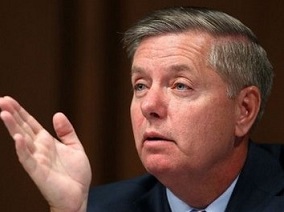
Of all the Senate Armed Services Committee members who questioned Chuck Hagel, the only one who based his questioning on actual things related to national defense that Chuck Hagel has discussed in the past in a measured, persistent-but-not-bullying way was South Carolina Senator Lindsey Graham. The stark contrast between his interrogation of Mr. Hagel and John McCain’s was easily discernible in print, but even more discernible in the video excerpts.

John McCain’s body language, tone, and face are those of an unquintessential leader. Everything is combat and he must win at all time and his “enemy” must publicly surrender. Lindsey Graham’s body language, tone, and face showed none of those things. It was clear, though, that his line of questioning was directed toward a centerpiece of American defense policy, and its importance was why he stayed with it to try to elicit a policy response from Chuck Hagel.

lindsey graham Armed Services Committee SenateOn the other side of the table in the confirmation hearing, however, was another unquintessential leader. As a quintessential leader who interviews and hires people routinely, if Chuck Hagel had been a candidate I was interviewing for a job, after about five minutes, I would have ended the interview and would have asked my HR department to send out a form letter to Mr. Hagel saying “thanks, but no thanks.”

Mr. Hagel was completely unprepared for any of the questions he was asked. He lacked key information on policy matters directly related to the job of Secretary of Defense. He lacked, it seemed, informed and well-thought out policies on international matters and foreign relations. In short, he seemed not to even be aware of the rudimentary elements and matters related to the job he is being considered for. Most of his time was spent embroiled in defending or being decimated about his past, and the end result was the question, at least in my mind, of why anyone thought Mr. Hagel was even remotely qualified to be considered for the Secretary of Defense position.

Quintessential leaders are (a) qualified and (b) extremely prepared for their jobs. That is what we as quintessential leaders must be at all times. We will never know all the answers to all the questions, but as quintessential leaders, it’s our responsibility to be honest and say, “I don’t know the answer to that, but I’ll find out and get back to you,” and then get back with an answer as soon as possible. You won’t lose respect if you don’t know all the answers, but you will lose respect if you don’t know any of the answers.

Quintessential leaders are also not hypocritical and disingenuous. You will not hear a quintessential leader call someone a friend and then treat him or her like an enemy. Quintessential leaders do not bully, do not insist on always being right nor do they insist that everyone publicly admit he or she is right, do not blame, do not accuse, do not attack, do not exhibit any kind of hostility. Disagreement and hostility are not twins. People can disagree without hating each other. And people who hate each other can agree.

As quintessential leaders, we should always look at the wealth of examples of people in leadership positions that surrounds us every day and identify what is quintessential leadership and unquintessential leadership. Then we need to take what we find and measure ourselves against it, because knowledge doesn’t do us any good unless we apply it. And the only person you or I can change is ourselves. If you’re not growing and changing, you’re at best stagnating, but more likely, you’re going backward.

And that’s one direction, as quintessential leaders, we need to be vigilant about ensuring that we’re not going consistently. As long as you and I breathe for a living, there will be times when we take a step or two back. That’s life. But the difference between quintessential leaders and unquintessential leaders is that quintessential leaders know this, are continually watching for it, recognize it as soon as it starts happen, and take immediate action to stop and reverse it.

Where are you today? Going backward? Stationary (stagnant)? Going forward? 

What are you going to do about it?

Share on Facebook

Posted: January 30, 2013 in Quintessential Leadership

If you like any, some, or all of the blog posts you read on The Quintessential Leader, please share them on Facebook and please share what you like about the post. You can also include a link to my business site (http://www.thequintessentialleader.com) in your comments. 

Word of mouth – and, in this case, social media – is the best way to share things that matter to you or that strike a cord with you.

Thanks! I would appreciate it!

I am a close observer of people who are in leadership positions. I look for quintessential leadership traits in them, as part of who they are as people. I don’t always agree with their positions on things nor do I wholeheartedly support and approve of everything they are associated with.

I strip all that stuff away however when I’m looking at people to determine whether they have quintessential leadership traits or not. Because quintessential leadership traits are what should be important to all of us who are in leadership positions.

So when I write about someone here, I’m pointing out where they do – or don’t – possess quintessential leadership traits. Period. Because that’s what this blog is about.

Hillary Rodham Clinton has proven over time that she has many quintessential Secretary of State Hillary Clintonleadership traits and that she continues to hone those and grow in maturity in them. We can learn a lot from briefly reviewing them.

One quintessential leadership trait that Hillary Clinton has is resiliency. When she first emerged on the national scene during President Bill Clinton’s first presidential run, she made a lot of comments that made her unpopular with older Americans, it seemed. When she emerged as a working First Lady, Hillary Clinton seemed to lose even more popularity. At that time, it seemed that a lot of the American public despised her.

She resoundingly failed to change national public health care, which was the cause she took on in President Clinton’s first term in office, and that failure brought more condemnation and dismissal from a large segment of the population and elected officials. 

During President Clinton’s second term in office, Hillary Clinton endured personal humiliation and condemnation because of President Clinton’s infidelity.

However, because of the quintessential leadership trait of resiliency, Hillary Clinton never quit, and shortly after the second Clinton presidential term, successfully ran for a senate seat to represent New York in Congress.

In 2008, Senator Hillary Clinton ran an unsuccessful primary campaign against Senator Barack Obama for the Democratic presidential nomination. It went badly for a lot of reasons and Senator Barack Obama won the nomination.

Once again, Senator Clinton did not quit, and by this time had, through her work in the Senate, shown her knowledge, skill, and ability to be the obvious choice to lead the State Department and easily won confirmation as Secretary of State during President Obama’s first term in office.

It has been in this role as Secretary of State that the other quintessential leadership traits of Secretary Clinton have really come to light.

One of those quintessential leadership traits that Secretary Clinton has shown is a thorough knowledge of her job. While all quintessential leaders will sometimes let things slip through the cracks, even with thorough knowledge, given the opportunity to explain the circumstances and complexity of their work, it becomes clear that, as much as humanly possible, they are on top of everything.

Such is the case with  the Benghazi attack in Libya on September 11, 2012 that left Ambassador Chris Stevens and three other Americans dead. Secretary Clinton was aware of the danger – generally, not specifically to Ambassador Chris Stevens’ situation in Libya – and was continually and exhaustively dealing with several different countries at the same time in trying to keep everyone out of harm’s way. A cable from Ambassador Stevens requesting more security did not get to Secretary Clinton personally and American lives were lost.

Secretary Clinton’s immediate responses within the State Department and publicly show two other quintessential leadership traits she has.

First, Secretary Clinton took responsibility for the problems that led to the death of four Americans in Libya. She acknowledged, among other things, the procedural problem in the State Department that made this cable from Ambassador Stevens not get bumped up to her attention.

Second, Secretary Clinton took action to right the wrongs that existed by completely accepting and working immediately on making all 24 recommendations for change within the State Department made by an independent report on the Benghazi attack released in December 2012.

Another less-touted and harder-to-accomplish quintessential leadership trait that Secretary Clinton – unlike the majority of her government colleagues – showed was humility. Instead of denying, rejecting, blaming, and refusing to change, Secretary Clinton listened to and took the recommendations of others, even though it meant admitting her own failure. It takes a big person to do that and that is a huge quintessential leadership trait.

After reading through excerpts of the January, 23, 2013 U.S. congressional hearings where Secretary Clinton gave testimony about the Benghazi attacks, it is clear that Secretary Clinton has developed and matured the quintessential leadership traits she has. She was pretty viciously attacked and disrespected by some of those on the congressional side of the hearings, but she didn’t attack back.

Another quintessential leadership trait that came out in the excerpts I read was Secretary Clinton’s ability to stay focused on the big picture – vision. And, perhaps, that is the underlying quintessential leadership trait that has sustained Secretary Clinton during many years on a crazy roller-coaster ride in a very public venue. Secretary Clinton didn’t let all the derailment attempts take over – the “would have, should have, could have” statements that focused on a past she had no control over and couldn’t change. Instead Secretary Clinton focused on the present and the future and how to change and improve things.

And the interesting thing about the congressional attacks of and outright disrespect toward Secretary Clinton and her response was it seems like the only adult – and the only quintessential leader – in the whole bunch that showed up that day was Secretary Clinton.

As not-so-public human beings, it’s very easy to jump in and become part of the peanut gallery and Monday morning quarterbacks. But as quintessential leaders, it’s a good exercise sometimes to put ourselves in the shoes of people like Secretary Clinton and see how many of our quintessential leadership traits would be as obvious and apparent in the same situation and circumstances.

When’s the last time you yelled at an employee in front of someone else? When’s the last time you attacked someone who was pointing out that something you are responsible for needed to change? When’s the last time somebody really made a nasty comment to you and you made a nastier one back to them? When’s the last time you did absolutely everything right with no mistakes?

Being quintessential leaders is a 24/7 job. In fact, it’s not job. It’s who we are and becoming better at being. Everything matters. Let’s never forget that!

As today – January 21, 2013 – marks the United States’ federal observance of Dr. Martin Luther King, Jr.’s birthday (Dr. King’s actual birth date was January 15, 1929), it is a good time to review some of the quintessential leadership traits that Dr. King possessed and that we should be looking for and developing in our own quintessential leadership journeys.

Dr. Martin Luther King, Jr.As always, having quintessential leadership traits does not make any of us perfect or without the flaws of human nature, so I urge each of us, as Dr. King undoubtedly did, to also examine ourselves to see where we are unquintessential in leadership and in life and endeavor and persevere to change or eliminate those things and traits that prevent us from being thoroughly quintessential in every aspect of who we are, what we do, how we live, and how we lead. This is our life-long quest.

One of the premier quintessential leadership traits that Dr. Martin Luther King, Jr. possessed was the ability to see the big picture – vision – and communicate that vision. To learn in-depth and to gain application insight into how Dr. King and three other leaders who shared this rare quintessential leadership trait, you can purchase Communicating Vision from The Quintessential Leader online store.

Dr. King also had the quintessential leadership traits of undeterred focus and commitment. His goal was the next substantial effort undertaken after President Abraham Lincoln’s two momentous achievements – the Emancipation Proclamation of 1863 and ensuring the passage of the 13th Amendment to the U.S. Constitution in 1865 – toward making the phrase “all men are created equal,” as declared by Thomas Jefferson in the U.S. Declaration of Independence in 1776 true, not just in words, but in fact.

No matter what Dr. King had to endure personally, including prison, overt hatred, ominous threats, and ultimately, untimely death by assassination on April 4, 1968 at the hands of James Earl Ray at the Lorraine Motel in Memphis, Tennessee, or what he and the civil rights movement collectively endured, including the deadly bombing of the 16th Street Baptist Church in Birmingham, Alabama in 1963, the deadly and strong backlash of the resurgent Ku Klux Klan, and overt local and state-sanctioned law enforcement brutality, Dr. King never wavered in focus or commitment to making racial equality a reality.

He didn’t see problems, only opportunities, even in the face of daunting odds and a lot of pain and suffering for a lot of people along the way. That is a rare quintessential leader trait that we could and should all make sure is part of how we lead and who we are.

Another quintessential leadership trait that Dr. King had was part of what made him a trusted and a trustworthy leader: he set and he adhered to a higher standard for what the road to achieving racial equality would look like. Dr. King was adamant about not using violence in the cause (this was a big difference between the civil rights movement of the 1950’s and most of the 1960’s and the more radical Baby Boomer civil rights activism of the late 1960’s that took center stage in the fight for racial equality, promoting violence as the great equalizer). Dr. King knew that returning violence for the violence being perpetrated against the African-American community would only create more violence. He knew that was not the solution. 

He set the higher standard for the moving of winning hearts and mind, through eloquence, persuasion, passion, reason, and practicality. A good example of this was the very successful bus boycott in Montgomery, Alabama in 1955 to end segregation on buses that was initiated because of what had happened to Rosa Parks.

Although the white community in Montgomery largely acted shamefully and, sometimes violently, the African-American community followed the example set by Dr. King, meeting that higher standard of non-violence – even when they were the victims of violence – and their perseverance paid off.

Another quintessential leadership that that Dr. King had was the ability to admit fear and then face and overcome it. Just because we’re in leadership positions doesn’t mean that we won’t come up against things bigger than ourselves – often! – and things that can seem scary or can create anxiety. Those are all part of our normal human emotional makeup. But how we manage fear and anxiety is the difference between a quintessential leader and an unquintessential leader.

Dr. King had an interesting statement about fear and anxiety: “If you’re not anxious, then you’re not engaged.” He didn’t live or lead with overriding fears and anxiety, which unquintessential leaders do, but he recognized the relationship between being wholeheartedly invested in something and the range of emotions that can evoke.

Knowing that Dr. King was a pastor, undoubtedly he spent a lot of time in prayer asking God for the help to overcome the fears and the anxieties. King David talks with God about this very thing as well in Psalm 139:23. This is the verse that always comes to my mind and is part of my prayers to God when I am dealing with fears and anxieties.

Quintessential leaders are not ruled by their emotions and they know what resources they have available to them to help them manage and neutralize them so that they don’t cause hasty and poor decision-making.

If you find yourself as a leader being led by your emotions, then you’re not exercising this quintessential leadership trait. A good rule of thumb when you’re dealing with an emotionally-charged situation is to put a little time and distance between you and it before doing anything. The phrases “let me sleep on it” or “let me think about it” should become part of your decision-making process because that time and distance can neutralize the emotional aspect and give you clarity to make the right decisions for the right reasons.

While this is not a comprehensive discussion of all the quintessential leadership traits that Dr. King had, I would be remiss if I left out the trait of team-building from this discussion. Dr. King understood how vital building and growing teams – and individuals on those teams (look how many people from the civil rights movement went on to take leadership positions later in their lives) – was to accomplishing the goal of racial equality.

He understood that consensus across a diverse and large group of the American nation was the only way to achieve the goal. He knew it was critical to and how to motivate, engage, encourage, support, and sustain the ever-burgeoning team. Dr. King was, like President Abraham Lincoln, a very gifted team builder. As quintessential leaders, it benefits us greatly to go back and learn in detail how they did it. The eBook, Teams & Performance, available from The Quintessential Leader online store, provides an in-depth analysis and application of what quintessential team-building looks like.

Quintessential leaders are, at heart, historians, because they study the successes and failures of people in leadership positions before them, with an eye to learning to become even more quintessential leaders and removing or avoiding the mistakes of unquintessential leadership that are equally a part of our education.

Dr. Martin Luther King, Jr. is one of those leaders we should go back and spend some time with. You’ll find that, like you and like me, he made his share of mistakes, he had human flaws and weaknesses, but the thrust, intent, and purpose of his life was, as ours should be, not to be the sum of those, but to be the sum of his victories. His legacy tells us he achieved that goal. We should expect no less of ourselves.

This month, in U.S. news, two prominent people in leadership positions in the sports world who have shown themselves to be thoroughly unquintessential leaders have emerged. One of the ties between these two people – Lance Armstrong (7-time Tour de France winner) and Manti Te’o (the highly-touted former Notre Dame linebacker and Heisman Trophy runner-up) – is that of broken trust as a result of blatant dishonesty, spin, angling, the blame game, and outright deception.

As quintessential leaders, it is absolutely imperative that we understand how trust is built and how we become and stay trustworthy, because as is the case with Lance Armstrong and Manti Te’o, once trust is destroyed and trustworthiness is gone, it is difficult, if not impossible, to ever get back.

My eBook, “Trust & Trustworthiness” provides a compellingly insightful and comprehensive compilation of the quintessential leadership components of building and keeping trust and becoming and being trustworthy and what they look like in practice.

Although I enjoy sports, professional cycling and college football are two sports I don’t have any interest in nor do I really understand exactly what the mass appeal of them is.

However, I would have had to have lived under a rock for the past twenty years or so not to have a fairly good knowledge about Lance Armstrong and his career. The interesting thing about Armstrong, though, is that years ago, when he really hit his stride and became a household name, I observed a certain disconnectedness and ruthless coldness about him that made me uncomfortable. His eyes, I think, betrayed him. When the then-rumors about his doping began to swirl, I believed they were more than just rumors and were probably credible.

Armstrong vehemently insisted for years that he had never used drugs to enhance his physical performance and continued that steadfast denial even in the face of the irrefutable proof of his usage of banned substances and his distribution of those substances to others in the cycling world in the 1000+-page report from the United States Anti-Doping Agency (USADA) released in June 2012.

One of the most disturbing things I observed about Lance Armstrong during this period of accusations and denials was his viciousness and his determination to destroy as many lives as possible along the way. His behavior seemed more like that of a sociopath than of a man defending himself against unfounded and baseless claims. He spent a lot of time and energy ridding himself of accusers and, in his mind, enemies, fingering them as being cheaters and liars and claiming to be a victim of vindictiveness spurred by jealousy over his accomplishments.

After seeing portions of Lance Armstrong’s interview with Oprah Winfrey and reading the full transcript, it turns out that Armstrong was the cheater and the liar all along. Watching his body language and his eyes and observing the calculated and emotionless responses to Winfrey’s questions, it’s clear that Armstrong has strong sociopathic tendencies and that is the epitome of unquintessential leadership.

The first thing that I noticed about Lance Armstrong in the actual interview clips was that he still doesn’t believe he did anything wrong – and he never will. There is no contrition. There is no regret. There is no remorse. There is no guilt.

There is nothing behind the very feeble gestures that he’d like us to believe are admissions of dishonesty, wrong-doing, and cheating. No one who knows this man should ever expect a genuine apology from him. Whenever someone starts this statement: “I guess I’ll have to apologize…,” that person is not convicted within him or herself of his or her guilt, culpability, or the need to right a wrong. 

In Lance Armstrong’s mind and heart, he’s innocent of any wrong-doing. One of his claims to defend his doping is that “everyone else was doing it.” That’s the oldest excuse in the world, but only unquintessential leaders use it. All the other wrongs in the world don’t make a quintessential leader’s wrong right. Wrong is wrong and right is right.

People in leadership positions set the example for those they are responsible for leading. So when Lance Armstrong dopes, lies, cheats, and blames and crushes other people, what example is he setting? It’s unquintessential leadership on steroids, pun intended.

The most telling quote for me of Lance Armstrong’s interview with Oprah Winfrey was this one about cheating: “At the time, no. I kept hearing I’m a drug cheat, I’m a cheat, I’m a cheater. I went in and just looked up the definition of cheat and the definition of cheat is to gain an advantage on a rival or foe that they don’t have. I didn’t view it that way. I viewed it as a level playing field.”

This is the heart, core, soul of Lance Armstrong. He has no integrity and he epitomizes the very worst – the opposite of quintessential leadership – of unquintessential leadership.

Manti Te’o, the former Notre Dame linebacker and Heisman Trophy contender, has a shorter, but equally unquintessential leadership track as that of Lance Armstrong. Another appalling aspect to this story is the same kind of unquintessential leadership being shown by Notre Dame’s executive staff, most notably athletic director, Jack Swarbrick, who has countered Deadspin’s revelation of the fraud and dishonesty perpetrated by Te’o by continuing to assert that Te’o was the victim of a hoax.

Te’o’s story of the death of his grandmother and girlfriend within a 12-hour period of each other fueled sympathy and admiration both by the media and the public for the young football player in September of 2012.

However, as Deadspin revealed this week, the story was a lie. Te’o’s grandmother did die in September 2012, but there was no girlfriend and no subsequent death from leukemia. It turns out that this was a publicity move of dishonesty and fraud – probably to up the chances of Te’o winning the Heisman Trophy and being drafted higher in the NFL – that, no matter what the assertions of Te’o and Notre Dame officials are, Te’o was intimately involved in and continually purported to be true.

The fact that Te’o actively participated in the fraud is what highlights his own and Notre Dame’s lack of quintessential leadership. How Notre Dame’s athletic director can keep telling people that Te’o is an innocent victim of a hoax when Te’o’s own words convict him and show him to be thoroughly involved in the web of deceit is beyond comprehension. It seems that once people go down the road of dishonesty, eventually they begin to believe their own lies to the point that truth is never and can never be within their grasps again.

Te’o’s dishonesty, with Notre Dame’s apparent approval and backing, has destroyed any credibility – and that includes trust and trustworthiness – he had. Even if he is drafted by the NFL (personally, I think they’d be crazy to draft him), no one will ever trust him again. He has proven himself to be an unquintessential leader: unreliable, undependable, dishonest, untrustworthy, and selfish, self-centered, and self-absorbed.

Te’o, in the end, like Lance Armstrong, and like every other unquintessential leader, is all about himself. They don’t care about the team or the truth. They have no integrity. They lack any authenticity. They are pretenders, wannabe’s, and examples of the opposite of what we as quintessential leaders want to be, should be, and, indeed, must be.