Archive for the ‘Examples and Analyses of Quintessential Leadership’ Category

As quintessential leaders, we need to be aware of how constant connection to digital technology negatively affects us as leaders and the people on the teams we lead.

If we don’t understand what this looks like and how it manifests itself and we don’t find a way to ensure that we have a balance between real life and digital life, then we will not be able to be quintessential leaders. It’s that simple.

Going Gentle Into That Good Night's avatarGoing Gentle Into That Good Night

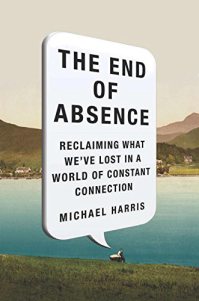
internet going gentle into that good night neurological changesThis is the first of a multipart series of reviews that I will write on The End of Absence: Reclaiming What We’ve Lost in a World of Constant Connection written by Michael Harris in 2014.

I have written on the main point of Harris’ book in “Dementia of the Preoccupied: How Multitasking and Being Attached to Technology 24/7 is Creating A Dementia Effect on Society” and “The Quintessential Leader Perspective On the Art – and Beauty – of Silence,” which everybody should take some time now to read.

The End of Absence: Reclaiming What We've Lost in a World of Constant Connection by Michael HarrisI would also highly recommend that everyone read The End of Absence: Reclaiming What We’ve Lost in a World of Constant Connection. At about 200 pages, it is completely doable for the shorter attention spans (one of the side effects, as I’ve noted and Harris notes, of a life immersed in digital technology).

Michael Harris and I…

View original post 3,183 more words

team-building recruiting interviewing assessing hiringTeam-building consists of four distinct steps: recruiting, interviewing, assessing, and hiring. A flawed approach in any one of these steps will, at the least, severely derail the process, and, at the worst, stop it altogether.

Modern team-building has become an increasingly-frustrating, long and drawn out, and very unsatisfying process for both organizations and potential team members. Much of this is because of the lack of quintessential leadership guiding the process.

If your organization is having difficulty building the right teams and building great teams – which delays new project initiatives, on-going projects advancement, and, ultimately, has a negative effect on customers (existing and new) and profits – then this post will show you why.

By showing you how quintessential leaders build teams, this post will also guide you in addressing the issues and flaws in the process that are holding your organization back from fulfilling its mission statement, from growing, from being successful, and from being more profitable.

The recruiting phase of team-building is the critical part of the team-building process. If this is not done well or effectively, then the rest of the steps – interviewing, assessing, and hiring – won’t matter.

It’s that important.

And yet, most of the time, very little, if any, quality attention and investment is given to this step. As a result, this is where the biggest bottlenecks occur and where the process tends to crash and burn.

Why?

There are several key reasons why recruiting is the least effective and most failure-ridden step of your organization’s team-building efforts:

  1. The role of potential team member additions is fuzzy.

    This is usually because the person who is responsible for leadership of the team is not clear on exactly what they want, but they want it now.

    As a result, they create a vague and general position description that 90% of potential team members meet the criteria for, resulting in an overwhelming number of potential team members who aren’t a match for the actual position.

  2. The role of potential team member additions is burdensomely skill-heavy and skill-specific.

    This is usually because the person who is responsible for the leadership of the team has created a rigid, unrealistic box that potential team members are expected to fit immediately and 100% into on Day 1 if they are added to the team.

    As a result, no potential team members possess all the skills and the proficiency levels specified, so no potential team members are a match for the position.

  3. The role of potential team member additions is inaccurately named.

    This is usually because either the person responsible for the leadership of the team has not defined the role in their own mind precisely enough or because the organization has a very lateral structure where functions and roles are not the same thing, but they look like the same thing on paper.

    As a result, potential team members who are “overqualified” apply. And, unfortunately, these potential team members intimidate the team leaders because of their experience and expertise. So, only from the team leaders’ standpoint, these potential team members are not considered a match.

  4. Potential team members are being vetted and eliminated through an automated human resources database system (designed by human resources departments and database administrators with no first-hand knowledge or understand of what job-specific complexities are involved with successfully adding a member to the team) with a limited and general keyword set.

    In other words, there is no human interaction in the initial phase of the recruiting process. The person responsible for leading the team doesn’t get a good and diverse choice of potential team members and potential team members who would be an excellent match get eliminated by an flawed automated process.

  5. Potential team members are being vetted by outsourced and offshore recruiters who barely understand and can communicate in the native language of the organization and the potential team members.

    As a result, the recruiters don’t really understand the requirements of the role, so they contact potential team members who most likely are not a match.

    For those potential team members, the interaction – always phone – is a nightmare because of the communication issues. Even if there is a possible match, potential team members will pass on it because they’re not going to agree to anything they can’t comprehend, language-wise.

  6. Organization recruiters either don’t understand or simply mismatch skill sets repeatedly.

    As a result, potential team members who are contacted by these kinds of recruiters end up being ready to gnash their teeth, pull their hair out, and include a phrase in their email signature that says “If you are recruiting for ‘x,’ ‘x’ does not equal ‘y,’ so please pass on by.”

  7. Organizations using domestic top-tier recruiting agencies – who have met with and know the potential team members they have available to offer – don’t give the recruiters enough concrete information about the role and the kind of potential team members they are looking for to enable the recruiters to do a good initial vetting job for them.

    As a result, recruiters reach out to potential team members who seem to meet the criteria given and being the process of setting the potential team member up with the person responsible for leading the team in the organization.

    This can go through several steps between the recruiter and the potential team member toward an interview and then suddenly stop because the organization hiring, or the team leader, or both realize they didn’t nail the role down concretely enough for the potential team members the recruiter is presenting them with.

    This is frustrating and a time-waster for both the recruiter and the potential team member (who may be putting other things on hold because this position is a good match) and it’s a time-waster for the organization that is hiring.

Quintessential leaders understand that recruiting is the crucial step in the team-building process. Therefore, this is the step they spend quality time on.

They first accurately and completely define the role they want to fill on their team. This is a skill that requires visualizing a human being in that role, not just things that are needed because nobody on the team has them or can do them. 

The definition should be big-picture, with the areas of responsibility framed out in the role’s description.

Quintessential leaders then identify the core competencies that the role requires.

This part of the recruiting step looks at experience, not in terms of specific applications, but in terms of what areas potential team members need to have experience, knowledge, and understanding in to successfully fill the identified role.

It also specifies the level (entry, intermediate, advanced, or expert) of experience, knowledge, and understanding that potential team members need to have to be a successful addition to the team. 

Core competencies are also identified and framed out in terms of the big picture.

At this point in the recruiting process, quintessential leaders have a very good idea of what they need in a potential team member, but because there are too many intangible things like personality, temperament, culture of the team/organization that also factor into who the successful candidate will be, quintessential leaders bypass the automated vetting systems because they realize they may lose great potential team members just because their resumes don’t exactly match the database keywords.

Although some quintessential leaders may use top-tier recruiting agencies (with specific instructions on the type of candidates they’re looking for), the majority of quintessential leaders usually do the actual dirty work – reading resumes and cover letters to select potential candidates – of recruiting themselves.

The reason is that cover letters and resumes can tell them a lot about potential candidates that they won’t be able to find out any other way other than a face-to-face interview.

Because quintessential leaders are big-picture people, they have an uncanny ability to connect disparate dots that may not look like they are related, but actually are.

By using this ability with actual cover letters and resumes, they will be able to identify, far more accurately than anyone or anything else, which candidates will be the best fit for the team.

Quintessential leaders also understand intangibles about people, and cover letters and resumes will often reveal those.

These intangibles include transferable skills (skills developed or learned in one industry, type of organization, or even life experience that can be used in other industries and types of organizations), skills that can be taught and learned, and intuitive or innate skills. These round out the big-picture snapshot of each potential team member.

Quintessential leaders now have a finite set of potential team members that they have personally identified as good fits for their teams to make initial contact with as the recruiting step transitions into the interviewing step of team-building.

And once the recruiting step is done, the rest of the team-building process is comparatively easy.

It’s unfortunate that most organizations and leaders of teams would rather expend the majority of their effort on the back end of the team-building process (which includes the termination process when poorly-chosen team members don’t work out), continually sacrificing productivity, success, and profitability as a result, instead of on the front end where it matters most.

the quintessential leader building trust and being trust worthy book

In the first post of this series, the excerpt from chapter 1 included a list of all the components we must develop and have to build trust and be trustworthy.

In the subsequent chapter excerpts detailing the components we need to have and develop to build trust and be trustworthy, chapter 2 discusses honesty, chapter 3 discusses integrity, andchapter 4 discusses fairness, chapter 5 discussesrighting wrongs, chapter 6 discusses accountability, and chapter 7 discusses consistencychapter 8 discusses sincerity, and chapter 9 discusses setting boundaries.

This post, which includes an excerpt from chapter 10, discusses the component of setting a higher standard that builds trust and makes us trustworthy.

Setting a higher standard should be the first thing people in leadership positions do. Before anything else.

While setting a higher standard goes hand-in-hand with setting boundaries, setting a higher standard establishes evidentiary boundaries of character, which affects every area of our conduct. 

These are standards that we adhere to no matter where we are, what we are doing, or who we are with. And they are standards that we expect the members on our teams to adhere to as well.

Let’s look how a lack of setting a higher standard looks in real life. This should have everyone reading this nodding their heads because there is not one of us who hasn’t seen it.

How many times have we seen someone who seems to have a higher standard of conduct when we’re with them and then they deny that by their conduct (words and actions) when they’re not with us?

On social media, perhaps. With other people, perhaps. In different venues than the one(s) we associate them with. 

Now let me ask the harder question. What was our reaction to their lack of a higher standard?

If we shrugged it off, thinking it was no big deal, or if we were invited and joined into to whatever the conduct was, then we have not set a higher standard for ourselves either.

Only you can answer for yourself and only I can answer for myself, but if we have not set a higher standard, then we are not quintessential leaders and we are destroying trust and not being trustworthy.

Building trust and being trustworthy is an integrated trait of quintessential leaders.

It is also an integrated trait that all of us – because each and every one of us leads at least one team, small or large, of people in our lives – need to develop and have as part of the core of who we are and what we are. In essence, this trait is at the center of exemplary character and conduct, and none of us should settle for anything less than this in ourselves and others.

Unfortunately, most of us settle for less. A lot less. In ourselves. In others. 

The majority of people in leadership positions today are not trust builders and they are not trustworthy. Many of us, frankly, are also not trust builders and trustworthy.

We live in a world that with no moral code as its foundation that expects trust to be non-existent or broken. Look around. It’s everywhere, including, in many cases, very close to you.

And society has become so accustomed to this that it glorifies it instead of condemning it.

Politicians who lie routinely, who line their pockets with money and perks while making decisions that hurt and destroy the people they are supposed to represent, who cheat on their wives because they can.

Arts and sports celebrities who have no regard for faithfulness to their spouses, who live hedonistic lifestyles that destroy their families, the people around them, and, eventually their lives.

Religious leaders who cheat on their wives, who cheat on their taxes, and who scam their congregations both in how they deceitfully handle the word of God and in coercive and corrupt financial matters, acquiring wealth and power in the process.

Business leaders who destroy millions of lives by deceit, fraud, and illegal actions that result in their employees and customers losing everything while they escape any kind of punitive action and instead reap obscene profits and end their tenures – only to go to another financially lucrative position – with golden parachutes that are equally obscene.

And we, as individual leaders for our teams, who cheat on our taxes, who are routinely dishonest with the children (our own and others) and other people entrusted to us, who routinely steal things from our workplaces (you most likely didn’t pay for that pen you’re using at work, so it doesn’t belong to you), who routinely break traffic laws, who will walk out of stores with something we were not charged for and never think twice about it, who will take extra money that we’re not owed in financial transactions without blinking an eye, who cheat on our spouses, who marry until “divorce do us part,” and who, as a course of habit, break confidences of family and friends, gossip about family and friends behind their backs, and destroy reputations in the process.

Maybe we haven’t thought about building trust and being trustworthy at this kind of nitty gritty level.

But until we do – and we develop and have this trait as the core of who and what we are – we will not build trust and we will not be trustworthy. And we will not be quintessential leaders.

Trust and trustworthiness is probably the single most important trait we can possess. And it is also the most fragile.

It can take a long time to build and be, but it can be broken irreparably in a single second.

Therefore, this is a lifetime work on and in ourselves that we must commit to making an integral part of our character by continually developing it, maintaining it, and growing it. 

This goal should be our goal.

But it requires courage. It requires diligence. It requires vigilance. It requires continual self-examination. It requires continual change. It requires the ability to, much of the time, stand alone to maintain.

It is not for the faint-hearted. It is not for the vacillators. It is not for the crowd-pleasers. It is not for the pretenders. It is not for the wannabes. It is not for the weak.

But if you’re reading this, I know that you’re not any of those kinds of people. Those kinds of people won’t even read this because it requires time, effort, change, and commitment, and too many of us are, sadly, either just too lazy or we just don’t care. 

Building Trust and Being Trustworthy takes an in-depth look at the “this is what it looks like in practice” aspect of each of the components we need to develop and have to build trust and be trustworthy. The second chapter discusses the component of honesty in building trust and being trustworthy.

olive-horizontal-line

Excerpt from”Chapter 10: The Setting A Higher Standard Component of Trust and Trustworthiness”

I’ve thought deeply about this component for quite some time as I’ve, over the course of the last few years, observed in almost every area of life – families, politics, education, religion, military, business, society, and in many individual lives, not only the absence of a higher standard of performance and conduct, but increasingly, no-standard of performance and conduct.

It seems that the “anything goes” philosophy has become the norm in the world.

It has, because of the most recent US presidential election, a very thought-provoking article entitled “General Failure,” in the November 2012 issue of The Atlantic – which was written well before the revelation of General David Patraeus’s adultery with his biographer and the possible adultery of General John R. Allen with Jill Kelly – and finally the resignation of General Patraeus from being CIA director, come back full-force into my line of vision.

This kind of behavior (all the parties know each other and are closely linked to each other) among the powerful in Washington, DC, based on what I’ve read and heard about it, is not only commonplace, but is seen as acceptable. 

The initial reactions from people in leadership positions – Senator Dianne Feinstein (D-California), for example, who implied that General Patraeus should not have resigned because he committed adultery – made it evident that not only are people in leadership positions not setting a higher standard for performance and conduct, but there is, in fact, no standard.

It seems to me that before we talk about setting higher standards in terms of performance and conduct, we need to talk about adultery and why it falls into the higher standard category on a personal and leadership level.

Marriage vows are taken based on the trust of two people in each other. By their very nature, they create a trust relationship.

By entering a marriage covenant, both parties are setting, demanding, and promising to adhere to a higher standard of conduct. When either party to those vows, which are made traditionally before God and people, breaks them, that person breaks the trust relationship.

Frankly, if a spouse shows untrustworthiness and destroys the trust in his or her closest personal relationship in life, then he or she is untrustworthy and destroys trust in every part of his or her life.”


the quintessential leader building trust and being trust worthy book

In the first post of this series, the excerpt from chapter 1 included a list of all the components we must develop and have to build trust and be trustworthy.

In the subsequent chapter excerpts detailing the components we need to have and develop to build trust and be trustworthy, chapter 2 discusses honesty, chapter 3 discusses integrity, and chapter 4 discusses fairness, chapter 5 discusses righting wrongs, chapter 6 discusses accountability, and chapter 7 discusses consistency, and chapter 8 discusses sincerity.

This post, which includes an excerpt from chapter 9, discusses the component of setting boundaries that builds trust and makes us trustworthy.

Setting boundaries is not a negative thing. In fact, what it does is create a framework within which we operate and the things and people entrusted to us operate. 

Everyone knows what the framework is and the consequences for operating outside the framework because we consistently and fairly enforce the consequences when the framework is breached.

Why is a framework important? Shouldn’t everybody and everything be able to do whatever they want and however they want without any limitations?

Let me ask you this. Would you live in a house or work in a building that had not been framed before it was built?

Frameworks give a solid foundation, a sturdy structure, and a clearly-defined border, within which there is a lot of room for individual creativity, innovation, and expression.

Without frameworks, however, there is no stability and constant danger of collapse with injuries or fatalities.

We seldom see people in leadership positions who not only don’t set boundaries, but don’t know how to. As a result, everything is a free-for-all and the results are destructive and devastating.

And when the destruction and devastation hits, trust and trustworthiness are extinguished forever.

Building trust and being trustworthy is an integrated trait of quintessential leaders.

It is also an integrated trait that all of us – because each and every one of us leads at least one team, small or large, of people in our lives – need to develop and have as part of the core of who we are and what we are. In essence, this trait is at the center of exemplary character and conduct, and none of us should settle for anything less than this in ourselves and others.

Unfortunately, most of us settle for less. A lot less. In ourselves. In others. 

The majority of people in leadership positions today are not trust builders and they are not trustworthy. Many of us, frankly, are also not trust builders and trustworthy.

We live in a world that with no moral code as its foundation that expects trust to be non-existent or broken. Look around. It’s everywhere, including, in many cases, very close to you.

And society has become so accustomed to this that it glorifies it instead of condemning it.

Politicians who lie routinely, who line their pockets with money and perks while making decisions that hurt and destroy the people they are supposed to represent, who cheat on their wives because they can.

Arts and sports celebrities who have no regard for faithfulness to their spouses, who live hedonistic lifestyles that destroy their families, the people around them, and, eventually their lives.

Religious leaders who cheat on their wives, who cheat on their taxes, and who scam their congregations both in how they deceitfully handle the word of God and in coercive and corrupt financial matters, acquiring wealth and power in the process.

Business leaders who destroy millions of lives by deceit, fraud, and illegal actions that result in their employees and customers losing everything while they escape any kind of punitive action and instead reap obscene profits and end their tenures – only to go to another financially lucrative position – with golden parachutes that are equally obscene.

And we, as individual leaders for our teams, who cheat on our taxes, who are routinely dishonest with the children (our own and others) and other people entrusted to us, who routinely steal things from our workplaces (you most likely didn’t pay for that pen you’re using at work, so it doesn’t belong to you), who routinely break traffic laws, who will walk out of stores with something we were not charged for and never think twice about it, who will take extra money that we’re not owed in financial transactions without blinking an eye, who cheat on our spouses, who marry until “divorce do us part,” and who, as a course of habit, break confidences of family and friends, gossip about family and friends behind their backs, and destroy reputations in the process.

Maybe we haven’t thought about building trust and being trustworthy at this kind of nitty gritty level.

But until we do – and we develop and have this trait as the core of who and what we are – we will not build trust and we will not be trustworthy. And we will not be quintessential leaders.

Trust and trustworthiness is probably the single most important trait we can possess. And it is also the most fragile.

It can take a long time to build and be, but it can be broken irreparably in a single second.

Therefore, this is a lifetime work on and in ourselves that we must commit to making an integral part of our character by continually developing it, maintaining it, and growing it. 

This goal should be our goal.

But it requires courage. It requires diligence. It requires vigilance. It requires continual self-examination. It requires continual change. It requires the ability to, much of the time, stand alone to maintain.

It is not for the faint-hearted. It is not for the vacillators. It is not for the crowd-pleasers. It is not for the pretenders. It is not for the wannabes. It is not for the weak.

But if you’re reading this, I know that you’re not any of those kinds of people. Those kinds of people won’t even read this because it requires time, effort, change, and commitment, and too many of us are, sadly, either just too lazy or we just don’t care. 

Building Trust and Being Trustworthy takes an in-depth look at the “this is what it looks like in practice” aspect of each of the components we need to develop and have to build trust and be trustworthy. The second chapter discusses the component of honesty in building trust and being trustworthy.

olive-horizontal-line

Excerpt from”Chapter 9: The Setting Boundaries Component of Trust and Trustworthiness”

A lack of sincerity has been painfully and increasingly evident in business, political, educational, civil, and religious leadership for quite some time, and it’s becoming the norm instead of the exception.

While sincerity is very closely aligned with honestychange link here to chapter 3 excerpt link: integrity, and authenticity, it is still a distinct component from these other quintessential leadership traits.

Sincerity, put simply, is the opposite of hypocrisy. But we need to define both of those words to see why.

Hypocrisy, in its simplest definition, is a person pretending to be, do, or believe something he or she isn’t, doesn’t do, or doesn’t believe. The Greek root of this word means “play-acting.” In other words, a hypocrite is faking it or perpetuating fraud.

Sincerity, on the other hand, defines a person who actually is, does, and believes everything he or she appears to be, does, and says he or she believes. In other words, a sincere person is “for real,” genuine, and free of pretense and deceit.

Sincerity, then, is a quintessential leader trait and another key component of building trust and being trustworthy.

What sets the component of sincerity apart from honesty, integrity, and authenticity, although, again it is closely related to all of these, is that it indicates a person’s motives or motivations.

This is another aspect of character – a heart issue. The other side of the coin, hypocrisy, also speaks to motives, motivations, and character.

Nowhere recently have we seen hypocrisy abound and sincerity questioned than in the aftermath of Hurricane Sandy, which left a wide and extensive swath of devastation when it merged with two other storms to form a super-storm over the northeast United States on October 29-30, 2012.

the quintessential leader building trust and being trust worthy book

In the first post of this series, the excerpt from chapter 1 included a list of all the components we must develop and have to build trust and be trustworthy.

In the subsequent chapter excerpts detailing the components we need to have and develop to build trust and be trustworthy, chapter 2 discusses honesty, chapter 3 discusses integrity, and chapter 4 discusses fairness, chapter 5 discusses righting wrongs, chapter 6 discusses accountability, and chapter 7 discusses consistency.

This post, which includes an excerpt from chapter 8, discusses the component of sincerity that builds trust and makes us trustworthy.

We can make a good show of appearing to do all the right things and saying all the right words, but if we’re just faking everything then all our efforts amount to nothing.

“Why?,” you ask. “Wouldn’t that be enough?”

The answer is “no.” Because if we don’t believe what we are doing and what we are saying, then no one else is going to believe it – or us – either.

People can spot insincerity a mile away. It oozes out of us in tangible – facial expressions, eyes, gestures – and intangible – tone of voice, attitude, quality of effort – ways.

We can’t hide either sincerity or insincerity, no matter how hard we might try.

Unfortunately, the component of sincerity is almost non-existent among the people who are in leadership positions today. There is so much fake everything all around us and in us that when we do see sincerity, it almost renders us unconscious.

Building trust and being trustworthy is an integrated trait of quintessential leaders.

It is also an integrated trait that all of us – because each and every one of us leads at least one team, small or large, of people in our lives – need to develop and have as part of the core of who we are and what we are. In essence, this trait is at the center of exemplary character and conduct, and none of us should settle for anything less than this in ourselves and others.

Unfortunately, most of us settle for less. A lot less. In ourselves. In others. 

The majority of people in leadership positions today are not trust builders and they are not trustworthy. Many of us, frankly, are also not trust builders and trustworthy.

We live in a world that with no moral code as its foundation that expects trust to be non-existent or broken. Look around. It’s everywhere, including, in many cases, very close to you.

And society has become so accustomed to this that it glorifies it instead of condemning it.

Politicians who lie routinely, who line their pockets with money and perks while making decisions that hurt and destroy the people they are supposed to represent, who cheat on their wives because they can.

Arts and sports celebrities who have no regard for faithfulness to their spouses, who live hedonistic lifestyles that destroy their families, the people around them, and, eventually their lives.

Religious leaders who cheat on their wives, who cheat on their taxes, and who scam their congregations both in how they deceitfully handle the word of God and in coercive and corrupt financial matters, acquiring wealth and power in the process.

Business leaders who destroy millions of lives by deceit, fraud, and illegal actions that result in their employees and customers losing everything while they escape any kind of punitive action and instead reap obscene profits and end their tenures – only to go to another financially lucrative position – with golden parachutes that are equally obscene.

And we, as individual leaders for our teams, who cheat on our taxes, who are routinely dishonest with the children (our own and others) and other people entrusted to us, who routinely steal things from our workplaces (you most likely didn’t pay for that pen you’re using at work, so it doesn’t belong to you), who routinely break traffic laws, who will walk out of stores with something we were not charged for and never think twice about it, who will take extra money that we’re not owed in financial transactions without blinking an eye, who cheat on our spouses, who marry until “divorce do us part,” and who, as a course of habit, break confidences of family and friends, gossip about family and friends behind their backs, and destroy reputations in the process.

Maybe we haven’t thought about building trust and being trustworthy at this kind of nitty gritty level.

But until we do – and we develop and have this trait as the core of who and what we are – we will not build trust and we will not be trustworthy. And we will not be quintessential leaders.

Trust and trustworthiness is probably the single most important trait we can possess. And it is also the most fragile.

It can take a long time to build and be, but it can be broken irreparably in a single second.

Therefore, this is a lifetime work on and in ourselves that we must commit to making an integral part of our character by continually developing it, maintaining it, and growing it. 

This goal should be our goal.

But it requires courage. It requires diligence. It requires vigilance. It requires continual self-examination. It requires continual change. It requires the ability to, much of the time, stand alone to maintain.

It is not for the faint-hearted. It is not for the vacillators. It is not for the crowd-pleasers. It is not for the pretenders. It is not for the wannabes. It is not for the weak.

But if you’re reading this, I know that you’re not any of those kinds of people. Those kinds of people won’t even read this because it requires time, effort, change, and commitment, and too many of us are, sadly, either just too lazy or we just don’t care. 

Building Trust and Being Trustworthy takes an in-depth look at the “this is what it looks like in practice” aspect of each of the components we need to develop and have to build trust and be trustworthy. The second chapter discusses the component of honesty in building trust and being trustworthy.

olive-horizontal-line

Excerpt from”Chapter 8: The Sincerity Component of Trust and Trustworthiness”

A lack of sincerity has been painfully and increasingly evident in business, political, educational, civil, and religious leadership for quite some time, and it’s becoming the norm instead of the exception.

While sincerity is very closely aligned with honestychange link here to chapter 3 excerpt link: integrity, and authenticity, it is still a distinct component from these other quintessential leadership traits.

Sincerity, put simply, is the opposite of hypocrisy. But we need to define both of those words to see why.

Hypocrisy, in its simplest definition, is a person pretending to be, do, or believe something he or she isn’t, doesn’t do, or doesn’t believe. The Greek root of this word means “play-acting.” In other words, a hypocrite is faking it or perpetuating fraud.

Sincerity, on the other hand, defines a person who actually is, does, and believes everything he or she appears to be, does, and says he or she believes. In other words, a sincere person is “for real,” genuine, and free of pretense and deceit.

Sincerity, then, is a quintessential leader trait and another key component of building trust and being trustworthy.

What sets the component of sincerity apart from honesty, integrity, and authenticity, although, again it is closely related to all of these, is that it indicates a person’s motives or motivations.

This is another aspect of character – a heart issue. The other side of the coin, hypocrisy, also speaks to motives, motivations, and character.

Nowhere recently have we seen hypocrisy abound and sincerity questioned than in the aftermath of Hurricane Sandy, which left a wide and extensive swath of devastation when it merged with two other storms to form a super-storm over the northeast United States on October 29-30, 2012.

the quintessential leader building trust and being trust worthy book

In the first post of this series, the excerpt from chapter 1 included a list of all the components we must develop and have to build trust and be trustworthy.

In the subsequent chapter excerpts detailing the components we need to have and develop to build trust and be trustworthy, chapter 2 discusses honesty, chapter 3 discusses integrity, and chapter 4 discusses fairness, chapter 5 discusses righting wrongs, and chapter 6 discusses accountability.

This post, which includes an excerpt from chapter 7, discusses the component of consistency that builds trust and makes us trustworthy.

Being consistent in our lives as humans is often very difficult. The reasons for this difficulty are quite simple:

  • Our conduct is a reflection of our feelings, which are constantly changing, instead of our thinking, which is – or should be – more unchangeable in all the things and ways that matter
  • We do not have a solid foundation and core of principles, absolute right and wrong, acceptable and unacceptable, and good and bad that we adhere to ourselves and apply equally to everything and everyone else in our lives without exception

Inconsistency is extremely damaging in every way.

It creates instability, unreliability, fear, reluctance, malaise, disenfranchisement, alienation, and excessively-high stress levels.

Inconsistency completely inhibits the ability to plan, to project, and to grow. It also prevents teams from developing and reaching their potential and will eventually lead to high attrition rates. 

And, yet, consistency is impossible to find in many people who are leadership positions today. Randomness and chaos seem to rule every corner of the world and that is a big contributor to the prevalent lack of trust in and untrustworthiness of the majority of people who are in leadership positions now.

Building trust and being trustworthy is an integrated trait of quintessential leaders.

It is also an integrated trait that all of us – because each and every one of us leads at least one team, small or large, of people in our lives – need to develop and have as part of the core of who we are and what we are. In essence, this trait is at the center of exemplary character and conduct, and none of us should settle for anything less than this in ourselves and others.

Unfortunately, most of us settle for less. A lot less. In ourselves. In others. 

The majority of people in leadership positions today are not trust builders and they are not trustworthy. Many of us, frankly, are also not trust builders and trustworthy.

We live in a world that with no moral code as its foundation that expects trust to be non-existent or broken. Look around. It’s everywhere, including, in many cases, very close to you.

And society has become so accustomed to this that it glorifies it instead of condemning it.

Politicians who lie routinely, who line their pockets with money and perks while making decisions that hurt and destroy the people they are supposed to represent, who cheat on their wives because they can.

Arts and sports celebrities who have no regard for faithfulness to their spouses, who live hedonistic lifestyles that destroy their families, the people around them, and, eventually their lives.

Religious leaders who cheat on their wives, who cheat on their taxes, and who scam their congregations both in how they deceitfully handle the word of God and in coercive and corrupt financial matters, acquiring wealth and power in the process.

Business leaders who destroy millions of lives by deceit, fraud, and illegal actions that result in their employees and customers losing everything while they escape any kind of punitive action and instead reap obscene profits and end their tenures – only to go to another financially lucrative position – with golden parachutes that are equally obscene.

And we, as individual leaders for our teams, who cheat on our taxes, who are routinely dishonest with the children (our own and others) and other people entrusted to us, who routinely steal things from our workplaces (you most likely didn’t pay for that pen you’re using at work, so it doesn’t belong to you), who routinely break traffic laws, who will walk out of stores with something we were not charged for and never think twice about it, who will take extra money that we’re not owed in financial transactions without blinking an eye, who cheat on our spouses, who marry until “divorce do us part,” and who, as a course of habit, break confidences of family and friends, gossip about family and friends behind their backs, and destroy reputations in the process.

Maybe we haven’t thought about building trust and being trustworthy at this kind of nitty gritty level.

But until we do – and we develop and have this trait as the core of who and what we are – we will not build trust and we will not be trustworthy. And we will not be quintessential leaders.

Trust and trustworthiness is probably the single most important trait we can possess. And it is also the most fragile.

It can take a long time to build and be, but it can be broken irreparably in a single second.

Therefore, this is a lifetime work on and in ourselves that we must commit to making an integral part of our character by continually developing it, maintaining it, and growing it. 

This goal should be our goal.

But it requires courage. It requires diligence. It requires vigilance. It requires continual self-examination. It requires continual change. It requires the ability to, much of the time, stand alone to maintain.

It is not for the faint-hearted. It is not for the vacillators. It is not for the crowd-pleasers. It is not for the pretenders. It is not for the wannabes. It is not for the weak.

But if you’re reading this, I know that you’re not any of those kinds of people. Those kinds of people won’t even read this because it requires time, effort, change, and commitment, and too many of us are, sadly, either just too lazy or we just don’t care. 

Building Trust and Being Trustworthy takes an in-depth look at the “this is what it looks like in practice” aspect of each of the components we need to develop and have to build trust and be trustworthy. The second chapter discusses the component of honesty in building trust and being trustworthy.

olive-horizontal-line

Excerpt from”Chapter 7: The Consistency Component of Trust and Trustworthiness”

What this means in practical terms is that a quintessential leader is who he or she says he or she is and that he or she is what he or she says they believe – all the time, without exception. When we as quintessential leaders practice consistency, our teams always know what to expect and that helps to create an organized, sensible and predictable environment in which team members can operate, grow, and thrive.

When those who claim to be leaders don’t practice consistency, they become very much like Robert Louis Stevenson’s Dr. Jekyll and Mr. Hyde. The environment for their teams is chaotic, confusing and unpredictable and is characterized by constant fear and failure to thrive.

Consistency, like all the other components of trust and trustworthiness, is a rare commodity in any part of life today. It goes hand-in-hand with fairness and character. In society, in parenting, in politics, in religion, and in business, consistency has been replaced by expediency. The lack of consistency that overshadows humanity now is also a reflection of the “it’s all about me” mindset that seems to be the driving force in most people today.

Convictions, commitments, principles are built on foundations of sand that shift continuously (and are, therefore, broken almost as soon as they are made) depending on the situation at the moment. Most people and most people in leadership positions are more concerned about how things will effect them personally and how things look than they are about consistency, fairness, and character. 

That is a sad commentary on what we as a society have become. However, quintessential leaders don’t follow the crowd and allow society to mold and shape them (“everybody else is doing it, so it must be okay”), but instead stay on the path of building trust and being trustworthy and they exhibit consistency no matter what the situation both as leaders and examples to others. 

I was recently at a conference where I saw a lot of glaring examples of inconsistency among people in leadership positions.

But one stood out more than most of the others.

A presenter had three presentations during the conference.

In his first presentation, he made some erroneous and unsupported statements that left many of us scratching our heads.

In his second presentation, he was on target with everything and was able to fully provide support for the whole presentation. 

In his third presentation, he went back to the erroneous and unsupported statements of the first presentation and actually expanded on them.

The problem? The speaker’s second presentation completely contradicted what he said in his first and third presentations.”