Archive for the ‘Examples and Analyses of Quintessential Leadership’ Category

There have been a lot of examples of unquintessential leadership in this week’s news, and I will highlight the ones that have caught my attention – some you may be aware of and others you may not be – and give a brief summary of each of them with links so you can review the stories yourselves and glean the lessons from each of them that we, as quintessential leaders, must always be diligent to look for and learn from.

Lance ArmstrongThe first story is the news, which, frankly, is no surprise to me, that Lance Armstrong has refused to meet with the U.S. Anti-Doping Agency (USADA) and testify under oath about his use of illegal substances during his career as a professional cyclist. In light of this development – which was a necessary step in his path to be able compete athletically in any sport and any hopes of redemption from his fall from grace – it seems to bear out that all that he said in his interview with Oprah Winfrey last month was nothing more than lies accompanied by crocodile tears. Purely unquintessential leadership on every level with this man.

Another unquintessential leadership story that caught my Alex (A-Rod) Rodriguez - New York Yankeesinterest this week was about Alex Rodriguez, third baseman for my favorite baseball team, the New York Yankees. Joe Posnanski does a very good job of showing the unquintessential leadership traits that have led to his demise, not only as a baseball player, but as a role model for young kids playing the game of baseball. Mr. Posnanski lists several things that contributed to where A-Rod finds himself now, but from a quintessential leader point of view, three character traits – pride, cheating, and dishonesty – are at the core of what makes Alex Rodriguez an unquintessential leader.

Another unquintessential leadership news story from this week was the revelation that the FBI – anyone who knows the real history of the FBI from its inception and anything at all about the tactics of its first director, J. Edgar Hoover, should really not be surprised by this latest story – has a lot of employees using government-issued equipment to engage in sexting. Not only is this behavior immoral, but it’s also illegal under federal law, which the FBI is the enforcing agency of.

The next instance of unquintessential leadership to get a lot of press this week has global implications, as well as terrorist implications. Government systems and corporate systems were the target – from China and Pakistan to the U.S. and from the U.S. to Iran (that we know of). This high-profile story also introduced the general public to a new term – spear phishing – which is already well-known in the cyber security field. In general terms, the unquintessential leadership behavior is hacking or trying to hack computers and networks.

Hacking – one famous hacking group is Anonymous – involves several unquintessential leadership traits: the deliberate breaking into and breaching, if possible, of computers and networks; distributing malicious or harmful software to either steal information or destroy information or incapacitate the computer or network; and, a lot of pride and arrogance in taking credit for the breach.

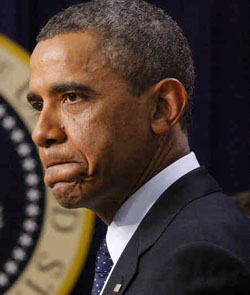
President Barack ObamaThe last unquintessential leadership news story I’ll cover for this week is the looming sequestration if President Obama and the US Congress don’t reach a budget agreement.

While both sides bear responsibility for the lack of an agreement, President Obama, as Commander-in-Chief, has shown an unquintessential leadership trait side of his introverted temperament – he’s an INTJ –  which I also am, so I understand what’s happened and why, but the unquintessential leadership aspect of his decision is a faulty cost-benefit analysis.

When INTJ’s have done everything in their power to try to resolve, negotiate, change, and conclude an impasse or breach, whether with an individual or a group of individuals, and nothing happens, as their energy levels get depleted and they get tired of hitting their heads against a brick wall, so to speak, they do a cost (how much am I putting into this?)-benefit (what is the best I can expect as a result?) analysis, and if the cost outweighs the benefit, they stop, close the door, and walk away for good.

Once that door is closed, it can’t be reopened, because the INTJ has moved on to things he or she can resolve, negotiate, change and conclude, and the last effort is no longer a part of their lives, literally. It’s over. Period.

That’s a part of the temperament and it drives all the other people in our lives crazy because it’s the only temperament that does this and none of the other temperaments understand it. Trust me, I’ve heard it enough to know it doesn’t make sense to anyone who’s not an INTJ.

That appears to be the point that President Obama has reached with the U.S. Congress.

The problem here with the lack of an agreement and the possible automatic sequester is that whatever the cost is to President Obama personally, it does not outweigh the benefits of continuing the resolution process, the negotiating, the change,  and successful conclusion needed to get past the breaches and impasses that exist. One of the traits of quintessential leadership is understanding that the needs of the many outweigh the needs of the one, and as the leader of the United States, President Obama needs to remember – and keep at it, now matter how it affects him personally, because this is the job that he has – the needs of the American people outweigh any personal needs that he has.

President Obama doesn’t get the luxury of being an ordinary INTJ where the stakes aren’t all that high if he walks away for good. At least not until 2017.

This post will do a quintessential leadership analysis of Henry VIII during the years between 1525, when Anne Boleyn came on the scene and Catherine of Aragon became an inconvenience, and 1536, when Anne Boleyn was executed.

It’s important to note at this point that although Catherine of Aragon produced only one child – Mary I – during their marriage (she had several miscarriages, as did Henry VIII’s Catherine of Aragonother wives, which now seem to have been scientifically linked to Henry VIII himself, who may have had a rare blood type known as Kell positive), up until 1525, she and Henry VIII seemed to have had an amiable marriage, in spite of Henry’s philandering.

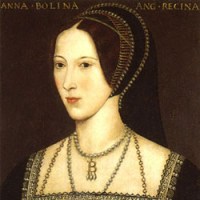
Anne Boleyn, who often carries the lion’s share of the blame for what happened to Catherine and in England during the next 11 years, was in fact only a single factor – although perhaps the tipping one –Anne Boleyn in what led to the tumult and upheaval within the royal family, the country, and the church during that time.
Several factors had an impact on why Henry VIII suddenly reversed himself on the legality of his marriage to Catherine in 1525 after they’d been married for 16 years (their marriage would not be annulled by the Church of England until 1533, but Catherine of Aragon never accepted the decision and maintained that she was Henry’s wife and the queen until her death from natural causes in 1536).

The French monarchy, the Holy Roman Empire, Thomas Wolsey, and Henry’s and Wolsey’s enemies at court were major players in where English international relations were in 1525 and how they were quickly thrown up in the air and changed dramatically within a year.

By 1520, France and the Hapsburg dynasty were becoming the powers to be reckoned with in Western Europe. In 1520, eager for a Franco-Anglo alliance, Thomas Wolsey arranged a meeting between Francis I, the king of France and Henry VIII at Field of the Cloth of Gold in the Netherlands in 1520.

Henry and Francis were very much alike in their educations, interests, and athleticism. They were also both extremely competitive. In addition to the political purposes of this meeting, tournaments had been arranged to show off the skills and abilities of the two young kings with the agreement that they would not compete against each other.

Henry broke the agreement – an act of unquintessential leadership that he became well known for – by challenging Francis to a wrestling match in which Henry emerged as the loser.

As a result, no alliance came out of the two-week meeting and relations with France were definitely worsening.

Not long after the Field of the Cloth meeting, the ever-scheming Wolsey, whose greatest aspiration was to be a pope, decided to throw England’s lot in with Charles V, who was at the time the king of the Hapsburg dynasty.

(After defeating Pope Clement VII in Rome in 1527, Charles and Pope Clement became allies. In 1530 Pope Clement VII crowned Charles as the Holy Roman Emperor, so Charles’ ties to the Roman Catholic Church were not only strong and close, but unbreakable, and he could exert a lot of influence over papal decisions.)

Charles V was also the nephew of Catherine of Aragon and his allegiance to his aunt was unquestioning.

In the 1520 meeting that Wolsey arranged between Charles V and Henry VIII, they agreed to form an alliance against France, with Charles providing the land power and Henry providing the sea power. In addition, Mary I was betrothed in marriage to Charles V, which strengthened the bond of the alliance.

Charles led a very successful campaign against France, capturing Francis I in the first battle in 1525. This was also the year that Anne Boleyn came to court.

The same year Henry named his illegitimate son, Henry Fitzroy, as heir to the throne, and gave him the titles and lands that would ensure his succession. The move infuriated Catherine, who believed Mary should be the heir to the throne, and perhaps initiated the bitterness that consumed her, understandably, the rest of her life.

Even though Henry had a male heir in place, he still wanted a legitimate male heir to succeed him. This driving desire brought out other unquintessential leadership traits in Henry that would be present the rest of his reign: changing the rules when they didn’t suit him, bullying, and trying to force everything to go the way he wanted it to and if it failed, blaming anyone and everyone involved and eliminating them by arrest on false charges and execution. The bloody period of Henry VIII’s reign was about to begin.

Anne Boleyn had already caught Henry’s eye. However, she refused to become his mistress and indirectly told him the only way Henry could have her was if Anne was his wife. Eager for a legitimate male heir and convinced, probably accurately, that Catherine would never be able to give him a male heir, Henry sought a way to dissolve his marriage to Catherine so he could marry Anne Boleyn.

Citing “new ecclesiastical understanding” based on Leviticus 18:16, Henry met with Wolsey and told him that God had cursed the marriage and he wanted Wolsey to go to Pope Clement and have it annulled. Henry used the issue of not knowing whether the marriage between Arthur and Catherine had been consummated (it is unlikely it was and Catherine maintained that it had not been, in which case the scripture wouldn’t apply), but passionately said that piety and obedience to God left him no choice but to end the marriage.

Wolsey was a shrewd politician and understood the position Henry was putting himself and Wolsey in politically and religiously and tried to talk Henry out of divorcing Catherine. Henry, showing another unquintessential leadership trait, refused to listen and demanded that Wolsey obtain the annulment. 

Pope Clement VII, at first, simply ignored Wolsey’s request. At the time, he and Charles V were enemies, and he knew that granting the annulment would have serious consequences for Rome. Henry kept pushing Wolsey and Catherine began a campaign of her own to save the marriage by sending surreptitious messages to Charles asking him to intervene.

When Charles heard that Henry wanted to divorce his aunt, while he did not intervene then with the pope, he immediately ended his engagement to Mary and took a wife. When Henry found out, he ended his alliance with Charles and entered into an alliance with France against him.

Meanwhile, Wolsey was between a rock and a hard place. Pope Clement, who had by now been captured in Charles’ defeat of Rome, had given him the authority to have a convocation of the cardinals in England to get the facts together, but had denied them any authority to make a binding decision. 

The struggle between the pope and Wolsey and Henry, who by 1528 had declared, in another unquintessential leadership stance, the sole and supreme religious and political law in England. While Henry didn’t directly, at this point, say the church in Rome didn’t have any authority over him, he certainly implied it. Henry began to take his case to the citizens of England, hoping to gain mass support from his subjects. 

He had two big obstacles. One was the sheer power the Catholic church had over aspects of the average Englishman’s life. The church was the center of English life. The second was Catherine’s popularity among the people, and the sense they had that she was getting a raw deal from Henry.

Obstacles like these never deterred Henry. As an unquintessential leader, he just bulldozed over everything that stood in his way, doing whatever he wanted to get the outcome he wanted. He certainly lived by the motto that “the end justifies the means.”

Wolsey continued to unsuccessfully try to obtain the annulment. Finally, Henry got fed up with his failure to do so – and because Anne Boleyn didn’t like and didn’t trust, for good reason, Wolsey and urged Henry to get rid of him – and had him arrested in November 1530 on charges of treason. Wolsey died of apparently natural causes – but who knows? – on his way to his trial on those charges later that month. Had he not, there is absolutely no doubt he would have been convicted and executed.

By 1531, Henry had moved further toward openly questioning the authority and the power of the pope and the Catholic church. He sent all the evidence for the divorce and the ensuing cardinal convocations with papal restrictions to the leading theological scholars at all the major universities in Europe to ask for their opinions. They were all in agreement that Pope Clement had exceeded the limits of his power and authority.

He also had English theologians developing reforms to the church in England, which included non-papal and non-Roman authority but only English authority – with the ruler as the head of the church – and he took the legal arguments to Parliament to adjudicate in December of 1531. Parliament also agreed that the pope had abused his power.

Pope Clement obviously was not happy with these developments and warned Henry of excommunication if he continued. However, Henry barged forward.

Thomas Cromwell, Henry’s chief statesman and an ardent supporter of the English reformation (a position that led him down a path similar to Wolsey’s in actions and made him a hated enemy of those in the English court who did not want to break with Rome), called a meeting of the English bishops in which he charged them with treason because of their loyalty oaths to the pope which conflicted with their loyalty to Henry.

The bishops realized the untenable situation they – and their lives – were in, and when they were brought to court to face the charges at Henry’s request, they offered Henry money and pledged their loyalty to him as “the supreme head of the Church of England.”

Henry took the bishops’ pledge to Parliament in January of 1532 and demanded that they produce official legislation that codified the pledge of loyalty to him, while keeping Catholicism as the official faith of England. This precipitated the final break with Rome.

In 1532, Thomas Cromwell engineered a meeting between English church officials and Parliament from which a conclusion was reached that an appeal to Rome about the dissolution of Henry and Catherine’s marriage was not necessary. The result was an English conclave of the bishops and Thomas Cranmer, the Archbishop of Canterbury, in which the decision was made to allow the divorce of Henry and Catherine.

This resulted in the immediate severance of the English church from Rome, Henry being excommunicated, and the door opened for his marriage to Anne Boleyn. Catherine, however, continued to appeal to Rome, as a Catholic in good standing, until her death to intervene and restore the marriage. The bridges that Henry burned made her appeal fall on deaf ears.

In January 1533, with a new/old (Henry never gave up his Catholic beliefs and the Church of England stayed essentially Catholic in theology and look and feel, much as it does even today) church in place with Henry as its supreme leader, Henry and Anne were married.

Another unquintessential leadership trait that Henry had now becomes more apparent: the chase appeals to him far more than the conquest. By all accounts, the marriage was tumultuous. Henry began cheating on Anne almost immediately, and she, unlike Catherine, but very much like Henry, was strong-willed, opinionated, and not afraid to fight with Henry. Anne also made many enemies at court because she was  a strong person, so there were many people eager for a chance to undermine her and get rid of her.

Perhaps Anne’s worst fault, in Henry’s eyes, was that she didn’t give him a legitimate male heir. The marriage produced a daughter, Elizabeth I, in September 1533, who in the end succeeded Henry VIII, but not without her own wild and crazy ride to succession, but if there were any other pregnancies, they ended in miscarriage.

Anne’s enemies in court, sensing Henry’s disillusionment with her, began badmouthing her to Henry as early as 1534. Another unquintessential leadership trait that Henry had is that he listened to and believed them because it would give him an excuse to get rid of her and marry again in hopes of producing a legitimate male heir.

On May 2, 1536, Henry had Anne arrested on charges of adultery (unproven) and witchcraft (also unproven, but the highly-charged superstitious mindset that had developed during the Middle Ages and cast a long shadow over human thinking until the 18th Century, was very much alive and well), among others.

Anne was executed by beheading 17 days later on May 19, 1536. That this is unquintessential leadership should go without saying.

In the next post, we’ll do a quintessential leadership analysis on the last 11 years of Henry VIII’s life and reign.

This begins the series of posts that will do quintessential leadership analyses on historically-significant people in leadership positions. Today’s post will look at the early  years of King Henry VIII of England.

And just to get the levity out of the way, while I was thinking about this and refreshing my memory on some of the details, I was amused by how many times the scene from the movie, Ghost, where Patrick Swayze sings “Henry the 8th” to Whoopi Goldberg until she agrees to help him, drifted in and out of the serious research I was doing. It’s a very funny scene, and obviously, quite effective from a cinematic standpoint.

But on to the the real Henry VIII and the quintessential leadership analysis of the first part of his life.

Henry VIII was born in 1491, one year before Christopher Columbus, under the patronage of King Ferdinand and Queen Isabella of Spain, would begin the series of voyages that would change North, Central, and South America, and the Caribbean islands forever…and not for the better.

He was the second son born to Henry VII, the first monarch in the Tudor dynasty. Henry VII came to throne after defeating Richard III (whose remains were recently discovered) in 1485 during the Battle at Bosworth Field. As a side note, one of my favorite Shakespeare plays is The Life and Death of Richard the Third. It, however, must be read in the context of when it was written – during Elizabeth I’s reign – so the portrayals are very favorably skewed toward the Tudors and very harshly skewed against the Plantagenets, of which Richard III was the last ruler.

Being the second son of Henry VII, who by all accounts was the exact opposite of Henry VIII in every way except the obsessive paranoia that plagued both men (Henry VII seems to have always been very paranoid, while Henry VIII became more paranoid in the last half of his life), Henry VIII started life with the prospect of being a simply a prince, since his older brother, Arthur, was heir to the throne. 

In many ways, in hindsight, it’s because of Henry VIII’s birth order that his formal education included so little government and economics, consisting primarily of what we now call liberal arts: languages, literature, music, and art. That is also what probably gave him the air of being a “Renaissance Man.” Henry VIII was very intelligent and very gifted. He was an accomplished author and musician. He was also a gifted athlete. He had a passion for gambling as well. These were the things that Henry VIII enjoyed and loved to spend his time doing.

Great for a prince, probably (I think of Prince Charles of England now as an example), but awful for a king. And some of these interests and proclivities were what made him dangerous – and an unquintessential leader – as a king.

Henry VIII was also a devout Roman Catholic, very knowledgeable on liturgy and theology, and authored a best-selling book in Europe denouncing Martin Luther and supporting the church in Rome. Paradoxically, Henry VIII Henry VIII as a young manwas also very handsome as a young man and, even before his marriages, had begun to be a womanizer. Like so many things in Henry VIII’s life, his professed beliefs and the contradictory behavior showed an unquintessential leader at the very core. It also, and this became more apparent throughout his life, showed a complete lack of self-control – also an unquintessential leadership trait.

Henry VII arranged a marriage early on for Arthur with the youngest daughter of Ferdinand and Isabella, Catherine of Aragon. The young couple married in 1501, but Arthur died five months after they were married.

After Authur’s death, Henry VII offered Henry VIII, who was 10 years old at the time, to Ferdinand and Isabella as a husband for Catherine, who was five years older, when he was old enough. These were political marriages and with Spain still at the top of game in Europe, Henry VII wanted to ensure peace and prosperity for England by a continue alliance with Ferdinand and Isabella. The logic was pragmatic: it’s unlikely, although not impossible, that a ruler will initiate a war against a country where one of his children is the spouse of the ruler.

Ferdinand and Isabella agreed.

When Henry VIII was eligible to marry Catherine at age 14, he rejected the marriage at the insistence of Henry VII, mainly because Isabella had died and Spain was not as politically strong nor as valuable to have as an ally. However, after Henry VII’s death, beginning a long series of unnecessary “in-your-face” decisions in opposition to his late father, Henry VIII married Catherine. It was a decision that would, in time, change the course of English and European history forever.

Henry VIII’s early reign showed many unquintessential leadership traits (although, some stayed the same throughout his reign, others replaced the younger ones as time went on). One that stayed the same was his method of dealing with people – all people – who were either inconvenient or got in his way. He simply got rid of them. The first two people he had executed were two of his father’s advisors, Richard Empson and Edmund Dudley.

Other unquintessential leadership traits became apparent in the way Henry VIII governed – or, more precisely, didn’t govern – early on. For some time after ascending to the throne, Henry VIII lived much the same life he lived as a prince, devoting most of his time to doing the things he enjoyed and following his passions. The unquintessential leadership trait that emerged was handing all the governing responsibilities over to a single person – Thomas Wolsey – who both quickly started consolidating his own power and making a lot of enemies. The fractious and dangerous environment of Henry VIII’s court began here. Henry, when he finally did decide to take complete control (another unquintessential leadership trait), used this to his advantage, encouraging and instigating the constant atmosphere of fear, intrigue, suspicion, and lies that led to death that characterize his reign. None of this was quintessential leadership.

He was a spendthrift all his life. His tastes were lavish, excessive, and his need for instant gratification quickly took the English coffers from the economically-stable position that Henry VII had left them in to a constant need for cash infusions throughout Henry VIII’s reign, which ended with him and England deeply in debt.

In part II of this look at Henry VIII, we’ll pick up at the point where his marriage to Catherine became inconvenient.

I plan to make this a weekly feature on this blog, beginning with today’s post. I’ve done this type of post a couple of times already this year, breaking a story or two down in detail.

However, beginning with this post I will summarize the stories – some you’ve heard and some you probably missed – and give a big-picture statement about the the failure of quintessential leadership in each of them, and then invite you, as quintessential leaders, to do your own more in-depth analysis about the quintessential leadership failure aspects of each of them.

I do this because the heart and core of who I am is a coach. My role as a coach is to highlight and guide, but I firmly believe that each of us must actually put some effort into the analysis, the learning, and the application process to fully benefit from it. We’re on this journey to become fully quintessential leaders together. Therefore, we must all be engaged and participating in the process. I invite you to join me in meeting that goal.

The first story of unquintessential leadership that caught my attention this week was the FBI sting that left 10 Atlanta police officers facing corruption charges, when it became clear that they were accepting large sums of money from street gangs to provide protection during drug deals. Law enforcement is entrusted with protecting those of us who obey the laws – local, state, national – and removing those who don’t – street gangs and drug dealers certainly are among those – and this is yet another example of that trust and trustworthiness being broken.  That is unquintessential leadership.

For a detailed and in-depth discussion of the components and traits involved in building trust and being trustworthy, please purchase my eBook, Building Trust and Being Trustworthy. You can also purchase a paperback copy from Amazon or a Kindle version.

The second story also involves law enforcement – Chris Dorner, who was terminated by the Los Angeles Police Department in 2009, and took a resoundingly unquintessential leadership route to protest what he believed was an unfair and unmerited – which it could well have been – termination. It doesn’t take much, from a big-picture point of view, to see how this is unquintessential leadership. Any claims that Dorner had about bias, prejudice, and mistreatment during his tenure and in his termination from the LAPD (he laid this out in a very coherent, well-organized document that shows this was an intelligent, sane man talking) were erased by how he chose to force the issue: with threats, murders, and hostage-taking. Eventually it cost Chris Dorner his life – who didn’t know that would be how it ended? – but if there were any real problems that he wanted addressed and corrected, no one will listen or do anything about it because the last actions of his life seem to support his termination.

Beyond the obvious – I do hope the obvious is obvious – what can we learn from this about how we resolve issues and about how our methods need to be consistent with quintessential leadership? It’s important to remember that not every issue, dispute, or disagreement is win or lose, with no in between. Some are. But those involve moral foundations and principles and are non-negotiable under any circumstances.

But for the everyday issues, disputes, and disagreements we deal with, are we able to see that a draw is sometimes quintessential leadership in action? The “how” we do something matters as much as the “what” and “why.” Are you the kind of person who draws a line in the sand about absolutely everything? If so, you’re not a quintessential leader.

I urge you to take some time to think about this in your own lives. I have seen many people with legitimate whats and whys go down in flames because of how they tried to address and resolve them. On the other hand, I’ve seen just as many people who had absolutely no basis for their whats and whys – in in many cases, were completely on the wrong side of everything – prevail because of how they dealt with them. Both of these are the extremes, but it should be a lesson for us.

Another story of unquintessential leadership this week involves a company. Carnival Cruise Lines failed all leadership tests this week with their handling of the result of an engine room fire on Carnival Triumph earlier this week. The right – and quintessential leadership – action would have been to send some means of rescue (ferries, another ship with support to do the transfer, etc.) out immediately. Carnival Cruise Lines didn’t do that because of the cost involved. Their greed – as well as their belief that their industry is “bullet-proof” – underlines the lack of quintessential leadership at this company.

I read a statement from Carnival Cruise Line CEO Gerry Cahill this morning and if I were on the board of directors for this company, he would have been terminated right after this statement: “We pride ourselves on providing our guests with a great vacation experience, and clearly we failed in this particular case.”  Failure was simply a matter of not providing a great vacation experience? Mr. Cahill is an unquintessential leader in action.

Another continuing story of unquintessential leadership this week are the Armed Services Committee confirmation hearings on Chuck Hagel as Secretary of Defense. The “politics-as-usual” circus surrounding this highlights how much of a lack of any quintessential leadership there is in American politics. But freshman senator Ted Cruz of Texas brought the unquintessential leadership spotlight on himself this week during the hearings. Read the story. This is not quintessential leadership. Period.

And the last story of unquintessential leadership that I’ll point out today is the story of Oscar Pistorius. You can read the story if you don’t know it already. Any time I hear of athletes involved in incidents like this, my first thought goes to overinflated egos – an unquintessential leadership trait. My second thought goes to the rampant use of performance-enhancing drugs among professional and Olympic athletes, which is illegal, unfair, and wrong – also unquintessential leadership traits – and the emotional and hormonal side-effects of those drugs, which can contribute to actions like these.

Ultimately, though, the full responsibility for this falls solely and completely on Oscar Pistorius. If he took performance-enhancing drugs, he knew the risks, and he made the choice. All the tears, shaking, and “strongest denials possible” won’t change the fact the he is responsible for every choice he made – including this one.

The Kindle version of  Building Trust and Being Trustworthy is now available on Amazon. You can purchase it here.

Want to know the heart, the core, the soul of what being a quintessential leader is? It is building trust and being trustworthy. Without this, you cannot be a quintessential leader. Without this, you cannot be a leader. Period.

Let’s get real. It doesn’t matter how many platitudes you give. It doesn’t matter how many buzz words you use. It doesn’t matter how many leadership seminars you conduct, how many leadership articles you write, how many leadership lectures you give. If you are not living and being these traits of building trust and being trustworthy, then you are not a quintessential leader and your example, your seminars, your writing, your lectures are perpetuating a fraud on your teams, your students, your readers, and your audiences.

As quintessential leaders, our responsibility is to build trust and be trustworthy. We say that is who we are, but do we really know how far that commitment takes us? It’s definitely the narrow path, but to be genuine, authentic, and quintessential leaders and not wannabe’s, which is what we see around us in most of the people in leadership positions, we must commit and adhere to that. Otherwise, there will be no real leadership.

Let’s make sure we’re not pretenders. Let’s make sure we’re not following the crowd. Let’s make sure we know what we need to do – from our families, because this is where quintessential leadership starts, for our neighbors, for our teams, for our business units, for our organizations, for our towns, for our states, for our countries, for our brothers and sisters in the human race.

You and I have a personal responsibility to do this. It doesn’t matter whether anyone else is doing it or not. You and I answer for ourselves alone, not for anyone else. Anything less than ensuring that you and I are fulfilling our responsibility to build trust and be trustworthy is an excuse.

Quintessential leadership doesn’t have excuses. It is action. Let’s take action today. None of us is guaranteed tomorrow.