Archive for the ‘Examples and Analyses of Lack of Leadership and Unquintessential Leadership’ Category

It is easy to distinguish quintessential leaders from unquintessential leaders by the way they deal with the pressure of a crisis or crises. 

Below I will give a short list of characteristics that quintessential and unquintessential leaders do when a crisis or crises arise.

Each of you who reads this has a two-fold assignment. First, as always, look at your own leadership characteristics in a crisis or crises and see which leadership style you, in general, fall under. The second assignment is that if you read this, I want you to give me input, via a comment, with an additional characteristic for both quintessential and unquintessential leaders’ crisis-management styles.

I’m going to move, for the most part, to shorter blog posts of this interactive format, because if you’re reading this, you have information to share with me and to share with the other readers of this blog, and I want to encourage us to communicate with and help each other grow as quintessential leaders.

quintessential leader crisis crisesSome of the characteristics of an unquintessential leader in a crisis are:

  • Pretend it doesn’t or deny that it does exist
  • Ignore it
  • Avoid it
  • Procrastinate doing anything about it
  • Blame it on someone else
  • Make it someone else’s crisis

Some of the characteristics of a quintessential leader in a crisis are:

  • Acknowledge it
  • Tackle it quickly and honestly (this means the quintessential leader expects and is prepared for a crisis)
  • Take responsibility
  • Be accountable for resolving it

Obviously, these are not comprehensive lists. Now it’s your turn to contribute with a characteristic for each type of leader in a crisis.

What can you to add to these lists?

Today’s post will discuss the mindset of unquintessential leadership and how that mindset gets expressed in actions and words. As quintessential leaders, it’s important that we are reminded from time to time of what quintessential leadership is not, so we can examine our own mindsets (attitudes and motivations) and words and actions to ensure that we’re not letting unquissential leadership creep in.

The reality is that there are far more unquintessential leadership examples around us than quintessential leadership examples.

Most of the people in leadership positions today have a mixture of the two, with more of an unquintessial leadership mindset than a quintessential leadership mindset.

This creates confusion and an atmosphere of constant uncertainty because we never know which to expect under any given circumstance. This mixture engenders continual instability and a pervasive lack of trust.

However, there are some people in leadership positions who have purely unquintessential leadership mindsets (with no quintessential leadership in their mindsets at all). We can readily spot them because their words and actions – indeed, the very core of who they are – ooze with the characteristics of the unquintessential leader mindset.

I always suspect mental illness(es) in these cases because, in general, we humans who are sane – more or less – tend to be, regrettably, a mixture of good and bad, but someone who exhibits nothing but unquintessential leadership has nothing good in his or her thinking, actions, and words. It simply cannot be found.

So let’s take a look at the major characteristics of the unquintessential leadership mindset and what each of them look like in action.

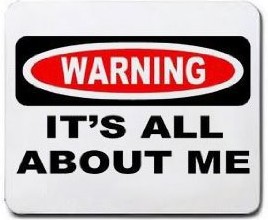
It is ALWAYS all about METhe first is pride and arrogance. The unquintessential leadership mindset is primarily narcissistic, so for the person who has this mindset everything is always all about them. What does this look like in action?

Constant self-promotion and exaggeration of importance, position and status in words and actions is one way this pride and arrogance manifests itself. No one is better, brighter, or more right.

This mindset is one of being superior to and more special than everyone else. The world – no, make that the universe – revolves around the unquintessential leader.

Nothing and no one else matters except for him or her and anyone who doesn’t realize that is the object of the unquintessential leader’s derision and condemnation.

Unquintessential leaders are, in short, legends in their own minds.

Another characteristic of the unquintessential leadership mindset is the need to control everything and everybody. What does this look like in practice?

Absolutely no challenge to the authority, authenticity, correctness, and thoughts, ideas, opinions, and edicts – because that’s what unquintessential leaders issue – is tolerated or allowed. Absolute and complete loyalty to the unquintessential leader is demanded and tested routinely. Action to squelch and remove real or perceived challenges on any of these fronts is swift and brutal.

Threats and intimidation (bullying) are another characteristic of the mindset of unquintessential leadership. This characteristic in action is a constant barrage of harassment and haranguing. An atmosphere of fear is created by the continual reminders that those under unquintessential leadership have tenuous positions and one “wrong” word or move will result in their eliminations and expulsions.

Language is the primary weapon in this characteristic, with repetition on a constant basis of what the negative consequences are that the unquissential leader holds over the heads of those cross him or her.

Manipulation is another characteristic of the unquintessential leadership mindset. Manipulation is accomplished by spin doctoring everything to make everything support what the unquintessential leader believes about him or herself.

Its effectiveness depends on a lack of critical thinking, fear, and the everpresent specter of punishment. It can be quite effective with people who either can’t, won’t, and don’t know how to think for themselves.

This is one of the most subtle characteristics, and, therefore, in my opinion, one of the most dangerous.

Another characteristic of the unquintessential leadership is the creation and maintenance of an atmosphere of suspicion and war anywhere the unquintessential leader is able to. What does this look like?

There are constant words and actions that pit people against each other, creating first suspicion, then war among those people. Unquintessential leaders will constantly find targets to attack personally and set up for everyone else to attack.

This tends to be the way unquintessential leaders get rid of people who challenge them, who disagree with them, who call them out when they are being unquintessential leaders.

Because of all the characteristics of the unquintessential leader mindset, the inability to handle the truth (for an unquintessential leader, the only truth that exists is the truth as he or she has constructed it) is universally the one that usually becomes the most obvious early on because anyone who confronts the unquintessential leader is quickly – and usually very publicly and visibly as a warning to everyone else – hunted down, forced out, and completely destroyed, if possible.

People can usually hide the other characteristics for quite some time, but not being able to face or admit the truth is almost impossible to ever hide.

As quintessential leaders, it is imperative that we are constantly examining our mindsets – our motives, our attitudes, our words, our actions, who we are – to ensure that we are not letting these characteristics of the unquintessential leadership mindset to come in and become part of us and how we lead.

This is the battle we all fight constantly, but it is a battle we must never abandon and a battle we must win. For ourselves and for our teams in every area of our lives. 

Yes. It’s that important.

The quintessential leadership articles being recommended this week are not tightly related, but I think as you read through them you will see some common threads and connections.

Four Pillars of LeadershipIn Mike Myatt’s article, “Four Pillars of Stable Leadership,” he discusses the four elements of the quintessential leadership trait of stability. Stable leadership is critical to building trust and being trustworthy.

I think this paragraph summarizes very well the benefit of stable leadership: “Few things positively impact an organization like a stable tone from the top. A humble and resolute confidence, a sure hand, and a steady calm inspire belief in a leader’s competence and capability.  Stable leaders not only know where they stand, but they also leave no doubt in the minds of others as to what matters, and what will and won’t be tolerated.”

Unfortunately, stable leadership is a rare commodity in most organizational structures today. This includes our personal lives, our work lives, our social lives, and our religious lives. As quintessential leaders, though, we must be the exceptions to the rule in society where it seems now that ego, the big “I,” and situational ethics and relativity predominate the top-tier positions in most organizational constructs.

We must always be the ones to hold fast to humility, to absolute right and wrong, to consistency, to fairness, and to remember that each of us is part of a bigger “we” and not the solo big “I.” 

Why Leadership Training Doesn’t Work,” by Erika Anderson, is a thought-provoking article about the way quintessential leaders build future quintessential leaders versus the way most organizations approach leadership.

Her point is that true leadership building is involved, interactive modeling and mentoring in the course of work, not sitting in a classroom and telling the same old hackneyed stuff – that, by the way, has never worked and still doesn’t work because it has nothing to do with the real world – and expecting people to know how to be leaders.

Mentoring and modeling is the best way to train and learn in the area of leadership. I’ve learned what quintessential leadership is and isn’t by experiencing it and doing it and helping build future quintessential leaders in the process in the real world. And those lessons could have never been taught  – or learned – in a classroom.

Dan Rockwell’s article, “How to Be Humble Without Being a Loser,” contrasts the characteristics of haughty (unquintessential) leadership and humble (quintessential) leadership. The traits of a humble leader include many of the same traits that build trust and make us trustworthy. The humble leader traits list is simply who we, as quintessential leaders, are striving to be and become.

The 5 Reality-Based Rules of the Workplace and What You Can Do About It” by Cy Wakeman may, on the surface, seem like an odd choice in this list of articles, but quintessential leadership is dependent on what he discusses here. In fact, these rules that Wakeman identifies apply equally to life, so they’re important for everyone to know. 

In my post, “The Quintessential Leadership Balance Between Facts and Feelings,” I talked about how quintessential leaders do not allow emotions be the engines of their decision-making. Wakeman comes at this same conclusion from a different angle: emotional expensiveness and how it affects a person’s overall value to an organization (he lists some of the traits of being “emotionally expensive”). 

And although I’ve never thought about the formula he uses in concrete terms, it is the exact formula I tend to use in hiring new team members and giving more responsibility to existing team members.

The formula is: YOUR VALUE = Current Performance + Future Potential – (3 x Emotional Expensiveness). Look at how heavily emotional expensiveness affects the result of this equation. As quintessential leaders, we cannot afford to be emotionally expensive nor we can we afford to have team members who are emotionally expensive.

In Umair Haque’s article, “How and Why to be a Leader – Not a Wannabe,” he contrasts the characteristics that separate quintessential leaders from everyone else (the wannabes). While I don’t agree with some of the words he chose to show the contrasts, the information contained here is solid.

I hope we as quintessential leaders are constantly and consistently questioning and transforming every step of the way, as well as having values, truth, architecture (quintessential leaders build; wannabes hit numbers and quotas targets), and enjoyment/passion.

I hope you’ve all had a productive week and the quintessential leadership journey has been forward-moving. Thank you, as always, for sharing some of your time with me and allowing me to share some of mine with you.

This is not the post I had planned for this blog today. However, it is clear to me that everyone – from the media all the way to Paula Deen – is missing the bigger picture of the core issue at the heart of this story.

As a side note, I shake my head continually at the situational ethics and twisted logic that a lot of people are approaching this story with. The heart of this story is not about a lack of forgiveness, about “casting stones,” about defaming Paula Deen (she did that all by herself by her lack of quintessential leadership without any help from anyone else).

It is, instead, a cautionary tale that all of us, and especially those of us who are quintessential leaders, need to look into the mirror of and see where and if we see our own reflections. If we miss that in all of this, then we’ve missed the whole point. 

The core issue of this situation with Paula Deen is that she lacks the unimpeachable character, the irrefutable integrity, the unwavering values, the non-negotiable adherence to and upholding of the highest of standards personally and professionally, and the evident humility of a quintessential leader. 

Paula Deen Today Show 6-26-13Increasingly, the story has zeroed in on a single aspect of Paula Deen’s deposition in response to a lawsuit filed by a former employee (who, for the record, is not African-American and who had quite a bit of responsibility at several of Paula Deen’s restaurants) raising the specter that Deen is prejudiced against African-Americans.

Paula Deen herself has waffled all over the place about this one part of a much bigger problem, so it’s really unclear exactly where she stands. And that’s consistent with a lack of unimpeachable character. When you don’t have a solid foundation of anything that is absolute in life, the floor constantly shifts on you from moment to moment.

But the charges of racism are only one part of a larger picture of who Paula Deen is and how she has failed as a quintessential leader both personally and professionally throughout her career. If you want the whole picture, you can read the former employee’s lawsuit here and Paula Deen’s deposition here.

Paula Deen fails the quintessential leader test in several areas. The first is setting and adhering to the highest set of standards of conduct (behavior, which includes speech and action) and requiring that everyone on the team adhere to them too. When people on the team fail to adhere to them, the remedial process to change or go is begun and if there’s no change, those people go. No matter who they are.

A telling quote from Paula Deen’s interview on the Today show this morning reveals her lack of understanding of leadership and her lack of ability to lead: “It’s very distressing for me to go into my kitchens and hear what these young people are calling each other. … I think for this problem to be worked on, these young people are gonna have to take control and start showing respect for each other.”

Paula Deen is in the leadership position and it is her job to set the standard of what is acceptable and what isn’t in her kitchens. She, as she has done since the beginning of all this, once again puts the responsibility somewhere else, instead of taking it herself. If she didn’t allow this kind of behavior in her restaurants – which clearly she does – she wouldn’t be hearing it at all there.

This is Paula Deen’s fundamental blind spot. She seems to have absolutely no comprehension of what her role as a leader is. This seems to be another case of someone who’s really good at a skill, but who should have never been in a leadership position because she’s not equipped to do it.

Once a person in a leadership position, as Paula Deen has time and again, allows, tolerates, and accepts compromise and exceptions to what is generally considered appropriate and right behavior, first in themselves and then with others, they have failed as quintessential leaders.

Once compromise and exceptions enter the picture, character is negatively impacted, and this is the second area where Paula Deen fails the quintessential leader test.

Paula Deen doesn’t see anything intrinsically wrong with any of the behavior in either the former employee’s lawsuit or in her own deposition. The casualness with which she accepts unacceptable behavior in speech and in action – and even does it herself – shows defective character.

Character is a big deal. Every choice, every decision, every thought impacts our character. That impact can either be positive or negative.

The more we negatively impact our character, the less we will care about right and wrong and good and bad and the looser our standards of what’s “okay,” “normal,” and “acceptable” will be.

This is unquintessential leadership. Quintessential leaders know character matters and we know that everything we do and our teams do reflect on our character.

We know you can do one hundred things right and one thing wrong, and the one wrong thing, unless we tackle it head on by admitting it, fixing it, and changing it so that it doesn’t happen again, can be what defines us the rest of our lives.

This is what Paula Deen is not doing and why she is not a quintessential leader.

The reality is that Paula Deen has hit a watershed moment in her life. This could be a time of real change for her.

This, believe it or not, is not unfixable. The fixing will be painful and embarrassing and will cost Paula Deen a lot in effort, money, and reputation. But the result would be worth it in the end.

But if you don’t understand that anything’s wrong, which Paula Deen doesn’t seem to, and you cannot accept the responsibility for your failures as a leader, which Paula Deen has never addressed, and your way of dealing with it is to cast a wide net of blame and responsibility on others by playing the victim and indulging in self-pity, then change will not happen. At least not now.

Paula Deen confirmed that this morning with her statement that “I is who I is and I’m not changing.”

Paula Deen, in the way she has conducted herself at every step of the way in her current situation, has shown herself to be an unquintessential leader.

First, Paula Deen showed – in case you think this is “no big deal” – herself to be a bully (this falls under the unquintessential leadership trait of bullying) and to have a prevailing lack of personal integrity and self-discipline.

Part of personal integrity is having and demonstrating respect for everyone. Personal integrity also has high standards of conduct and will not engage in – or allow – behavior or speech that denigrates and disrepects another human being. Self-discipline enforces personal integrity.

Second, after Paula Deen had failed on this part of quintessential leadership, although she had opportunities to redeem herself and prove that she was a quintessential leader who made a mistake, but was eager to rectify it and make it right immediately, she continues to show unquintessential leadership.

The first thing a quintessential leader does when he or she realizes they’ve screwed up – and we all do it as long as we breathe for a living – is to correct it and make amends. Matthew 5:25 gives quintessential leadership advice on how to handle someone suing you.

Had Paula Deen been a quintessential leader, she would have initiated a one-on-one meeting with her former employee as soon as she learned of the lawsuit and Paula Deenapologized and asked her former employee how she could make amends to her. Granted that takes a lot of humility, which quintessential leaders also have, but it would have resolved the issue between them and the general public would have probably never heard about it.

Instead, Paula Deen responded to the lawsuit in a deposition that made it even more clear how little personal integrity and self-discipline she possesses. It’s enough to make all of us who are striving to be quintessential leaders cringe most of the way through it.

Her inability to see the seriousness and hurtfulness of her mindset – because how we think is how we talk and act – in her speech and behavior and to accept it as “okay” or “normal” is more proof that Paula Deen is an unquintesssential leader.

Inset statement here: All of us who are Southerners should be cringing as well and putting a lot of distance between ourselves and Paula Deen. Paula Deen does not and will never represent me as a Southerner. We are not all like that. I apologize on behalf of Paula Deen and tell you that her speech and her behavior is wrong, unacceptable, and should not and will not, by me anyway, be tolerated in any way, shape, or form.

After Paula Deen’s deposition became public, she once again had an opportunity to own up and make it right all the way around, as quintessential leaders will eventually do. She failed again.

Instead of taking responsibility and correcting everything on the spot, Paula Deen showed the unquintessential leadership trait of pointing the finger everywhere but at herself. She blamed the South and the time she grew up in as the reason she is a bigot and disrepectful in her treatment of and behavior and speech toward African-Americans.

When that statement became public, Paula Deen yet again had an opportunity to humble herself and be a quintessential leader and take full responsibility and commit to changing herself and making amends.

And, once again, she failed. Her three anemic attempts to “apologize” were not apologies. They did not include a sincere and heartfelt apology where she acknowledged that she was wrong, she needs to and will change, and she will make amends to everybody affected (not just her former employee who is suing).

Paula Deen made it obvious that, in her mind, she stills believes what she demonstrated in her speech and behavior toward this employee and her deposition, but she felt forced to do something to try to save her gig with the Food Network and keep her $17 million dollar brand from imploding.

But there was nothing real, sincere, humbled, or changed behind any of her words. As with all unquintessential leaders, it was talking the talk with no intention of walking the walk.

food-networkAfter seeing these three videos, the Food Network did indeed say they would not renew her contract when it expires at the end of the month.

That was the right thing for the Food Network to do.

And, you know what, I really hope at some point that Paula Deen comes around and understands, acknowledges, really apologizes, makes amends, and makes the changes she needs to make. That’s my prayer for her. She’s got a lot of talent, but a lot of talent doesn’t make you a good person, nor does it make you right, nor does it make you a quintessential leader. 

Now, as quintessential leaders, we need to take some time  to review our own mindsets and how that comes out in our speech and behavior. Do we have personal integrity and self-discipline? Do we care? Or do we just go along with whatever the people around us are doing?

Quintessential leaders set the highest standards for ourselves. And we adhere to them, not when it’s convenient, not when we feel like it, but all the time. Even if it means we’re standing all by ourselves. It’s an act of courage, as indeed our lives are lived by many acts of courage that often swim constantly against the prevailing tide of unquintessential leadership that exists just about everywhere today.

So, let’s be courageous and be the quintessential leaders we say we are striving to be. It’s not the easy path and it’s not a whole lot of fun sometimes, especially when we screw up, but it’s the only way that we’ve committed ourselves to be.

Listed below are The Quintessential Leader’s recommendations for articles that all of us quintessential leaders should read and think about this week.

A note about these article recommendations. I am very careful in selecting these and their inclusion here means that I agree with the premise and gist of the article, not necessarily with every single thing that the writer says. 

That’s the purpose of reading and critically thinking. Reading should ignite our thinking and it should cause us to process, weigh, question, answer, accept and reject. I believe that the reasons why groupthink is so prevalent everywhere in society today are because:

(a) most people don’t read substantively

(b) most people have stopped – if they ever knew how – critically thinking about everything

(c) most people have been subtly conditioned to not question anything and everything for its truthfulness and accuracy

(d) most people have not developed an internal database of truth to find answers in (they depend on others to tell them what truth is)

(e) most people don’t have a clue how to accept or reject information coming at them, so everything comes in and stays (and creates confusion). 

Quintessential Leadership is About Breaking ThingsThis quote from “Leadership is About Breaking Things” by Michael Myatt sums up one of the hallmark differences between quintessential leadership and unquintessential leadership: “If you’re more interested in protecting what is than you are finding the answer to what if  you might be in a leadership role, but you’re likely not leading well. Order isn’t all it’s cracked-up to be. In fact, I’d go so far as to say routine is the great enemy of leaders. Conformity to the norm does little more than pour the foundation of obsolescence by creating an environment that shuns change rather than embraces it. Disruption is never found by maintaining the status quo, but it’s most commonly revealed in the chaos that occurs by shattering the status quo. Smart leaders don’t think ‘best’ practices – they focus their attention on discovering ‘next’ practices. The simple fact of the matter is too many leaders are concerned with fixing things, when what they should be doing is breaking things.” 

Note that it is things quintessential leaders break, not people. Unquintessential leaders desperately maintain the status quo and spend all their time and energy on breaking people into yielding and submitting to ways of doing things that often are archaic, inefficient, ineffective, inexplicable, and weren’t even good or right to begin with. 

As quintessential leaders, we must never fall into the trap of “that’s the way we’ve always done it, so that’s the way we’ll continue to do it.” Quintessential leaders know why they’re doing everything and are able to, in their own words, explain, quantify, and show the tangible results – honestly and authentically (no dog-and-pony shows and no smoke and mirrors)- to anyone and everyone.

Quintessential leaders are forward-looking and forward-moving. They never rest on their laurels and they never stop asking “why” and “how.” Quintessential leadership is never static, but instead it is always dynamically improving.

In “Why Leaders Must ‘Get Real’ – 5 Ways to Unlock Authentic Leadership,” by Margie Warrell, the link between authenticity and quintessential leadership is summed up in five key areas where we must be “real.” 

While Guari Sharma’s article, “How to Grow a Small Team: Nine Best Hiring Practices,” focuses on building small teams in a start-up environment, these nine best hiring practices should be part of the way we as quintessential leaders hire.

I am always surprised at how little effort can sometimes be expended in the hiring process as well as how little potential employers think outside of the box with regard to hiring and then the moaning and groaning that comes when the new hires are, at best, mediocre, in key areas of their responsibilities, or, at worst, abysmally poor in all areas of their responsibilities, initiating the 90-day “let’s find a way to get rid of them while we can” probational period that most jobs now have attached to them.

Quintessential leaders are high-level and performance-oriented teambuilders. We understand that investing well and at a high time (and perhaps monetary) cost up front will pay off for everyone involved. Too many people in leadership positions have no long-term and big-picture vision for themselves, their teams, and their organizations, so they hire randomly and sloppily and everyone suffers in terms of progress, success, and profits.

In Dan Rockwell’s, “The Surprising Path to the Top,” the quintessential leadership trait of growing others is discussed. Quintessential leaders are always growing other people in their lives, not just their team members. That is an intrinsic part of who quintessential leaders are. Because quintessential leaders are big-picture thinkers, we realize that helping everyone we have the opportunity to help grow in whatever forms that takes is part of our responsibilities and legacies. 

The reality is that the only thing we take out of this temporary, physical life is our character and the net results of our relationships with God and others. Quintessential leaders take this knowledge to heart and that is where the focus of every aspect of our lives is. And that is why we are always growing others where we are able. We understand it’s never all about “me.”

We understand that our lives and the gifts we’ve been given didn’t originate with us and are not ours to use selfishly. Power and pride and money are never part of the equation. We want financial security, but we will not sell our souls or throw others under the bus time and again to get and keep it. We value integrity, truth, and honesty more highly than anything else in the world. And sometimes that means we take – and they can be big – physical losses and hits. Sometimes we recover and sometimes we don’t on a physical level. But a character loss and hit, while theoretically recoverable, is something we’re not willing to take, because that destroys everything in terms of trust and trustworthiness

This quote from “The Single Greatest Secret of Leadership – Fail Up” by Daniel K. Williams illustrates how quintessential leaders approach failures (their own and those of others): “As leaders, we serve our employees best by not focusing attention on their weaknesses and mistakes. Instead we should encourage them to navigate through challenges on their journey. We can help by asking questions like ‘How do you learn best?’ ‘What could you do better?’ or ‘How can the team better support you in the future?’

The most important thing is to strive to move forward continually. Some days we make great progress in some areas; other days we seem to slide a bit. If we were to chart our progress on a board, it has ups and downs, but overall it should move upward as we live and learn from our mistakes and failures.

Peaks and Valleys of LifeQuintessential leaders understand that this thing called life, which includes our work, is never a straight line, but a series of mountains and valleys that represent our successes and our failures. However, it should be through our failures that we find the greatest opportunities to grow, to change, to move forward, or as Williams puts it “to fail up.”

Quintessential leaders seize those opportunities and do that, not just with themselves, but with everyone on all the teams they lead in life.

May we continue along the quintessential leader path, navigating the mountains and valleys with equanimity and courage, growing ourselves and growing others along the way.

We are in the middle of an incredible process that begins with who we are internally on a foundational level, proceeds with wisdom, knowledge, and application (growth), and results in not only our quintessential leadership being perfected, but also planted and cultivated in everyone with whom our lives intersects.