Posts Tagged ‘unquintessential leadership’

Manipulation is emotional blackmail and an unquintessential leadership traitWe live in a society that is fundamentally dishonest. Nothing is ever as it seems. Lying is the norm. Selfishness and self interests drive everything we see, hear, and read.

Unfortunately, most of us – those in leadership positions and those who are not – are the perpetrators of this fundamental dishonesty and lying because we have become consumed by self-centeredness and our own self interests.

A predominant aspect of this fundamental dishonesty is our overriding propensity toward manipulation. We manipulate people. We manipulate situations. We manipulate things.

Manipulation is an unquintessential leader trait. 

Manipulation is insidious. Most of us aren’t aware of how much of our daily lives are based on manipulation.

Manipulation is subtle. It comes couched in altruistic coverings that hide the real purpose behind the manipulation (the hidden agenda).

Manipulation – doing it and resisting it – is a vulnerability for all of us because it plays on our emotions.

Emotions are the weak spot for each of us. Emotions are fickle, volatile, and unreliable in terms of making sane, logical, and rational decisions.

That is why manipulation works so well. It usually catches us off guard and depending on what emotional buttons get pushed – practiced manipulators can read these emotional buttons like the backs of their hands, even if they don’t know the people, situations and things they are manipulating – we can fall for it before we even realize what’s happened.

Manipulation is essentially emotional blackmail.

There are a lot of people who have perfected emotional blackmail, both those in leadership positions and those not in leadership positions. 

It’s important to remember that manipulation is not something that just crops up in adulthood. Manipulators are sometimes born, but they most often are developed from a very early age. 

There is something fundamental in our human character that steers us even as toddlers to try to find a way to gain an advantage over others – namely the adults in our lives – and get what we want.

We all usually try manipulation first. If the adults in our lives allow us to get what we want through manipulation, then we develop the habit of defaulting to manipulation as how we interact with everything else in our lives.

With time and opportunity, we get really good at manipulation. Eventually, unchecked, we perfect it until we simply don’t know any other way than manipulation to operate in the world.

If this is our lives’ trajectory, then we also become fundamentally deceptive, dishonest, and devoid of integrity, character, and trustworthiness

There are common emotional buttons that are pushed by experienced manipulators. These buttons are based on the primal emotions that drive the human race.

Fear is an emotional button that manipulators pushThe most common emotional button that seasoned manipulators push is fear. These include:

  • Fear for safety
  • Fear for security
  • Fear of harm
  • Fear of loss
  • Fear of punishment

Another common emotional button that skilled manipulators push is sympathy.

Sympathy is something that experienced manipulators don’t Manipulation includes pushing the sympathy emotional buttonfeel and practice themselves (in fact, manipulators are extremely harsh toward and brutally critical of everyone else and habitually advocate no sympathy for anyone else but themselves), but they are exceptionally good at generating it for themselves.

The sympathy emotional button gets pushed by the manipulator in the following ways:

  • Constantly drawing attention to themselves
  • Constantly presenting themselves as vulnerable and delicate
  • Constantly reminding everyone of how much they are suffering
  • Constantly seeking validation and accolades because of how “well” they’re suffering

A final common emotional button that experienced manipulators push is guilt.

Guilt is, in my opinion, the most subjective emotion we have and skilled manipulators don’t access it directly, but instead use insinuation. 

The guilt emotional button is sometimes pushed by this statement:

  • I’m disappointed…

The guilt button is pushed by manipulationGuilt emotional buttons, however, most often get pushed by some form of these two basic questions about what the manipulator has supposedly done for the person they are trying to manipulate:

  • Have you forgotten…?
  • Don’t you remember…?

The interesting thing about manipulators and the guilt emotional button is that the manipulator is always manufacturing a past that never happened (i.e., the balance sheet is not in their favor and often is the exact opposite of what they are insinuating).

But the combination of  lifelong manipulators with our innate – and sometimes outsized – human capacity to experience guilt (even if we haven’t done anything wrong – am I the only one who gets a little nervous when a police car is behind me on the road even though I’m obeying all the traffic laws?) makes this emotional button harder to handle logically, and it is, in my opinion, the one to which we are most susceptible.

One of the most maddening things about manipulation and manipulators, though, is that they expect everything and give nothing.

Manipulation is selfishness and self-centeredness on steroids. Manipulators will not give up anything. They will not take responsibility for anything.

Manipulators will vengefully attack anyone and everyone who resists and refuses to fall for their manipulation.

In fact, manipulators fight back against this by making the resistors and the refusers of their attempts to manipulate the “bad guys.”

Manipulators do this loudly, publicly, and relentlessly. And because they are effective liars, manipulators usually manage to convince a lot of people that those who can’t and won’t be manipulated are horrible, awful, despicable people who deserve nothing but contempt and derision.

For the majority of people who fall for the lies of manipulators, these resistors and refusers effectively cease to exist as part of the human race. 

It happens every day. Innumerable times a day.

Stop.

Look.

Listen.

Manipulation is all around us. Perhaps manipulation is in us.

Because we are striving to be quintessential leaders, we have to be aware of what manipulation looks like and how much of it may have crept into our own lives in our words and our actions.

That means being brutally honest with ourselves and asking the tough questions of ourselves.

Whether we are manipulators or not depends on our motivation in everything in our lives.

As quintessential leaders, we must ask and answer these questions of ourselves continually:

  1. Why am I saying this?
  2. Why am I doing this?
  3. Am I being honest?
  4. Is this exclusively for my benefit or will it benefit everybody?

If we’re honest – and those of us striving to be quintessential leaders say we are honest, so we must back that up with proof in a world that is fundamentally dishonest – we may find that a lot of what we say and do on a daily basis is designed to manipulate people, situations, and things to work in our favor and for our benefit.

This is the difficult work of quintessential leadership.

Most people are unable and unwilling to do it because it means changing who and what they are at the core level of their lives.

It means doing the right thing all the time, no matter what the personal cost. It means giving up some things. It means being selfless, even when it would be a piece of cake to fulfill our selfish desires.

Quintessential leaders are not most people.

How are we doing?

Amazon: What Unquintessential Leadership Looks LikeIn an August 16, 2015 articleThe New York Times took an in-depth look at how Amazon, initiated and encouraged by CEO Jeff Bezos, operates internally. Even in a time when unquintessential leadership is the norm in almost every organization, the environment and culture at Amazon stands out as being at the most extreme end of unquintessential leadership.

Let’s look at what unquintessential leadership looks like from Amazon’s playbook. I hope everyone reads the article because the details are that important, but I’m going to look at the big-picture areas of unquintessential leadership here.

There is no teamwork at Amazon. Instead, each person is out for themselves and is encouraged to do whatever it takes to get themselves noticed, promoted, and distinguished from everyone else.

There are no boundaries and there is no room for respect. The environment and culture at Amazon says, instead, that everyone else working there is the enemy and must be eliminated with extreme prejudice.

Extreme prejudice is a military euphemism for assassination.  Amazon not only encourages extreme prejudice, but it promotes it by having many mechanisms in place to accomplish it.

The Amazon culture and environment is one of competition, backbiting, sabotage, bullying, and spying. Everybody is looking at everyone else and looking for something, anything to denigrate, criticize, or destroy everybody else. If nothing exists in actuality, the culture encourages manufacturing it (lying) to get ahead.

A secret feedback system is in place where everyone can continuously give feedback on everyone else based on every interaction they have with each other. Amazon spins this as a state-of-the-art data-driven performance system, but it is really a tool that seeks to eliminate with extreme prejudice. 

Beside the malevolent intent behind this feedback system, which is in itself unquintessential leadership, the data – which now rules everything in our society – is corrupt because it depends on humans. Who have bad days. Who have positive and negative emotions. Who sometimes have really bad interactions with or negative reactions to even people they love and cherish and would give their lives for, but who are far, far more prone to those with and toward people they don’t know, don’t like, or they see as their enemies.

Unquintessential leadership at Amazon can also be seen in its oppressive micromanagement system. It appears that the people in mid-level leadership positions spend all their time with microtracking the corrupted data about their employees and using short threat-filled and bullying mostly faceless interactions based on the corrupt data instead of actually working with their employees and helping them to contribute to the company.

The Unquintessential Leadership of Jeff Bezos and AmazonEverything’s a test at Amazon. Emails sent in the middle of the night with an expectation of immediate response. Working long and grueling hours. Sacrificing everything – health, family, and life – to Amazon. Amazon is the god that must be exclusively worshiped by its employees.

If an employee can’t make and keep that commitment, then that employee is eliminated. And much like the people who disappear in George Orwell’s 1984, every trace and record of the eliminated is expunged. They simply never existed.

Amazon’s culture is designed according to the unquintessential leadership dream: completely break everybody. Those who survive can be rebuilt into the automaton Amazon mold of unquintessential leadership. Those who don’t survive were weak, useless, unworthy, and never mattered anyway. They are not missed because they never existed.

This quote from the article highlights this aspect of the unquintessential leadership at Amazon: “Bo Olson…said that his enduring image was watching people weep in the office, a sight other workers described as well. ‘You walk out of a conference room and you’ll see a grown man covering his face,’ he said. “Nearly every person I worked with, I saw cry at their desk.'”

These are the overarching areas of what unquintessential leadership looks like at Amazon. 

But I challenge each of us not to sit here smugly patting ourselves on the back because we’re not like THAT.

The reality is that a lot of the elements of unquintessential leadership at Amazon – for which the company is not only unapologetic for, but also wears like a badge of honor – exist in most organizations today. 

It may be more hidden, more subtle, or sugarcoated as being helpful or productive, but it is just as dangerous, just as damaging, and just as destructive.

As quintessential leaders, we can never allow ourselves to be deceived into thinking any manifestation of unquintessential leadership is permissible and okay. It is never permissible and it is never okay.

Here’s where the mirror test comes in for you and for me.

What do you and I think about the unquintessential leadership at Amazon? 

What do you and I think about the unquintessential leadership in our own organizations?

Are you and I okay with it or are you and I standing up to it and fighting against  it, even if it costs you and me everything to do so?

Our answers to these questions determine whether we are on the main road of unquintessential leadership or we are on the less-traveled-by road of quintessential leadership.

How are we doing?

what's in for me unquintessential leadershipRecently I posted on the rampant narcissism and entitlement that pervades society, including most people in leadership positions, today.

The song in the video above, “What Have You Done For Me Lately?,” by Janet Jackson kept coming back to me as I’ve continued to think about the specific attitudes that characterize entitlement and narcissism, and this post will discuss a riff on this attitude, which is “What’s in it for me?”

The driving mindset behind “What’s in for me?” is simple and selfish. It translates into “I’m not going to do anything that doesn’t benefit or reward me.” It is manifested in many ways, a few of which we’ll look at today. 

One the primary places where this attitude and mindset exists is in modern sales and marketing operations. It is a key phrase that both salespeople and marketing specialists use when they are talking to customers, either in person or via media.

It’s rather duplicitous, though. On the surface, it seems to be selfless in appealing to customers’ narcissism and entitlement only. However, it’s revealing of the sellers’ mindset because when customers buy, sellers make money and profits, so sellers are always asking “What’s in it for me?” as well.

One of the ever-popular sales/marketing techniques where this attitude is blatantly revealed is pyramid or multilevel marketing (MLM) sales (also known as schemes).

Multilevel Marketing Pyramid SalesThese kinds of sales depend on a tiered sales system, where the top person in the tier gets paid every time everybody under them buys something. If the person has salespeople on their tier, then those salespeople get paid every time their customers order, and the top person on the tier gets paid as well.

In other words, every single sale in that tier amounts to “What’s in it for me?” That is a primary reason why MLM salespeople consistently have so much aggressive and repetitive marketing and advertising for products that are sold this way.

That is also why there are a plethora of “sounds-too-good-to-be-true” (remember what your parents taught you about this statement), unprovable, deceptive, and outright dishonest claims around many of the products sold using this method.

And, of course, the parent companies for these MLM products make a fortune on the backs of their salespeople (independent distributors).

Why?

Because the MLM salespeople do all the marketing, all the advertising, and all the legwork for new customers, and the cost to the parent company is minimal compared to direct sales and marketing costs for non-MLM companies.

This is the unquintessential leadership attitude of “What’s in it for me?” at its worst and most obvious.

What's In It For Me? Unquintessential Leader MindsetBut it would be a mistake to assume that this is not the mindset in the majority of organizations today, because unquintessential leadership abounds, and this is the unwritten and unspoken mantra that is the underpinning of that leadership.

Would it surprise you, though, if I told you that the “What’s in it for me?” attitude is not just a prevailing organizational attitude, but an increasingly prevalent individual and personal attitude as well? That means we – you and I – are very susceptible to having and operating by this unquintessential leadership mindset in both our private and public lives.

What does it look like in us as individuals? That’s what you and I, as people who are striving to be quintessential leaders, need to be able to identify so that we can ensure that it’s not an attitude that we have and live our lives by.

Let’s ask some questions to find out what this mindset looks like in us as individuals:

  1. Do we notice people in genuine need everywhere in our lives?
  2. Do we routinely and proactively offer to help people in genuine need (time, money, effort, etc.)?
  3. Do we help people in genuine need without expecting anything in return?
  4. Do we help people in genuine need without holding it over their heads, now or in the future?
  5. Would we offer to buy a stranger something to eat if they ask us for money for food?
  6. Would we give a stranger the coat or sweater we’re wearing if they are out in the cold without either?
  7. Would we be willing to share our last bit of food, heat, and clothing with a stranger who is also hungry, cold, and underdressed for the weather?

If we answered “no” or “it depends” to any or all of these questions, then we need to examine our attitudes for the unquintessential leadership “what’s in it for me?” mindset that has somehow begun to creep into our autopilot programming.

Obviously, none of us as individuals can take care of all the genuine needs that exist in the world. But within our little spheres of the world, we can certainly make a conscious and continual effort to do what we are able when we’re able.

And that means that we, as quintessential leaders, should always be proactively looking for genuine needs that we can fill.

When is the last time we cleaned out our family’s drawers and closets and donated the clothes, shoes, etc. that we don’t wear anymore to a homeless shelter or to a battered women’s shelter?

When is the last time we went – and took our kids – to visit homebound elderly people we know or elderly people in an assisted living facility or a nursing home? Many of these people have no visitors, including, sadly, their own families, at all and life, as they end it, is alone and lonely.

Selfless GivingThese are just a few examples. We should be able to come up with many more and take action to help freely and selflessly, because that’s the opposite of the “What’s in it for me?” attitude.

While these questions deal with our private lives, we also should be doing the same thing in our public lives.

When is the last time we had a conversation with our team members just to see how they’re doing and to see if they have personal needs that we can help out with?

A good example is the increasing number of employees who have a fulltime job at our organizations and also have a fulltime job at home as caregivers not just for their spouses and children, but additionally for their aging parents as well.

We could organize the rest of our team to provide meals for the employees and their families two or three nights a week (this could be as simple as a casserole and a salad made on Sunday and brought to work on Monday).

We could see if there are errands like grocery shopping or picking up medications at the pharmacy that we can do for the employees to cut down on the number of things they have to do in addition to working fulltime and being a extended family caregiver fulltime.

Again, this is just one example. As quintessential leaders, we should be looking for these areas to serve – because that’s what selfless giving is – others around us everywhere in our lives.

So it’s time for each us to look in the mirror of our lives and ask which of these questions defines our mindsets and attitudes: “What’s in for me?” or “What can I do for you?”

If the question is the first, then we need to make changes. If the question is the second, then there’s always room to improve.

How are we doing?


cia torture unquintessential leadershipWith the United States Senate Intelligence Committee’s report released on December 10, 2014 about the methods the CIA used to gather national security information in the post-September-11-2001 era and the subsequent responses, it is profoundly evident that there was and is unquintessential leadership all the way around.

Let’s look at why.

The reality is that the business of humanly-devised governments – any humanly-devised government in any context – is the business of unquintessential leadership.

Humanly-devised governments attract people who crave and chase power and will do anything to get it. For these people, “being in charge” means ruling over, crushing, dictating, and dominating others. These people are expert liars and manipulators.

They also hold the belief that everyone except them is non-thinking, gullible, and ignorant. Therefore, they believe they can do and say anything and get away with it because nobody will even notice.

While there may be quintessential leaders even in humanly-devised governments, they will not not be the public names and the public faces associated with these governments.

Quintessential leaders don’t want the limelight. Quintessential leaders are not power-hungry. Quintessential leaders will not compromise their principles for positions and money. And, generally, quintessential leaders are few and far between in humanly-devised government structures.

While we generally associate team-building with quintessential leadership, there is a team structure in unquintessential leadership as well. However, the type of team and the purpose of the team is diametrically opposite that of quintessential leadership.

At the heart of unquintessential leadership are intricate, deeply-entangled webs of deceit. To successfully support these webs of deceit, a team of three types of people must be in place:

  • Architects
  • Executors
  • Scapegoats

The architects devise the plans. However, no single architect has access to or responsibility for the entire web of deceit. Instead each architect is given a piece of the web to build in isolation (and sometimes ignorance) of all the other pieces.

One reason for this is to ensure that the unquintessential leader has complete control, because whoever has all the information has all the power (quintessential leaders, by contrast, ensure their teams have all the information and each team member knows and understands how their part fits and works with all the other parts).

The other reason is that if the webs of deceit are ever discovered, everyone involved can claim plausible deniability. In other words, nobody is accountable and no one can be blamed.

The executors are the ones who carry out the plans. They are not given anything but orders and they are expected to carry them out as they are designed and without questioning.

This is the mentality that first came to light with the Nazis under Adolph Hitler and his team in Germany during World War II. The standard refrain for executors? “I was just doing what I was told to do.”

The scapegoats are the people who fall on their swords if any part of these webs of deceit comes to light (never are any of these webs of deceit fully untangled in part because of their design and in part because, in the end, most of us don’t really want to know or care about the whole truth). The scapegoats know their roles and they are generously rewarded and taken care of for fulfilling them.

With the components of webs of deceits defined, let’s now look at a few specific examples of how unquintessential leadership permeates humanly-devised governments in the instance of this report on the CIA’s activities after 9/11/01.

dianne feinstein senate intelligence committee unquintessential leadershipDianne Feinstein, who is the chairman of the United States Senate Intelligence Committee, spearheaded this report and pushed for its public release, despite concerns that its contents could result in terrorist activity against United States’ interests abroad and at home.

The fear of what could happen when it became public alone, if you’re a thinking person, should tell you that everyone involved knew enough very specific details about what the CIA was doing in its detention and interrogation program.

And yet there are three main threads of denial: complete ignorance, complete acceptance, and complete immorality. Each of these is a product of unquintessential leadership.

The report suggests that the United States Senate Intelligence Committee had no idea about the specific detention and interrogation methods the CIA employed after the 9/11/01 attacks. Feinstein herself in her statement releasing the report suggests that she and the Committee were shocked by what they found and had the Committee known exactly what the CIA was doing, they would have never authorized it. 

If you believe that, I’ve got beach front property in Omaha, Nebraska I’d like to sell to you.

This is an example of the absolute ignorance response of unquintessential leadership.

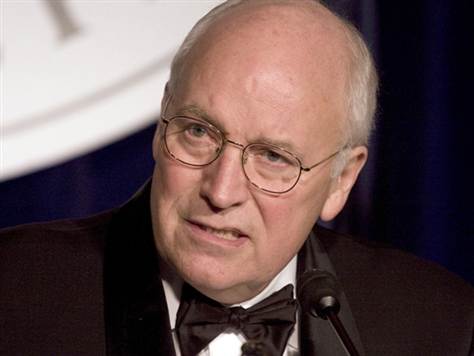
Former Vice-President Dick CheneyOn the other side of the equation – the complete acceptance response of unquintessential leadership – is former Vice-President Dick Cheney. Calling the report, which he admittedly hadn’t read in full, “a piece of crap,” Vice-President Cheney fully supported everything the CIA did as being the right thing to do.

Watching his response, I was struck as I am every time I see Vice-President Cheney with the sense that he didn’t believe it was as bad as it should have been and, had he been unfettered and unchallenged, he would have pulled out all the stops and let the CIA do anything and everything the human mind could conjure up to constitute torturing another human being.

This, too, is unquintessential leadership. On steroids.

Former CIA Director Michael HaydenThe third response – complete immorality – is, at least for me, unfathomable unquintessential leadership. When I first heard Former CIA Director Michael Hayden say, “I was in government for ten years after 9/11, and let me tell ya, a phrase I never heard from anybody in any position of authority: ‘Whatever you guys do about this terrorism threat, please, please don’t overreact.’ Never heard it,…,” I was dumbfounded.

This means Hayden knew that what the CIA was doing with regard to detentions and interrogations was overreacting, and, yet, on his watch as head of the agency, he sanctioned and authorized it anyway.

The lack of any moral values and objections in this point of view and way of being is also unquintessential leadership.

These are just a few examples from the big picture of this story. There are many more.

As quintessential leaders, we should always be analyzing stories like this and asking ourselves whether quintessential leadership or unquintessential leadership is involved. We should know which is which and why it is one or the other. That line is drawn, not in sand, but in concrete.

More importantly, we should be carefully and exhaustively studying our own leadership through the lenses of these stories to see if there are any reflections of areas in our lives in which we are being unquintessential leaders.

We may be very surprised at what we find if we’re willing to do the work and be brutally honest with ourselves about ourselves, but without this continual work, we cannot change what is unquintessential to what is quintessential.

How are we doing?


Dan Rockwell summarizes and I expound and our leadership blogs often complement each other very well.

So, while Dan Rockwell’s post doesn’t explore the depths of the differences between unquintessential leaders and quintessential leaders, this list is a very good overview.

world series 2014 san francisco giants kansas city royals quintessential leaderI’ll get this out of the way up front. If I watch a baseball team play an entire game (which is rare because I don’t often want to give up three or more hours of my life to something that, in the end, doesn’t move me forward in some way in the rest of my life) during the regular baseball season, that team is the New York Yankees.

Although I grew up in the South, my dad – who grew up listening to Yankees baseball games on the radio in Burlington, NC – was a Yankees fan and he passed that on to me. The things I loved about watching Yankees’ games with my dad when I was a kid was to see how much he enjoyed and knew about the game and how much he enjoyed sharing that with his family.

After Daddy died, I let baseball pretty much slip away from my active radar because it just didn’t hold any appeal without him to watch it with. Now I’m an extremely passive Yankees fan. I might catch an inning or two a couple of times a year – although I occasionally check their standings throughout the season – but that’s most of the extent of my baseball consumption these days.

However, during the World Series each year, no matter who is playing, I try to watch at least a couple of innings of each game until a clear winner emerges because I want to see what it was that got those teams there that year.

Why?

Because beyond the exceptional skills of a few players on each team, there has to be leadership and teamwork to get all of the players and coaches synced up enough over the course of the season to play the kind of baseball that consistently makes its way successfully through the playoffs to get to the World Series.

Last year, when the Boston Red Sox outperformed the St. Louis Cardinals to win the World Series, there was a distinctive outward manifestation of the team-building that had taken place during the regular season – every Red Sox player grew a beard and none of the players shaved their beards until the World Series was over.

2014 world series jake peavy pitcher quintessential leadershipThere is an interesting link between the 2013 World Series and the 2014 World Series. That link is Jake Peavy, a starting pitcher for the Boston Red Sox in 2013 and for the San Francisco Giants in 2014.

The quality of a baseball team’s pitching staff is often a determining factor in how well the team gels together and how far the team extends its season. Starting pitchers are critical in this mix and, while they may not be the official team captains (leaders), they are often the de facto leaders on the field during games.

Peavy had good pitching stats going into his stint with the Red Sox, but after a dismal two-year performance, he was traded to the Giants in 2014. Peavy has not done much better in his first year there, including in the World Series.

And here’s where leadership and team-building and teamwork come into play. No one respects Jake Peavy.

I was very surprised to hear how the sports commentators basically trashed Peavy in the first game he pitched this year against the Kansas City Royals in the World Series.

Supposedly the objective and unbiased presenters of the games, these commentators made it clear that they didn’t expect anything but failure out of Peavy with their disparaging comments from the get-go.

The body language, facial gestures, and actions of the Giants on the field and in the dugout during game 2 and game 6 of this year’s World Series showed the entire team’s – including the coaches and manager – contempt for Peavy when he was pitching.

Although he was the de facto leader on the field, it was clear no one wanted him there and it led to the beginning of the Royals’ rout of the Giants when no one paid any attention to him during a crucial play in last night’s game (game 6).

The crucial play came during Peavy’s disastrous second inning when Peavy was telling Giants first baseman Brandon Belt to throw home and Belt completely ignored him and decided to run down the tag of the Royals Eric Hosmer at first base. Hosmer beat the tag.

In that moment, the lack of leadership, teamwork, and team-building among the Giants organization was crystal clear to me. It replayed in slow motion in my mind as I thought how those few seconds showed me all I needed to see as a quintessential leader to know that Giants don’t have it.

san francisco giants logoOh, the Giants may win the 2014 World Series, because they have a few great hitters and one great pitcher – who may be a clutch reliever tonight if starting pitcher Tim Hudson gets behind in the early innings – who might get lucky enough to pull it off.

kansas city royals logoHowever, the odds favor the Royals, who clearly have leadership, teamwork, and team-building in place. They look like a time, they act like a team, and they play like a team.

It’s taken the Royals 29 years to get another World Series-ready team in place, but the organization carefully and skillfully, over the course of several years (one of last night’s commentators said that professional baseball is different from any other sport in that it takes a lot longer to bring an athlete up to the skill level and capability to play at the professional level), ensured that the leadership, the team-building – individually and collectively – and the teamwork is in place for just such a moment as this.

Based on my experience as someone who strives to practice and continues to grow toward quintessential leadership in every part of who I am and in my life every day, I know that what the Royals have in place – and the Giants don’t have in place – gives the Royals the advantage of being successful.

What about us? You and me. Do we strive to be and work at being quintessential leaders continuously in every part of our lives? Do we even know what it is? Can we recognize it when we see it or don’t see it, no matter where we see it? 

The reality is that if we don’t live, do, and are something 24/7, then it’s not a part of us, of who and what we are. We’re pretenders.

And because we’re pretenders, we don’t know what the real thing looks like and are susceptible to falling for counterfeits and believing they’re the real thing, when it fact they’re not.

To know what quintessential leadership does and doesn’t look like, we must be actively striving to be and practicing quintessential leadership everywhere in our lives, even those areas and places and moments where nobody’s looking (those count more, in many ways, than the ones in which somebody or everybody’s looking).

How are we doing?