Posts Tagged ‘arrogance’

In “The Mindset of Unquintessential Leadership and What It Looks Like in Action,” one of the characteristics that I identified as part of that mindset is bullying.

I think it’s fair to say that we’ve all been exposed to bullying at some point during our lives. However, not all of us have been victims of bullying. For a bully to succeed, the person being bullied has to give his or her power to the bully.

Not everyone who gives this power to bullies is inherently weak. Sometimes the surrender simply comes from long-term battle fatigue and being completely worn down over time.

It takes tenacity, an exceptionally-strong will, and a very thick skin sometimes not to give power to someone else, especially with threats that sometimes go as far as the possibility of losing one’s life. (more…)

Today’s post will discuss the mindset of unquintessential leadership and how that mindset gets expressed in actions and words. As quintessential leaders, it’s important that we are reminded from time to time of what quintessential leadership is not, so we can examine our own mindsets (attitudes and motivations) and words and actions to ensure that we’re not letting unquissential leadership creep in.

The reality is that there are far more unquintessential leadership examples around us than quintessential leadership examples.

Most of the people in leadership positions today have a mixture of the two, with more of an unquintessial leadership mindset than a quintessential leadership mindset.

This creates confusion and an atmosphere of constant uncertainty because we never know which to expect under any given circumstance. This mixture engenders continual instability and a pervasive lack of trust.

However, there are some people in leadership positions who have purely unquintessential leadership mindsets (with no quintessential leadership in their mindsets at all). We can readily spot them because their words and actions – indeed, the very core of who they are – ooze with the characteristics of the unquintessential leader mindset.

I always suspect mental illness(es) in these cases because, in general, we humans who are sane – more or less – tend to be, regrettably, a mixture of good and bad, but someone who exhibits nothing but unquintessential leadership has nothing good in his or her thinking, actions, and words. It simply cannot be found.

So let’s take a look at the major characteristics of the unquintessential leadership mindset and what each of them look like in action.

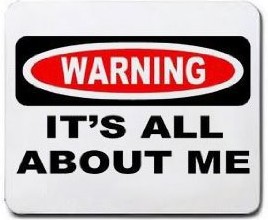
It is ALWAYS all about METhe first is pride and arrogance. The unquintessential leadership mindset is primarily narcissistic, so for the person who has this mindset everything is always all about them. What does this look like in action?

Constant self-promotion and exaggeration of importance, position and status in words and actions is one way this pride and arrogance manifests itself. No one is better, brighter, or more right.

This mindset is one of being superior to and more special than everyone else. The world – no, make that the universe – revolves around the unquintessential leader.

Nothing and no one else matters except for him or her and anyone who doesn’t realize that is the object of the unquintessential leader’s derision and condemnation.

Unquintessential leaders are, in short, legends in their own minds.

Another characteristic of the unquintessential leadership mindset is the need to control everything and everybody. What does this look like in practice?

Absolutely no challenge to the authority, authenticity, correctness, and thoughts, ideas, opinions, and edicts – because that’s what unquintessential leaders issue – is tolerated or allowed. Absolute and complete loyalty to the unquintessential leader is demanded and tested routinely. Action to squelch and remove real or perceived challenges on any of these fronts is swift and brutal.

Threats and intimidation (bullying) are another characteristic of the mindset of unquintessential leadership. This characteristic in action is a constant barrage of harassment and haranguing. An atmosphere of fear is created by the continual reminders that those under unquintessential leadership have tenuous positions and one “wrong” word or move will result in their eliminations and expulsions.

Language is the primary weapon in this characteristic, with repetition on a constant basis of what the negative consequences are that the unquissential leader holds over the heads of those cross him or her.

Manipulation is another characteristic of the unquintessential leadership mindset. Manipulation is accomplished by spin doctoring everything to make everything support what the unquintessential leader believes about him or herself.

Its effectiveness depends on a lack of critical thinking, fear, and the everpresent specter of punishment. It can be quite effective with people who either can’t, won’t, and don’t know how to think for themselves.

This is one of the most subtle characteristics, and, therefore, in my opinion, one of the most dangerous.

Another characteristic of the unquintessential leadership is the creation and maintenance of an atmosphere of suspicion and war anywhere the unquintessential leader is able to. What does this look like?

There are constant words and actions that pit people against each other, creating first suspicion, then war among those people. Unquintessential leaders will constantly find targets to attack personally and set up for everyone else to attack.

This tends to be the way unquintessential leaders get rid of people who challenge them, who disagree with them, who call them out when they are being unquintessential leaders.

Because of all the characteristics of the unquintessential leader mindset, the inability to handle the truth (for an unquintessential leader, the only truth that exists is the truth as he or she has constructed it) is universally the one that usually becomes the most obvious early on because anyone who confronts the unquintessential leader is quickly – and usually very publicly and visibly as a warning to everyone else – hunted down, forced out, and completely destroyed, if possible.

People can usually hide the other characteristics for quite some time, but not being able to face or admit the truth is almost impossible to ever hide.

As quintessential leaders, it is imperative that we are constantly examining our mindsets – our motives, our attitudes, our words, our actions, who we are – to ensure that we are not letting these characteristics of the unquintessential leadership mindset to come in and become part of us and how we lead.

This is the battle we all fight constantly, but it is a battle we must never abandon and a battle we must win. For ourselves and for our teams in every area of our lives. 

Yes. It’s that important.
There have been a lot of examples of unquintessential leadership in this week’s news, and I will highlight the ones that have caught my attention – some you may be aware of and others you may not be – and give a brief summary of each of them with links so you can review the stories yourselves and glean the lessons from each of them that we, as quintessential leaders, must always be diligent to look for and learn from.

Lance ArmstrongThe first story is the news, which, frankly, is no surprise to me, that Lance Armstrong has refused to meet with the U.S. Anti-Doping Agency (USADA) and testify under oath about his use of illegal substances during his career as a professional cyclist. In light of this development – which was a necessary step in his path to be able compete athletically in any sport and any hopes of redemption from his fall from grace – it seems to bear out that all that he said in his interview with Oprah Winfrey last month was nothing more than lies accompanied by crocodile tears. Purely unquintessential leadership on every level with this man.

Another unquintessential leadership story that caught my Alex (A-Rod) Rodriguez - New York Yankeesinterest this week was about Alex Rodriguez, third baseman for my favorite baseball team, the New York Yankees. Joe Posnanski does a very good job of showing the unquintessential leadership traits that have led to his demise, not only as a baseball player, but as a role model for young kids playing the game of baseball. Mr. Posnanski lists several things that contributed to where A-Rod finds himself now, but from a quintessential leader point of view, three character traits – pride, cheating, and dishonesty – are at the core of what makes Alex Rodriguez an unquintessential leader.
Another unquintessential leadership news story from this week was the revelation that the FBI – anyone who knows the real history of the FBI from its inception and anything at all about the tactics of its first director, J. Edgar Hoover, should really not be surprised by this latest story – has a lot of employees using government-issued equipment to engage in sexting. Not only is this behavior immoral, but it’s also illegal under federal law, which the FBI is the enforcing agency of.

The next instance of unquintessential leadership to get a lot of press this week has global implications, as well as terrorist implications. Government systems and corporate systems were the target – from China and Pakistan to the U.S. and from the U.S. to Iran (that we know of). This high-profile story also introduced the general public to a new term – spear phishing – which is already well-known in the cyber security field. In general terms, the unquintessential leadership behavior is hacking or trying to hack computers and networks.

Hacking – one famous hacking group is Anonymous – involves several unquintessential leadership traits: the deliberate breaking into and breaching, if possible, of computers and networks; distributing malicious or harmful software to either steal information or destroy information or incapacitate the computer or network; and, a lot of pride and arrogance in taking credit for the breach.

President Barack ObamaThe last unquintessential leadership news story I’ll cover for this week is the looming sequestration if President Obama and the US Congress don’t reach a budget agreement.

While both sides bear responsibility for the lack of an agreement, President Obama, as Commander-in-Chief, has shown an unquintessential leadership trait side of his introverted temperament – he’s an INTJ –  which I also am, so I understand what’s happened and why, but the unquintessential leadership aspect of his decision is a faulty cost-benefit analysis.

When INTJ’s have done everything in their power to try to resolve, negotiate, change, and conclude an impasse or breach, whether with an individual or a group of individuals, and nothing happens, as their energy levels get depleted and they get tired of hitting their heads against a brick wall, so to speak, they do a cost (how much am I putting into this?)-benefit (what is the best I can expect as a result?) analysis, and if the cost outweighs the benefit, they stop, close the door, and walk away for good.

Once that door is closed, it can’t be reopened, because the INTJ has moved on to things he or she can resolve, negotiate, change and conclude, and the last effort is no longer a part of their lives, literally. It’s over. Period.

That’s a part of the temperament and it drives all the other people in our lives crazy because it’s the only temperament that does this and none of the other temperaments understand it. Trust me, I’ve heard it enough to know it doesn’t make sense to anyone who’s not an INTJ.

That appears to be the point that President Obama has reached with the U.S. Congress.

The problem here with the lack of an agreement and the possible automatic sequester is that whatever the cost is to President Obama personally, it does not outweigh the benefits of continuing the resolution process, the negotiating, the change,  and successful conclusion needed to get past the breaches and impasses that exist. One of the traits of quintessential leadership is understanding that the needs of the many outweigh the needs of the one, and as the leader of the United States, President Obama needs to remember – and keep at it, now matter how it affects him personally, because this is the job that he has – the needs of the American people outweigh any personal needs that he has.

President Obama doesn’t get the luxury of being an ordinary INTJ where the stakes aren’t all that high if he walks away for good. At least not until 2017.

I plan to make this a weekly feature on this blog, beginning with today’s post. I’ve done this type of post a couple of times already this year, breaking a story or two down in detail.

However, beginning with this post I will summarize the stories – some you’ve heard and some you probably missed – and give a big-picture statement about the the failure of quintessential leadership in each of them, and then invite you, as quintessential leaders, to do your own more in-depth analysis about the quintessential leadership failure aspects of each of them.

I do this because the heart and core of who I am is a coach. My role as a coach is to highlight and guide, but I firmly believe that each of us must actually put some effort into the analysis, the learning, and the application process to fully benefit from it. We’re on this journey to become fully quintessential leaders together. Therefore, we must all be engaged and participating in the process. I invite you to join me in meeting that goal.

The first story of unquintessential leadership that caught my attention this week was the FBI sting that left 10 Atlanta police officers facing corruption charges, when it became clear that they were accepting large sums of money from street gangs to provide protection during drug deals. Law enforcement is entrusted with protecting those of us who obey the laws – local, state, national – and removing those who don’t – street gangs and drug dealers certainly are among those – and this is yet another example of that trust and trustworthiness being broken.  That is unquintessential leadership.

For a detailed and in-depth discussion of the components and traits involved in building trust and being trustworthy, please purchase my eBook, Building Trust and Being Trustworthy. You can also purchase a paperback copy from Amazon or a Kindle version.

The second story also involves law enforcement – Chris Dorner, who was terminated by the Los Angeles Police Department in 2009, and took a resoundingly unquintessential leadership route to protest what he believed was an unfair and unmerited – which it could well have been – termination. It doesn’t take much, from a big-picture point of view, to see how this is unquintessential leadership. Any claims that Dorner had about bias, prejudice, and mistreatment during his tenure and in his termination from the LAPD (he laid this out in a very coherent, well-organized document that shows this was an intelligent, sane man talking) were erased by how he chose to force the issue: with threats, murders, and hostage-taking. Eventually it cost Chris Dorner his life – who didn’t know that would be how it ended? – but if there were any real problems that he wanted addressed and corrected, no one will listen or do anything about it because the last actions of his life seem to support his termination.

Beyond the obvious – I do hope the obvious is obvious – what can we learn from this about how we resolve issues and about how our methods need to be consistent with quintessential leadership? It’s important to remember that not every issue, dispute, or disagreement is win or lose, with no in between. Some are. But those involve moral foundations and principles and are non-negotiable under any circumstances.

But for the everyday issues, disputes, and disagreements we deal with, are we able to see that a draw is sometimes quintessential leadership in action? The “how” we do something matters as much as the “what” and “why.” Are you the kind of person who draws a line in the sand about absolutely everything? If so, you’re not a quintessential leader.

I urge you to take some time to think about this in your own lives. I have seen many people with legitimate whats and whys go down in flames because of how they tried to address and resolve them. On the other hand, I’ve seen just as many people who had absolutely no basis for their whats and whys – in in many cases, were completely on the wrong side of everything – prevail because of how they dealt with them. Both of these are the extremes, but it should be a lesson for us.

Another story of unquintessential leadership this week involves a company. Carnival Cruise Lines failed all leadership tests this week with their handling of the result of an engine room fire on Carnival Triumph earlier this week. The right – and quintessential leadership – action would have been to send some means of rescue (ferries, another ship with support to do the transfer, etc.) out immediately. Carnival Cruise Lines didn’t do that because of the cost involved. Their greed – as well as their belief that their industry is “bullet-proof” – underlines the lack of quintessential leadership at this company.

I read a statement from Carnival Cruise Line CEO Gerry Cahill this morning and if I were on the board of directors for this company, he would have been terminated right after this statement: “We pride ourselves on providing our guests with a great vacation experience, and clearly we failed in this particular case.”  Failure was simply a matter of not providing a great vacation experience? Mr. Cahill is an unquintessential leader in action.

Another continuing story of unquintessential leadership this week are the Armed Services Committee confirmation hearings on Chuck Hagel as Secretary of Defense. The “politics-as-usual” circus surrounding this highlights how much of a lack of any quintessential leadership there is in American politics. But freshman senator Ted Cruz of Texas brought the unquintessential leadership spotlight on himself this week during the hearings. Read the story. This is not quintessential leadership. Period.

And the last story of unquintessential leadership that I’ll point out today is the story of Oscar Pistorius. You can read the story if you don’t know it already. Any time I hear of athletes involved in incidents like this, my first thought goes to overinflated egos – an unquintessential leadership trait. My second thought goes to the rampant use of performance-enhancing drugs among professional and Olympic athletes, which is illegal, unfair, and wrong – also unquintessential leadership traits – and the emotional and hormonal side-effects of those drugs, which can contribute to actions like these.

Ultimately, though, the full responsibility for this falls solely and completely on Oscar Pistorius. If he took performance-enhancing drugs, he knew the risks, and he made the choice. All the tears, shaking, and “strongest denials possible” won’t change the fact the he is responsible for every choice he made – including this one.

Quintessential leaders never have to – nor in fact, would – promote their efforts, a piece of a larger picture and larger plan. They are interested in outcomes and their contributions, as leaders, are devoted to successful outcomes for their teams, business units, organizations, and society at large. That is where their focus, their attention, and their efforts are directed.

So, when you hear people continually promote themselves as leaders, constantly touting their sole accomplishments, pointing everything back to themselves, you are seeing someone who is not only not a quintessential leader, but who is not even in a leadership position, except in his or her own mind. Everything the person is about is self-aggrandizement

Although self-aggrandizers are abundant throughout society, they seem to be even most prolific in business, sports, donald trump self-aggrandizementand religion. Donald Trump in business comes to mind. Muhammad Ali in his heyday in boxing comes to mind. The world of religious organizations is so full of these types of muhammad ali cassius clay self-aggrandizementpeople that it is difficult to pinpoint a single example. And the so-called religious types are the easiest to recognize and unmask because they all claim to be some sort of “only” representative of God and yet none of them agrees with each other or God.

Self-aggrandizers have an exaggerated and unsubstantiated view of their accomplishments and their contributions. They are legends in their own minds. They are completely self-absorbed and everything they say and do is from a “the world revolves around me” perspective. The prominent words their vocabularies are Imy, and me.

Self-aggrandizers believe they are superior to the rest of the human race. They also believe that they are unfairly treated and under-recognized by everyone else, primarily because, in their delusional , self-important opinions, everyone else is too ignorant and too blind to see how great and awesome they really are.

So, instead of spending time actually accomplishing the results that quintessential leaders are known for, the self-aggrandizers spend all their time promoting themselves. We’ve all worked with people who are self-aggrandizers and they are a detriment and an obstacle to productivity and success because they are consumed with nothing but being seen and heard and constant attention-seeking. These people suck up all the energy of whatever environment they are in and frequently stall or stop any progress if they’re allowed to continue unchecked.

The roots of self-aggrandizement are strong delusion, an overinflated ego (pride, vanity, arrogance), and insecurity. When a person has to spend all his or her time telling everyone how special, great, wonderful, awesome, superior he or she is – when in reality, if a person really is any or some or all of those things, it is readily apparent to everyone as a pattern of behavior and as just who that person is all the time and usually the person doesn’t even see those qualities in themselves, but it is other people who point them out – that person is first trying to convince him or herself those things are true – insecurity – and second trying to convince everyone else they are true as well.

The strong delusion is a contextual issue. Everything said to or about the self-aggrandizer gets assimilated through the “I, my, me” filter that dominates his or her thinking, and comes out, at best, twisted completely out of or spun completely away from its original context, or, at worst, completely invented (a lie). Regardless of which way the self-aggrandizer comes to his or her conclusions, he or she is always right and everyone else is always wrong.

An overinflated ego will argue, fight, contest, and keep conflict going. The ironic thing is that most people will tire of the endless arguing, fighting, contesting, and conflict after a while because they realize, at some point, that there’s no reasoning with a self-aggrandizer and the continuation of the discussion is a waste of time, but because the self-aggrandizng person gets the last word, so to speak, this boosts his or her ego even more and further convinces him or her that he or she is right. It’s a vicious circle, not based on evidence or fact, but simply based on the self-aggrandizer’s ability to out talk and outlast everyone else.

Insecurity is the knock of reality on a self-aggrandizer’s door. But since self-aggrandizers live in a world of strong delusions and super-sized egos, they will never allow this reality to get any further than the door. They lock insecurity out with even more self-aggrandizement.

So, if you see or hear someone who is always making presumptuous and momentous claims about him or herself, their positions, their accomplishments and who and what they are, you should recognize that that person is a self-aggrandizer. He or she is not any kind of leader and not a quintessential leader.

We as quintessential leaders need to recognize self-aggrandizement and remove it from among our teams and remove ourselves as far from it as possible. It is one of the most toxic and destructive forces that we will face in life. Giving it any attention will only encourage it and make it worse. We don’t need that. Our teams, our business units, our organizations don’t need that.