Archive for the ‘Quintessential Leadership is an Art’ Category

Anakin Skywalker Before He Became Darth VaderRecently, I sat down and watched, for the second time, back-to-back, the last two movies of the Star Wars prequel trilogy – Episode II: Attack of the Clones and Episode III: Revenge of the Sith. I had not seen either movie in several years, but wanted to review them after a recent Star Wars marathon on Spike TV during the Thanksgiving weekend when I saw most of all the three Star Wars movies in the original trilogy.

As I watched these two movies, I was amazed to see a lot of quintessential leadership – the presence or lack of presence – issues emerge. I decided to do an analysis of how Anakin Skywalker became Darth Vader, because in looking at the transformation, we can learn some important lessons about quintessential leadership – what it is and what it isn’t and how the presence or absence of the components of trust and trustworthiness, which I’ve discussed in detail in this blog, determine whether even the most competent, gifted, and capable people are also quintessential leaders.

Luke SkywalkerOne of the first things I noticed this time is how much Anakin and Luke Skywalker were alike in temperament and thinking. Both men were extremely gifted, but both also overestimated their gifts and their abilities and it created a recklessness and pride in them that clouded their ability to think clearly, to be humble, and to exercise self-control.

Both Anakin and Luke Skywalker were inconsistent in performance. At times, they both did the right thing, and at other times, they both did the wrong thing. Emotionally, they were both out of control, and they both lived their lives based on their feelings, which is why they both had an inconsistent level of performance. In short, they were unreliable and unpredictable, which are traits of unquintessential leaders.

Additionally, both Anakin and Luke Skywalker shared the trait of impatience. This came in part from pride and their overestimation of themselves, but it also came from a lack of contentment with where they were and what they were doing and the ability to see each step as part of a big-picture process. They both wanted, for example, to be Jedi knights – and both pretended to be before they were – before they had met all the qualifications through training and experience to actually be a Jedi knight.

This is a common character flaw that we find in unquintessential leaders. They want to positions, the titles, but they are either unwilling or unable to patiently do the work and take the time to be qualified to have those positions and titles. When they find a way – as Anakin did – to take a shortcut to where they believe they should be and want to be, the results are always disastrous.

Luke, in spite of sharing many of the unquintessential character traits of his father, turned out to, when push came to shove, avoid the same path his father had chosen. But it occurred to me that even though he did the right thing in the end, he still had the character flaw that he shared with Anakin of questioning the fairness of things as it related to him and he never completely learned to control his emotions, so Luke, as a force for good, long-term, remains questionable in my mind. Doing one right thing one time doesn’t make a person’s character. Right character is developed through a lifetime of making the right choices every time, all the time.

Granted, none of us does this perfectly, but a quintessential leader has this at the front of his or her intent and purpose at all times. That’s the quality of integrity.

So let’s look briefly at the unquintessential leader traits that Anakin Skywalker had that led him to choose to become Darth Vader. Notice that I purposefully used the word choose, because that is a crucial element in this discussion: the totality of all the choices in life that each of us makes is an integral component of whether we are quintessential leaders or unquintessential leaders at our core. Granted, there are gifts, abilities, talents that contribute to this equation, but even there, we have the choice to develop them or ignore them, use them or not use them, and to decide how we’re going to use them, so choice is always involved at the fundamental level.

In Episode II: Attack of the Clones, we see Anakin Skywalker as a young adult and in an apprenticeship with Obi-Wan Kenobi to become a Jedi knight. One of the things that stands out about Anakin’s character, even here, is how forcefully he is led by his emotions. He’s a no-holds-barred kind of person when it comes to how he feels. His pursuit of love is untamed and relentless. His fears rule his days and nights. His anger is fierce and hot. His resentments about the things he believes aren’t fair seethe steadily just under the surface, occasionally spewing out in volcanic outbursts.

Yoda LeadershipInterestingly, both Yoda and Obi-Wan Kenobi – as they would years later with his son – are constantly warning Anakin about self-control in all areas of his life (choices), but especially with regard to his emotions. Anakin doesn’t realize that being led by his emotions is the destabilizing force in his life. 

Emotional thinking crowds out objective thinking and the ability to observe things are they are instead of things from – as Obi-Wan ironically tells Luke to explain not revealing Darth Vader as Luke’s father – from a “certain point of view.” Emotional thinking leads to inconsistency, which is an unquintessential leader trait.

The roots of Anakin’s discontent, which is fueled by his rampant and conflicting, at times, emotions are evident in this episode.

He doesn’t see, for example, Lord Palpatine clearly, and believes he is one of the good guys, while Lord Palpatine is slowly and deliberately using Anakin’s emotional thinking and lack of objectivity to surreptitously manipulate Anakin. 

Anakin believes that things the Jedi are or aren’t doing for him, with him, and to him are not fair and are holding him back. This belief is fully cemented in Episode III: Revenge of the Sith, and it becomes the underpinning of all the choices he makes from there on out. 

As a result of Anakin’s lack of self-control, not only with his emotions, but in the rest of his life, where we see the same vacillation between extremes that his emotions have start appearing, we see three other unquintessential traits appear: a lack of integrity, a lack of honesty, and a lack of authenticity.

Anakin becomes dishonest with everyone, including himself, in these two episodes. Anakin isn’t even truthful with his wife, even though his fear – uncontrolled emotion – of her dying in childbirth leads him to choose to become Darth Vadar, because Lord Palpatine offers Anakin the power to prevent her death. This dishonesty also points to Anakin’s self-absorption, self-centeredness, and selfishness.

No longer is he focused on the big picture of why he is there and what the mission of the Jedi is. It no longer is important to Anakin by the end, only what he wants and what he feels and what he needs. In a sense, even his wife and twin children go off Anakin’s radar because his choices will dramatically and negatively affect them.

Lord Palpatine aka The EmporerNear the end of Anakin’s road to choosing to become Darth Vadar, he straddles the line between being a Jedi apprentice and being Lord Palpatine’s apprentice. He is thoroughly inauthentic, double-minded, and we watch as he walks the tightrope of trying to be someone that he has already abandoned being in his mind and in his emotions. The Jedi sense that something’s wrong, as does Anakin’s wife, but Anakin has gotten so good at pretending to be something he’s not that no one realizes what is really wrong until it’s too late.

Anakin’s issue with integrity was always there, but he made choices in both episodes which eroded and destroyed his integrity completely. A simple – and yet not simple when we examine it – example is his marriage to Padmé Amidala. The Jedi code forbade close attachments because of the emotions those attachments engendered and which the Jedi realized could dilute a Jedi’s obligation to his primary duty and could make him a vulnerable target for the dark side of the force.

But Anakin made a choice to deliberately break the Jedi code and marry Padmé in secret, and then further chose to hide their marriage and lie about their marriage, and encouraged Padmé to do the same. I think this is the defining event that destroyed any integrity that Anakin had left.

So, by the end of the third episode, we have seen all the choices along the way that Anakin Skywalker made that led him to choose to become Darth Vader. He had tremendous gifts, great abilities, and a lot of potential. But he lacked the traits of a quintessential leader, so, in the end, all that Anakin possessed naturally didn’t matter. We see the the same lack of quintessential leadership traits in the machine-driven-Darth Vader in the first Star Wars trilogy: his outside has changed, he’s got more power, but the inside – what he lacked or destroyed by choice to begin with – remained remarkably the same.

The question I leave with you is what are all the choices that are we making today? Are they choices that will enhance our quintessential leadership potential and realization, or are they choices that are eroding our quintessential leadership potential and are cumulatively making us unquintessential leaders?

Every choice matters. Let’s make every choice count toward quintessential leadership. 


I’ve been observing for the last four years an emerging and accurate identification of an obstacle that exists that has contributed to the ever-present gridlock between the current president of the United States, President Barack Obama, and the United States Congress (the U.S. Senate and the U.S. House of Representatives). However, one of the things that is missing from the conversation is the real what and why behind the obstacle and the solution to removing it. The people who’ve identified the symptom talk and write about it without understanding the cause and how to address that in an effective way.

Let me say up front that this is not a post about politics. Politics is a game of lies and spin and I have no time or use for all that, nor will I waste my time talking about it. This post, instead, is about how temperament can affect quintessential leadership negatively and this post also drills down to how an introverted leader needs to modify his or her behavior to ensure that teamwork is in play and goals are successfully achieved.

Joe Scarborough, of MSNBC’s “Morning Joe,” seems to consistently and accurately define the obstacle (i.e., the symptom of the problem) that stands between President Barack Obama and the United States Congress. Ironically, when Scarborough points to the symptom of the solution, without realizing it, he is talking about two extremes in temperament: strong introversion and strong extroversion.

The solution, realistically, lies somewhere in the middle, but the solution can be found in the comparison and contrast between the strongly-introverted person that President Obama is and the strongly-extroverted person that Scarborough points to again and again as the model for teamwork and getting things done.

Joe Scarborough describes the obstacle to getting things done legislatively as an unwillingness by President Obama to reach out to anybody in Congress, including members of his own Democrat party, and an unwillingness to sit down and talk face-to-face, either one-on-one or in a group, to either members of his own party or members of the Republican party. And every time Scarborough describes this obstacle, he brings up former President Bill Clinton to show the contrast of how someone, probably more successfully than any other American president, countered and removed all gridlock by doing just the opposite of what President Obama is doing.

And what Scarborough is pointing to when he contrasts these two men is temperament and how President Clinton used his strong extroversion to ensure that the country’s goals were achieved and how President Obama’s strong introversion is inhibiting his ability to do the same. An analysis of how temperament can get in the way of quintessential leadership, then, and what can be done to moderate and counter that is, therefore, the sole topic of discussion in this post.

Before addressing the temperaments of these two men and the things that separate them temperamentally in their leadership styles, a short discussion of temperaments and how they play into how each of us sees and relates to the world around us is critical. An invaluable – I personally think this book ought to be a “must read” for everyone who is a leadership position – resource for quintessential leaders to understand both extroversion and introversion and leadership is Susan Cain‘s “Quiet: The Power of Introverts in a World That Can’t Stop Talking.”

Commonly-accepted proportions, based on extensive research, of extroverts to introverts in the human population show a 75%-extrovert to 25%-introvert ratio (one in every four people is an introvert).  Cain’s book, while showing that general temperament dominance can also be a function of culture, shows that all of us are genetically and neurologically predisposed to either extroversion or introversion. She also shows how extroversion as “normal” and preferred and introversion as “abnormal” and undesirable – as well as needing to be “fixed” or “changed” – developed into the mindset and culture of the Western world.

Another important part of this conversation is that, because of temperament, it is very difficult – and impossible for people with strong and extreme tendencies in this temperament – for extroverts to ever really understand introverts, while introverts – even though it makes no sense to them – have a quite good understanding of extroverts. Extroverts can’t understand any temperament that is not like theirs, so much of the “abnormal” kinds of labeling – loner, weird, unsociable, etc. – that is typically applied to introverts – who, by the way, are none of these – we see in general cultural views expressed by extroverts.

Please take some time to read Jonathan Rauch’s article, “Caring for Your Introvert,” published in The Atlantic in March 2003 because it does a good job of dispelling some of these incorrect ideas and shows why the labels don’t match up with the reality.

Introversion and extroversion can be measured by scientific instruments such as the Myers-Briggs test, which is often a prerequisite to acceptance into post-graduate programs at many U. S. universities and colleges, and the Myers-Briggs Type Indicator which identifies 16 temperament types.

And even though all people can be typed within these 16 temperament types, where each person falls on the spectrum of the various components that make up the temperament is what makes no two same-temperament people exactly alike. In other words, each of us is unique. An additional note, which Susan Cain makes sure to point out, is that even though a person is characterized by a temperament type, even strongly, not all the attributes of that type may actually apply or be present. Again, each of us is unique. And that’s the most important thing to remember when discussing generalities, which the topic of temperament types is.

Since I’m taking this topic on – and to show the truth embedded in the cautions in my last paragraph – I will share my temperament type (which, no matter how many times I’ve been tested and how much experience and time is accrued between the tests, the type and proportions remain the same) with you and tell you a little bit about why I am  in a position to bring temperament as the source of the obstacle that Joe Scarborough has identified. If you click on the graph below, you’ll see it in its original size, which will make it easier to read.

quintessentialldr Myers-Briggs Temperament Indicator Graph

As you can see, I’m an INTJ, so I’ve got an introvert temperament. You’ll also noticed that I fall into the strong/extreme range of introversion. This is important, because this is a temperament characteristic that President Obama and I share. While I don’t know the exact temperament type of President Obama, I suspect that he is also an INTJ, and his unique temperament type lies in where he falls along each of the measurement scales.

One of the paradoxes that I’ve read and seen noted about President Obama time and again is that of the seemingly two different people he is in front of big crowds versus in front of small groups or one-on-one. It really isn’t a paradox, because since I’ve noticed the same paradox in myself – and this is something I’ve had to learn how to change in the second setting – I know why he is more comfortable in front of a large, mostly anonymous crowd instead of in a small and well-known group and individual setting.

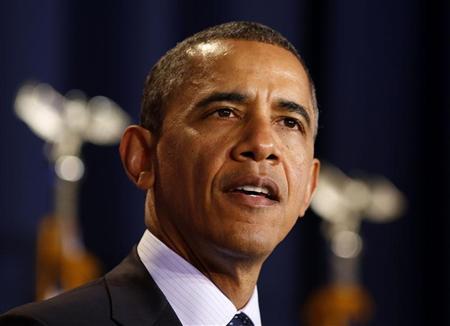
In front of a large, mostly anonymous group, President Obama is doing a presentation about something he believes, is a part of who he is, and he is an expert on. He’s written about, thought about, and is a subject-matter expert, from his perspective, about it. It’s not a conversation, which would require him to process information quickly and U.S. President Barack Obama speaks at the National Defense University in Washingtonverbalize eloquently just as quickly his response – which introverts simply cannot do (look at how poorly he did in the Q & A debates in this year’s election process). Therefore, there’s no pressure on him, and is relaxed and confident, and even almost passionate.

However, in the give-and-take of ad hoc verbal conversation and negotiation in face-to-face meetings with groups and individuals President Obama knows, he is so uncomfortable that he avoids it altogether. I read about what he’s done proposal-wise with the current fiscal cliff negotiations and that he’s incredulous about why it’s not done already. I don’t know the details of the proposal – nor is that important here. However, here’s what I’ve read and seen about what President Obama has done. He’s composed – that’s in writing – a document that says what he wants and sent it to Congress to get passed.

That’s how introverts are most comfortable communicating and he’d be delighted to have Congress put their proposal in writing, send it to him – introverts understand information much more easily when they read it than when they hear it -, give him some solitude to digest it, make written changes, if needed, then send the revised proposal back in writing. He’s probably the best emailing president we’ve ever had. 🙂

And that’s the problem. If we consider the 4:1 ratio of extroverts to introverts, then applied generally, 75% of Congress are extroverts and they are the majority that want a face-to-face sit-down with President Obama to hammer out an agreement (not to mention that, except for President Jimmy Carter, who was probably as strongly introverted as President Obama, this is how Washington has traditionally gotten things done at the end of the day).

And this is why former President Bill Clinton represents the key to the solution. President Clinton is clearly an extrovert on the strong-to-extreme end of the spectrum.  I suspect this “polar opposites” temperament difference between President Obama and him has been why there are constant suggestions that the two men don’t like eachPresident-Bill-Clinton other and their relationship has seemed frosty at best.

The fact is that President Clinton doesn’t understand President Obama, temperamentally, and President Obama, while he understands President Clinton temperamentally, can’t wrap his head around embracing it or doing it.

There’s another possible component that may explain the seeming distance between the presidents. As a strong-to-extreme extrovert, President Clinton most likely (and some of his personal behavior lends credibility to this) has no concept of personal space and physical (not visible, but discernible) boundaries – both of which are important and critical to introverts.

And I guarantee you that President Clinton has unknowingly invaded President Obama’s personal space and ignored his physical boundaries way too many times, and President Obama’s response, which is an introvert response, has been to literally and figuratively back up to create a safe distance – for him – between the two men. That’s the heart of the dynamic you can see going on between these two presidents, who probably don’t really dislike each other, but are in totally different universes temperamentally.

But Joe Scarborough, who is also a strong extrovert, is right in pointing to President Clinton as someone from whom President Obama needs to draw on his playbook to get anything accomplished. This means President Obama, who has been time and again characterized as “leading from behind,” which is what INTJ’s typically do, needs to get out of his comfort zone. The reality is that President Obama doesn’t see a need to do this and doesn’t think it’s going to accomplish anything. He knows that he will be at a disadvantage in the verbalization part of the process.

But, if President Obama doesn’t do these face-to-face small group and individual meetings with members of both parties – understanding that 75% of Congress needs to talk to him and be heard (listening is one of his strengths) and also understanding that it is okay to say “I want to think about what you’ve said and let’s meet again to discuss it” to offset his fear of being put on the spot – then he’s not going to be able to garner the support he needs to meet the country’s goals and objectives legislatively.

And that’s where quintessential leadership comes in. One of the defining characteristics of a quintessential leader is being able to understand what other people need and being able to find ways to accommodate those needs in a way that is win-win for everyone. It doesn’t mean being a chameleon, nor does it mean being insincere. It also doesn’t mean compromising principles, integrity, authenticity, or ethics. But it does mean moving, taking the necessary steps first to meet others halfway, and having the confidence in your understanding, discernment, and experience to ensure that the right and best possible outcome will be achieved.

There is a proverb that says insanity is doing the same thing over and over and expecting different results. That quote is commonly attributed to Albert Einstein, but there is no definitive proof he actually said it. However, being pretty familiar with Albert Einstein as a person, philosopher, mathematician, and scientist, it seems very consistent with the way he thought and lived his life and did his work.

Organizational dysfunction starts with this definition of insanity. The reality is that most organizations that exist, wherever or in whatever sector of the world, have some dysfunction in them. Humans, by nature, are dysfunctional, and since humans make up organizations, it follows that dysfunction, to some degree, will exist.

With quintessential leadership at the top, though, most of the dysfunction can be changed or eliminated so that the organization itself is not dysfunctional.

However, when there is no quintessential leadership at the top levels of an organization, the organization becomes dysfunctional. The interesting thing about dysfunction, which is abnormal or impaired function, is that once it becomes the norm, it only gets worse until the whole system – in this case, organizations – fails and eventually dies.

Ironically, as organizations get more dysfunctional, the more effort people in top leadership positions put into attempting to save the organizations from death by doing the same wrong, non-working, and sometimes just plain dumb things that made the organizations so dysfunctional to begin with. When I see this, it reminds me of someone hyperventilating and when the panic of not being able to breathe sets in, the person hyperventilates even more, making it even more impossible to breathe.

It’s counterintuitive, isn’t it? It doesn’t make sense, does it? And, yet, in every dysfunctional organization, when the big picture is analyzed to see how the organization got to where it is and what the organization’s response is, it’s the same reaction as a person who’s hyperventilating and panics.

There are many obvious signs of organizational dysfunction and a lack of quintessential leadership at the top, just as there are signs of deepening dysfunction within an organization, but I’ll cover just a few of these here today.

A tell-tale sign of organizational dysfunction is elitism and an upper class (who’s important) and everyone else (who’s not). If you see “us” and “them” or “we’re special and you’re not” in organizational thinking, you’re dealing with organizational dysfunction.

Elitism and upper classes are created by a group of people, starting with the people in top leadership positions, who confer on themselves (and make sure everyone else knows), with no basis for doing so, an elevated and special status above everyone else in the organization. This group pitches this status out like a bone to a dog to the rest of the organization as something to aspire to and it creates minions and sychophants who, driven by a desire to be part of the upper class and have its self-conferred power and nothing else, will do anything, legal or illegal, moral or immoral, right or wrong, good or bad to get there.

These people naturally float to the sub-leadership positions (because all dysfunctional organizations have an elaborate multi-class structure) because they will also agree with everything the elitists say, do, and promote. This is a key reason why organizations get more dysfunctional because there is no one in a leadership position who is a quintessential leader and will say, “This isn’t working and we need to figure out why and how to correct it,” or “That’s wrong; here are the right ways that could be done,” or even “That’s a dumb idea. It’s failed over and over, so it’s time to start over and figure out how to implement a smart, workable idea.”

The irony is that the more dysfunctional an organization becomes, the less disagreement of any kind is tolerated, which means there’s simply no place for quintessential leadership in that organization in a way that will bring the organization out of its dysfunctional state (there will always be a few quintessential leaders even in the worst of dysfunctional organizations, but they will be mostly invisible except to the people who work directly with them).

When an organization reaches extreme dysfunction, then absolute agreement with everything about the organization becomes the mandate that is explicitly communicated to every individual in the organization with some sort of “either you’re with us or you’re against us” or “if you don’t agree, you might as well leave” statement attached and the threat of elimination from the organization if disagreement is found (whether expressed or suspected as a result of intense coercion, which is often employed at this point, to root out dissension).

Another sign of organizational dysfunction is that the people in top leadership positions make sure they’re taken care of, no matter what, to the exclusion of the rest of the organization. An example that illustrates this, which I read earlier this morning on Forbes’ website, is that of Hostess executives getting bonuses for the liquidation of the company while 18,000 people are losing their jobs.

The dysfunction of an organization begins when that organization structures itself by corporate charters and organizational documents so that the elite are protected and taken care of, while there is no similar protection or care given to the rest of the individuals in the organization (who fall into an “at-will” class – so, yes, there is a bottom class!). Additionally, and this is duplicitous and egregiously wrong on every level, many organizations use these founding documents to ensure that people who’ve been identified as the elite of the elite are the only ones eligible to assume the top positions in the organization. Often, these same organizations will offer a public posture of opening the floor up to democracy in filling these positions, which is dishonest, while the elite have made sure that only the people they want to fill those positions actually meet all the criteria.

And this sign leads to the next sign of organizational dysfunction, which is a lack of trust, a lack of respect, and a lack of loyalty to the organization by the individuals in that organization who are not in the elite class.

From an objective and big-picture standpoint, this is the inevitable result of watching, as a part of, an organization form dysfunctionally, operate dysfunctionally, and be seemingly clueless that its dysfunctional. 

And the response from the elite is just as baffling. They become more dysfunctional and the organization becomes more dysfunctional.

Instead of the elite looking around them and at themselves and realizing they’ve created and are perpetuating and worsening the organizational dysfunction, they make all the non-elite individuals in the organization the problem.

This is communicated in statements like “we don’t get the respect we deserve” and “nobody cares about loyalty anymore”. The reality is that when people in top leadership positions create and perpetuate dysfunctional organizations, it involves trust-breaking tactics (dishonesty, manipulation, and deceit, to name a few) and the result is a lack of loyalty to the organization (really, who in his or her right mind is going to pledge loyalty to an organization that, first, is not loyal to him or her, and second, has proven a lack of integrity by its actions?).

Once those statements are communicated, then the next step by the elite is to try to dictate and demand respect and loyalty by imposing very constrictive restrictions on the individuals in the organization. This creates a very hostile environment and destroys morale and motivation. 

At this point, the dysfunctional organization is already in the actively dying process. Some of the non-elite will start looking for an environment where quintessential leadership exists and they can trust, respect, and have a measure of loyalty (loyalty to humanly-devised organizations should not be absolute because humans – myself included – make mistakes, do things wrong, mess up, but the response to those screw-ups is what matters and what builds or destroys trust, respect, and loyalty) and leave as soon as they are able.

Others will just quit with no other prospects in sight and either drop out of the organizational pool altogether or become entrepreneurs and start their own organizations. And others – this will be the majority – will just quit and stay, ensuring the imminent death of the dysfunctional organization.

The saddest part of this is that dysfunctional organizations don’t have to exist. They shouldn’t exist. But until quintessential leadership is being lived, practiced, and a part of every individual within that organization – quintessential leaders mentor, coach, and provide the opportunity for everyone they interact with, professionally and personally, because that’s who they are, to learn how to be quintessential leaders – we will continue to have and see the increase of organizational dysfunction. 

In my earlier post, The Most Unquintessential Leader in My Experience, I reviewed in summary form, the characteristics that made this person the antithesis of a quintessential leader. In today’s post, I will review the characteristics of the most quintessential leader I’ve had in my career. Much of what he taught me by example went over my head at the time – I encountered him on my second fulltime job out of college – but as time has passed, I find myself reflecting more and more on the invaluable lessons of quintessential leadership that he used and modeled for me and have tried to incorporate those in my own quintessential leadership.

Unlike the last post in which the unquintessential leader was nameless, I will name this person. He was Wayne Grovenburg. He died in a motorcycle accident in Oklahoma in 2000, so I’ve never gotten a chance to thank him personally for his great example, so this is my overdue tribute to his legacy as a quintessential leader.

I was hired by Wayne and another technical manager as a technical writer for a little – but growing – software company that had spun off from a larger long-established electrical components distribution company. The software had been developed in-house to handle the unique business cycle of a distribution company, but the executives of the existing company saw the potential of the need for this product by other distribution companies.

About half the employees were legacy employees with the parent company and about half had been hired when the new company started up. The person who had been writing the user documentation for the software was a legacy employee who was old compared to most of the other employees and had a quasi-marketing background. She wrote most of the marketing literature for the company and was involved in doing trade shows early on, but was phased out as the company looked for a more professional image.

The quasi-marketing person was my supervisor, but I reported ultimately to Wayne. The age difference between the quasi-marketing person and me was at least 30 years, so that alone set up the scenario for inevitable clashes. We were also both very intransigent when we believed we were right, so this added to the inevitability of butting heads. A lot. I was very young, very brash, and very confident in my knowledge and abilities. She was an aging employee who was, in the end, trying to keep a paycheck until she could retire and pursue her real interests, which were nebulous and ethereal. Her real interests were reflected in her writing style which didn’t sit well with my logical, down-to-earth, let’s-get-it done mentality. Another potential for conflict. She had no knowledge about technical writing; I had helped one of my college professors write a technical writing textbook while I was finishing up college, and I’d had about a year’s worth of experience working with real technical writers at a large software/hardware company, so I knew what I was doing.

Another technical writer was hired at the same time I was. She was a good bit older than me as well, but she had military technical writing experience, so we were okay together professionally.

My first day at work quasi-marketing person handed me one of the user manuals she had written and asked me to edit it. It was bad. I read the first of what we later covertly called “the Tony stories” and it was neither technical nor instructive. In fact, it was insulting from the perspective of the user because it basically explained the process of his or her job to them instead of showing how to use the software to do a job he or she already knew inside and out.

I grabbed one of the red pens I had gotten from the administrative assistants up front and got to work. When I handed the manual back to quasi-marketing person two hours later, she opened it up and immediately burst into tears seeing that most of the pages were bleeding with red ink. I had not expected an emotional response, but before I could even address that, she had run off to find Wayne.

Before she found him, though, she had tried to trash me, in hysterical tears by then, to almost everyone else in the company. Ironically, her first stop had been at the administrative assistants’ area. When I had met them all that morning, I made a point of noting their surroundings to see what was important to them, and had engaged in a little getting-to-know you conversation with each of them based on what I saw in their work areas. I knew, intuitively, that this group of people could make my time at this company pleasant or hell, and since I genuinely liked them, based on my brief interactions with them, I decided it was going to be as pleasant as I could make it.

Quasi-marketing person was also a bit of an elitist, so she talked down to the administrative assistants and also spent a good bit of time berating them. The only time she talked to them was when she had to, and there was no love lost between them and her (I got all of this in my introductions to them that morning). They, though, were the eyes and ears of the executives in the company, so I have no doubt the executives knew what quasi-marketing person was up to. Other than the president of the company, none of the rest of them had much use for her.

She finally found Wayne and went behind closed doors with him. I got a call from the administrative assistant to the president and she asked me to come up front (this began the pattern of how we would communicate when she was watching my back). When I got there, she and the other administrative assistants told me what happened and then said “Don’t worry. No one takes her seriously.”

After a couple more hours, Wayne came to my cube and asked me to go to lunch. We went and he gave me one of the most meaningful conversations and some of the best advice I’ve ever gotten professionally.

He wasn’t angry or upset with me. He wasn’t angry or upset with quasi-marketing person. But he realized that if the two of us could not figure how to tolerate each other without these flashfires – from her – every day, we’d get nothing done and he’d be spending all his time trying to referee between her and me, which meant he wouldn’t be getting his work done either.

He intuitively understood how to communicate with people and he was very effective in making his points without being critical or destructive to anyone. He also had that rare knack for knowing how to effectively communicate with each of his team members in spite of the diversity of our backgrounds and temperaments. And, of all the people I’ve worked for along the way, I never felt like I needed to put body armor on, even if the conversation was serious and I needed to make some changes for the good of the team and the company.

He made a very wise decision in putting the responsibility to keeping the relationship with quasi-marketing person in my hands. He knew that she was not going to change and that talking with her to help her see her deficits was an exercise in futility. So, in that lunch meeting, we had a heart-to-heart and he reminded me to stay focused on the company mission and on the big picture. He advised me to find less in-your-face ways of making changes – after all, that garbage that I’d read was exactly why he and the other technical manager hired me and he reminded me of that and the value they knew we were bringing to the company – and, if necessary, to go around her if I knew face-to-face could bring on an eruption (she was furious by the time she talked with him). He finished by reassuring me that I had his support and all of us, except her, were on the same page, but she was there because the president felt obligated to her, so I’d have to find ways to live with that and live with that peacefully.

Several things stand out in my mind to this day about that conversation. The first thing that Wayne did was refocus me on the big picture: the goal. Since I’m a goal-oriented person, this was the best approach he could have taken at the outset of the conversation.

The second thing was the balanced and gentle way Wayne discussed both my strengths and my weaknesses. Not once did I hear “you were wrong” come out of his mouth, but by the end of the conversation, I knew what I had done wrong and I knew what I needed to change.

The third thing that Wayne did was to engage me a participatory way in the process of keeping the peace while the necessary transition of redoing the documentation happened. By making me responsible for watching myself and giving me advice on what to do to help keep the peace, he made me his partner that day and it made a huge difference. I wasn’t just the new kid on the block, the youngest person in the company, but instead I was a full-fledged participant in the company and the team.

The fourth thing that Wayne did that made a deep impression on me was that he didn’t take sides. Not once did he bad-mouth quasi-marketing person to me, even though I suspect, looking back, that she was a thorn in his side, since she certainly was to almost every other person in the company. Whatever he felt personally about her, he kept to himself. And he made it clear that he would not put up with anyone disrespecting her. That was an ethical standard that I try to remember in my leadership today, because it can be a very hard thing to separate personal feelings from professional obligations.

The last thing he did was to end the conversation positively, making sure that I didn’t walk away from the conversation and lunch believing I was the worst person on the planet. He brought up some of the things that I could have done better or differently, which was exactly how he phrased it, and then gave me practical ways on how to do it better or differently – in effect, giving me tangible parameters within which to work that were acceptable to him and to the company to get the job done -, without attacking me or tearing me down. And in the end, he let me know that I had his support and everything was okay between us.

Unfortunately, that was not the last conflict quasi-marketing person and I had, but I took the wise and generous mentoring of the most quintessential leader I’ve experienced in my career, did my best to implement it and build his belief and trust in me, since he had already demonstrated that he had belief and trust in me, and eventually she was moved out of the department and out of the team.

Wayne’s gone now, but his lessons and his example resonate with me to this day. So I’m a bit late, my friend, but thank you!