Archive for the ‘Qualities of a Quintessential Leader’ Category

All of us are part of many teams during our lifetimes: family, schools, social organizations, religious organizations, and business organizations are the major teams we are a part of throughout our lives. And, while we as individuals, are striving to become quintessential leaders, we often find that we are the only or one of a handful of team members on the various teams we are a part of that are.

So today’s post asks each of us to assess the teams we are a part of and determine whether the teams practice quintessential leadership or unquintessential leadership.

If they practice quintessential leadership, then we should encourage and grow that by becoming more quintessential in our personal leadership (modeling and mentoring quintessential leadership).

However, if one or many or all the teams we’re a part of practice unquintessential leadership, then today’s question for each of you to answer – please share your comments here because we who a part of this blog are a team and we can learn from each other – is what do you and I do personally to work to change that?

In Mike Myatt’s article, “30 Outdated Leadership Practices Holding Your Company Back,” he has a chart that, in general, shows unquintessential leadership practices (left column) and quintessential leadership practices (right column):unquintessential leader and quintessential leader practices 2013

Which column, in general, describes each team you’re a part of? And to answer this honestly and accurately, each of us must first ask which column, in general, describes us individually as people and as leaders?

In this earlier post, I discussed how quintessential leaders look into mirrors while unquintessential leaders look through windows. Take a moment and go back to review that post. Because today’s post gives us another opportunity, as quintessential leaders, to look into a mirror. 

The question, then, is will I? Will you?

Today’s post will take a brief look what quintessential leadership and unquintessential leadership look like in terms of character. Increasingly, it seems that both people in leadership positions and the people they lead believe that character is irrelevant to a person’s ability to lead.

However, that is not true.

quintessential leadership character mattersThe type of character a person possesses is the critical component to whether someone is a quintessential leader or an unquintessential leader, because character defines who and what we are as people. Character is something that we are at all times. It is an essential component in determining whether we are building trust and are trustworthy or we are destroying trust and are untrustworthy.

Anthony Weiner and Bob Filner are two people in leadership positions who’ve been in the spotlight recently because of character issues. However, both have proven themselves, not only in what they’ve done, but how they’ve handled what they’ve done, to be unquintessential leaders.

What does a lack of character and unquintessential leadership look like? 

  • Belief that character and the ability to lead are not connected
  • Lack of remorse or guilt
  • Patent inability to admit being wrong
  • Refusal to take responsibility, blaming others
  • Refusal to apologize
  • Refusal to make amends
  • Refusal to change
  • Lack of care or concern about effects of behavior

What does character and quintessential leadership, then, look like?

  • Understanding that character and the ability to lead are intrinsically connected
  • Remorse when wrong
  • Admit when wrong
  • Take responsibility and blame self
  • Apologize
  • Make amends
  • Willingness to change
  • Great care and concern about effects of behavior

We all struggle with character as humans, but as quintessential leaders, we must win that struggle. And that means who we are on the inside must match who we say we are and project ourselves to be on the outside.

Because we live with our internal selves 24/7, each of us has the responsibility to continually:

  • Assess ourselves
  • Admit where we fall short of the character standard
  • Apologize for and fix in our lives, if we are able, whatever’s been broken because of our shortfalls
  • Remove the shortfall
  • Change

Character matters. It always has. It does. It always will.

Are a lot of the people you know – and answer to on the job – in leadership positions psychopaths? Are you a psychopath in a leadership position? Am I? Tough questions for us personally to answer, but not very tough to answer if we’ve worked with psychopaths.

I have worked with several in my career. Each one had a different personality and temperament, but they all shared the same destructive traits of psychopaths.

There seems to be a disproportionate number of psychopaths, compared to the general population, who end up in leadership positions. In “Sometimes the boss really is a psycho,” one researcher found that about 4% of the 203 executives he studied were psychopaths, while psychopaths make up only about 1% of the general population.

Meryl Streep as Miranda Priestly in The Devil Wears PradaWhen I think of the epitome of a psychopathic person in a leadership position, I think of Meryl Streep’s character, Miranda Priestly, in The Devil Wears Prada.

Some of the characteristics of psychopaths in leadership positions include:

  • Skillful and continual manipulation – bullying, threatening, and intimidating subordinates and charming, flattering, and fawning over superiors – of everyone in the organization
  • Over-inflated ego and sense of self-importance
  • Pathological lying
  • Absence of a sense of right and wrong
  • Absence of remorse and regret
  • Absence of empathy and sympathy
  • Toxicity

liam neeson oskar schindler schindler's listWhen I think of the opposite of Miranda Priestly, sticking with the movies here, I think of Oskar Schindler, portrayed by Liam Neeson in Schindler’s List.

Some of the characteristics of real leaders are:

  • Trustworthiness in everything
  • Strong convictions about right and wrong
  • Willingness to do whatever it takes to do the right thing, regardless of personal or professional cost
  • Humility
  • Strong sense of empathy and sympathy
  • Fairness with everyone

Have you worked with a psychopath in a leadership position? How did it affect you and the organization? What characteristics can you add to the list of psychopath traits as something we all need to be aware of?

Have you worked with a real leader? How did it affect you and the organization? What characteristics did he or she have that you learned and can add to the list of characteristics of real leaders?

Your turn.

It is easy to distinguish quintessential leaders from unquintessential leaders by the way they deal with the pressure of a crisis or crises. 

Below I will give a short list of characteristics that quintessential and unquintessential leaders do when a crisis or crises arise.

Each of you who reads this has a two-fold assignment. First, as always, look at your own leadership characteristics in a crisis or crises and see which leadership style you, in general, fall under. The second assignment is that if you read this, I want you to give me input, via a comment, with an additional characteristic for both quintessential and unquintessential leaders’ crisis-management styles.

I’m going to move, for the most part, to shorter blog posts of this interactive format, because if you’re reading this, you have information to share with me and to share with the other readers of this blog, and I want to encourage us to communicate with and help each other grow as quintessential leaders.

quintessential leader crisis crisesSome of the characteristics of an unquintessential leader in a crisis are:

  • Pretend it doesn’t or deny that it does exist
  • Ignore it
  • Avoid it
  • Procrastinate doing anything about it
  • Blame it on someone else
  • Make it someone else’s crisis

Some of the characteristics of a quintessential leader in a crisis are:

  • Acknowledge it
  • Tackle it quickly and honestly (this means the quintessential leader expects and is prepared for a crisis)
  • Take responsibility
  • Be accountable for resolving it

Obviously, these are not comprehensive lists. Now it’s your turn to contribute with a characteristic for each type of leader in a crisis.

What can you to add to these lists?

The quintessential leadership articles being recommended this week are not tightly related, but I think as you read through them you will see some common threads and connections.

Four Pillars of LeadershipIn Mike Myatt’s article, “Four Pillars of Stable Leadership,” he discusses the four elements of the quintessential leadership trait of stability. Stable leadership is critical to building trust and being trustworthy.

I think this paragraph summarizes very well the benefit of stable leadership: “Few things positively impact an organization like a stable tone from the top. A humble and resolute confidence, a sure hand, and a steady calm inspire belief in a leader’s competence and capability.  Stable leaders not only know where they stand, but they also leave no doubt in the minds of others as to what matters, and what will and won’t be tolerated.”

Unfortunately, stable leadership is a rare commodity in most organizational structures today. This includes our personal lives, our work lives, our social lives, and our religious lives. As quintessential leaders, though, we must be the exceptions to the rule in society where it seems now that ego, the big “I,” and situational ethics and relativity predominate the top-tier positions in most organizational constructs.

We must always be the ones to hold fast to humility, to absolute right and wrong, to consistency, to fairness, and to remember that each of us is part of a bigger “we” and not the solo big “I.” 

Why Leadership Training Doesn’t Work,” by Erika Anderson, is a thought-provoking article about the way quintessential leaders build future quintessential leaders versus the way most organizations approach leadership.

Her point is that true leadership building is involved, interactive modeling and mentoring in the course of work, not sitting in a classroom and telling the same old hackneyed stuff – that, by the way, has never worked and still doesn’t work because it has nothing to do with the real world – and expecting people to know how to be leaders.

Mentoring and modeling is the best way to train and learn in the area of leadership. I’ve learned what quintessential leadership is and isn’t by experiencing it and doing it and helping build future quintessential leaders in the process in the real world. And those lessons could have never been taught  – or learned – in a classroom.

Dan Rockwell’s article, “How to Be Humble Without Being a Loser,” contrasts the characteristics of haughty (unquintessential) leadership and humble (quintessential) leadership. The traits of a humble leader include many of the same traits that build trust and make us trustworthy. The humble leader traits list is simply who we, as quintessential leaders, are striving to be and become.

The 5 Reality-Based Rules of the Workplace and What You Can Do About It” by Cy Wakeman may, on the surface, seem like an odd choice in this list of articles, but quintessential leadership is dependent on what he discusses here. In fact, these rules that Wakeman identifies apply equally to life, so they’re important for everyone to know. 

In my post, “The Quintessential Leadership Balance Between Facts and Feelings,” I talked about how quintessential leaders do not allow emotions be the engines of their decision-making. Wakeman comes at this same conclusion from a different angle: emotional expensiveness and how it affects a person’s overall value to an organization (he lists some of the traits of being “emotionally expensive”). 

And although I’ve never thought about the formula he uses in concrete terms, it is the exact formula I tend to use in hiring new team members and giving more responsibility to existing team members.

The formula is: YOUR VALUE = Current Performance + Future Potential – (3 x Emotional Expensiveness). Look at how heavily emotional expensiveness affects the result of this equation. As quintessential leaders, we cannot afford to be emotionally expensive nor we can we afford to have team members who are emotionally expensive.

In Umair Haque’s article, “How and Why to be a Leader – Not a Wannabe,” he contrasts the characteristics that separate quintessential leaders from everyone else (the wannabes). While I don’t agree with some of the words he chose to show the contrasts, the information contained here is solid.

I hope we as quintessential leaders are constantly and consistently questioning and transforming every step of the way, as well as having values, truth, architecture (quintessential leaders build; wannabes hit numbers and quotas targets), and enjoyment/passion.

I hope you’ve all had a productive week and the quintessential leadership journey has been forward-moving. Thank you, as always, for sharing some of your time with me and allowing me to share some of mine with you.

This is not the post I had planned for this blog today. However, it is clear to me that everyone – from the media all the way to Paula Deen – is missing the bigger picture of the core issue at the heart of this story.

As a side note, I shake my head continually at the situational ethics and twisted logic that a lot of people are approaching this story with. The heart of this story is not about a lack of forgiveness, about “casting stones,” about defaming Paula Deen (she did that all by herself by her lack of quintessential leadership without any help from anyone else).

It is, instead, a cautionary tale that all of us, and especially those of us who are quintessential leaders, need to look into the mirror of and see where and if we see our own reflections. If we miss that in all of this, then we’ve missed the whole point. 

The core issue of this situation with Paula Deen is that she lacks the unimpeachable character, the irrefutable integrity, the unwavering values, the non-negotiable adherence to and upholding of the highest of standards personally and professionally, and the evident humility of a quintessential leader. 

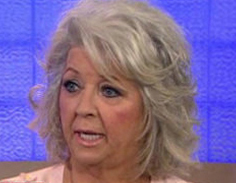
Paula Deen Today Show 6-26-13Increasingly, the story has zeroed in on a single aspect of Paula Deen’s deposition in response to a lawsuit filed by a former employee (who, for the record, is not African-American and who had quite a bit of responsibility at several of Paula Deen’s restaurants) raising the specter that Deen is prejudiced against African-Americans.

Paula Deen herself has waffled all over the place about this one part of a much bigger problem, so it’s really unclear exactly where she stands. And that’s consistent with a lack of unimpeachable character. When you don’t have a solid foundation of anything that is absolute in life, the floor constantly shifts on you from moment to moment.

But the charges of racism are only one part of a larger picture of who Paula Deen is and how she has failed as a quintessential leader both personally and professionally throughout her career. If you want the whole picture, you can read the former employee’s lawsuit here and Paula Deen’s deposition here.

Paula Deen fails the quintessential leader test in several areas. The first is setting and adhering to the highest set of standards of conduct (behavior, which includes speech and action) and requiring that everyone on the team adhere to them too. When people on the team fail to adhere to them, the remedial process to change or go is begun and if there’s no change, those people go. No matter who they are.

A telling quote from Paula Deen’s interview on the Today show this morning reveals her lack of understanding of leadership and her lack of ability to lead: “It’s very distressing for me to go into my kitchens and hear what these young people are calling each other. … I think for this problem to be worked on, these young people are gonna have to take control and start showing respect for each other.”

Paula Deen is in the leadership position and it is her job to set the standard of what is acceptable and what isn’t in her kitchens. She, as she has done since the beginning of all this, once again puts the responsibility somewhere else, instead of taking it herself. If she didn’t allow this kind of behavior in her restaurants – which clearly she does – she wouldn’t be hearing it at all there.

This is Paula Deen’s fundamental blind spot. She seems to have absolutely no comprehension of what her role as a leader is. This seems to be another case of someone who’s really good at a skill, but who should have never been in a leadership position because she’s not equipped to do it.

Once a person in a leadership position, as Paula Deen has time and again, allows, tolerates, and accepts compromise and exceptions to what is generally considered appropriate and right behavior, first in themselves and then with others, they have failed as quintessential leaders.

Once compromise and exceptions enter the picture, character is negatively impacted, and this is the second area where Paula Deen fails the quintessential leader test.

Paula Deen doesn’t see anything intrinsically wrong with any of the behavior in either the former employee’s lawsuit or in her own deposition. The casualness with which she accepts unacceptable behavior in speech and in action – and even does it herself – shows defective character.

Character is a big deal. Every choice, every decision, every thought impacts our character. That impact can either be positive or negative.

The more we negatively impact our character, the less we will care about right and wrong and good and bad and the looser our standards of what’s “okay,” “normal,” and “acceptable” will be.

This is unquintessential leadership. Quintessential leaders know character matters and we know that everything we do and our teams do reflect on our character.

We know you can do one hundred things right and one thing wrong, and the one wrong thing, unless we tackle it head on by admitting it, fixing it, and changing it so that it doesn’t happen again, can be what defines us the rest of our lives.

This is what Paula Deen is not doing and why she is not a quintessential leader.

The reality is that Paula Deen has hit a watershed moment in her life. This could be a time of real change for her.

This, believe it or not, is not unfixable. The fixing will be painful and embarrassing and will cost Paula Deen a lot in effort, money, and reputation. But the result would be worth it in the end.

But if you don’t understand that anything’s wrong, which Paula Deen doesn’t seem to, and you cannot accept the responsibility for your failures as a leader, which Paula Deen has never addressed, and your way of dealing with it is to cast a wide net of blame and responsibility on others by playing the victim and indulging in self-pity, then change will not happen. At least not now.

Paula Deen confirmed that this morning with her statement that “I is who I is and I’m not changing.”