Archive for the ‘Myths and Misconceptions About Management’ Category

I’ve been observing for the last four years an emerging and accurate identification of an obstacle that exists that has contributed to the ever-present gridlock between the current president of the United States, President Barack Obama, and the United States Congress (the U.S. Senate and the U.S. House of Representatives). However, one of the things that is missing from the conversation is the real what and why behind the obstacle and the solution to removing it. The people who’ve identified the symptom talk and write about it without understanding the cause and how to address that in an effective way.

Let me say up front that this is not a post about politics. Politics is a game of lies and spin and I have no time or use for all that, nor will I waste my time talking about it. This post, instead, is about how temperament can affect quintessential leadership negatively and this post also drills down to how an introverted leader needs to modify his or her behavior to ensure that teamwork is in play and goals are successfully achieved.

Joe Scarborough, of MSNBC’s “Morning Joe,” seems to consistently and accurately define the obstacle (i.e., the symptom of the problem) that stands between President Barack Obama and the United States Congress. Ironically, when Scarborough points to the symptom of the solution, without realizing it, he is talking about two extremes in temperament: strong introversion and strong extroversion.

The solution, realistically, lies somewhere in the middle, but the solution can be found in the comparison and contrast between the strongly-introverted person that President Obama is and the strongly-extroverted person that Scarborough points to again and again as the model for teamwork and getting things done.

Joe Scarborough describes the obstacle to getting things done legislatively as an unwillingness by President Obama to reach out to anybody in Congress, including members of his own Democrat party, and an unwillingness to sit down and talk face-to-face, either one-on-one or in a group, to either members of his own party or members of the Republican party. And every time Scarborough describes this obstacle, he brings up former President Bill Clinton to show the contrast of how someone, probably more successfully than any other American president, countered and removed all gridlock by doing just the opposite of what President Obama is doing.

And what Scarborough is pointing to when he contrasts these two men is temperament and how President Clinton used his strong extroversion to ensure that the country’s goals were achieved and how President Obama’s strong introversion is inhibiting his ability to do the same. An analysis of how temperament can get in the way of quintessential leadership, then, and what can be done to moderate and counter that is, therefore, the sole topic of discussion in this post.

Before addressing the temperaments of these two men and the things that separate them temperamentally in their leadership styles, a short discussion of temperaments and how they play into how each of us sees and relates to the world around us is critical. An invaluable – I personally think this book ought to be a “must read” for everyone who is a leadership position – resource for quintessential leaders to understand both extroversion and introversion and leadership is Susan Cain‘s “Quiet: The Power of Introverts in a World That Can’t Stop Talking.”

Commonly-accepted proportions, based on extensive research, of extroverts to introverts in the human population show a 75%-extrovert to 25%-introvert ratio (one in every four people is an introvert).  Cain’s book, while showing that general temperament dominance can also be a function of culture, shows that all of us are genetically and neurologically predisposed to either extroversion or introversion. She also shows how extroversion as “normal” and preferred and introversion as “abnormal” and undesirable – as well as needing to be “fixed” or “changed” – developed into the mindset and culture of the Western world.

Another important part of this conversation is that, because of temperament, it is very difficult – and impossible for people with strong and extreme tendencies in this temperament – for extroverts to ever really understand introverts, while introverts – even though it makes no sense to them – have a quite good understanding of extroverts. Extroverts can’t understand any temperament that is not like theirs, so much of the “abnormal” kinds of labeling – loner, weird, unsociable, etc. – that is typically applied to introverts – who, by the way, are none of these – we see in general cultural views expressed by extroverts.

Please take some time to read Jonathan Rauch’s article, “Caring for Your Introvert,” published in The Atlantic in March 2003 because it does a good job of dispelling some of these incorrect ideas and shows why the labels don’t match up with the reality.

Introversion and extroversion can be measured by scientific instruments such as the Myers-Briggs test, which is often a prerequisite to acceptance into post-graduate programs at many U. S. universities and colleges, and the Myers-Briggs Type Indicator which identifies 16 temperament types.

And even though all people can be typed within these 16 temperament types, where each person falls on the spectrum of the various components that make up the temperament is what makes no two same-temperament people exactly alike. In other words, each of us is unique. An additional note, which Susan Cain makes sure to point out, is that even though a person is characterized by a temperament type, even strongly, not all the attributes of that type may actually apply or be present. Again, each of us is unique. And that’s the most important thing to remember when discussing generalities, which the topic of temperament types is.

Since I’m taking this topic on – and to show the truth embedded in the cautions in my last paragraph – I will share my temperament type (which, no matter how many times I’ve been tested and how much experience and time is accrued between the tests, the type and proportions remain the same) with you and tell you a little bit about why I am  in a position to bring temperament as the source of the obstacle that Joe Scarborough has identified. If you click on the graph below, you’ll see it in its original size, which will make it easier to read.

quintessentialldr Myers-Briggs Temperament Indicator Graph

As you can see, I’m an INTJ, so I’ve got an introvert temperament. You’ll also noticed that I fall into the strong/extreme range of introversion. This is important, because this is a temperament characteristic that President Obama and I share. While I don’t know the exact temperament type of President Obama, I suspect that he is also an INTJ, and his unique temperament type lies in where he falls along each of the measurement scales.

One of the paradoxes that I’ve read and seen noted about President Obama time and again is that of the seemingly two different people he is in front of big crowds versus in front of small groups or one-on-one. It really isn’t a paradox, because since I’ve noticed the same paradox in myself – and this is something I’ve had to learn how to change in the second setting – I know why he is more comfortable in front of a large, mostly anonymous crowd instead of in a small and well-known group and individual setting.

In front of a large, mostly anonymous group, President Obama is doing a presentation about something he believes, is a part of who he is, and he is an expert on. He’s written about, thought about, and is a subject-matter expert, from his perspective, about it. It’s not a conversation, which would require him to process information quickly and U.S. President Barack Obama speaks at the National Defense University in Washingtonverbalize eloquently just as quickly his response – which introverts simply cannot do (look at how poorly he did in the Q & A debates in this year’s election process). Therefore, there’s no pressure on him, and is relaxed and confident, and even almost passionate.
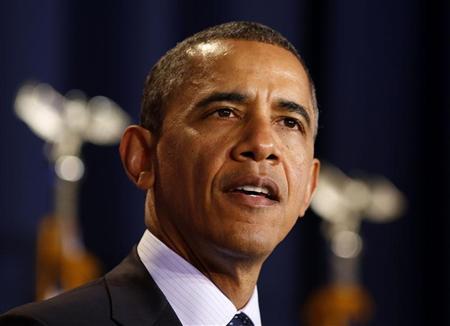
However, in the give-and-take of ad hoc verbal conversation and negotiation in face-to-face meetings with groups and individuals President Obama knows, he is so uncomfortable that he avoids it altogether. I read about what he’s done proposal-wise with the current fiscal cliff negotiations and that he’s incredulous about why it’s not done already. I don’t know the details of the proposal – nor is that important here. However, here’s what I’ve read and seen about what President Obama has done. He’s composed – that’s in writing – a document that says what he wants and sent it to Congress to get passed.

That’s how introverts are most comfortable communicating and he’d be delighted to have Congress put their proposal in writing, send it to him – introverts understand information much more easily when they read it than when they hear it -, give him some solitude to digest it, make written changes, if needed, then send the revised proposal back in writing. He’s probably the best emailing president we’ve ever had. 🙂

And that’s the problem. If we consider the 4:1 ratio of extroverts to introverts, then applied generally, 75% of Congress are extroverts and they are the majority that want a face-to-face sit-down with President Obama to hammer out an agreement (not to mention that, except for President Jimmy Carter, who was probably as strongly introverted as President Obama, this is how Washington has traditionally gotten things done at the end of the day).

And this is why former President Bill Clinton represents the key to the solution. President Clinton is clearly an extrovert on the strong-to-extreme end of the spectrum.  I suspect this “polar opposites” temperament difference between President Obama and him has been why there are constant suggestions that the two men don’t like eachPresident-Bill-Clinton other and their relationship has seemed frosty at best.

The fact is that President Clinton doesn’t understand President Obama, temperamentally, and President Obama, while he understands President Clinton temperamentally, can’t wrap his head around embracing it or doing it.

There’s another possible component that may explain the seeming distance between the presidents. As a strong-to-extreme extrovert, President Clinton most likely (and some of his personal behavior lends credibility to this) has no concept of personal space and physical (not visible, but discernible) boundaries – both of which are important and critical to introverts.

And I guarantee you that President Clinton has unknowingly invaded President Obama’s personal space and ignored his physical boundaries way too many times, and President Obama’s response, which is an introvert response, has been to literally and figuratively back up to create a safe distance – for him – between the two men. That’s the heart of the dynamic you can see going on between these two presidents, who probably don’t really dislike each other, but are in totally different universes temperamentally.

But Joe Scarborough, who is also a strong extrovert, is right in pointing to President Clinton as someone from whom President Obama needs to draw on his playbook to get anything accomplished. This means President Obama, who has been time and again characterized as “leading from behind,” which is what INTJ’s typically do, needs to get out of his comfort zone. The reality is that President Obama doesn’t see a need to do this and doesn’t think it’s going to accomplish anything. He knows that he will be at a disadvantage in the verbalization part of the process.

But, if President Obama doesn’t do these face-to-face small group and individual meetings with members of both parties – understanding that 75% of Congress needs to talk to him and be heard (listening is one of his strengths) and also understanding that it is okay to say “I want to think about what you’ve said and let’s meet again to discuss it” to offset his fear of being put on the spot – then he’s not going to be able to garner the support he needs to meet the country’s goals and objectives legislatively.

And that’s where quintessential leadership comes in. One of the defining characteristics of a quintessential leader is being able to understand what other people need and being able to find ways to accommodate those needs in a way that is win-win for everyone. It doesn’t mean being a chameleon, nor does it mean being insincere. It also doesn’t mean compromising principles, integrity, authenticity, or ethics. But it does mean moving, taking the necessary steps first to meet others halfway, and having the confidence in your understanding, discernment, and experience to ensure that the right and best possible outcome will be achieved.

There is a proverb that says insanity is doing the same thing over and over and expecting different results. That quote is commonly attributed to Albert Einstein, but there is no definitive proof he actually said it. However, being pretty familiar with Albert Einstein as a person, philosopher, mathematician, and scientist, it seems very consistent with the way he thought and lived his life and did his work.

Organizational dysfunction starts with this definition of insanity. The reality is that most organizations that exist, wherever or in whatever sector of the world, have some dysfunction in them. Humans, by nature, are dysfunctional, and since humans make up organizations, it follows that dysfunction, to some degree, will exist.

With quintessential leadership at the top, though, most of the dysfunction can be changed or eliminated so that the organization itself is not dysfunctional.

However, when there is no quintessential leadership at the top levels of an organization, the organization becomes dysfunctional. The interesting thing about dysfunction, which is abnormal or impaired function, is that once it becomes the norm, it only gets worse until the whole system – in this case, organizations – fails and eventually dies.

Ironically, as organizations get more dysfunctional, the more effort people in top leadership positions put into attempting to save the organizations from death by doing the same wrong, non-working, and sometimes just plain dumb things that made the organizations so dysfunctional to begin with. When I see this, it reminds me of someone hyperventilating and when the panic of not being able to breathe sets in, the person hyperventilates even more, making it even more impossible to breathe.

It’s counterintuitive, isn’t it? It doesn’t make sense, does it? And, yet, in every dysfunctional organization, when the big picture is analyzed to see how the organization got to where it is and what the organization’s response is, it’s the same reaction as a person who’s hyperventilating and panics.

There are many obvious signs of organizational dysfunction and a lack of quintessential leadership at the top, just as there are signs of deepening dysfunction within an organization, but I’ll cover just a few of these here today.

A tell-tale sign of organizational dysfunction is elitism and an upper class (who’s important) and everyone else (who’s not). If you see “us” and “them” or “we’re special and you’re not” in organizational thinking, you’re dealing with organizational dysfunction.

Elitism and upper classes are created by a group of people, starting with the people in top leadership positions, who confer on themselves (and make sure everyone else knows), with no basis for doing so, an elevated and special status above everyone else in the organization. This group pitches this status out like a bone to a dog to the rest of the organization as something to aspire to and it creates minions and sychophants who, driven by a desire to be part of the upper class and have its self-conferred power and nothing else, will do anything, legal or illegal, moral or immoral, right or wrong, good or bad to get there.

These people naturally float to the sub-leadership positions (because all dysfunctional organizations have an elaborate multi-class structure) because they will also agree with everything the elitists say, do, and promote. This is a key reason why organizations get more dysfunctional because there is no one in a leadership position who is a quintessential leader and will say, “This isn’t working and we need to figure out why and how to correct it,” or “That’s wrong; here are the right ways that could be done,” or even “That’s a dumb idea. It’s failed over and over, so it’s time to start over and figure out how to implement a smart, workable idea.”

The irony is that the more dysfunctional an organization becomes, the less disagreement of any kind is tolerated, which means there’s simply no place for quintessential leadership in that organization in a way that will bring the organization out of its dysfunctional state (there will always be a few quintessential leaders even in the worst of dysfunctional organizations, but they will be mostly invisible except to the people who work directly with them).

When an organization reaches extreme dysfunction, then absolute agreement with everything about the organization becomes the mandate that is explicitly communicated to every individual in the organization with some sort of “either you’re with us or you’re against us” or “if you don’t agree, you might as well leave” statement attached and the threat of elimination from the organization if disagreement is found (whether expressed or suspected as a result of intense coercion, which is often employed at this point, to root out dissension).

Another sign of organizational dysfunction is that the people in top leadership positions make sure they’re taken care of, no matter what, to the exclusion of the rest of the organization. An example that illustrates this, which I read earlier this morning on Forbes’ website, is that of Hostess executives getting bonuses for the liquidation of the company while 18,000 people are losing their jobs.

The dysfunction of an organization begins when that organization structures itself by corporate charters and organizational documents so that the elite are protected and taken care of, while there is no similar protection or care given to the rest of the individuals in the organization (who fall into an “at-will” class – so, yes, there is a bottom class!). Additionally, and this is duplicitous and egregiously wrong on every level, many organizations use these founding documents to ensure that people who’ve been identified as the elite of the elite are the only ones eligible to assume the top positions in the organization. Often, these same organizations will offer a public posture of opening the floor up to democracy in filling these positions, which is dishonest, while the elite have made sure that only the people they want to fill those positions actually meet all the criteria.

And this sign leads to the next sign of organizational dysfunction, which is a lack of trust, a lack of respect, and a lack of loyalty to the organization by the individuals in that organization who are not in the elite class.

From an objective and big-picture standpoint, this is the inevitable result of watching, as a part of, an organization form dysfunctionally, operate dysfunctionally, and be seemingly clueless that its dysfunctional. 

And the response from the elite is just as baffling. They become more dysfunctional and the organization becomes more dysfunctional.

Instead of the elite looking around them and at themselves and realizing they’ve created and are perpetuating and worsening the organizational dysfunction, they make all the non-elite individuals in the organization the problem.

This is communicated in statements like “we don’t get the respect we deserve” and “nobody cares about loyalty anymore”. The reality is that when people in top leadership positions create and perpetuate dysfunctional organizations, it involves trust-breaking tactics (dishonesty, manipulation, and deceit, to name a few) and the result is a lack of loyalty to the organization (really, who in his or her right mind is going to pledge loyalty to an organization that, first, is not loyal to him or her, and second, has proven a lack of integrity by its actions?).

Once those statements are communicated, then the next step by the elite is to try to dictate and demand respect and loyalty by imposing very constrictive restrictions on the individuals in the organization. This creates a very hostile environment and destroys morale and motivation. 

At this point, the dysfunctional organization is already in the actively dying process. Some of the non-elite will start looking for an environment where quintessential leadership exists and they can trust, respect, and have a measure of loyalty (loyalty to humanly-devised organizations should not be absolute because humans – myself included – make mistakes, do things wrong, mess up, but the response to those screw-ups is what matters and what builds or destroys trust, respect, and loyalty) and leave as soon as they are able.

Others will just quit with no other prospects in sight and either drop out of the organizational pool altogether or become entrepreneurs and start their own organizations. And others – this will be the majority – will just quit and stay, ensuring the imminent death of the dysfunctional organization.

The saddest part of this is that dysfunctional organizations don’t have to exist. They shouldn’t exist. But until quintessential leadership is being lived, practiced, and a part of every individual within that organization – quintessential leaders mentor, coach, and provide the opportunity for everyone they interact with, professionally and personally, because that’s who they are, to learn how to be quintessential leaders – we will continue to have and see the increase of organizational dysfunction. 

“”Power tends to corrupt, and absolute power corrupts absolutely. Great men are almost always bad men.”
John Emerich Edward Dalberg Acton

This week Judge Louis Freeh released the results of his investigation into Penn State’s culpability in Jerry Sandusky‘s unfathomable, despicable, and morally bankrupt abuse of children for a prolonged period of time and the picture that emerges is morally unconscionable, reprehensible, and disgusting for the university, for the football program, and for Joe Paterno.

There’s absolutely no doubt that Jerry Sandusky already proved himself worthy of those verbs many times over, but now after the release of the report, it is evident that so is everyone who else involved in positions of power with Penn State from 1998 to the present. And none more so than Joe Paterno.

I know next to nothing about college football. The fact that I know several coaches’ names is because I watched The Blind Side. But until then, the one name I recognized was Joe Paterno, who was resoundingly lauded for his discipline, principles, and morality with regard to the football program.

It turns out that was all a lie, idolatrous press – probably perpetuated by Paterno himself – that covered up who Joe Paterno really was. Paterno, it turns out, was the person with all the power at Penn State. And while there’s plenty blame to go around among to executive staff there because no one had the character and the guts to stand up to him and do the right thing no matter what, it’s clear that absolute power absolutely corrupted Joe Paterno.

The evidence shows that the only person Joe Paterno cared about was Joe Paterno. Whether he started out that way is open for speculation, but there is no doubt as he accrued power, he became selfish, self-centered, and self-absorbed – a total narcissist. If he ever had any to begin with, he lost all moral conviction, accountability, responsibility, compassion, and empathy.

It would be too simplistic to say it was simply because he didn’t want to lose power. The reality is that power became his idol and that became the driving force in his life. The picture that emerges is of a man who was a bully and a tyrant, a man devoid of care, concern, protectiveness, and love for anyone but himself and his empire.

In many ways, Joe Paterno is no different than Nero, than Hitler, than Stalin, than Pol Pot, than Idi Amin, than “Papa Doc” Duvalier, than any other brutal, malicious, destructive dictator that we can think of. If that sounds like hyperbole, it is not. This absolute corruption is something they all share.

There are calls for the NCAA to ban Penn State’s football program, but in the world of sports – and college sports and college football in particular – it is not uncommon for successful coaches to be given this kind of absolute power. And again and again, we see that it absolutely corrupts. Human lives become unimportant, good values and principles no longer matter, doing the right thing at all times is non-existent. Demagogues emerge and power, success, and money become all that matters and the demagogues will lie, cheat, steal, coerce, threaten, and even tolerate moral and legal wrong-doing to preserve them.

Taylor Branch wrote an article for The Atlantic in November 2011 – before the Sandusky/Penn State story broke – entitled “The Shame of College Sports,” which was a real eye-opener to me about this connection between ascending power, money, and success and the equal declination of principles, values, and care and concern for human beings and their lives. It’s well worth a read.

The Penn State story is a sad and obscene and abominable one, but I can guarantee you that it’s just one in an ever-expanding ocean of many. 

I have worked with one person who was a quintessential leader. The next post will be about that person and how grateful I am that our paths intersected early in my career, because I learned a lot from him not only about what quintessential leadership looks like in practice, but also about having the highest standards of integrity and practicing what a person says he or she believes.

The rest of the people in leadership positions throughout my career so far have been managers (and not stellar in even that arena) and non-quintessential leaders. Some were decent people personally, but had no leadership skills. Others were not decent people personally and also had no leadership skills. As I’ve sorted through the names, faces, and experiences, contrasting and comparing them all, one person leads the way in non-quintessential leadership and I will point out the areas in which this became glaringly obvious.

You may recognize these characteristics in someone you know and/or have worked with. And the more of these symptoms that are evident, the more toxic the work environment and the lower the morale will be. If you are experiencing burn-out and all that encompasses, then you probably have a non-quintessential leader like this.

He had a reputation when I got hired and I quickly heard that he was a “yes” man, a suck-up to those above him – and a tyrant to those who worked for him, and wishy-washy, going with whatever the prevailing winds moved the executive leadership of the organization, which left his teams in constant disarray.

Ironically, he did not want me to be hired because he thought I was too assertive and too committed to changing things drastically. In the conservative mindset of the organization, change was viewed with suspicion and resistance, and if anything did actually change (very few of the fundamental changes that needed to be made to become efficient, effective, and productive were made while I was there or have been made since), it was only after going through layers and layers of committees, organizational red tape, and many hoops held up by the executive staff to jump there. Change – or the attempt to change – was thoroughly exhausting and was mostly an exercise in futility.

He was ignored (and I didn’t find this out until later, but I realistically know that it was only a small contributor to the tenor of the relationship he and I had, because I know I shared the same kind of relationship with him in general that all his other team leaders did) and the CTO, who liked me personally and professionally and wanted someone who would shake things up in a positive and productive way, made the offer of employment to me, which I accepted.

As I began the job and was observing, evaluating, and listening to my team members and my peers, I also observed, evaluated, and listened to those who were responsible for overseeing all of us. The first thing I noticed about this man was that he had gotten where he was not because he was qualified for a leadership position, but because he was skilled in playing the elaborate political games this organization reeked with. He ingratiated himself with the people who wielded power in their respective business units and who had the unqualified support of the CEO.

They were like gods to him and he bowed at their altars regularly, slavishly acquiescing to their every whim and demand, whether it made sense or not, was reasonable or not, was right or not, to the exclusion of the majority of the organization’s other employees.

In disputes in which they leveled charges against his employees, they were always true and right and his employees were always dishonest and wrong. He never checked facts and never investigated a situation before drawing a conclusion. He simply took their word at face value and supported them. Not once in all the time I was there did I ever see him support or go to bat for one of his employees.  Ever.

For context, it is important to note that the people he cowtowed to and curried favor with were an ivory-tower group of people who were prima donnas and consistently made mountains out of mole hills, if there was an issue, and if there was not an issue, but they decided a person wasn’t paying them enough attention or being subservient enough, they fabricated issues.

And this group of people was who he always threw his support behind. He was more interested in himself – and his career, because he was a lifer at this organization – than he ever was with his teams. And that was reinforced time and again.

His climb up the ladder was the result of his own self-centeredness and kissing up to the right people. He did not have any leadership skills and was not even that knowledgeable about the technical areas he was responsible for. But he had teams that made him look good and he never had any problem taking all the credit himself and promoting himself when things went right.

Equally, when things went wrong – both because of poor leadership on his part and because he constantly agreed to things that either couldn’t be done the way he agreed to them or couldn’t be done in the unrealistic timeframes he agreed to or both – he never took any responsibility, instead placing all the blame and castigation – he was quite adept at that – on his teams.

He was neither respected nor liked by any of us. But we were stuck with him, so we did our best to do our jobs in spite of him. It was never easy. The turnover rate of his teams was (and still is) the highest in the organization and yet no one ever questioned it nor did anything to address it. Those who’ve endured had other personal reasons for staying, but it has not been without a lot of grief and heartache and ulcers along the way.

Toward the end of my tenure there – when he’d crossed a major line by calling me into a “meeting,” closing the door, and proceeding to yell and scream at me, getting worked up into a full rage which had him standing banging on his desk and threatening me (I was alarmed enough for my physical safety that I was trying to assess how close I was to the door and whether I could get out fast enough if he came after me), and the administrative assistants sitting outside the door were “frightened” (I heard this after the fact) for me and went to alert the CTO, who shrugged and did nothing – I spelled it out to him (I refused to meet with him alone anymore after this meeting, and after three months, he couldn’t remember what he did and after I told him, could not understand why I was so upset about it).

Prior to my last annual performance review there, I wrote a document and gave it to him and told him we would not do my performance review until he had read it. Performance reviews with him were a nightmare. They lasted a full day and consisted of him haranguing all of us over our deficits. None of us ever got more than a cumulative “meets expectations,” and, of course, raises were tied to that, so none of us ever got much, if any, of a raise. Early on, after talking with one of my peers who also became a good friend (we were complete opposites in temperament and approaches, but together we made a very successful team), I discovered that our director blasted me for not doing more of what he criticized my peer for doing and he blasted my peer for not doing more of what he criticized me for doing. That’s an impossible situation to try to navigate.

He kept delaying my last performance review and one day I got a call from the CTO saying he wanted to meet with me. In the meeting, he said that my director had tried to read my paper and just couldn’t get through it. The CTO said it was hard for him to get through it, not because it wasn’t well-written, but because it presented a lot of information in a “dense,” high-level way that, although it was completely understandable, required a higher level of intelligence and capability than this director had. I then aired my professional grievances against him and the CTO’s response was disappointing. He said that this director had a “limited range of responses” and it was my responsibility to just deal with it.

By then, I was seriously pursuing other career opportunities, so I just walked out and finally did the performance review, which netted me the usual “meets expectations.”

When I submitted my “burn-no-bridges” resignation letter to this director, he was genuinely surprised. He was so enmeshed in the organizational mindset of “you stay here until you die or are fired (which rarely happened)” that he could not wrap his brain around the fact that someone would actually leave by choice. He did not ask me why I was leaving, nor did he express any regret (and although 200 or so people showed up at my going-away party, he did not). My last action of significance, though, was making sure that the person I had groomed to replace me and who I knew would stand toe-to-toe with him just like I did in support of my team members (she was more charming and proficient verbally than I was and, amazingly, he liked her better than most) got my position. I left, knowing that although there was no leadership at the top, that my team members had a leader who was poised to become a quintessential leader.