Archive for the ‘Examples and Analyses of Lack of Leadership and Unquintessential Leadership’ Category

what's in for me unquintessential leadershipRecently I posted on the rampant narcissism and entitlement that pervades society, including most people in leadership positions, today.

The song in the video above, “What Have You Done For Me Lately?,” by Janet Jackson kept coming back to me as I’ve continued to think about the specific attitudes that characterize entitlement and narcissism, and this post will discuss a riff on this attitude, which is “What’s in it for me?”

The driving mindset behind “What’s in for me?” is simple and selfish. It translates into “I’m not going to do anything that doesn’t benefit or reward me.” It is manifested in many ways, a few of which we’ll look at today. 

One the primary places where this attitude and mindset exists is in modern sales and marketing operations. It is a key phrase that both salespeople and marketing specialists use when they are talking to customers, either in person or via media.

It’s rather duplicitous, though. On the surface, it seems to be selfless in appealing to customers’ narcissism and entitlement only. However, it’s revealing of the sellers’ mindset because when customers buy, sellers make money and profits, so sellers are always asking “What’s in it for me?” as well.

One of the ever-popular sales/marketing techniques where this attitude is blatantly revealed is pyramid or multilevel marketing (MLM) sales (also known as schemes).

Multilevel Marketing Pyramid SalesThese kinds of sales depend on a tiered sales system, where the top person in the tier gets paid every time everybody under them buys something. If the person has salespeople on their tier, then those salespeople get paid every time their customers order, and the top person on the tier gets paid as well.

In other words, every single sale in that tier amounts to “What’s in it for me?” That is a primary reason why MLM salespeople consistently have so much aggressive and repetitive marketing and advertising for products that are sold this way.

That is also why there are a plethora of “sounds-too-good-to-be-true” (remember what your parents taught you about this statement), unprovable, deceptive, and outright dishonest claims around many of the products sold using this method.

And, of course, the parent companies for these MLM products make a fortune on the backs of their salespeople (independent distributors).

Why?

Because the MLM salespeople do all the marketing, all the advertising, and all the legwork for new customers, and the cost to the parent company is minimal compared to direct sales and marketing costs for non-MLM companies.

This is the unquintessential leadership attitude of “What’s in it for me?” at its worst and most obvious.

What's In It For Me? Unquintessential Leader MindsetBut it would be a mistake to assume that this is not the mindset in the majority of organizations today, because unquintessential leadership abounds, and this is the unwritten and unspoken mantra that is the underpinning of that leadership.

Would it surprise you, though, if I told you that the “What’s in it for me?” attitude is not just a prevailing organizational attitude, but an increasingly prevalent individual and personal attitude as well? That means we – you and I – are very susceptible to having and operating by this unquintessential leadership mindset in both our private and public lives.

What does it look like in us as individuals? That’s what you and I, as people who are striving to be quintessential leaders, need to be able to identify so that we can ensure that it’s not an attitude that we have and live our lives by.

Let’s ask some questions to find out what this mindset looks like in us as individuals:

  1. Do we notice people in genuine need everywhere in our lives?
  2. Do we routinely and proactively offer to help people in genuine need (time, money, effort, etc.)?
  3. Do we help people in genuine need without expecting anything in return?
  4. Do we help people in genuine need without holding it over their heads, now or in the future?
  5. Would we offer to buy a stranger something to eat if they ask us for money for food?
  6. Would we give a stranger the coat or sweater we’re wearing if they are out in the cold without either?
  7. Would we be willing to share our last bit of food, heat, and clothing with a stranger who is also hungry, cold, and underdressed for the weather?

If we answered “no” or “it depends” to any or all of these questions, then we need to examine our attitudes for the unquintessential leadership “what’s in it for me?” mindset that has somehow begun to creep into our autopilot programming.

Obviously, none of us as individuals can take care of all the genuine needs that exist in the world. But within our little spheres of the world, we can certainly make a conscious and continual effort to do what we are able when we’re able.

And that means that we, as quintessential leaders, should always be proactively looking for genuine needs that we can fill.

When is the last time we cleaned out our family’s drawers and closets and donated the clothes, shoes, etc. that we don’t wear anymore to a homeless shelter or to a battered women’s shelter?

When is the last time we went – and took our kids – to visit homebound elderly people we know or elderly people in an assisted living facility or a nursing home? Many of these people have no visitors, including, sadly, their own families, at all and life, as they end it, is alone and lonely.

Selfless GivingThese are just a few examples. We should be able to come up with many more and take action to help freely and selflessly, because that’s the opposite of the “What’s in it for me?” attitude.

While these questions deal with our private lives, we also should be doing the same thing in our public lives.

When is the last time we had a conversation with our team members just to see how they’re doing and to see if they have personal needs that we can help out with?

A good example is the increasing number of employees who have a fulltime job at our organizations and also have a fulltime job at home as caregivers not just for their spouses and children, but additionally for their aging parents as well.

We could organize the rest of our team to provide meals for the employees and their families two or three nights a week (this could be as simple as a casserole and a salad made on Sunday and brought to work on Monday).

We could see if there are errands like grocery shopping or picking up medications at the pharmacy that we can do for the employees to cut down on the number of things they have to do in addition to working fulltime and being a extended family caregiver fulltime.

Again, this is just one example. As quintessential leaders, we should be looking for these areas to serve – because that’s what selfless giving is – others around us everywhere in our lives.

So it’s time for each us to look in the mirror of our lives and ask which of these questions defines our mindsets and attitudes: “What’s in for me?” or “What can I do for you?”

If the question is the first, then we need to make changes. If the question is the second, then there’s always room to improve.

How are we doing?


Dr. Ned M. RossThe first – and one of less than a handful of people whose lives have intersected with mine in which I’ve seen an unwavering commitment to quintessential leadership – quintessential leader in my life was my dad. He modeled quintessential leadership  in everything he was, he did, and he said.

When I was younger, I didn’t appreciate it as much. Now that I’m older, I appreciate it – and my dad – more and more with each passing day.

My dad’s been gone almost 17 years, but his example and the lessons he taught me about what quintessential leadership is and what it looks like in practice have taken root over the years, with those roots getting more deeply entrenched and stronger with time and practice, and have now begun to blossom and bear fruit in my own life.

I wish my dad were here to see that, although it was hard to tell then, I watched, I listened, I absorbed, and I took everything to heart. His experience, his counsel, and his wisdom have permeated my mind, my conscience, and my life as I’ve tried them, tested them, proved them, and found them to be true.

The older me would tell my dad that he was right (the younger me had a hard time admitting that anyone else was ever right) and would never stop expressing my gratitude and my love. That, for my dad, will have to wait for another day, one that I am looking forward to very much.

In the meantime, though, I have the opportunity to pass the lessons on in developing other quintessential leaders. I don’t claim to have mastered them nor to execute them perfectly. But that is a front-of-my-mind-always goal and nothing I think, say, or do isn’t within the context of that goal. That, my friends, is the first step to becoming a quintessential leader.

One of the ongoing lessons my dad taught me was to show respect to everybody. In my words. In my actions. In every area of my life. I can still hear him saying “Be nice to everyone you meet on the way up, because you’ll meet the same people on your way back down.”

Respect can be a complicated thing for us as people and us as quintessential leaders. It shouldn’t be, as I hope to show, since respect is an outward manifestation of our understanding of the brotherhood of humanity and of the integrity of our character, but it can be until we understand the essence of what respect is.

Respect is not tied to our likes or dislikes, our feelings and emotions, nor to what we agree or disagree about.

Instead, it is an acknowledgement that each of us has the exact same value in terms of our humanness – at our most basic structure, each of us is just a little dirt and a little water mixed together, and when death, the great equalizer, comes that is what we all return to, minus the water – and in terms of our purpose and our potential.

Most of the people in leadership positions today lack respect for anyone else. They may show favoritism to their lackeys as long as they support and help them and push their agendas – which are power, greed, and control – but favoritism is fickle and disappears when lackeys are inconvenient or no longer useful.

Respect is not fickle, nor is it tied to what someone else can do for us. That is simply beyond the grasp of most people in leadership positions today. 

respect quintessential leaderDisrespect is in vogue. It is wrapped up in the forms of tearing others down, name-calling, and put downs. It is characterized by people exposing the “weaknesses” of others, ripping those weaknesses – and those people – to shreds, and then the disrespecters exalting themselves to show how superior and better they are than the lowlifes they just called out.

As shameful and as disgusting as this conduct is, those who do it have no shame and no remorse. In fact, with social media, they’ve found a bigger and more public venue in which to flagrantly disrespect other people. As a result, disrespect has become the norm, while respect is becoming harder and harder to find.

A recent example of this pervasive disrespect – and this is a pattern of behavior with this individual – from someone in a leadership position, but who is not a quintessential leader, brought this back to the forefront of my thinking.

Here are a few excerpts from an email this person in a leadership position wrote to somebody he disagrees with:

“…that you remain a congenital liar incapable of telling the truth.”

“You seem to fail to grasp that you were used as a useful idiot…”

“…you were too stupid to realize that you were being used.”

“I have no time for lying fools whose mission in life is to slander and spread division…”

“Take your vomit somewhere else and don’t waste my time.”

I disagree, for different reasons, with almost all that the recipient of this email says as well. However, I would never communicate with this person – or anyone else on the planet – in a disrespectful manner. The person in a leadership position, though, had absolutely no qualms about it. 

As quintessential leaders, each of is responsible for showing respect to everyone and to modeling that to the quintessential leaders we are developing. Since that’s our responsibility, what does it look like in practice?

Not everybody is going to like everybody else. That’s a fact of life.

My dad, I think, came the closest of anybody I know to liking almost every person he ever met. I can think of two people I know for a fact that he didn’t like, and there may be two others, but he never said one way or the other.

I, on the other hand, have a longer list of people that I don’t care for and would rather not have to be within 300 miles of on any given day (and, frankly, the same is probably true for them with me). It’s not that they are awful people or bad people, but our personalities and temperaments are so different that we just don’t sync up on any kind of tangible level.

Given the choice to spend any kind of extended time with them or face a firing squad, I’d most likely choose the firing squad. Both are excruciating, but one is fast and one-and-done. Social pain is difficult for me, so quick elimination – my own – is generally my preference.

However, whether we are more like my dad and there’s almost nobody we don’t like or we’re more like me and have a pricklier personality and temperament, we still are responsible for being respectful to everybody.

We all have emotions and feelings and sometimes we get hurt, we get angry, and we get sad at what other people do to us and say to us. Disrespecting them – revenge and getting even – is our default response tendency as humans.

But quintessential leaders never forget their responsibility to be respectful and to be reminded that we have also hurt, angered, and saddened other people in our travels through life, and we’ve been shown respect, along with mercy and restraint, at times along the way when we didn’t deserve it. We pay that forward. It’s that simple.

As human beings, it’s often easier to find things we disagree on than things we agree on. That, too, is part of life. Sometimes those disagreements are deep and intense. Sometimes they are so fundamental, moral-wise, character-wise, and principle-wise, that they force a relationship between or among people to break – at least for the rest of this temporary existence of physical life.

However, no matter how strong the disagreement, even to the point of breaking relationships for the remainder of our physical lives, we may have with other people, we are still responsible for showing them respect.

I suspect that when this life is done and the next iteration occurs that we’ll all find that all the things we thought we knew were in fact next to nothing (and that little splinter where there was a minute bit of understanding and insight was more wrong than right) and all that we argued over, disagreed over, and fought over was basically a waste of time because none of us got it right.

If that’s the case, then our responsibility for being respectful to everybody else – even if they disrespect us – should weigh even heavier in who and what we as quintessential leaders are.

So how do quintessential leaders show respect? What does it look like?

  • Never personally attack anyone else. You can disagree and be respectful. You can dislike and be respectful. You can experience negative emotions and feelings and be respectful. You can break a relationship, because it’s the healthiest thing to do, and be respectful.
  • Never tear anyone else down. You are not anyone’s judge and jury. You have never value purpose potential equals respectwalked in their shoes, so whatever you think you know about them is not even close to their whole story. Show mercy.
  • Never badmouth anyone to anyone else. This an emotional response to anger, frustration, and impatience with other people. It says a whole lot more about you as a person than it does about the person you’re badmouthing.
  • Silence can be a form of respect, especially when it comes to anyone that we are hard-pressed to find or see anything positive about. Just because we don’t see it or haven’t found it doesn’t mean it’s not there. Silence ensures that we recognize that everyone has value, even if we don’t know personally what it is. It is often the better part of wisdom.

What would you add to this list of what respect looks like?

More importantly, how are we doing?

distortion of truth unquintessential leaderA couple of things have happened in February 2015 that have really made it obvious how thoroughly entrenched unquintessential leaders are in our society and how few quintessential leaders actually exist.

These two things may look like they are completely unrelated on the surface, but in fact they both underline how extant hypocrisy, revisionist history, and distortion are within the very fabric of our society.

That, to date, no one has looked at the big picture and connected the dots in any of these things to show the trifecta of unquintessential leadership – hypocrisy, revisionist history, and distortion – is a testimony that quintessential leaders are almost nonexistent on this planet. (more…)

cia torture unquintessential leadershipWith the United States Senate Intelligence Committee’s report released on December 10, 2014 about the methods the CIA used to gather national security information in the post-September-11-2001 era and the subsequent responses, it is profoundly evident that there was and is unquintessential leadership all the way around.

Let’s look at why.

The reality is that the business of humanly-devised governments – any humanly-devised government in any context – is the business of unquintessential leadership.

Humanly-devised governments attract people who crave and chase power and will do anything to get it. For these people, “being in charge” means ruling over, crushing, dictating, and dominating others. These people are expert liars and manipulators.

They also hold the belief that everyone except them is non-thinking, gullible, and ignorant. Therefore, they believe they can do and say anything and get away with it because nobody will even notice.

While there may be quintessential leaders even in humanly-devised governments, they will not not be the public names and the public faces associated with these governments.

Quintessential leaders don’t want the limelight. Quintessential leaders are not power-hungry. Quintessential leaders will not compromise their principles for positions and money. And, generally, quintessential leaders are few and far between in humanly-devised government structures.

While we generally associate team-building with quintessential leadership, there is a team structure in unquintessential leadership as well. However, the type of team and the purpose of the team is diametrically opposite that of quintessential leadership.

At the heart of unquintessential leadership are intricate, deeply-entangled webs of deceit. To successfully support these webs of deceit, a team of three types of people must be in place:

  • Architects
  • Executors
  • Scapegoats

The architects devise the plans. However, no single architect has access to or responsibility for the entire web of deceit. Instead each architect is given a piece of the web to build in isolation (and sometimes ignorance) of all the other pieces.

One reason for this is to ensure that the unquintessential leader has complete control, because whoever has all the information has all the power (quintessential leaders, by contrast, ensure their teams have all the information and each team member knows and understands how their part fits and works with all the other parts).

The other reason is that if the webs of deceit are ever discovered, everyone involved can claim plausible deniability. In other words, nobody is accountable and no one can be blamed.

The executors are the ones who carry out the plans. They are not given anything but orders and they are expected to carry them out as they are designed and without questioning.

This is the mentality that first came to light with the Nazis under Adolph Hitler and his team in Germany during World War II. The standard refrain for executors? “I was just doing what I was told to do.”

The scapegoats are the people who fall on their swords if any part of these webs of deceit comes to light (never are any of these webs of deceit fully untangled in part because of their design and in part because, in the end, most of us don’t really want to know or care about the whole truth). The scapegoats know their roles and they are generously rewarded and taken care of for fulfilling them.

With the components of webs of deceits defined, let’s now look at a few specific examples of how unquintessential leadership permeates humanly-devised governments in the instance of this report on the CIA’s activities after 9/11/01.

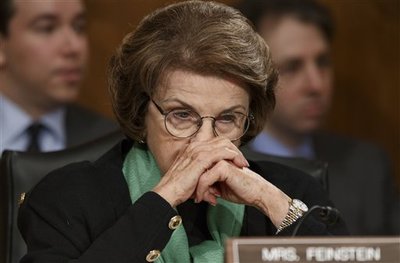
dianne feinstein senate intelligence committee unquintessential leadershipDianne Feinstein, who is the chairman of the United States Senate Intelligence Committee, spearheaded this report and pushed for its public release, despite concerns that its contents could result in terrorist activity against United States’ interests abroad and at home.

The fear of what could happen when it became public alone, if you’re a thinking person, should tell you that everyone involved knew enough very specific details about what the CIA was doing in its detention and interrogation program.

And yet there are three main threads of denial: complete ignorance, complete acceptance, and complete immorality. Each of these is a product of unquintessential leadership.

The report suggests that the United States Senate Intelligence Committee had no idea about the specific detention and interrogation methods the CIA employed after the 9/11/01 attacks. Feinstein herself in her statement releasing the report suggests that she and the Committee were shocked by what they found and had the Committee known exactly what the CIA was doing, they would have never authorized it. 

If you believe that, I’ve got beach front property in Omaha, Nebraska I’d like to sell to you.

This is an example of the absolute ignorance response of unquintessential leadership.

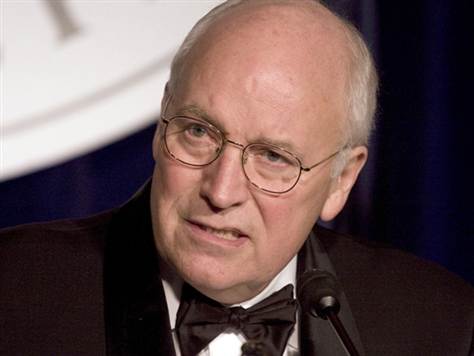
Former Vice-President Dick CheneyOn the other side of the equation – the complete acceptance response of unquintessential leadership – is former Vice-President Dick Cheney. Calling the report, which he admittedly hadn’t read in full, “a piece of crap,” Vice-President Cheney fully supported everything the CIA did as being the right thing to do.

Watching his response, I was struck as I am every time I see Vice-President Cheney with the sense that he didn’t believe it was as bad as it should have been and, had he been unfettered and unchallenged, he would have pulled out all the stops and let the CIA do anything and everything the human mind could conjure up to constitute torturing another human being.

This, too, is unquintessential leadership. On steroids.

Former CIA Director Michael HaydenThe third response – complete immorality – is, at least for me, unfathomable unquintessential leadership. When I first heard Former CIA Director Michael Hayden say, “I was in government for ten years after 9/11, and let me tell ya, a phrase I never heard from anybody in any position of authority: ‘Whatever you guys do about this terrorism threat, please, please don’t overreact.’ Never heard it,…,” I was dumbfounded.

This means Hayden knew that what the CIA was doing with regard to detentions and interrogations was overreacting, and, yet, on his watch as head of the agency, he sanctioned and authorized it anyway.

The lack of any moral values and objections in this point of view and way of being is also unquintessential leadership.

These are just a few examples from the big picture of this story. There are many more.

As quintessential leaders, we should always be analyzing stories like this and asking ourselves whether quintessential leadership or unquintessential leadership is involved. We should know which is which and why it is one or the other. That line is drawn, not in sand, but in concrete.

More importantly, we should be carefully and exhaustively studying our own leadership through the lenses of these stories to see if there are any reflections of areas in our lives in which we are being unquintessential leaders.

We may be very surprised at what we find if we’re willing to do the work and be brutally honest with ourselves about ourselves, but without this continual work, we cannot change what is unquintessential to what is quintessential.

How are we doing?


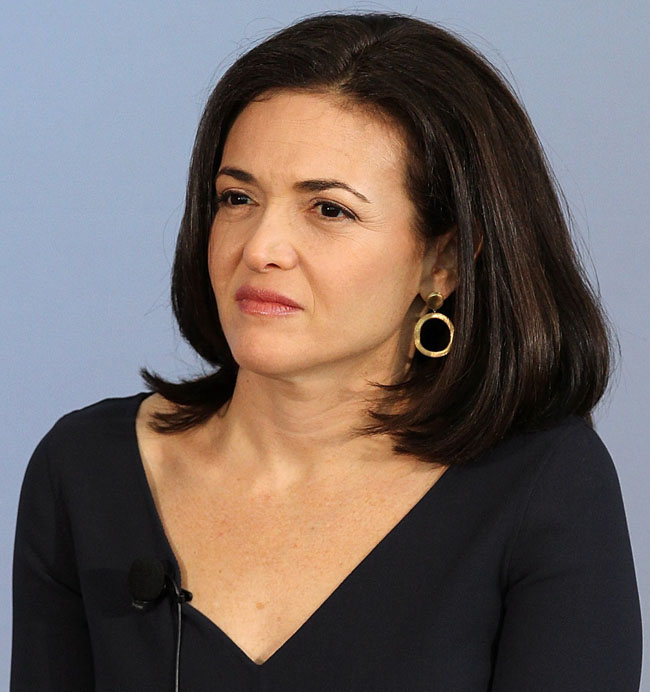
Sheryl Sandberg bossy equals unquintessential leadership “I want every little girl who’s told she’s bossy to be told instead that she has leadership skills.” – Sheryl Sandberg

Sheryl Sandberg is quite disappointing, not just as a role model for women, but also as a role model for leaders, because this quote illustrates – as does her 2013 book, Lean In – that she doesn’t really know a whole lot about what leadership really entails and that she isn’t a quintessential leader.

Sandberg is an example of someone who’s in a leadership position – she’s the Chief Operating Officer at Facebook – who isn’t a leader. In fact, she’s an example of an unquintessential leader.

Why?

This quote encapsulates Sandberg’s philosophy and lifeview. And her philosopy and lifeview are dead wrong.

But I also realize, that from time to time, we all need a refresher on and a reminder of the basics, especially as our society blurs more lines between “this” and “that” and as our language morphs into opposites suddenly equaling each other.

This is a responsibility that I, as a striving quintessential leader, have to my teams. And that includes each of you.

So let’s examine why bossiness and leadership are not the same thing and why they are, in fact, completes opposites of each other. 

While the list of differences between what bossiness and leadership are is lengthy, I’ve chosen to highlight a few of the more important differences between the two.

One important difference between bossiness and leadership is that bossiness seeks to control, while leadership seeks to guide.bossy attributes unquintessential leadershipThe trait of of bossiness is always about control – and the bossy person getting their way at all costs. This is a byproduct of narcissism, of pride, of insecurity, of fear, and of internal inadequacy.

This is also a black-and-white view of outcomes: if I don’t get my way, I lose (control and everything else) and if I do get my way, I win (control and everything else). In fact, there are no processes with bossiness, just outcomes. Everything in life is a tick in the W or L column, and ticks in the L column are unacceptable.

Leadership, on the other hand, is about guidance. It creates frameworks and teams. It recognizes that there are multiple ways to achieve the same goal and it clearly delineates guidelines (ethical, moral, functional, etc.) within which the teams are free to navigate, making the best use of their talents, their abilities, their education, and their experience.

Leadership is the glue that ensures that the dots get connected, but it doesn’t legislate every step the teams take to connect those dots.

There are failures, but not losses. There are mistakes, but not catastrophes (the guidance of leadership sees catastrophes in the making and stops them before they become catastrophes). There are successes, but not wins. Inherent in the processes of each of these areas, however, are the more important things in terms of leadership: the lessons of experience and the education of future leaders.

A second important difference between bossiness and leadership is that bossiness forces, while leadership persuades.

A bossy person has a “my way or the highway” attitude. Bossy people, who never see a reason to explain their edicts and view people who have questions about their edicts as mortal enemies, always threaten dire consequences to force people to do things their way.

This can come in the form of threats (“if you don’t do it my way, you’ll be fired/shunned/excluded/removed”), intimidation (“you won’t get that promotion/grade/position if you don’t do it my way”), and bullying (“I can make every waking moment of your life hell for you if you don’t do it my way”).

As I’ve said before, forcing people to do something may seem to work in the short-term, but it is not leadership nor is it an effective strategy for the long-term.

Leaders, on the hand, motivate their teams by persuasion. Leaders explain everything they are able to explain. They also invite input from their teams on how to address and tackle problems, issues, projects, and goals. Leaders are there to keep the big picture on track, but they are not there to force a single solitary way to meet challenges.

There is generally a best path to success, and leaders persuade their teams to adhere to that path – this is where coaching comes in – while the team works together to build the steps on that path. It’s a very interactive process where everybody on the team is invited, everybody on the team is included, and everybody on the team is expected to make a contribution.

And questions are encouraged. Every time someone starts to ask me a question with some variation of “This may be a dumb/stupid question, but…?,” I always answer first with “The only dumb/stupid question is the one you don’t ask.” I believe that and I practice that. If you don’t know the answer to something, it’s not very smart not to try to get the answer.

quintessential leadership is not bossyA final critical difference between bossiness and leadership is how things are managed. Bossy people micromanage everything and everybody, while leaders macromanage the big things and coach and help their teams as the need arises.

Bossy people literally look over everyone’s shoulders all the time. This is because when you have to force people to do things in a rigid, inflexible way, because people are individual and unique, you can’t trust everybody to adhere perfectly to that rigid inflexibility.

Most of this is a result of the “square peg in a round hole” principle: some people just don’t have the skills or abilities to follow a rigid and inflexible pattern that is diametrically opposite to how they think and work. It’s not that those people aren’t fully capable of doing the task or job right and well, but instead because they would accomplish it a different way that uses their gifts and strengths.

Leaders, on the other hand, build diverse teams that purposefully include people with unique talents and abilities so that when the teams work as units all the bases are covered. In other words, there are no gaps in knowledge, experience, and skills. Leaders trust their teams.

Leaders and their teams work together to plan and execute at the macro level. Each team member is given autonomy and authority over his or her part of the project or goal (again, within the big-picture framework in terms of scope and function and in terms of what’s ethical and what’s moral) with the understanding of how his or her part fits in with the other parts.

Leaders take care of the macro things like budgets, resources, time, as well as ensuring that things – and people – not only move forward, but move forward to successful completion. Again, it’s an interactive, but not intrusive process.

So the question I leave you with today, my fellow quintessential leaders, is are you bossy or are you a leader? 


Dan Rockwell summarizes and I expound and our leadership blogs often complement each other very well.

So, while Dan Rockwell’s post doesn’t explore the depths of the differences between unquintessential leaders and quintessential leaders, this list is a very good overview.