Posts Tagged ‘team building’

Unquintessential leadership is everywhere. Very few people in leadership positions even know, much less understand what quintessential leadership is. 

When we trace back and see how and when these unquintessential leaders were placed in leadership positions, we often find that the people who selected them were also unquintessential leaders and taught and mirrored the unquintessential leadership traits these people now exhibit. We also find that in most cases politics, personality, and a very limited criteria for selection – often superficial or technical – was applied.

The results of unquintessential leadership are reflected in the teams they are supposed to be leading. These results are devastating: to the teams and to the organizations these teams exist in. And yet the unquintessential leaders are oblivious to their responsibility for the carnage they – to a person, among unquintessential leaders, if there is a problem, it’s always the fault of others (“they turned on me,” “they were unmanageable,” “they were not team players,” etc.) leave in their wakes.

Unquintessential leadership, like quintessential leadership, has cause-and-effect results.

exaggerated sense of self-importance narcissism leadershipOne thing that is common and an overarching characteristic of unquintessential leaders is their own exaggerated sense of self-importance. This manifests itself in both subtle ways and obvious ways, but it’s always at the core of what unquintessential leaders do. Or don’t do.

An exaggerated sense of one’s own important is one of the most dangerous character traits a human being can have. It produces pride, arrogance, disdain, control, and the denigration of everyone and everything around it. It produces disaster and is one of the biggest enemies to what successful team-building looks like (cohesion, productivity, satisfaction, progress, growth, and profitability).

Let’s look at some of the specific characteristics that unquintessential leaders exhibit because of their exaggerated senses of their own importance and what the effects of those are, not only on their teams, but on their organizations – and beyond (if an organization is malfunctioning from within, then it is completely impotent and ineffective outside itself).

Unquintessential leaders are micromanagers. Not even the smallest detail can be attended to or decision can be made without their approval. The irony is that unquintessential leaders excel at minutiae, but they are either incapable or unwilling – or both – of handling the big picture and making big and/or tough decisions.

The effect on their teams is that their teams disengage completely and quit, either symbolically or literally. Oh the people may show up, but they are not there. Why bother? Human beings were given reason, creativity, initiative, and a need to produce, to grow, to reach their greatest potentials. When all of that is stifled or eradicated by micromanagement – which is really a lack of trust – a shell exists, but everything else dies. 

Team members who don’t yet have other options to go to will stay, but they are not there. Team members who have other options leave as soon as they’re able to pursue the new options.

Organizations with high attrition rates always have serious micromanagement problems, which, in turn, means they have a lot of unquintessential leaders in place.

quintessential leaders have a compassUnquintessential leaders try to control, through intimidation, threats, manipulation, coercion, and, sometimes, brute force, their teams. They insert themselves into every aspect of their team members’ lives, both inside and outside the organizational context, and try to wield power over each and every outcome.

The primary effect of this on their teams is resistance. No human being has absolute control over another human being. When this kind of control is exerted among human beings, resistance is the natural result. Interestingly, the net effect of this is the same as that of micromanagement: the team quits, internally and/or externally.

What defies logic for me is that often unquintessential leaders recognize that their teams have quit. When they do, unquintessential leaders then micromanage and try to control even more. It’s absolutely absurd. But I’ve seen it happen over and over.

Unquintessential leaders are inconsistent and unreliable. There is absolutely nothing about them that their teams can count on except that they will be inconsistent and unreliable.

The next effect of this is that their teams have no trust in the unquintessential leaders and the unquintessential leaders have proven themselves untrustworthy.

What eventually happens is that their teams end up bypassing them completely and going to others outside the team construct who’ve proven themselves to be quintessential leaders. Unquintessential leaders get angry about this, but their exaggerated senses of self-importance blind them to the fact that their actions have necessitated that their teams go elsewhere for what they need and require.

Unquintessential leaders are never available for their teams when they need them. They’re either too busy, physically absent, or simply unwilling to put the needs of their teams above their own needs and desires. You can never find them when you really need them.

The effect on their teams is disillusionment, anger, and resentment. The disillusionment, anger, and resentment starts building underneath the surface of their teams, but as this particular characteristic is repeated, that anger and resentment is palpable and evident throughout the team. It becomes something you can discern on a very tangible level in words, in body language, in attitudes. It’s an incredibly destructive force.

These are some of the more obvious results of unquintessential leadership (Qualities of Quintessential Leaders offers a stark and refreshing contrast of some of the results of quintessential leadership).

quintessential leaders changeToday’s question for you and me is simple. Am I an unquintessential leader or am I a quintessential leader?

As always, this is a look-in-the-mirror question for you and for me that requires close examination, brutal honesty, and if you and I are not quintessential leaders, immediate steps to change.

I am brave enough to look in that mirror and do the work of looking and changing. Will you join me?


All quintessential leaders need a strong inner circle that they choose, because as Rockwell points out failure in leadership occurs in both isolation and control. The right inner circle – and this only comes through time, experience, interaction, and observation – enhances us as quintessential leaders and as people.

Quintessential leaders understand that they have areas of weakness, gaps in knowledge, and lack certain skills. Their inner circles will supplement and fill the voids.

Everyone we include in our inner circles should bring a lot to the table. This generally includes strong personalities and opinions (there is a HUGE difference between strong and argumentative – quintessential leaders will not add those who debate or argue for the sake of debating or arguing to their inner circles because this is a recipe for disaster and destruction). People with strong personalities and opinions will be successful when their focus is on goals, not themselves, and not winning at all costs.

Too many organizations mistake strong personalities and opinions that are self-centered, as well as isolation (I’m the “one and only”) and control (“my way or the highway”) as leadership. In reality this is the antithesis of leadership. It’s just self-absorption, self-aggrandizement, and self-centeredness.

Our inner circles should have passion, but they should be able to back that passion up with substance: truth, facts, logic, and focus. Passion for the sake of passion is never enough.

Rockwell lists three types of people who should be in our quintessential leadership circles. “You need a:

Visionary who is never satisfied.
Tender-heart who nurtures people.
Doer who is fanatical about execution.

Note: Include at least one old (visionary or nurturer) and one young (doer).”

Think today about the three people who fill these roles in your inner circles. If you don’t have all three, then think about who you would choose to fill these roles.

Dan Rockwell's avatarLeadership Freak

The enemy of success is isolation. The higher you go the easier isolation becomes, but, it’s a devastating problem at all levels of leadership.

isolation

Isolated leaders fear conspiracies and feel misunderstood. Worse yet, ivory-tower leaders resort to control through authority.

Us/them thinking destroys influence.

Defeat isolation and enhance success by developing a high-power inner circle.

Choose:

Don’t take volunteers. Choose your inner circle.

Three people are enough. Six is too many and two is too few. You need a:

  1. Visionary who is never satisfied.
  2. Tender-heart who nurtures people.
  3. Doer who is fanatical about execution.

Note: Include at least one old and one young.

Strengths:

  1. Hard working. Doers trump thinkers.
  2. Strong opinions and emotions. Lapdogs feel good but won’t take you far.
  3. Unflinching alignment with organizational values.
  4. Comfort saying no. Good manners are nice but not essential.
  5. Dedication to serve the organization before serving themselves.
  6. Strength to confront brutal facts.

View original post 139 more words

mark-zuckerberg-facebookOverwhelmingly today, in most organizations, all the focus, all the recognition, all the accolades go to one person or a few people within the organizations who have become the face or faces of the organization. This superstar limelight is generated internally and promoted externally, but it is a troubling sign of unquintessential leadership.

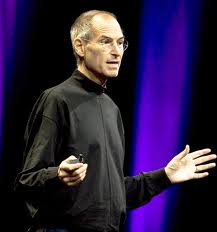
steve-jobs-appleA few examples are names that we probably know better than the names of some of our neighbors, some of our colleagues, and some of our more distant relatives: Steve Jobs, Bill Gates, Jeff Bezos, and Mark Zuckerberg

Let me ask you a question. Have you ever heard any of these people give credit to and recognize the teams behind their organizations’ successes? (more…)

If you’re unhappily employed, underemployed, or unemployed, this post is for you. No, it won’t lead to real change unless the people listed in the next paragraph read it, understand it, and choose to become quintessential leaders in this area (my hope), but it will explain what’s happening now and hopefully it will spur you to think creatively about how to present yourself to organizations as a prospective team member.

Likewise, if you’re in talent acquisition in a human resources department or you’re in a leadership position with decision-making responsibility for building a team or teams, this post is also for you. My hope is that you take it to heart and make the changes necessary to build new teams and add to existing teams.

As I’ve said often, quintessential leaders think outside of the box in every area of life. In addition, they are big-picture thinkers. Because of that, they approach building their teams from a completely different perspective than unquintessential leaders. 

Here is how they (and, we, who are quintessential leaders) do it. (more…)

This is an excellent quintessential leadership post by Dan Rockwell. Alarmists tell everybody all the time all the things that could, that might, that possibly go wrong and they expect everybody, including those of us in leadership positions, to address and focus on these potential problems (which, by the way, seldom materialize at all, or in the rare cases, they do, not at all the way the alarmists envisioned them) instead of the real problems, issues, and projects at hand.

My way of addressing this alarmist syndrome on my teams is to tell them at the outset not to bring a problem – real or potential – to me without bringing me a solution as well. And “Do you have a solution?” was always the question I asked as soon as I heard either “We have a problem…” or “We might have a problem…” If the answer I got was “No,” then I reminded the person that they had a part in the process of solving real or potential problems and they hadn’t done their part, so we wouldn’t discuss until they had.

Potential problems, interestingly, almost never came back to me. Real problems did, but so did some really innovative solutions, which was win-win for everyone.

Dan Rockwell's avatarLeadership Freak

Warning switch

Alarmists are irritating. They push the panic button at the first hint of smoke. They see what might go wrong and yell fire. While you’re dealing with “real” issues, they’re dealing with things that might happen.

Reject the temptation to ignore “alarmists.” All problems were potential once. The land of leadership is the land of not yet and could be. That includes potential problems. Leaders consumed with current issues aren’t leading.

Four inadequate responses to “alarmists:”

  1. Agree. Issues are often over or misstated.
  2. Answer. Don’t give answers. Your answer suggests more potential problems to an alarmist.
  3. Minimize. Alarmists become more alarmed if you don’t make them feel heard.
  4. Ignore. Bury your head in the sand and you’ll get kicked in the butt.

One crucial concern:

Consider the source. Don’t waste your time with disengaged spectators. Ignore them politely. The future is never built by fixing issues from complainers on the…

View original post 166 more words

As today – January 21, 2013 – marks the United States’ federal observance of Dr. Martin Luther King, Jr.’s birthday (Dr. King’s actual birth date was January 15, 1929), it is a good time to review some of the quintessential leadership traits that Dr. King possessed and that we should be looking for and developing in our own quintessential leadership journeys.

Dr. Martin Luther King, Jr.As always, having quintessential leadership traits does not make any of us perfect or without the flaws of human nature, so I urge each of us, as Dr. King undoubtedly did, to also examine ourselves to see where we are unquintessential in leadership and in life and endeavor and persevere to change or eliminate those things and traits that prevent us from being thoroughly quintessential in every aspect of who we are, what we do, how we live, and how we lead. This is our life-long quest.

One of the premier quintessential leadership traits that Dr. Martin Luther King, Jr. possessed was the ability to see the big picture – vision – and communicate that vision. To learn in-depth and to gain application insight into how Dr. King and three other leaders who shared this rare quintessential leadership trait, you can purchase Communicating Vision from The Quintessential Leader online store.

Dr. King also had the quintessential leadership traits of undeterred focus and commitment. His goal was the next substantial effort undertaken after President Abraham Lincoln’s two momentous achievements – the Emancipation Proclamation of 1863 and ensuring the passage of the 13th Amendment to the U.S. Constitution in 1865 – toward making the phrase “all men are created equal,” as declared by Thomas Jefferson in the U.S. Declaration of Independence in 1776 true, not just in words, but in fact.

No matter what Dr. King had to endure personally, including prison, overt hatred, ominous threats, and ultimately, untimely death by assassination on April 4, 1968 at the hands of James Earl Ray at the Lorraine Motel in Memphis, Tennessee, or what he and the civil rights movement collectively endured, including the deadly bombing of the 16th Street Baptist Church in Birmingham, Alabama in 1963, the deadly and strong backlash of the resurgent Ku Klux Klan, and overt local and state-sanctioned law enforcement brutality, Dr. King never wavered in focus or commitment to making racial equality a reality.

He didn’t see problems, only opportunities, even in the face of daunting odds and a lot of pain and suffering for a lot of people along the way. That is a rare quintessential leader trait that we could and should all make sure is part of how we lead and who we are.

Another quintessential leadership trait that Dr. King had was part of what made him a trusted and a trustworthy leader: he set and he adhered to a higher standard for what the road to achieving racial equality would look like. Dr. King was adamant about not using violence in the cause (this was a big difference between the civil rights movement of the 1950’s and most of the 1960’s and the more radical Baby Boomer civil rights activism of the late 1960’s that took center stage in the fight for racial equality, promoting violence as the great equalizer). Dr. King knew that returning violence for the violence being perpetrated against the African-American community would only create more violence. He knew that was not the solution. 

He set the higher standard for the moving of winning hearts and mind, through eloquence, persuasion, passion, reason, and practicality. A good example of this was the very successful bus boycott in Montgomery, Alabama in 1955 to end segregation on buses that was initiated because of what had happened to Rosa Parks.

Although the white community in Montgomery largely acted shamefully and, sometimes violently, the African-American community followed the example set by Dr. King, meeting that higher standard of non-violence – even when they were the victims of violence – and their perseverance paid off.

Another quintessential leadership that that Dr. King had was the ability to admit fear and then face and overcome it. Just because we’re in leadership positions doesn’t mean that we won’t come up against things bigger than ourselves – often! – and things that can seem scary or can create anxiety. Those are all part of our normal human emotional makeup. But how we manage fear and anxiety is the difference between a quintessential leader and an unquintessential leader.

Dr. King had an interesting statement about fear and anxiety: “If you’re not anxious, then you’re not engaged.” He didn’t live or lead with overriding fears and anxiety, which unquintessential leaders do, but he recognized the relationship between being wholeheartedly invested in something and the range of emotions that can evoke.

Knowing that Dr. King was a pastor, undoubtedly he spent a lot of time in prayer asking God for the help to overcome the fears and the anxieties. King David talks with God about this very thing as well in Psalm 139:23. This is the verse that always comes to my mind and is part of my prayers to God when I am dealing with fears and anxieties.

Quintessential leaders are not ruled by their emotions and they know what resources they have available to them to help them manage and neutralize them so that they don’t cause hasty and poor decision-making.

If you find yourself as a leader being led by your emotions, then you’re not exercising this quintessential leadership trait. A good rule of thumb when you’re dealing with an emotionally-charged situation is to put a little time and distance between you and it before doing anything. The phrases “let me sleep on it” or “let me think about it” should become part of your decision-making process because that time and distance can neutralize the emotional aspect and give you clarity to make the right decisions for the right reasons.

While this is not a comprehensive discussion of all the quintessential leadership traits that Dr. King had, I would be remiss if I left out the trait of team-building from this discussion. Dr. King understood how vital building and growing teams – and individuals on those teams (look how many people from the civil rights movement went on to take leadership positions later in their lives) – was to accomplishing the goal of racial equality.

He understood that consensus across a diverse and large group of the American nation was the only way to achieve the goal. He knew it was critical to and how to motivate, engage, encourage, support, and sustain the ever-burgeoning team. Dr. King was, like President Abraham Lincoln, a very gifted team builder. As quintessential leaders, it benefits us greatly to go back and learn in detail how they did it. The eBook, Teams & Performance, available from The Quintessential Leader online store, provides an in-depth analysis and application of what quintessential team-building looks like.

Quintessential leaders are, at heart, historians, because they study the successes and failures of people in leadership positions before them, with an eye to learning to become even more quintessential leaders and removing or avoiding the mistakes of unquintessential leadership that are equally a part of our education.

Dr. Martin Luther King, Jr. is one of those leaders we should go back and spend some time with. You’ll find that, like you and like me, he made his share of mistakes, he had human flaws and weaknesses, but the thrust, intent, and purpose of his life was, as ours should be, not to be the sum of those, but to be the sum of his victories. His legacy tells us he achieved that goal. We should expect no less of ourselves.