Posts Tagged ‘honesty’

Unquintessential leaders don't acknowledge their limitations and are chameleonsIt seems to be more and more difficult – if not impossible – for people to acknowledge their limitations in any area of life. Because of the ubiquitous influence of technology – and our exploding addiction to it – society in general seems to have been lulled into the deception that everyone’s an expert, everyone knows everything, and no one has any limitations.

Quintessential leaders stand out as the increasingly rare exceptions to this general trend. We know our areas of expertise, but equally important, we know our limitations even in those areas as well as our limitations in all the other areas where we are either not experts or truly don’t have clue. 

What does not acknowledging our limitations, which is what unquintessential leaders do, look like? What causes it? And what are the results?

Do you know people who seem to be chameleons? Are you a chameleon?

Chameleons – the reptiles – are notorious for adapting to whatever environment they are in by changing their skin color to match the environment around them. This is both a protective function (you can’t be eaten if you can’t be seen) and a predatory function (if your prey can’t see you, they’ll willingly stroll casually right into being your dinner). 

In many ways, human chameleons can have the same protective and predatory functions.

Not all human chameleons are even aware that they are chameleons. In this case, the chameleon function is protective.

Protective chameleonThe way it looks in humans as protective function is that they change completely to fit in whatever group they are in at a given time. They literally look like several different people in one body.

Perhaps these chameleons are unaware of the striking contradictions this presents in the big picture of their lives. Perhaps it doesn’t matter because the reward they receive is what matters most.

These protective chameleons are insecure with themselves and with their abilities. They are people-pleasers and they want everybody to like them and to accept them. They are consummate “yes” people to everybody. They’re always the first to agree, the first to raise their hands, and the first to say they’re on board with anything in any group they are in.

The results of being a protective chameleon bring about the exact opposite of what protective chameleons are trying to achieve.

Because they can’t possibly do everything they agree to do, they either just simply don’t do most of what they say they will do or they take so long to do it that someone else ends up having to get it done.

This often looks like procrastination, but in reality it’s the result of needing to be liked and accepted to such a great extent that protective chameleons overpromise and overcommit, knowing they can’t do – and perhaps not even intending to do – what they’ve promised and committed to do. 

Therefore, protective chameleons are undependable. They appear to be wishy-washy. And they destroy trust.

Predatory chameleonPredatory chameleons are consciously duplicitous and deceitful. They knowingly pretend to be an integral part of whatever group of people they are with. These people are often charming and engaging, and they will encourage full disclosure with assurances of confidentiality in each group they’re with.

Predatory chameleons are information brokers. Their sole intent is to get information and use that information for their own gain (money or power or both).

Predatory chameleons have played the game a long, long time and they know exactly what they are doing and they know the rewards it will bring them. In other words, they don’t care as long as they get what they want.

Like protective chameleons, predatory chameleons also destroy destroy trust. Unlike most protective chameleons, predatory chameleons also intentionally destroy lives. That is actually part of the reward for them.

No matter which type of chameleon these people are, one of the common characteristics they share is the inability and the unwillingness to ever acknowledge their limitations. In other words, they are fundamentally, whether its conscious or not, dishonest.

Quintessential leaders, on the other hand, value honesty and integrity as essential parts of their character.

Quintessential leaders are not going to pretend to be somebody they are not or to know something they don’t or to do something they either can’t do or don’t want to do.

Saying “no” is not taboo. In fact, it’s often the right thing to do. It is often the smart thing to do. It is often the sane thing to do. 

But we live in a society where saying “yes,” even if it’s a lie, to everything is not only accepted, but expected.

That’s a significant integrity problem that the entire human race is saddled with now. And, sadly, few people recognize it and even fewer people struggle against it to do the right thing.

Shame on us.

There is also a lot of integrity in saying “I don’t know,” which is what quintessential leaders do when they really don’t know something.

Of course, they always offer to find out if that “I don’t know” is just something they are unfamiliar with, but would be able to do with the right resources or if that “I don’t know” means they really aren’t able to do something.

So, quintessential leaders not only recognize their limitations, but they also acknowledge them. They believe in and practice full disclosure of what they are able do and what they aren’t able to do at all times.

It might cost them financially because they lose potential business and income to someone else who can do what they can’t.

It might cost them socially because they won’t conform to norms that violate their principles and beliefs.

But here is the one thing it won’t cost them: trust. Even if quintessential leaders lose potential customers (and income) or they lose social relationships because they acknowledge their limitations, they will have built trust.

The social relationships generally don’t come back and that, in the end, is just as well. But even those people will remember the quintessential leader as someone who had integrity and courage even if they vehemently disagree with them.

Potential customers, on the other hand, even though they may have chosen a different route, will remember the trustworthiness of quintessential leaders and they will come back in the future. That’s a guarantee.

Especially in a world where honesty and trust is in short supply and each passing day reveals more broken trust and dishonesty everywhere we look.

Once trust is broken, it is, seldom, if ever, possible to regain it and/or repair it. It is one of the most valuable things that each us has and it is heartbreaking to see how lightly and casually we treat it. 

So now is the time for you and me who are striving to become quintessential leaders to look into our own lives and see where we stand in the area of acknowledging our own limitations.

chameleon-unquintessential-leaderAre we chameleons? 

If we are chameleons, are we protective chameleons or are we predatory chameleons?

If we are chameleons, are we okay with being chameleons, no matter which type we are?

Are we consistently striving to be quintessential leaders in this area of our lives?

No matter what you and I answer to these questions, if we aren’t happy with the answer, there is a remedy.

The remedy is change. Change requires us to be rigorously honest with ourselves. Change requires us to be conscious of the things that we are doing and why. Change requires us to consciously replace the behavior we don’t want with the behavior we do want.

As always, change is a process and none of us change easily or perfectly or overnight. But we can’t change if we don’t commit to it and don’t take that first step and follow it up with every other step toward the right direction.

How are we doing?

 

Coach Dean Smith UNC quintessential leaderCoach Dean Smith, who led the University of North Carolina basketball program for 36 years, died on February 7, 2015 after a long battle with dementia. Throughout his coaching career and his life after coaching, Coach Smith embodied many of the characteristics of quintessential leadership.

He was not a perfect man, but none of us can claim perfection either. There were times when he wasn’t a quintessential leader, just as there are times we are not quintessential leaders.

But when Coach Smith’s life as a whole, both on the basketball court and off, is considered (and that’s the only way to consider anyone’s life, including our own, because no one – including each of us – gets it right every single time), it’s clear that his goal was to be a quintessential leader. And the results of his commitment to that goal are evident to this day.

I grew up in North Carolina. But me being an UNC basketball fan was not a given. My dad got his undergraduate degree from Wake Forest and he taught physical therapy at Duke University and did a year of pre-veterinary schools studies at North Carolina State University. My mom studied medical technology at Duke University, which is where she and my dad met and made their lifelong commitment to each other. (more…)

the quintessential leader building trust and being trust worthy book

In the first post of this series, the excerpt from chapter 1 included a list of all the components we must develop and have to build trust and be trustworthy.

The second post in this series, which included an excerpt from chapter 2 of Building Trust and Being Trustworthy, looked at the component of honesty in building trust and being trustworthy.

This post will include an excerpt from chapter 3 of Building Trust and Being Trustworthy

Another component of building trust and being trustworthy that we must have is integrity.

Most people don’t realize that integrity and honesty are two distinct but complementary components of building trust and being trustworthy. This chapter defines and shows what integrity does and doesn’t look like.

Building trust and being trustworthy is an integrated trait of quintessential leaders.

It is also an integrated trait that all of us – because each and every one of us leads at least one team, small or large, of people in our lives – need to develop and have as part of the core of who we are and what we are. In essence, this trait is at the center of exemplary character and conduct, and none of us should settle for anything less than this in ourselves and others.

Unfortunately, most of us settle for less. A lot less. In ourselves. In others. 

The majority of people in leadership positions today are not trust builders and they are not trustworthy. Many of us, frankly, are also not trust builders and trustworthy.

We live in a world that with no moral code as its foundation that expects trust to be non-existent or broken. Look around. It’s everywhere, including, in many cases, very close to you.

And society has become so accustomed to this that it glorifies it instead of condemning it.

Politicians who lie routinely, who line their pockets with money and perks while making decisions that hurt and destroy the people they are supposed to represent, who cheat on their wives because they can.

Arts and sports celebrities who have no regard for faithfulness to their spouses, who live hedonistic lifestyles that destroy their families, the people around them, and, eventually their lives.

Religious leaders who cheat on their wives, who cheat on their taxes, and who scam their congregations both in how they deceitfully handle the word of God and in coercive and corrupt financial matters, acquiring wealth and power in the process.

Business leaders who destroy millions of lives by deceit, fraud, and illegal actions that result in their employees and customers losing everything while they escape any kind of punitive action and instead reap obscene profits and end their tenures – only to go to another financially lucrative position – with golden parachutes that are equally obscene.

And we, as individual leaders for our teams, who cheat on our taxes, who are routinely dishonest with the children (our own and others) and other people entrusted to us, who routinely steal things from our workplaces (you most likely didn’t pay for that pen you’re using at work, so it doesn’t belong to you), who routinely break traffic laws, who will walk out of stores with something we were not charged for and never think twice about it, who will take extra money that we’re not owed in financial transactions without blinking an eye, who cheat on our spouses, who marry until “divorce do us part,” and who, as a course of habit, break confidences of family and friends, gossip about family and friends behind their backs, and destroy reputations in the process.

Maybe we haven’t thought about building trust and being trustworthy at this kind of nitty gritty level.

But until we do – and we develop and have this trait as the core of who and what we are – we will not build trust and we will not be trustworthy. And we will not be quintessential leaders.

Trust and trustworthiness is probably the single most important trait we can possess. And it is also the most fragile.

It can take a long time to build and be, but it can be broken irreparably in a single second.

Therefore, this is a lifetime work on and in ourselves that we must commit to making an integral part of our character by continually developing it, maintaining it, and growing it. 

This goal should be our goal.

But it requires courage. It requires diligence. It requires vigilance. It requires continual self-examination. It requires continual change. It requires the ability to, much of the time, stand alone to maintain.

It is not for the faint-hearted. It is not for the vacillators. It is not for the crowd-pleasers. It is not for the pretenders. It is not for the wannabes. It is not for the weak.

But if you’re reading this, I know that you’re not any of those kinds of people. Those kinds of people won’t even read this because it requires time, effort, change, and commitment, and too many of us are, sadly, either just too lazy or we just don’t care. 

Building Trust and Being Trustworthy takes an in-depth look at the “this is what it looks like in practice” aspect of each of the components we need to develop and have to build trust and be trustworthy. The second chapter discusses the component of honesty in building trust and being trustworthy.

olive-horizontal-line

Excerpt from”Chapter 3: The Integrity Component of Trust and Trustworthiness”

We have already looked in-depth at the honesty component of trust and trustworthiness, and now we will look a corresponding and complementary component: integrity. They are not the same, although both must be present in quintessential leaders. To separate them more logically in thinking, honesty is how a person is (conduct), while integrity is who and what a person is (values and standards).

Generally, one doesn’t exist without the other because they depend on each other. If you observe someone who’s habitually dishonest with him or herself and others in any and/or every part of his or her life, you will find upon further observation, that person also lacks integrity. On the other hand, if you see someone who’s habitually honest with him or herself in any and/or every part of his or her life, upon further observation of that person, you will learn that he or she possesses integrity.

The word integrity comes from the root word integral, which means, among other things, entirecomplete, or whole. And that is a strong part of what integrity actually is. It is undivided and unwavering with regard to moral principles, to right and wrong, to right values and standards.

There  is no deviation, regardless of circumstances or costs. It is a systemic quality that affects everything in life. If it’s not a part of a person, life is perpetually chaotic, a free-for-all, and completely unpredictable in terms of directions and outcomes. If it is part of a person, there’s an unchangeable and dependable framework that can be trusted and counted on no matter what’s going on inside the frame.

So, what does integrity look like in action? It first has an intrinsic set of immutable values and standards and adheres to those values and standards, no matter what. Second, it is a conscious and deliberate choice of service – selflessness – over self-interest.

Integrity, by default, is encapsulated by Spock’s famous statement before sacrificing his life to save the rest of the Enterprise crew in The Wrath of Khan: “The needs of the many outweigh the needs of the one.” A quintessential leader will have the integrity to do what’s best for everyone, not just what’s best for him or herself. There is never a component of self-interest as a guiding principle in decision-making.

Integrity is also demonstrated by good stewardship. A quintessential leader will use resources correctly and judiciously and will acquire and allocate them fairly and skillfully, maximizing the benefit to all, based on needs, not wants.

Additionally, a quintessential leader will guard and protect those resources, ensuring that they are not diluted or wasted (this includes people – a good team can be undone by just one person that is not contributing or is actively creating divisions and disruptions).”

the quintessential leader building trust and being trust worthy book

In the first post of this series, the excerpt from chapter 1 included a list of all the components we must develop and have to build trust and be trustworthy.

This post, which includes an excerpt from the second chapter of Building Trust and Being Trustworthy, begins to look at each of those components extensively in terms of what they are and aren’t and what they look like and don’t look like in practice. 

The first component of building trust and being trustworthy that we must have is honesty.

Building trust and being trustworthy is an integrated trait of quintessential leaders.

It is also an integrated trait that all of us – because each and every one of us leads at least one team, small or large, of people in our lives – need to develop and have as part of the core of who we are and what we are. In essence, this trait is at the center of exemplary character and conduct, and none of us should settle for anything less than this in ourselves and others.

Unfortunately, most of us settle for less. A lot less. In ourselves. In others. 

The majority of people in leadership positions today are not trust builders and they are not trustworthy. Many of us, frankly, are also not trust builders and trustworthy.

We live in a world that with no moral code as its foundation that expects trust to be non-existent or broken. Look around. It’s everywhere, including, in many cases, very close to you.

And society has become so accustomed to this that it glorifies it instead of condemning it.

Politicians who lie routinely, who line their pockets with money and perks while making decisions that hurt and destroy the people they are supposed to represent, who cheat on their wives because they can.

Arts and sports celebrities who have no regard for faithfulness to their spouses, who live hedonistic lifestyles that destroy their families, the people around them, and, eventually their lives.

Religious leaders who cheat on their wives, who cheat on their taxes, and who scam their congregations both in how they deceitfully handle the word of God and in coercive and corrupt financial matters, acquiring wealth and power in the process.

Business leaders who destroy millions of lives by deceit, fraud, and illegal actions that result in their employees and customers losing everything while they escape any kind of punitive action and instead reap obscene profits and end their tenures – only to go to another financially lucrative position – with golden parachutes that are equally obscene.

And we, as individual leaders for our teams, who cheat on our taxes, who are routinely dishonest with the children (our own and others) and other people entrusted to us, who routinely steal things from our workplaces (you most likely didn’t pay for that pen you’re using at work, so it doesn’t belong to you), who routinely break traffic laws, who will walk out of stores with something we were not charged for and never think twice about it, who will take extra money that we’re not owed in financial transactions without blinking an eye, who cheat on our spouses, who marry until “divorce do us part,” and who, as a course of habit, break confidences of family and friends, gossip about family and friends behind their backs, and destroy reputations in the process.

Maybe we haven’t thought about building trust and being trustworthy at this kind of nitty gritty level.

But until we do – and we develop and have this trait as the core of who and what we are – we will not build trust and we will not be trustworthy. And we will not be quintessential leaders.

Trust and trustworthiness is probably the single most important trait we can possess. And it is also the most fragile.

It can take a long time to build and be, but it can be broken irreparably in a single second.

Therefore, this is a lifetime work on and in ourselves that we must commit to making an integral part of our character by continually developing it, maintaining it, and growing it. 

This goal should be our goal.

But it requires courage. It requires diligence. It requires vigilance. It requires continual self-examination. It requires continual change. It requires the ability to, much of the time, stand alone to maintain.

It is not for the faint-hearted. It is not for the vacillators. It is not for the crowd-pleasers. It is not for the pretenders. It is not for the wannabes. It is not for the weak.

But if you’re reading this, I know that you’re not any of those kinds of people. Those kinds of people won’t even read this because it requires time, effort, change, and commitment, and too many of us are, sadly, either just too lazy or we just don’t care. 

Building Trust and Being Trustworthy takes an in-depth look at the “this is what it looks like in practice” aspect of each of the components we need to develop and have to build trust and be trustworthy. The second chapter discusses the component of honesty in building trust and being trustworthy.

olive-horizontal-line

Excerpt from”Chapter 2: The Honesty Component of Trust and Trustworthiness”

Let’s look at some specific examples of what the quintessential leader trait of honesty looks – and doesn’t look – like. Maybe a leader is honest with his team not hiding any truth from them. But what if his or her team routinely sees the leader exhibit dishonest behavior outside the confines of the team?

Is the leader honest with his or her superiors, or does the leader routinely fudge, obfuscate, tell “little white lies” (there is no such thing: a lie is a lie is a lie) to them about things? This routinely occurs in most organizations. Sometimes it done under the guise of protecting the team and sometimes it’s done out of habit. Either way, it’s dishonest.

Is the leader honest with his or her peers or is he or she known to exaggerate or embellish on a regular basis? This is ego-driven dishonesty and comes from a spirit of competition and one-upmanship. This is definitely not a quintessential leader we’re talking about, but it reflects a lot of the people we see in leadership positions in organizations.

Does the leader respect company property and use it honestly? For example, if the leader has a company credit card does he or she use it strictly for company/business-related expenses or does the leader do things like put personal expenditures on it from time to time or use it to take everyone out for a night on the town during a business trip? Is their computer, phone, car – and anything else the company might provide – used solely for business or are they routinely employed for the leader’s personal use? If company property is used for anything other than directly-related-to-business purposes and things, then those uses are an example of dishonesty.

And here’s the net effect of these areas of dishonesty. Even if a leader is honest with his or her team, because he or she is dishonest in every other part of his or her life, the team can’t trust him or her. The team will question even the things that are true and will never trust the leader. The evidence is too compelling that, in the balance of things, he or she is untrustworthy.”

yoda star wars leadershipUnless you’re God, Jesus Christ, or a fictional character (whose record, unlike the first two, is not perfect) in a Star Wars movie, the answer is “no.”

If you answered anything but “no,” then this post is for you.

Even if you answered “no,” this post is for you.

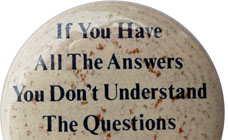
Because just saying “no” without understanding why doesn’t make you any more knowledgeable, any wiser, or any more of a quintessential leader than anyone who answered “yes” or “maybe.”

To discuss this topic cogently and thoroughly, we need to first look at the big picture and understand that there are different categories of questions we’re asked. These include factual questions, informational questions, moral questions, ethical questions, and life questions.

Moral questions and ethical questions should never be, for a quintessential leader, questions that we don’t have an immediate answer for and an explanation for our answers.

Consistent, unwavering, and unimpeachable moral and ethical character is a defining trait of quintessential leaders. It is literally a part of who and what we are and it is one of the traits that makes us trustworthy.

However, there are some factual questions and informational questions that we may not know the answers to, but we know we can find the answers.

When we are asked these kinds of questions, our responses are “Let me find the answers and get back to you.” Our responsibility then is to do what we say we’re going to do promptly.

life questions quintessential leaderBut the questions that will be the ones we will not know or have all the answers for are life questions. And how and if we answer those questions accurately and compassionately will determine if we’re quintessential leaders or not.

There is a leadership myth that people who are in positions of leadership are required to have all the answers and know everything or they are not leaders.

Many people in leadership positions tend to fall into the traps of this myth. And the results are devastating because more hurt and damage is done by trying to live up to the myth than simply saying “I don’t know, but…”

Because the reality is that when it comes to life questions, none of us have or know all the answers. Ever. There are many things in life that are beyond our human understanding, knowledge, and comprehension.

To pretend that we have all the answers or to believe that we can find all the answers is, at its root, dishonest.

Sometimes it’s unintentional dishonesty. We are trying to do what we think we’re supposed to be doing – the myth. There are several ways this unintentional dishonesty happens.

One way is that we simply don’t understand the nature of the question and we believe we’re answering it when in fact we’re answering another question altogether.

Another way is that we haven’t been where the person asking the question has been or is. In other words, we haven’t experienced firsthand either exactly or to the degree of what that person has or is experiencing, so we have no frame of reference from which to answer their question. But we try to answer it anyway.

And then sometimes it’s intentional dishonesty because of pride, arrogance, and the need to maintain control. We know we don’t know, but we don’t care.

So we make things up, we lie without blinking, and we fool enough of the people enough of the time to gain a lot of people who believe us until our fantasies and our lies fall apart, as all fantasies and lies do in time, and in the wake of them is a bigger swath of destruction and damage than any hurricane, earthquake, volcanic eruption, or tsunami could even begin to touch because we’ve destroyed lives from the inside out.

Destruction and damage to stuff is difficult to deal with and, while some losses are permanent and unrecoverable, a viable measure of recovery is still possible.

no one has all the answers quintessential leaderDestruction and damage to the soul and to the psyche, on the other hand is excruciating, and often times, the possibility of any kind of meaningful recovery is slim to none.

The reality of life is that some things in life simply don’t have answers – at least that are available to us peeps on the planet.

With many life questions, it’s impossible to make a nice, neat list and say, “If you do a, b, c, this will answer x life question.” Life and the unique situations that each of us experience – which generates the questions – as we go through life are not that simple.

If any of us thinks it is, then we simply don’t get it.

So when we are trying to live up to the “leader-knows-all” myth, we not only hurt ourselves and do more damage by “answering” life questions, but we hurt and do a lot of damage to those we’re “answering.”

What, then, do quintessential leaders do? 

This came up recently in a discussion about an “answered” life question that I didn’t – and wouldn’t – ask, but that I have been and am experiencing 24/7 for a long time. And I’ll share with you what I shared in the discussion.

The “answer” was well-intentioned but it had some noticeable flaws and, in the end, was the answer to another question.

I had a physical reaction – my chest tightened up and I really had to work hard for a few minutes to get a grip and calm myself down – at the very beginning of the “answer,” because I knew it wasn’t the answer to the question.

There were disconcerting statements made that literally caused anxiety in me because I knew what was being said – and I’m not even sure the person answering the question realized they said what they said – showed a lack of knowledge, experience, and intimate understanding, even though the person answering the question is very compassionate, caring, and empathetic.

On a personal note, in some ways, at least for me, that’s much, much harder to deal with than someone you know doesn’t care.

And, yet, there would be no way to explain to this person or any other person who has not walked intimately and long-term in the shoes of this – or any other, for that matter – life question that the answers, if there are any, are not always so cut and dry, “this” or “that,” and that, in the big scheme of things, there are a lot of aspects that there are no answers for. 

But as I listened to the “answer,” it became apparent that the life question being answered was not the one that had been asked. I have done and am doing all the things contained in that answer and none of them has answered my life question (which is the same life question the person was attempting to answer).

Quintessential leaders, first and foremost, recognize their limitations. And when it comes to life questions, we are all limited. We don’t have or know all the answers to life questions and we won’t as long as we breathe for a living.

And that’s okay. It doesn’t mean we’re less of a leader. It doesn’t mean we’ve failed. It doesn’t mean that we’ve let other people down. It means that we’re human.

I was asked during the discussion how I would have answered this life question. Since it’s a predominant life question for me right now, I gave the answer I’ve come to accept, but I added what someone who hasn’t walked in the shoes of this life question isn’t really able to in a meaningful way.

My answer? “I don’t know the answer, but I’m asking the same question myself because I’m going through the same thing. I completely understand exactly what you’re asking, why you’re asking it, and what a crushing, 24/7 weight it is on your mind and your life. I can’t solve it for you. I can’t fix it for you. But I can walk, step for step, with you and beside you through it. You are not completely alone.”

My fellow quintessential leaders, “I don’t know” in the matter of life questions is the next best thing to silence if we don’t know or have the answers. It is the product of wisdom. It is also the product of humility.

An abundance of words about something we haven’t experienced firsthand, know little or nothing about in a meaningful way, or simply don’t understand is the worst thing we can do.

Life questions are tough for everyone. Except for the people being intentionally dishonest in answering them, the motivation to find answers is not malicious (in fact, it’s the opposite because we really want to help), but when the answers are hollow or wrong or to a different question altogether, we do more harm than good. 

How are we doing?


Recent scientific research has revealed that the brain has a special cell – called a “grid cell” – that functions as a global positioning system (GPS), enabling us to continually know where we are in relationship to all the routes we take while physically moving about and storing those as memories that we retrieve when we traverse a route we have already traveled before.

I am not sure I have this neurological GPS grid cell. From my earliest memories, I have been prone to getting lost, not just my first time going some place, but often every time, especially if it’s a place I travel to infrequently. My lack in this area is so pronounced that – and this is rare, but it’s happened enough to give me pause – in the dark, especially, I get turned around in my own house and walk into the wrong room. 

In addition, I’m directionally-challenged. North, south, east, and west are beyond my scope of understanding in real life (I can tell you where they are on a map). If I have to point in a direction, I usually point in the wrong direction. I have to remind myself of my elementary school science that the sun rises in the east and it sets in the west so that twice a day I know where east and west are.

This directional challenge is even worse when I get directions from someone who uses north, south, east, and west as descriptors to explain how to get from point A to point B.

You know just how directionally-challenged you are when you actually prefer a perplexing propensity (probably not unique to northeast Tennessee, but I haven’t run into as much anywhere else in the country as I have here) to use non-existent landmarks and vague measurements with no road names as driving directions that might be less likely to get you lost.

Even when the directions sound like this: “you go down there (pointing in the direction you need to go), and you go past where that big ol’ tobaccer barn useta be, and then you kinda curve around a little, and then you go to the red light, and then you go right, and it’s just a little ways after that.”

So when I bought my first GPS for the car, I was elated.

It was actually very comforting and soothing for me because I tend to panic when I get lost and the fear of the uncertainty of knowing what to do next – if I stay where I am, I’m still lost, but if I move from where I am, then I may get even more lost – has been a permanent fixture of my life since the day I got my driver’s license.

Never again would I have to worry about getting lost again while driving. Because even if I had no clue where I was and where I needed to go, it did and would get me there reliably. I could trust it to navigate me correctly, no matter what.

Quintessential leaders have a similar GPS that doesn’t come pre-programmed, doesn’t depend on satellites hovering above earth’s atmosphere, and doesn’t have to worry about outages because of sunspots or solar flares.

This GPS is developed over time, the product of having an absolute moral foundation of right and wrong, adhering consistently to that absolute moral foundation of right and wrong, and having that adherence become an integral part of who we are and what we do, no matter what.

character gps system quintessential leaderThe quintessential leader’s GPS is character.

Character tells us what our position is no matter what circumstances we find ourselves in, no matter who we’re with, no matter what other factors, familiar or unfamiliar, are involved. It ensures that we accurately and consistently navigate life, no matter where life takes us or what life throws at us.

But there’s always a caveat with global positioning systems that we as quintessential leaders need to be aware of, recognize, and resist.

The first time I turned my GPS on in my car, I was driving from my house to an interstate on a route that I could drive with my eyes closed. Almost as soon as I’d pulled out of my driveway, the GPS started telling me to go to a different road and take a different route to the interstate. I vividly remember arguing out loud – and with vigor – with the GPS.

“I’m not going that way. I always go this way. I know you think I ought to do something different, but I’m not going to. Enough already!”

The more I resisted going the way the GPS was telling me to go, the more it talked to me telling me I was not going the way it wanted me to go. And the more loudly I responded to it, trying to drown out the voice, trying to get it to be quiet, trying to convince it that I was right and it was wrong, it seemed the louder and more insistent it got.

Similarly, we have to be aware that we can do the same thing with our character GPS. It will always lead us and guide us the right way, but we have to be aware that we can chose to ignore it or override it or even turn it off. It won’t force us to do the right thing. That’s a choice we have to make. Every time.

Going or doing something the way we always have gone or done it may not be wrong. However, it may also not be the best way. What our character GPS does is make us actively stop and be consciously aware and thinking about that more carefully as that internal voice guides our attitudes, our motives, our thoughts, our words, and our actions.

How often do we argue with our character GPS? How often do we rationalize doing something different than what it is telling us to do? How often do we make excuses for not following the directions it’s giving us? How often do we completely ignore it? How often do we just turn it off?

I know we all do at times. I know because I am guilty of having done this and doing this at times. Unfortunately, it seems that is part of being human and the struggle that humans encounter continually. Sometimes we struggle well and succeed. Other times we struggle poorly and we fail.

However, as quintessential leaders, our character global positioning systems should be already very well-developed, with updates being applied as they become available, so that, even though the struggles never go away entirely, we experience them less often and when we do experience them, we succeed much more than we fail.

In conjunction with this on-going development of our character global positioning systems, we will find that we are less apt to argue with, to rationalize around, to make excuses about, to ignore, or to completely turn them off.

Instead, we listen, we pay attention and we follow the route without deviation, without detours, and without exceptions. Every time. All the time.

Developing a character GPS takes commitment. It takes time. It takes a lot of effort. It also, often, means going completely counter to prevailing systems, ideas, methods, social norms, business norms, and life norms.

It’s important to remember that just because everybody else is doing something doesn’t mean everybody else is right.

For quintessential leaders, one of the first things we discover is that, in many cases, everybody else has settled for low standards or no standards. That’s hardly something we’d consider a worthy gauge against which to measure ourselves.

Quintessential leaders must dare to be and to do not only differently than the status quo, but also to replace it with the traits that make up our character global positioning systems: honesty, integrity, consistency, fairness, setting a higher standard, righting wrongs, accountability, sincerity, and setting boundaries.

How are we doing?