 Contrary to popular opinion, vision and focus are not the same thing. They are related, but vision and focus are distinct from each other in many ways. To be a quintessential leader, we must possess both vision and focus and know when and how to execute them consistently and well.
Frankly, many people in leadership positions today do not have either vision or focus. The majority of the exceptions to this have one, but not the other. That sliver-thin few, then, that possess both vision and focus are the ones we want to focus on in this post and, as we strive to be quintessential leaders ourselves, that we want to emulate.
What is vision and what role does it play in quintessential leadership? Vision is a big-picture and well-defined view of a distinct and yet-to-be-realized goal. Our mission statements, organizationally and individually, must capture vision.
This is the first step of quintessential leadership. Vision must be clear and concrete in its expression and it must create a framework within which we operate. In other words, if anything about us – thinking, being, doing, saying – goes outside that framework, then we have lost our vision.
Vision answers essential questions in broad terms, distinguishing the uniqueness of why we and our organizations exist and what we alone bring to the table to achieve a stated objective.
(If we cannot find anything unique in our existence – and by unique, I don’t mean philosophical differences, power plays, personality differences, etc. – then we won’t have a very compelling vision.
It will be difficult, if not impossible, if our stated vision looks almost identical to all the other organizations in our field, to distinguish why we should be the organization of choice. Not only that, but where there is no unique vision and there are lots of very similar competitors, the end result is confusion and attrition. In other words, everyone in the field loses in the end.)
Vision answers these questions:
- Why do we exist?
- What are our objectives?
- What is the framework in which we will meet those objectives?
- How is our framework both unique and better able to meet those objectives?
- What does success, in terms of the objective, look like?
 One of the biggest problems I see with vision statements in general is the wrong objective. Getting money, getting more customers, doing this, doing that are all short-term objectives and they are selfish objectives, and they are the wrong objectives.
Vision’s objective is long-term and consists of not what we get, but what we give. Because reaching long-term objectives requires giving a substantial investment of ourselves and our resources to the effort to give something better than what exists now to others beyond the organizational boundaries.
In other words, vision requires a selflessness that very few people in leadership positions now have. But quintessential leaders do and you see it in everything they are, they say, and they do.

Vision is the first and necessary part of being a quintessential leader. The second and equally-important part of being a quintessential leader is focus.
Focus is keeping your eye on the goal and moving toward it without deviation. It sounds simple, but this is, in many ways, the harder part to actually accomplish.
We live in a distraction-filled world that makes getting focus, keeping focus, and maintaining focus toward long-term goals the most difficult accomplishment to actually achieve for all of us.
Much of this is because our attention spans have been shortened to almost non-existence both subtly and overtly.
The overt ways have come to our doorsteps as a result of the technological revolution.
A constant and steady stream of new and cool gadgets litter and clog up our neurological landscape and they all seek to claim our attention and our desire at the same time.
24/7 virtual connectivity through email, cell phones, and social media are all increasingly fragmenting our time and attention while demanding our continual obsequiousness.
The subtle ways our attention spans have been practically destroyed can be attributed to the media and the workplace.
 Media’s contributions have been shorter commercials with more products advertised, 24/7 multiple-channel access to talking heads, and, from digital providers, multiple-screen programming that can be simultaneously (sports channels lead in this area). With the addition of streaming services, our neurological landscapes have just become completely overcrowded and overwhelmed.
The workplace has contributed to this with its championing of multitasking – the more things you can do at one time, the more brilliant, the more talented, the more wonderful you are – and multitaskers, creating in the process, including most of the people in leadership positions, a superficial semblance of productivity that upon closer examination shows no depth, no forward progress, and no focus.
So how do quintessential leaders keep their focus when it’s clear all the odds are against them?
They never allow the vision, the mission statement, and the goal out of their sight. They, like salmon, swim upstream against the tide of distractions, exercising extreme self-discipline and extreme determination all the time to get to that goal.
Quintessential leaders are big-picture and long-term people and that’s how they live and breathe. As a result, they’re able to move right through the distractions without getting caught up in them for the most part.
Occasionally, though, even quintessential leaders will get taken in temporarily by a distraction that may seem important or significant. But the difference is that quintessential leaders recognize that it’s a distraction.
So what do quintessential leaders do? They always evaluate the distraction in terms of their vision, their mission statement and their focus. If the distraction is within that big-picture framework and needs to be addressed or resolved on the spot, quintessential leaders take care of it immediately and starting moving forward again.
Quintessential leaders, then, are never moving and doing just for the sake of moving and doing. If moving and doing does not have a purpose within the vision, the mission statement, and the goal, it’s irrelevant and eliminated.
Quintessential leaders are very proficient at this because they’ve either been doing it all their lives – some of us are naturally wired this way – or they’ve learned how to do it in the process of becoming quintessential leaders.
It’s not always easy, it’s not always fun, and it’s most definitely not always popular.
But quintessential always eventually reach their goals, in the end, no matter how long, how bumpy, how rough, how intense, and how grueling the journey between the initial vision and the completed objective is.
So let’s look at ourselves in relationship to our vision and our focus.
Unquintessential leaders (people who have no vision and/or no focus) tend to complain about having too many things to do at once, not being able to finish anything, finding it hard to focus on what they’re supposed to be doing, having no breathing room or free time to recharge.
Unquintessential leaders also complain about not being organized and being perpetually confused about what they’re supposed to be doing, and, often, in the end, they quit, either literally or symbolically (just going through the motions as a pretender).
Quintessential leaders (people who have both vision – with the right objective – and focus), on the other hand, rarely complain about the effort and the toll it takes from and on them – and it does because all effort takes a toll, but the difference is whether it ultimately means anything or not – and the only thing they will complain about, at times, is having to expend even more effort to keep all the distractions and noise out so that they stay focused on the objective.
There is no disorganization, no lack of clarity, and no confusion. And they don’t quit, no matter what gets thrown in their way along the route from vision to goal.
So, my fellow quintessential leaders, how are we doing?

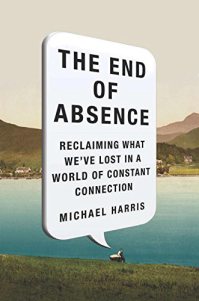
 This is the second of a three-part series of reviews that I am writing on The End of Absence: Reclaiming What We’ve Lost in a World of Constant Connection written by Michael Harris in 2014.
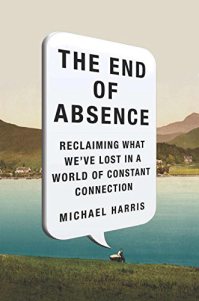 In “Part 1 – ‘The End of Absence’ (Michael Harris) Book Review,” we looked at the definition of absence and how it relates to our quality of life.



 The Quintessential Leader