Archive for the ‘Book Reviews’ Category

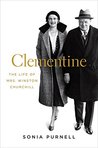
Clementine: The Life of Mrs. Winston ChurchillClementine: The Life of Mrs. Winston Churchill by Sonia Purnell
My rating: 5 of 5 stars

Fascinating book. As the author pointed out in her introduction to the book, Winston Churchill has gotten all the press and all the attention both during his life and since his death among the historians and biographers, while Clementine, his wife, was either invisible or contained to a single-sentence mention in passing. (more…)

Lady Bird and Lyndon: The Hidden Story of a Marriage That Made a PresidentLady Bird and Lyndon: The Hidden Story of a Marriage That Made a President by Betty Caroli
My rating: 5 of 5 stars

I was way too young to know anything about Lyndon and Lady Bird Johnson when they were in the White House and much of the scant knowledge I had of Lyndon Johnson – which left me with a negative impression of him both as a person and as someone in a leadership position – before reading this book has been acquired through my extensive study of the long history of war, beginning with the French in the 1950’s, in Vietnam. (more…)

The Artist, the Philosopher, and the Warrior: The Intersecting Lives of Da Vinci, Machiavelli, and Borgia and the World They ShapedThe Artist, the Philosopher, and the Warrior: The Intersecting Lives of Da Vinci, Machiavelli, and Borgia and the World They Shaped by Paul Strathern
My rating: 4 of 5 stars

This book was very interesting for several reasons. It caught my attention because the idea of Da Vinci, Machiavelli, and Borgia’s lives being intertwined with each other seemed far-fetched because of the vast differences in these three people as individuals.

And yet, for several months in 1502 and 1503, the artist (serving as military engineer), the philosopher (officially representing Florence, imperiled economically and militarily, yet paralyzingly indecisive over political allegiances), and the warrior indeed were together as Borgia made his eventually-doomed move, with his corrupt and debauched father, Pope Alexander VI, pulling the political strings in the background from the Vatican, to begin the quest to rule a united Italy. (more…)

Thinking, Fast and Slow - Daniel KahnemanThinking, Fast and Slow by Daniel Kahneman
My rating: 5 of 5 stars

I can usually read and absorb things – even those unfamiliar to me – quickly, but Kahneman’s book demands that you slow down (and, at times, stop altogether) and consider what is discussed here.

This book takes a detailed look at how our minds work. Or, surprisingly to me, in most cases how they don’t.

The mind is composed of two “systems,” as Kahneman labels them.

System A, the fast system, is the dominant mind system we employ the majority of the time.

System A is a flaky system, powered by emotions and impressions (many of which reflect our inherent biases and prejudices, which we’ve over time come to accept as universally true in every and all situations).

System A is also a faulty system that routinely makes errors, but rarely knows and even more rarely cares. System A deals with exactly what is in front of it, never worrying – or wondering – about what’s missing, what’s askew, or what else is needed before coming to a conclusion. Instead, it assumes what is there is all there is and makes up things to make what is there palatable and/or logical and then blithely moves on to the next thing, not missing a beat and never looking back.

Additionally, System is hopelessly gullible and is easily deceived. When we fall for lies and believe them until they become “truth,” we are running exclusively on System A. And we all have a much greater propensity toward this than we can even fathom (Kahneman’s book is full of examples of this and the numbers behind the research he and others he’s worked with over the last 50 are eye-opening).

System B, the slow system, is the system that does critical thinking.

System B is deliberate, analytical, and problem-solving, asking questions, seeking all the information, testing and proving answers based on solid evidence and comprehensive knowledge. All this work takes a lot of time, compared to the non-work of System A, expends a lot of glucose – energy – in the brain (the more hungry we are, the less likely we’re going to use System B at all), and is much harder than what System A does.

It turns out that System B is also extremely lazy: knowing how much effort, time, and resources are involved, System B routinely just lays low and lets System A field and handle everything. Except when System B has no choice but to get involved (retaining information for recall and working with math and numbers are two common examples of System B at work).

System A and System B don’t work together. The easiest way to deceive System A is to give System B something to do at the same time. While System B is diverted and occupied, System A will believe anything, no matter how outrageous or untrue it is.

Marketers and advertisers are the most notorious for exploiting this defect in our minds and they routinely suck most of us in as a result (and have lots of money and loyalty in the process), but we shouldn’t be fooled into believing that it doesn’t happen everywhere else in life as well.

This book really highlights how much we should be using System B for the stuff that matters in our lives – no matter how high the cost – instead of defaulting to (which we tend to do automatically) and relying on System A.

There is a lot to learn here and to use System B to really think about and understand, so it won’t be a quick read (no doubt, by design). But it is well worth the time and investment that we all are in need of making a concerted effort to do.

For those of us who are striving to become quintessential leaders, using System B dominantly is not just an option, but an imperative.

Whether we are building trust and being trustworthy depends upon our use of System B. How we lead our teams in every part of our lives depends upon our use of System B. The example we set for not only our teams, but everyone whose lives intersect with ours depends upon our use of System B.

How are we doing?

View all my reviews

The Long Shadow: The Legacies of the Great War in the Twentieth CenturyThe Long Shadow: The Legacies of the Great War in the Twentieth Century by David Reynolds
My rating: 5 of 5 stars

Although the author’s style is dense – by that I mean lots of information packed into a tight, but multilevel structure that requires a certain kind of deep, concentrated reading/comprehension ability that I believe has tragically been completely lost except to all but a few of us in this technology-driven (entangled) age when our attention/comprehension spans have been diminished to mere skimming, at best, and no-context, 5-second, twisted, spun, and completely made-up out of thin air sound bites, at worst – this is an incredible and comprehensive look at the global legacy of World War I on the 20th century and, in fact, here today in the 21st century. (more…)

Rising Tide: The Great Mississippi Flood of 1927 and How It Changed AmericaRising Tide: The Great Mississippi Flood of 1927 and How It Changed America by John M. Barry
My rating: 5 of 5 stars

After unprecedented continuous and heavy rain storms from the summer of 1926 through the spring of 1927 along the Mississippi River, the Great Mississippi Flood of 1927 became the worst and most destructive river flood in the history of the United States, with 27,000 square miles along the river overwhelmed and buried by water at depths up to 30 feet.

Rising Tide: The Great Mississippi Flood of 1927 and How It Changed America doesn’t just document this historic natural disaster. Instead it comprehensively looks at all the factors, many of them more than a century in the making, that coalesced over time to create not only this disaster, but the response to it, and the way it dramatically changed life, especially in the lower Mississippi, from the Mississippi Delta to the swamp country below New Orleans, forever.

This book is gripping and grabs you into the story, not only of the Mississippi River, but of America: its geography, its people, its society, its military, its power enclaves in business, government, life and the deep and fatal flaws of each of those that, ultimately led to this disaster and its aftermath.

For people like me, with a strong scientific bent, the numbers, the physics, the math, the structure, and the detailed solutions for harnessing the destructive power of the river are enthralling, but they are presented in a way that anyone can easily understand, especially when the flaws in thinking because of ignorance and/or laziness crop up along the way.

There are no heroes in this story, only mere limited humans. Some were downright villainous: self-absorbed, narcissistic, mean, hate-filled, murderous, deceitful, and motivated simply by pride, vanity, and greed. Others were products of their environments and experiences, believing they were altruistic, good, and devoted to the greater good, while in fact when push came to shove, the darkness of their hearts revealed itself as well.

Even the one man who knew the Mississippi River better than anyone else (and probably still stands alone in that intimate knowledge of the river) and had the engineering genius to know how to properly harness its power for good and did everything within his power to make that happen, James Eads, had flaws of character that emerged under pressure.

It’s often been said that we will never know how strong we are until we are surrounded by and confronted in every space of our lives with the impossible.

I believe – in fact, I know from experience for certain – that we will never know or understand how truly weak we are – where the hidden deep and destructive flaws of our hearts, our souls, our minds, and, indeed, our very nature and character are – until we are inundated at every turn with the impossible.

It is at this point where we have the opportunity to choose: to fully and humbly commit and endeavor to completely change and replace the very broken, the fatally flawed, and the intrinsic dastardly wrongs that permeate the human heart or to fully and proudly embrace them and feed and grow them to their fullest extent.

Rising Tide: The Great Mississippi Flood of 1927 and How It Changed America, at its core, is about the choices of America, its people as a whole, its society, its government, and, in fact, every single individual in the face of these weaknesses.

The choices disappoint. The weaknesses have continued to grow and to even more deeply become interwoven in the America – its people, its government, its society, and every single individual (including you and including me, if we have the courage and the honesty to admit it) – of 2016.

There is no concern or care for each other anywhere in the fabric of America and its organizations and institutions. Everything is about greed, power, and money. We destroy each other at every turn and in every nook and cranny of our society for our own benefit and for our own profit. We oppress. We steal. We lie. We cheat. We deceive. We hate. We destroy.

And we wrap all up in a pretty paper with a bow and sing our praises and exalt ourselves as we run the victory laps of our destructiveness and proclaim our honor and glory without end, when instead we should be ashamed of ourselves and doing something to wash away our sins.

Rising Tide: The Great Mississippi Flood of 1927 and How It Changed America is as current in its indictment of us as a nation, as a government, as a society, and as individuals as the century it covers that culminated in the preventable, but humanly inevitable, Great Mississippi flood of 1927.

The lessons here are instructive if we’re willing to learn them.

For those of us striving to be quintessential leaders, we must learn them and we must change as a result.

Otherwise, we have no claim at all to being quintessential or being leaders. We, instead are just pretenders, merely giving lip service to something that we know nothing about and want nothing to do with because doing it is infinitely harder – and requires so much more, and more than we are willing to give – than simply talking about it.

Are we merely talking a good game or are we doing the hard work?

View all my reviews