Archive for the ‘Quintessential Leadership’ Category

The quintessential leadership articles being recommended this week are not tightly related, but I think as you read through them you will see some common threads and connections.

Four Pillars of LeadershipIn Mike Myatt’s article, “Four Pillars of Stable Leadership,” he discusses the four elements of the quintessential leadership trait of stability. Stable leadership is critical to building trust and being trustworthy.

I think this paragraph summarizes very well the benefit of stable leadership: “Few things positively impact an organization like a stable tone from the top. A humble and resolute confidence, a sure hand, and a steady calm inspire belief in a leader’s competence and capability.  Stable leaders not only know where they stand, but they also leave no doubt in the minds of others as to what matters, and what will and won’t be tolerated.”

Unfortunately, stable leadership is a rare commodity in most organizational structures today. This includes our personal lives, our work lives, our social lives, and our religious lives. As quintessential leaders, though, we must be the exceptions to the rule in society where it seems now that ego, the big “I,” and situational ethics and relativity predominate the top-tier positions in most organizational constructs.

We must always be the ones to hold fast to humility, to absolute right and wrong, to consistency, to fairness, and to remember that each of us is part of a bigger “we” and not the solo big “I.” 

Why Leadership Training Doesn’t Work,” by Erika Anderson, is a thought-provoking article about the way quintessential leaders build future quintessential leaders versus the way most organizations approach leadership.

Her point is that true leadership building is involved, interactive modeling and mentoring in the course of work, not sitting in a classroom and telling the same old hackneyed stuff – that, by the way, has never worked and still doesn’t work because it has nothing to do with the real world – and expecting people to know how to be leaders.

Mentoring and modeling is the best way to train and learn in the area of leadership. I’ve learned what quintessential leadership is and isn’t by experiencing it and doing it and helping build future quintessential leaders in the process in the real world. And those lessons could have never been taught  – or learned – in a classroom.

Dan Rockwell’s article, “How to Be Humble Without Being a Loser,” contrasts the characteristics of haughty (unquintessential) leadership and humble (quintessential) leadership. The traits of a humble leader include many of the same traits that build trust and make us trustworthy. The humble leader traits list is simply who we, as quintessential leaders, are striving to be and become.

The 5 Reality-Based Rules of the Workplace and What You Can Do About It” by Cy Wakeman may, on the surface, seem like an odd choice in this list of articles, but quintessential leadership is dependent on what he discusses here. In fact, these rules that Wakeman identifies apply equally to life, so they’re important for everyone to know. 

In my post, “The Quintessential Leadership Balance Between Facts and Feelings,” I talked about how quintessential leaders do not allow emotions be the engines of their decision-making. Wakeman comes at this same conclusion from a different angle: emotional expensiveness and how it affects a person’s overall value to an organization (he lists some of the traits of being “emotionally expensive”). 

And although I’ve never thought about the formula he uses in concrete terms, it is the exact formula I tend to use in hiring new team members and giving more responsibility to existing team members.

The formula is: YOUR VALUE = Current Performance + Future Potential – (3 x Emotional Expensiveness). Look at how heavily emotional expensiveness affects the result of this equation. As quintessential leaders, we cannot afford to be emotionally expensive nor we can we afford to have team members who are emotionally expensive.

In Umair Haque’s article, “How and Why to be a Leader – Not a Wannabe,” he contrasts the characteristics that separate quintessential leaders from everyone else (the wannabes). While I don’t agree with some of the words he chose to show the contrasts, the information contained here is solid.

I hope we as quintessential leaders are constantly and consistently questioning and transforming every step of the way, as well as having values, truth, architecture (quintessential leaders build; wannabes hit numbers and quotas targets), and enjoyment/passion.

I hope you’ve all had a productive week and the quintessential leadership journey has been forward-moving. Thank you, as always, for sharing some of your time with me and allowing me to share some of mine with you.
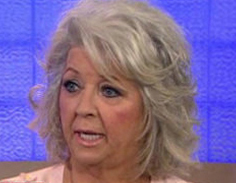
This is not the post I had planned for this blog today. However, it is clear to me that everyone – from the media all the way to Paula Deen – is missing the bigger picture of the core issue at the heart of this story.

As a side note, I shake my head continually at the situational ethics and twisted logic that a lot of people are approaching this story with. The heart of this story is not about a lack of forgiveness, about “casting stones,” about defaming Paula Deen (she did that all by herself by her lack of quintessential leadership without any help from anyone else).

It is, instead, a cautionary tale that all of us, and especially those of us who are quintessential leaders, need to look into the mirror of and see where and if we see our own reflections. If we miss that in all of this, then we’ve missed the whole point. 

The core issue of this situation with Paula Deen is that she lacks the unimpeachable character, the irrefutable integrity, the unwavering values, the non-negotiable adherence to and upholding of the highest of standards personally and professionally, and the evident humility of a quintessential leader. 

Paula Deen Today Show 6-26-13Increasingly, the story has zeroed in on a single aspect of Paula Deen’s deposition in response to a lawsuit filed by a former employee (who, for the record, is not African-American and who had quite a bit of responsibility at several of Paula Deen’s restaurants) raising the specter that Deen is prejudiced against African-Americans.

Paula Deen herself has waffled all over the place about this one part of a much bigger problem, so it’s really unclear exactly where she stands. And that’s consistent with a lack of unimpeachable character. When you don’t have a solid foundation of anything that is absolute in life, the floor constantly shifts on you from moment to moment.

But the charges of racism are only one part of a larger picture of who Paula Deen is and how she has failed as a quintessential leader both personally and professionally throughout her career. If you want the whole picture, you can read the former employee’s lawsuit here and Paula Deen’s deposition here.

Paula Deen fails the quintessential leader test in several areas. The first is setting and adhering to the highest set of standards of conduct (behavior, which includes speech and action) and requiring that everyone on the team adhere to them too. When people on the team fail to adhere to them, the remedial process to change or go is begun and if there’s no change, those people go. No matter who they are.

A telling quote from Paula Deen’s interview on the Today show this morning reveals her lack of understanding of leadership and her lack of ability to lead: “It’s very distressing for me to go into my kitchens and hear what these young people are calling each other. … I think for this problem to be worked on, these young people are gonna have to take control and start showing respect for each other.”

Paula Deen is in the leadership position and it is her job to set the standard of what is acceptable and what isn’t in her kitchens. She, as she has done since the beginning of all this, once again puts the responsibility somewhere else, instead of taking it herself. If she didn’t allow this kind of behavior in her restaurants – which clearly she does – she wouldn’t be hearing it at all there.

This is Paula Deen’s fundamental blind spot. She seems to have absolutely no comprehension of what her role as a leader is. This seems to be another case of someone who’s really good at a skill, but who should have never been in a leadership position because she’s not equipped to do it.

Once a person in a leadership position, as Paula Deen has time and again, allows, tolerates, and accepts compromise and exceptions to what is generally considered appropriate and right behavior, first in themselves and then with others, they have failed as quintessential leaders.

Once compromise and exceptions enter the picture, character is negatively impacted, and this is the second area where Paula Deen fails the quintessential leader test.

Paula Deen doesn’t see anything intrinsically wrong with any of the behavior in either the former employee’s lawsuit or in her own deposition. The casualness with which she accepts unacceptable behavior in speech and in action – and even does it herself – shows defective character.

Character is a big deal. Every choice, every decision, every thought impacts our character. That impact can either be positive or negative.

The more we negatively impact our character, the less we will care about right and wrong and good and bad and the looser our standards of what’s “okay,” “normal,” and “acceptable” will be.

This is unquintessential leadership. Quintessential leaders know character matters and we know that everything we do and our teams do reflect on our character.

We know you can do one hundred things right and one thing wrong, and the one wrong thing, unless we tackle it head on by admitting it, fixing it, and changing it so that it doesn’t happen again, can be what defines us the rest of our lives.

This is what Paula Deen is not doing and why she is not a quintessential leader.

The reality is that Paula Deen has hit a watershed moment in her life. This could be a time of real change for her.

This, believe it or not, is not unfixable. The fixing will be painful and embarrassing and will cost Paula Deen a lot in effort, money, and reputation. But the result would be worth it in the end.

But if you don’t understand that anything’s wrong, which Paula Deen doesn’t seem to, and you cannot accept the responsibility for your failures as a leader, which Paula Deen has never addressed, and your way of dealing with it is to cast a wide net of blame and responsibility on others by playing the victim and indulging in self-pity, then change will not happen. At least not now.

Paula Deen confirmed that this morning with her statement that “I is who I is and I’m not changing.”

Paula Deen, in the way she has conducted herself at every step of the way in her current situation, has shown herself to be an unquintessential leader.

First, Paula Deen showed – in case you think this is “no big deal” – herself to be a bully (this falls under the unquintessential leadership trait of bullying) and to have a prevailing lack of personal integrity and self-discipline.

Part of personal integrity is having and demonstrating respect for everyone. Personal integrity also has high standards of conduct and will not engage in – or allow – behavior or speech that denigrates and disrepects another human being. Self-discipline enforces personal integrity.

Second, after Paula Deen had failed on this part of quintessential leadership, although she had opportunities to redeem herself and prove that she was a quintessential leader who made a mistake, but was eager to rectify it and make it right immediately, she continues to show unquintessential leadership.

The first thing a quintessential leader does when he or she realizes they’ve screwed up – and we all do it as long as we breathe for a living – is to correct it and make amends. Matthew 5:25 gives quintessential leadership advice on how to handle someone suing you.

Had Paula Deen been a quintessential leader, she would have initiated a one-on-one meeting with her former employee as soon as she learned of the lawsuit and Paula Deenapologized and asked her former employee how she could make amends to her. Granted that takes a lot of humility, which quintessential leaders also have, but it would have resolved the issue between them and the general public would have probably never heard about it.

Instead, Paula Deen responded to the lawsuit in a deposition that made it even more clear how little personal integrity and self-discipline she possesses. It’s enough to make all of us who are striving to be quintessential leaders cringe most of the way through it.

Her inability to see the seriousness and hurtfulness of her mindset – because how we think is how we talk and act – in her speech and behavior and to accept it as “okay” or “normal” is more proof that Paula Deen is an unquintesssential leader.

Inset statement here: All of us who are Southerners should be cringing as well and putting a lot of distance between ourselves and Paula Deen. Paula Deen does not and will never represent me as a Southerner. We are not all like that. I apologize on behalf of Paula Deen and tell you that her speech and her behavior is wrong, unacceptable, and should not and will not, by me anyway, be tolerated in any way, shape, or form.

After Paula Deen’s deposition became public, she once again had an opportunity to own up and make it right all the way around, as quintessential leaders will eventually do. She failed again.

Instead of taking responsibility and correcting everything on the spot, Paula Deen showed the unquintessential leadership trait of pointing the finger everywhere but at herself. She blamed the South and the time she grew up in as the reason she is a bigot and disrepectful in her treatment of and behavior and speech toward African-Americans.

When that statement became public, Paula Deen yet again had an opportunity to humble herself and be a quintessential leader and take full responsibility and commit to changing herself and making amends.

And, once again, she failed. Her three anemic attempts to “apologize” were not apologies. They did not include a sincere and heartfelt apology where she acknowledged that she was wrong, she needs to and will change, and she will make amends to everybody affected (not just her former employee who is suing).

Paula Deen made it obvious that, in her mind, she stills believes what she demonstrated in her speech and behavior toward this employee and her deposition, but she felt forced to do something to try to save her gig with the Food Network and keep her $17 million dollar brand from imploding.

But there was nothing real, sincere, humbled, or changed behind any of her words. As with all unquintessential leaders, it was talking the talk with no intention of walking the walk.

food-networkAfter seeing these three videos, the Food Network did indeed say they would not renew her contract when it expires at the end of the month.

That was the right thing for the Food Network to do.

And, you know what, I really hope at some point that Paula Deen comes around and understands, acknowledges, really apologizes, makes amends, and makes the changes she needs to make. That’s my prayer for her. She’s got a lot of talent, but a lot of talent doesn’t make you a good person, nor does it make you right, nor does it make you a quintessential leader. 

Now, as quintessential leaders, we need to take some time  to review our own mindsets and how that comes out in our speech and behavior. Do we have personal integrity and self-discipline? Do we care? Or do we just go along with whatever the people around us are doing?

Quintessential leaders set the highest standards for ourselves. And we adhere to them, not when it’s convenient, not when we feel like it, but all the time. Even if it means we’re standing all by ourselves. It’s an act of courage, as indeed our lives are lived by many acts of courage that often swim constantly against the prevailing tide of unquintessential leadership that exists just about everywhere today.

So, let’s be courageous and be the quintessential leaders we say we are striving to be. It’s not the easy path and it’s not a whole lot of fun sometimes, especially when we screw up, but it’s the only way that we’ve committed ourselves to be.

I had about two-thirds of today’s post finished this morning, but then I went in for a full eye exam and they dilated both eyes and I can barely see to type. So, it will have to wait until Monday. You’ll want to read it, though, so keep an eye out for it!

Just wanted to remind everyone that Building Trust and Being Trustworthy is available on Amazon. This book discusses the components that all must be present to build trust and be trustworthy. It’s definitely something that we all as quintessential leaders are striving to do and be.

Hope everyone has had a productive and forward-moving week toward quintessential leadership.

The articles that Quintessential Leader is recommending in this week’s reading are very interrelated. One of the things that quintessential leaders do that makes them stand out from people who just have leadership titles but are not leaders is to think outside the box.

Thinking outside the box means the status quo – “that’s the way we’ve always done things” – is constantly being evaluated, challenged, and changed to better, smarter, more effective, and more efficient ways of growing and succeeding.

Overwhelmingly, the lack of leadership and the stagnation that seems to be epidemic in organizations today is because of the limitations people in leadership positions impose on the organizations. There is very little original thinking, very little innovation, and very little forward motion.

A lot of organizations are stuck in mindsets and methodologies of the past (theirs or others) and they operate from that outdated and unproductive viewpoint, all the while bemoaning the lackluster and tepid, at best, results of their efforts.

The fear of change and what change means to our comfort zones is part of the problem. The other part is that a lot of people in leadership positions are afraid of not being in control, which inviting and encouraging change will inevitably threaten.

But quintessential leaders are not egocentric. We understand that we are not the sole source of value in our organizations and teams and that when we involve – and grow – everyone on the team and in the organization in a meaningful way that uses each person’s gifts and talents to their fullest potentials, everybody wins and our organizations succeed. 

Quintessential leaders will surround themselves with people who are smarter than they are, know more than they know, and who will, in the collective effort of the team, ensure successful outcomes. This is the heart of leadership. And it is why there are so few quintessential leaders in most organizations.

In the article “Leader or Hero? Learning to Delegate,” Gordon Tredgold discusses a key component of quintessential leadership, which is delegation. Heroes insist on doing everything themselves. They are the ultimate examples of needing to be in complete control of everything. Heroes also get overwhelmed, stressed out, develop martyr complexes, and end up either doing many things poorly or, worse, not doing things that should be done at all.

Quintessential leaders are not heroes. They assemble competent teams, identify or develop (recognizing potential is one of the most common thinking-outside-the-box areas missing in recruiting and hiring in most organizations today) the strengths and abilities of those team members and then delegate accordingly.

I’ll give you an example of what this looks like. In one organization I worked for part of my teams’ responsibilities included detailed numbers work and reporting. While I can do that if push comes to shove, it’s not my forte and I don’t enjoy it and I usually end up making mistakes because, although I know it’s necessary, I dislike it so much that I rush through it to get it over with.

One of my team members, on the other hand, was excellent with this kind of work and really enjoyed it. So, guess who got to run with all the reporting and numbers work for the teams…and who also got all the credit?

And because it was appropriate and responsible delegation, we developed a high-trust relationship. I didn’t tell her how to do it – she knew better ways than I did of how it could best be accomplished – only what the final results needed to include. We teamed up and communicated well and often.

She knew she could count on me anytime she needed resources she didn’t have or needed me to pull some weight or run interference so she could get her job done. I knew her work was accurate and high-quality and it was one area I didn’t have to worry about.

I believe one of the reasons that so many people in leadership positions are heroes is because they don’t hire well (or are too insecure to hire someone who is better at doing something than they are). So they have no one to appropriately delegate too.

If you’re a leader who finds him or herself in a “hero” role, look at the team you’ve assembled and see if you’re overlooking talent or potential that you could delegate areas of responsibility to.

If you look at your team and don’t find anyone that you could delegate appropriately and responsibly to, then you’ve done a poor job of assembling your team and fixing that is the immediate priority on your to-do list.

Aad Boot’s “Mindset and Attitude Affect How We Lead Change (And How We Make Think outside the boxChanges in Ourselves) is very insightful about the difference in mindsets and attitudes in quintessential leaders and unquintessential leaders. Change is inevitable. How we, as quintessential leaders, approach, handle, and lead change is critical. As you’re reading this article, think about which of the two mindsets/attitudes that are presented in each of the bullet points describes your attitude and mindset toward change in every area of life. None of us handle change as well as we could, but the key to improving is to fix how we see and respond to change.

In the article, “6 Reasons Leaders Make Bad Decisions,” Glenn Lopis highlights six unquintessential leadership traits that we, as quintessential leaders, must always be on guard against. Our teams depend on us to lead. When we show that something other than leading our teams (which, again, means thinking outside the box all the time) is more important to us than that, then we become unquintessential leaders.

One of Lopis’s reasons for leaders making bad decisions is not seeing the opportunity. This goes back to mindset and reminds me of the twelve spies from Israel that were sent into Canaan to scout out the land. Only two, Joshua and Caleb, saw the opportunity. The other ten saw the problems. You can read the rest of the story for yourself to see why unquintessential leadership prevailing brings disastrous results.

Mike Myatt’s article, “The Most Common Leadership Model – And Why It’s Broken,” reiterates a topic I’ve discussed here before and also which represents not thinking outside the box. I’ve often described the extensive experience I bring to the table for any organization contemplating hiring me is comprised mostly of “soft skills” that are embedded in the competency areas of that same experience. One of the key areas I look for in team members is “soft skills.”

I’ve always said and will continue to say, because I believe it, that I can teach anyone the technical competencies a job requires, but I can’t teach them the “soft skills.” They either have them or they don’t. If they have them, all other things being equal, they’ll be on my team. I’m usually willing to take chances on people who possess “soft skills” and no technical competency because I know the value of “soft skills” and how they can be difficult to find, especially in highly-technical fields.

I’ll let Mike analyze the value of “soft skills” compared to “competency” from here because he gives a credible voice to what I’ve experienced most organizations never take into consideration: “Any organization that over weights the importance of technical competency fails to recognize the considerable, and often-untapped value contained in the whole of the person. It’s the cumulative power of a person’s soft skills, the sum of the parts if you will, that creates real value. It not what a person knows so much as it is how they’re able to use said knowledge to inspire and create brilliance in others that really matters.”

Once again, this is thinking outside the box. That is a vital requirement for us as quintessential leaders. Without it, we will fail our organizations, our teams, and ourselves.

I hope you’ve all had a good week and that your journey toward quintessential leadership has been fruitful and productive!

Pookey’s Sweet Life – Gluten Free is a company that will start out offering cupcake mixes that are both incredibly awesome and gluten-free, as well as easy to mix and bake. However,  Pookey’s Sweet Life – Gluten Free is currently in the process of trying to fund and launch the company. If the funding campaign, which ends in July, does not meet its goal, then the company will not be able to launch its gluten-free products.

The owner of Pookey’s Sweet Life – Gluten Free is a close friend of mine. As quintessential leaders, part of our responsibilities are to pay everything forward. This post is paying forward, because I know the owner is a quintessential leader and I know  that this business, with funding, is going to be successful.

But unless Pookey’s Sweet Life – Gluten Free gets the funding it needs by the first week of July, this company will not exist. And this company needs to exist.

As quintessential leaders, I’ve urged all of us to think outside of the boxes life tends to put around us. Here’s another exhortation to think outside of our personal boxes of life and consider the bigger box of humanity and the confining boxes that being gluten-intolerant puts many of those people and their families in.

As quintessential leaders, we are, by definition, big-picture in how we see, how we relate, and how we respond. This call to action for Pookey’s Sweet Life – Gluten Free enables each of us to show that we are quintessential leaders, not only in word, but in deed.

Pookey’s Sweet Life – Gluten Free has added s brand new perk added for a $15 dollar donation to this very worthy cause. You don’t have to donate $15 dollars, however, to make Pookey’s Sweet Life – Gluten Free a reality for all the gluten-intolerant people out there.

Forget about perks. Think about your family. No doubt there is someone among them who is gluten-intolerant.

Think about your friends. Do you know anyone who is gluten-intolerant? Would you be willing to help them?

Think about yourself. What if tomorrow you were diagnosed with gluten intolerance? Think about how radically your life would change, because most of the bread and pasta products we eat have gluten in them.

What if there were no companies that produced gluten-free products that were not only healthy but also tasty? What if all you had were the mega-produced gluten-free products that are, if not inedible, at least the last resort if you have no other choices?

Pookey’s Sweet Life – Gluten Free offers a wonderful alternative to all the bland, tasteless, and, yes, sometimes inedible products offered commercially now for people who are gluten-intolerant.

Pookey’s Sweet Life – Gluten Free is an incredibly personal venture based on a child’s need for gluten-free food. With love, care, and investment behind all the products that Pookey’s Sweet Life – Gluten-Free will offer, how could any of us not put ourselves in the shoes of parents and children who need these products and had no option but what we came up with ourselves to ensure our children had gluten-free alternatives?

For yourself. For your children. For your grandchildren. For your great-grandchildren. others. For others’ children. For others’ grandchildren. For others’ great-grandchildren.

Consider a small donation to help anyone that comes to mind when you think of those possibilities.

Until we’re in the middle of something health-wise, we don’t often have empathy and understanding for what many others who share our battles go through.

I learned this a few years ago when I was diagnosed with Graves’ Disease and Graves’ Eye Disease.

All my life, I’ve been through hell and back with these. And, for the rest of my life, I will continue to go through hell and back with them. That is something I’ve had to accept and adjust to. I’ve tried to change myself so that hell is not so bad for me and everybody else. That is a battle I will fight until the day I take my welcomed last breath.

Although both are autoimmune diseases and thyroid diseases are genetic in my maternal biological family, my struggle with these is not systemic, but instead neurological (which means the standard treatments for them don’t work). I’ve got an overactive hypothalamus and pituitary gland that overload my brain and my thyroid (apparently the weakest system in my body).

There’s no fix for me. And I’m okay with that and work to try to find other ways to fix what, realistically, can’t be fixed in this physical life.

So when I see things that can be fixed, like gluten intolerance, I push for those fixes. Probably harder than most people would. But I know what it’s like to have something that’s not fixable.

Gluten-intolerance is fixable. Or at least manageable. Pookey’s Sweet Life – Gluten Free is one of the fixes. Let’s join together to help in the effort to fix and address something that is fixable in this lif